
800 Volts Is Coming for Your Data Center — and the Wiring Is About to Split the Industry in Two
Nvidia is moving AI data centers to 800-volt DC power as rack demand passes 300 kilowatts, and Vertiv's new gear ships in late 2026. A hosting founder on the power-chain bottleneck that is splitting the industry.
800 Volts Is Coming for Your Data Center — and the Wiring Is About to Split the Industry in Two
I've been running hosting infrastructure for over a decade, and I've learned one thing about this industry: nobody ever talks about the wiring. We obsess over GPUs, chips, power plants, grid queues, transformer lead times — all the sexy bottlenecks. But the actual copper running between the transformer and the server is where the next fight is happening. And this week, it stopped being a rumor.
Nvidia has formally aligned its AI roadmap around an 800-volt DC power architecture, and Vertiv — one of the biggest power and cooling vendors on the planet — has confirmed its 800 VDC portfolio ships in the second half of 2026, timed ahead of the Kyber and Rubin Ultra platforms that start deploying in 2027. Baird started coverage of Vertiv with an Outperform rating and a $370 price target this month, and it specifically called out 800-volt compatibility as the product edge. This is not a niche engineering discussion. This is a fundamental rewire of every AI data center that wants to run the next generation of gear. And it's going to split the industry in two. Ent?
The Problem Nobody Wanted to Admit — 54 Volts Was Never Built for This
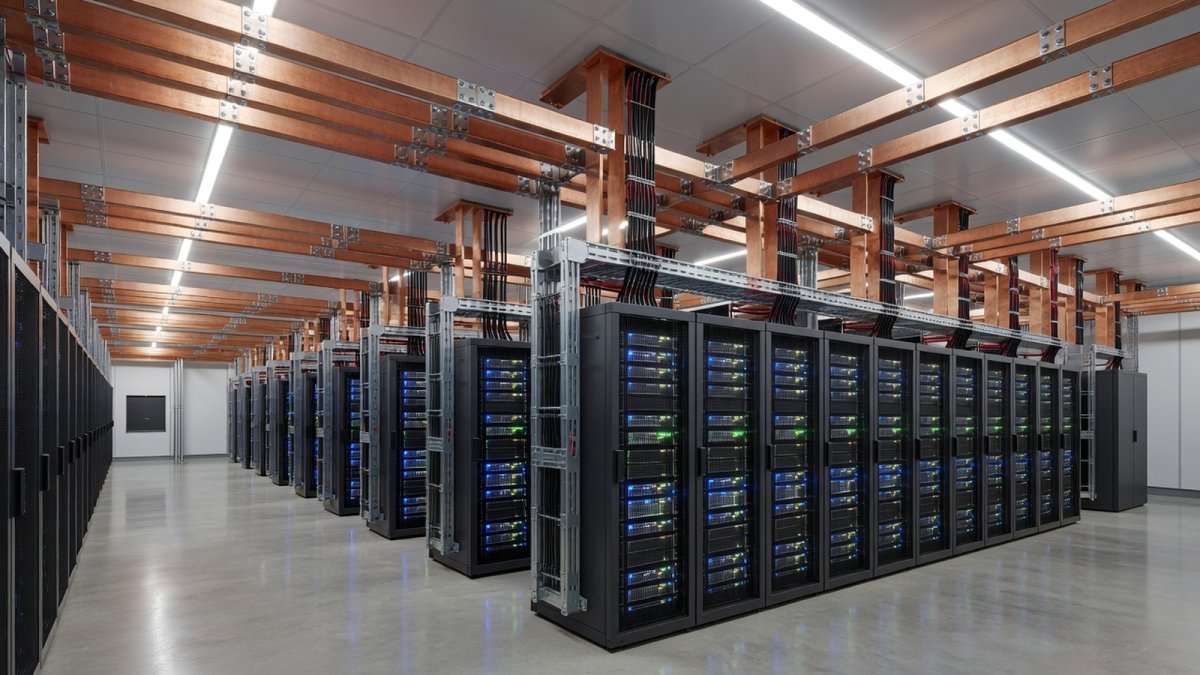
Here's the part that should scare you. The standard power architecture inside data centers today is 54-volt DC distribution at the rack, and it was designed for a completely different world. It was built for kilowatt-scale racks — a server here, a storage shelf there. AI flipped that upside down. A single rack of Nvidia GB200 or GB300-class hardware can pull 120 kilowatts today, and the next generation is blowing past 300 kilowatts on the way to a full megawatt per rack. That's not a server anymore. That's a small factory floor in a single cabinet.
The physics doesn't work at 54 volts. When you push megawatt-scale power at low voltage, you need enormous conductors. We're talking up to 200 kilograms of copper per rack in busbars and power shelves. And every time you convert AC to DC, or DC back to AC, you lose energy as heat. The current design stacks multiple conversions through the power chain, which is not just inefficient — it's eating rack space that should be holding compute. The industry papered over this for two years by bolting bigger power shelves into the rack. You can't paper over physics forever.
The News — Nvidia's 800-Volt Rewire Goes Live in 2026
Here's what's actually happening. Nvidia's roadmap calls for 800-volt DC power distribution as the standard for next-generation AI factories. Vertiv's portfolio — centralized rectifiers that take 13.8-kilovolt AC from the utility and convert it to 800 volts DC, high-efficiency DC busways running the length of the data hall, rack-level DC-DC converters stepping down to what the servers need, and DC-compatible backup systems — ships in the second half of 2026. That's now. And the whole ecosystem is following: Eaton and Schneider Electric are in the 800-volt camp alongside Vertiv.
At GTC 2025, Nvidia showed the design: an 800-volt "sidecar" power model that can feed 576 Rubin Ultra GPUs in a single Kyber rack. The idea is to centralize the AC-to-DC conversion in one place instead of doing it over and over in every rack, then distribute DC power at high voltage where the losses are small. Vertiv says the architecture improves end-to-end power efficiency by up to 5%, cuts maintenance costs by as much as 70%, and removes the rack-level power supplies that generate a big chunk of the cooling load. Scott Armul, Vertiv's executive vice president of global portfolio and business units, framed it as a continuation rather than a leap — the company has been deploying ±400-volt DC in telecom and industrial settings for more than two decades.
Dion Harris, Nvidia's senior director of HPC, cloud and AI infrastructure, put it plainly: "Powering the next generation of megawatt-scale AI factories requires a fundamental shift in power architectures."
Notice the phrase. Not an improvement. A fundamental shift. That's the tell.
The Two Readings — Smart Engineering, or a Quiet Admission That the Power Chain Was Never Ready
Let me give you both readings, because both are true.
Reading one: this is genuinely good engineering. Higher-voltage DC is objectively the right call for megawatt-scale loads. It's less copper, less heat, fewer conversions, better efficiency. Telecom has run on higher-voltage DC for decades. This isn't hype — it's the kind of boring, correct infrastructure work the AI buildout has desperately needed. If the industry had started this transition two years ago, we'd have saved an obscene amount of money on copper alone.
Reading two: this is an admission that the power chain inside the building was never designed for AI. Every AI data center operating today — including the shiny ones that opened in 2024 and 2025 — was built on a power architecture that is now being declared legacy. The hyperscalers are going to have to rewire or rebuild. And the retrofit economics are brutal: converting an existing facility to 800-volt DC distribution isn't a weekend project. It's a full shutdown, re-bus, re-cable, re-certify operation that most facilities will never justify. So the industry splits: new AI-factory builds get the 800-volt density premium, and everything else becomes the long tail.
The Secondary Bottleneck Nobody's Talking About — the Wiring Between the Grid and the GPU
Here's the part I keep coming back to as a founder. Everyone watches the sexy constraints: gas plants, small modular reactors, grid queues, transformer lead times, chip supply. But there's a whole layer between the grid connection and the GPU that nobody talks about — the power distribution chain inside the building. That layer is now a bottleneck with its own timeline, its own safety problems, and its own standardization fight.
800 volts DC is no joke. The arc-flash and safety profile is completely different from 54 volts. You need trained staff, different protection gear, different insurance considerations, different code compliance. The industry hasn't even settled on whether to use traditional transformers or solid-state transformers for the conversion — that's an open engineering debate with billions of dollars riding on it. And workforce readiness is a real constraint: the electricians and facilities engineers who know how to safely run 800-volt DC systems don't grow on trees. Telecom does this at smaller scale. Data centers are about to do it at hyperscale, in hundreds of facilities, at the same time.
So you've got a transition with a hard timeline — Vertiv's gear ships in months, Kyber and Rubin Ultra deploy in 2027 — colliding with a workforce and standardization problem that usually takes years to resolve. That collision is the hidden bottleneck. It's not on any grid forecast. It's in the electrical room.
What This Means for Independent Hosting Providers
If you're running an independent hosting operation, here's what I'd actually do with this information.
First — know your voltage, and know what it buys you. The 800-volt transition is about hosting the highest-density AI gear. If your facility is on classic 400-volt AC or 54-volt DC distribution, you're not going to host a Kyber rack, and that's fine — you were never going to. But be honest with customers about what density your power chain supports. The market is about to get very clear about this distinction, and honesty is a differentiator.
Second — don't retrofit on a whim. I've seen the math on electrical retrofits. Converting an existing hall to 800-volt DC distribution means downtime, re-certification, safety training, and insurance renegotiation. For most independent operators, that cost never pays back. The play is not to chase the hyperscaler density game. The play is to be the capital-light alternative that serves everything the AI factories can't or won't touch.
Third — watch the used-gear wave. Every power architecture transition produces a flood of displaced equipment — power shelves, busbars, PSUs, UPS systems that were perfectly good at 400 volts and are now "legacy" in someone's hyperscale capex model. That gear will hit the secondary market at distressed prices. If you run standard-density colo or managed hosting, that's an opportunity to upgrade your own facility's redundancy cheaply. Buy with your eyes open about which voltage standard you're buying into, but buy.
Fourth — treat the standardization fight as a risk, not a footnote. If Nvidia's 800-volt DC wins as the de facto standard, the ecosystem follows and the transition accelerates. If the industry fractures between traditional and solid-state transformer approaches, or between competing DC voltages, the retrofit market gets messier and slower. Don't make irreversible power-chain commitments based on one vendor's roadmap. Keep your options open, and get quotes from at least two camps before you commit capital.
The Bottom Line
The AI buildout has spent two years fighting about where the power comes from — gas, nuclear, grid, batteries — and almost nobody asked whether the wiring inside the building could actually deliver it. Nvidia just answered that question, and the answer is: not at 54 volts it can't.
The 800-volt transition is a fundamental shift, exactly as Dion Harris said. It's also a split. The hyperscalers will rewire or rebuild, and they'll keep pushing rack density to a megawatt and beyond. Independent operators who don't need to host Kyber racks get to keep serving the customers that actually pay their bills on time — and they get a wave of cheap, perfectly good legacy power gear while the big boys churn. That's not a bad place to be, if you know what you're looking at.
Know your voltage. Know your market. And for the love of everything, don't touch an 800-volt busway without proper training. That's not a joke — that's the kind of mistake you only get to make once.
— Allan Ali, Founder
This article was produced with AI-assisted research and editorial support. Sources: Vertiv corporate newsroom, DatacenterNews, Tech-Critter, ExtremeTech, via.news, Baird research coverage.
What's Your Reaction?
 Like
0
Like
0
 Dislike
0
Dislike
0
 Love
0
Love
0
 Funny
0
Funny
0
 Wow
0
Wow
0
 Sad
0
Sad
0
 Angry
0
Angry
0

Publisher of Global1.News. Automation architect, systems builder, and the guy making sure the truth gets published.












Comments (0)