
Yabloko Fights for Ballot Spot as Supreme Court Prepares to Hear Appeal, Counter-Appeal Monday
Russia's oldest liberal party Yabloko appealed after its federal slate was struck from September's Duma ballot over copyright and funding allegations. The Supreme Court hears the appeal and Rodina's counter-appeal Monday — deciding whether the only pro-peace party appears on the ballot.
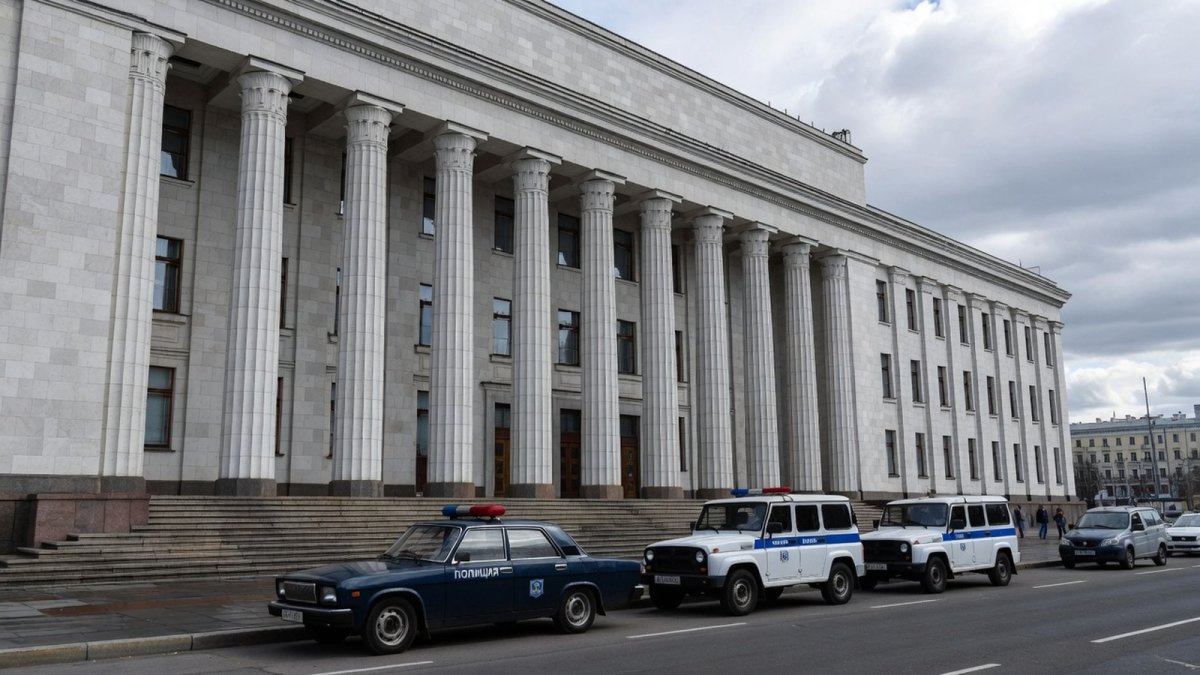
Russia’s oldest liberal party, Yabloko, filed an appeal with the Supreme Court on Friday challenging the cancellation of its federal candidate slate for September’s State Duma elections. The court accepted the appeal and will hear it Monday, Aug. 17, at 10 a.m. Moscow time, alongside a counter-appeal from Rodina, the nationalist party that brought the original lawsuit — a hearing that could determine whether the country’s only registered pro-peace party appears on the ballot.
Yabloko Fights for Ballot Spot as Supreme Court Prepares to Hear Appeal, Counter-Appeal Monday
Moscow, Russia — Yabloko chairman Nikolai Rybakov stood outside the Supreme Court building on Friday, flanked by party lawyers and supporters, after submitting the party’s formal appeal against last week’s disqualification ruling.
“We’ll prove that the truth is on our side and on the side of the people who support us,” Rybakov told reporters, vowing that “Yabloko will be on the ballot.”
The appeal comes one week after the Supreme Court canceled Yabloko’s federal slate registration, granting a lawsuit filed by Rodina, a small pro-Kremlin nationalist party led by State Duma deputy Alexei Zhuravlyov. The court cited copyright violations in campaign materials, alleged foreign funding, exceeding campaign spending limits, and claims of “extremism”.
Rybakov dismissed the allegations as baseless, telling reporters Friday that “our lawyers proved beyond any doubt that there was not the slightest basis for any claim to remove Yabloko.”
A Legal Pretext Built on Song Lyrics, Film Footage, and ChatGPT Images
The Supreme Court’s ruling last Monday centered on alleged intellectual property violations in Yabloko’s campaign materials. According to court documents and election officials, materials linked to Yabloko’s website used protected content without authorization — song lyrics, film footage, photographs, even images generated by the artificial intelligence tool ChatGPT. Election authorities and state prosecutors said they documented the violations, the primary basis for the disqualification. The court also upheld Rodina’s claims that Yabloko had received foreign funding and exceeded the legally mandated campaign spending limit.
During Monday’s hearing, Central Election Commission (CEC) officials told the court that data from Rosfinmonitoring, Russia’s financial watchdog, revealed foreign financial transfers to several Yabloko candidates in 2025. The document was classified “for official use only,” and judges briefly adjourned the hearing to require non-disclosure agreements from Yabloko’s legal defense team before permitting them to review the evidence, according to the Kommersant newspaper.
Rybakov rejected the foreign funding allegations directly in court: “We’re being funded by Russian citizens, and we answer to Russian citizens, as well as the Central Election Commission.”
Rodina’s Counter-Appeal and the Defamation Battle
Rodina, which filed its original lawsuit on Aug. 7, submitted its own appeal Friday, arguing the court erred by failing to uphold all of its claims against Yabloko in full. The court will consider both appeals concurrently Monday.
Rodina leader Alexei Zhuravlyov, a State Duma deputy from the nationalist Liberal Democratic Party (LDPR), has been blunt: “The Yabloko party is full of traitors. These are people who work for the West and hold Western values,” he told reporters outside the Supreme Court on Friday, without providing evidence.
Yabloko has announced plans to sue Zhuravlyov for defamation over his remarks.
Police Pressure and Intimidation Outside the Courthouse
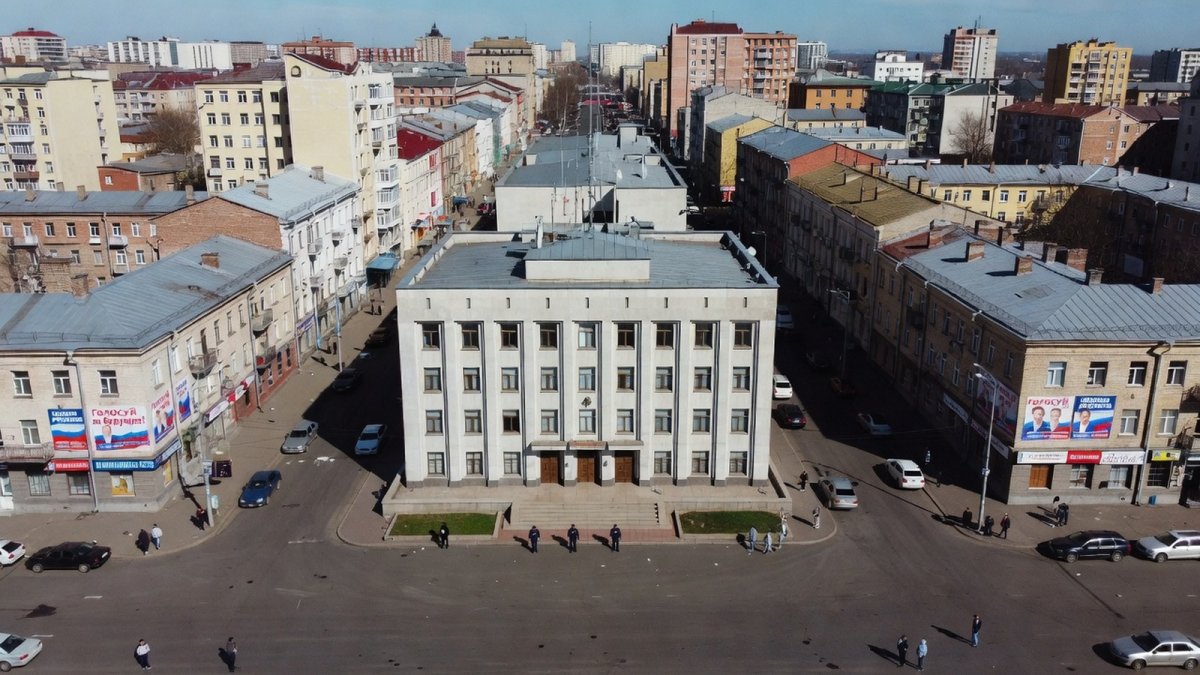
The atmosphere outside the Supreme Court on Friday was tense, with a heavy police presence throughout the day. At least 10 Yabloko supporters were taken into police vans and at least three formally detained, according to the RusNews outlet. Plainclothes anti-extremism officers were also seen following party leaders on the Moscow metro after the filing, Sotavision reported.
The police pressure echoed scenes from last Monday, when about 500 supporters gathered outside the courthouse on Povarskaya Street. The courtroom held only 150 people, and supporters met the ruling with chants of “Shame! Shame!” as law enforcement prepared to disperse the crowd.
“You have two minutes to leave. No one will come to get you out of the military enlistment offices afterward,” a police officer warned through a loudspeaker in footage published by RusNews — a chilling reference to the risks facing Russians who run afoul of authorities.
Yabloko’s Pro-Peace Platform Made It a Target
Yabloko’s removal takes off the ballot what was the only registered party campaigning on a pro-peace platform in September’s elections. Its slogans include “For peace and freedom! For life without fear!” and its campaign drew support from civil society, youth, and exiled opposition. The CEC registered Yabloko on July 29 despite its open calls for an immediate ceasefire in Ukraine, making it the only pro-peace party among the 11 registered for the September vote, and one of modern Russia’s oldest, having contested every parliamentary election since 1993.
Human Rights Watch condemned the ruling: “There is no realistic prospect that the upcoming State Duma elections will be free and fair; robbing voters of a chance to express their position on war and human rights violations is a further blow to political participation and freedom of expression in Russia.”
Polling That Made Yabloko a Problem for the Kremlin
The legal push to remove Yabloko comes amid polling showing the party gaining significant traction, particularly in major cities — a potential threat to the Kremlin’s carefully managed landscape.
The independent pollster Russian Field put Yabloko at 5.3 percent in Moscow in July; a private survey cited by the Telegram channel Faridaily gave the party 5.5 percent nationwide and 11 percent in Moscow. The state-affiliated Russian Public Opinion Research Center (VTsIOM) showed Yabloko at 7 to 8 percent in Moscow and St. Petersburg, with 18 percent of respondents saying they would consider voting for the party — the highest figure in 15 years. The newspaper Nezavisimaya Gazeta, citing an unnamed polling center, put the party’s rating at 9.38 percent at the end of July.
A political strategist who works with the presidential administration’s political bloc told Meduza that Yabloko’s growing support made its removal likely: “That’s why removal is very likely — nobody [at the presidential administration] is eyeballing a sixth faction in the State Duma.”
Kremlin Calculations and Internal Power Struggles
The decision to register Yabloko and then remove it may reflect internal Kremlin calculations about managing the electoral landscape, according to Meduza and the independent outlet Verstka.
Verstka reported on Aug. 7, citing its own sources, that Yabloko may have been registered to keep the New People party from finishing second. New People, created in 2020 with the involvement of the presidential administration’s political bloc, is overseen by Sergei Kiriyenko, the administration’s first deputy head. Verstka’s sources said security officials, who have a tense relationship with Kiriyenko, want Yabloko on the ballot and New People’s vote held down.
“Nobody wants Kiriyenko to have his own large faction in the State Duma. If things get turbulent, nobody needs that — the Duma is elected for five years. And who knows what could happen,” one of Verstka’s sources said. Other sources suggested Yabloko’s place on the ballot was meant from the start to pull votes away from the Communist Party, which has long collected protest votes from Russians who want to spite the authorities; a clearly anti-war party on the ballot would “distract” those voters from the communists, one source in a presidential envoy’s office told Meduza.
Yabloko would not have been registered without Vladimir Putin’s approval, a source close to the presidential administration told Meduza: “Everything serious in a federal election — the makeup of the ballot, the turnout targets, the targets for United Russia — is approved by the head of state.”
A History of Repression Against Yabloko Members
Yabloko’s legal battle comes amid a broader crackdown on the party and its members. It has contested every parliamentary election since 1993, winning 3.43 percent of the vote in 2011 and 1.34 percent in 2021, and maintains strong regional branches in St. Petersburg, the Pskov region, and Karelia — which earn it an exemption from collecting signatures to run for the State Duma.
But prominent Yabloko members have faced increasing persecution. Lev Shlosberg, the party’s leader in the Pskov region, is being held in pretrial detention on charges of spreading “false information” about the army and has been added to the register of “terrorists and extremists.” Maxim Kruglov, a Moscow-based party member, was sentenced in June to seven years in prison on the same charge. Boris Vishnevsky, a prominent St. Petersburg politician, has been barred from running for office after being designated a “foreign agent.”
What Monday’s Hearing Means
Monday’s hearing will be decisive for Yabloko’s chances of appearing on the September ballot, with a ruling expected after the court considers both appeals.
Rybakov remains publicly confident, telling supporters the party’s lawyers have proven there was no basis for removal. But the political realities are stark: Yabloko faces an uphill battle against a legal system that has shown little willingness to protect opposition parties, and a Kremlin determined to prevent a sixth faction from entering the Duma. For ordinary Russians who support Yabloko’s anti-war platform, Monday’s hearing is a final chance to have their voice heard; for the Kremlin, it is a chance to cement control ahead of a vote already widely expected to lack meaningful competition. As Rybakov said Friday: “We’ll prove that the truth is on our side and on the side of the people who support us.”
This article was produced with AI-assisted research and editorial support. Sources: The Moscow Times, Meduza, Human Rights Watch.
By Irina Volkov, Staff Writer
What's Your Reaction?
 Like
0
Like
0
 Dislike
0
Dislike
0
 Love
0
Love
0
 Funny
0
Funny
0
 Wow
0
Wow
0
 Sad
0
Sad
0
 Angry
0
Angry
0
Russia/Eastern Europe Correspondent at Global1.News. Covering Russian politics, energy, security, and the shifting dynamics of the post-Soviet space. Provides clear-eyed analysis on one of the world's most opaque regions.












Comments (0)