
Madagascar Revives Its Ancestral New Year: Taombaovao Returns After Decades
In a powerful act of cultural reclamation, Madagascar this year revived its pre-colonial New Year tradition, with the sacred bath festival Alahamadibe drawing crowds to the highlands southwest of the capital. The return of Taombaovao, a custom silenced for decades, signals a deeper movement across the continent where nations are dusting off ancestral practices to redefine their modern identities.
In a powerful act of cultural reclamation, Madagascar this year revived its pre-colonial New Year tradition, with the sacred bath festival Alahamadibe drawing crowds to the highlands southwest of the capital. The return of Taombaovao, a custom silenced for decades, signals a deeper movement across the continent where nations are dusting off ancestral practices to redefine their modern identities. From the shores of the Indian Ocean to the Sahel, the call to honor what came before is growing louder, and Madagascar is answering with fire, water, and song.
Reviving the Flame: Madagascar's Ancestral New Year Returns After Decades of Silence
Antananarivo, Madagascar — For the first time in living memory for many, the sacred stones of Manjakamiadana witnessed rituals performed freely and in their entirety, a sight that had not occurred since the era of the kings. The revival of the Malagasy New Year, known as Taombaovao, is more than a festival; it is a homecoming for a nation reconnecting with the spiritual core of its identity. This year's Alahamadibe sacred bath festival, held from 18 to 21 March at Doany Ambonga Ilaniara, southwest of Antananarivo, marked a turning point in how the Grande Île sees itself.
The Return of a Pre-Colonial Tradition
The Alahamadibe festival is the beating heart of the Malagasy New Year, a pre-colonial custom abandoned for decades under the weight of colonial rule and modernization. This year, the celebration unfolded over four days, drawing thousands to the sacred site where the rituals of purification and renewal were once the exclusive domain of royalty. The event is anchored in the Malagasy lunar calendar, a sophisticated system comprising 13 lunar months that has guided agricultural and spiritual life for centuries.
The first moon of the Alahamady month, which falls in March-April in the Gregorian calendar, marks the symbolic new year, a time when the island transitions from the heavy rains to the promise of the rice harvest. This astronomical precision reflects a deep understanding of nature's cycles, one that Malagasy ancestors encoded into their social and religious practices. The celebration is not merely a date on a calendar; it is a living connection to the land and the ancestors who cultivated it.
The tradition has seen a remarkable resurgence since the 1990s, a period when Madagascar, like many African nations, began a slow and deliberate process of cultural introspection. After decades of post-independence turbulence, the 1990s opened a space for civil society to revisit the customs that had been pushed to the margins. What started as small, intimate gatherings of elders and historians has grown into a national movement, culminating in the large-scale public celebrations witnessed this year.
This revival is part of a broader continental awakening, where pre-colonial traditions are being re-evaluated not as relics of the past but as vital tools for contemporary life. In Madagascar, the return of Taombaovao is a statement that the island's identity cannot be fully defined by the colonial interlude. The rituals, the language, and the lunar calendar are all threads in a fabric that was torn but never completely destroyed.
The choice of Doany Ambonga Ilaniara as the central site for the Alahamadibe festival is significant, as it is a place steeped in the spiritual history of the Merina people. The site's location southwest of the capital places it within the ancestral heartland, where the memory of the kingdom remains strong. By returning to these sacred grounds, the organizers are physically and symbolically reclaiming a geography of power that predates the modern state.
Keepers of the Sacred Flame
At the forefront of this cultural renaissance is Mikolo Hasina Ankoay Andrianarisoa, president of the organizing committee and a guardian of the tradition. His voice carries the weight of a man who has dedicated his life to ensuring that the next generation knows where it comes from. "A large part of what defines Malagasy identity has been lost, destroyed or has crumbled," he told the crowds, his words echoing across the highlands. His message was clear: the time for passive mourning is over, and the time for active reconstruction has begun.
Andrianarisoa's call to action is rooted in a profound belief in the resilience of his people. "Blood runs in our veins — and that blood is Malagasy," he declared, a statement that transcends mere ethnicity to encompass a shared cultural and spiritual inheritance. For him, the revival of Taombaovao is not a nostalgic exercise but a necessary step for the psychological and social health of the nation. He argues that a people who know their history are better equipped to navigate the complexities of the modern world.
Davida Rakoto, an organizer and fellow guardian of the tradition, emphasized the significance of performing rituals at Manjakamiadana, a sacred 19th-century site that served as the seat of the kingdom of Madagascar. For Rakoto, the ability to perform the rituals freely and in their entirety on the sacred stone "had not happened since the time of the kings." This act of restoration is a powerful symbol of sovereignty reclaimed, a quiet but firm assertion that the spiritual authority of the ancestors is once again being honored.
The restoration of Manjakamiadana's sacred character is a delicate process, requiring both historical knowledge and spiritual sensitivity. Rakoto and his team have worked to ensure that the rituals are performed with the exactitude demanded by tradition, from the lighting of the fire to the pouring of the water. This attention to detail is crucial, as the efficacy of the rituals is believed to depend on their faithful execution.
Violette Randrianjatovo, a deputy director of a French school abroad, represents a different facet of the revival: the diaspora returning to its roots. She spoke passionately about Ambohitrabiby, the cradle of the Merina kingdom, known as the "hasin' Imerina," or the sacred power of Imerina. It is here that the fire symbol is lit first, before being carried across the city and all of Madagascar. Randrianjatovo's involvement underscores the transnational nature of this cultural movement, as Malagasy people from around the world are drawn back to participate in the renewal.
Fire, Water and Renewal: The Rituals
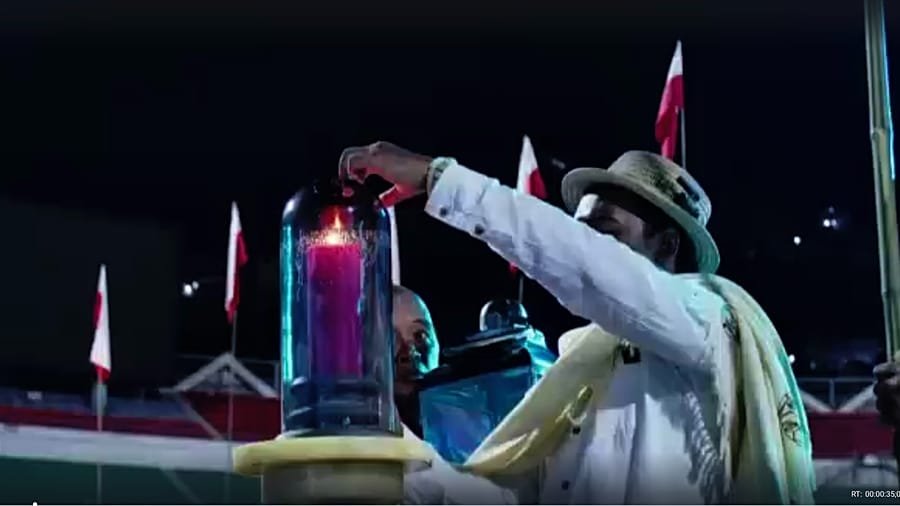
The rituals of Taombaovao are a sensory immersion, beginning with the sacred flame that is transmitted between the capital's neighborhoods. This relay of fire is not merely symbolic; it is a physical manifestation of unity, as each community receives the flame and adds its own energy to it. The journey of the flame from Ambohitrabiby to the heart of Antananarivo mirrors the historical expansion of the Merina kingdom, connecting the modern city to its ancient roots.
As night falls, the "afo tsy maty" vigil begins, a term that translates to "the fire that never dies." Lanterns illuminate the night in anticipation of the new year, creating a landscape of flickering lights that transforms the urban environment into a sacred space. This vigil is a time of reflection and waiting, a liminal period when the old year is dying and the new one has not yet been born. The community gathers, shares stories, and prepares itself for the moment of renewal.
The Fandroana, or sacred bath, is the centerpiece of the festival, a ritual of purification that washes away the impurities of the past year. This is complemented by the Zara-hasina rituals, which involve the sharing of blessed food and objects, symbolizing purification, blessing, sharing and renewal. These acts are not performed for an audience; they are performed for the community, reinforcing the bonds that hold society together.
The festival is deeply connected to faith in Zanahary, the supreme God, and the sense of the sacred that permeates Malagasy life. The rituals are a form of communication with the divine, a way of ensuring that the coming year is blessed with prosperity and harmony. This spiritual dimension is what elevates the festival from a mere cultural performance to a profound act of collective worship.
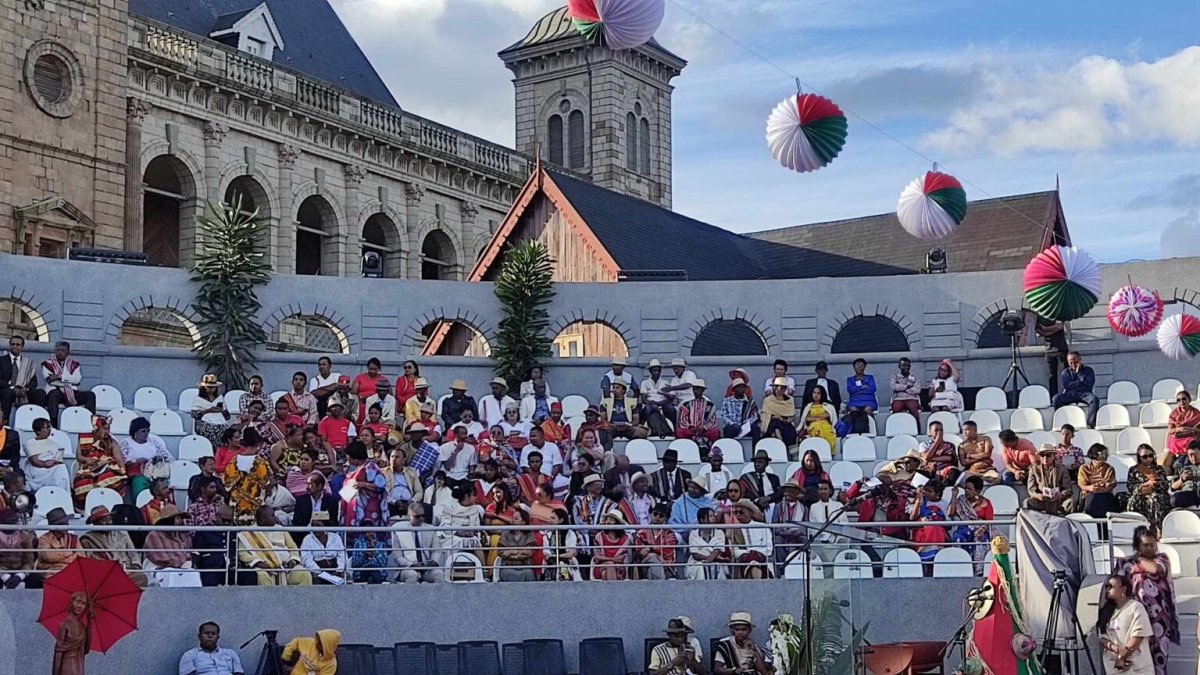
The celebration unites Malagasy beyond religious, ethnic and social distinctions, a remarkable feat in a country that has often been divided along these lines. At the Mahamasina Stadium in Antananarivo, a large crowd gathered, dancing to local music groups that filled the air with the rhythms of the island. The stadium, usually a site of political rallies and sporting events, was transformed into a space of pure cultural expression, where the only agenda was joy and unity.
An Island Reclaiming Its Identity
The spiritual and identity renewal of the "Grande Île" is palpable, as the New Year celebration coincides with a broader cultural calendar that is being actively rebuilt. The Ministry of Communication and Culture has thrown its weight behind the festivities, recognizing that cultural heritage is not a luxury but a necessity for national cohesion. This institutional support marks a shift from the past, when such traditions were often ignored or suppressed by the state.
The month of March has become a microcosm of this cultural awakening. On March 8, an International Women's Day festival and parade honored women in Malagasy society, acknowledging their central role in both the family and the nation. This celebration of women, followed by the Taombaovao festivities, creates a powerful narrative of renewal that is both social and spiritual. The recognition of women's contributions is a modern addition to the cultural calendar, but it resonates with the traditional respect for female ancestors and the maternal line.
This revival is part of a broader African context, where nations are reclaiming pre-colonial traditions as a source of strength and identity. From the restoration of ancient kingdoms in Ghana to the revival of indigenous languages in South Africa, the continent is engaged in a collective project of historical reclamation. Madagascar's Taombaovao is a unique contribution to this movement, offering a model of how a nation can honor its past while building its future.
For younger generations, the revival is a revelation. Many young Malagasy had only heard of Taombaovao in history books or from elderly relatives, and to see it performed with such vigor is a transformative experience. The festival provides a tangible link to their heritage, a way of understanding that their identity is not defined solely by the challenges of the present but also by the glories of the past. This generational transmission is perhaps the most critical aspect of the revival, ensuring that the tradition will not be lost again.
A National Celebration in the Making
The Taombaovao is on a clear trajectory toward becoming a fully recognized national holiday, a status that would cement its place in the official calendar of the Republic. In 2026, the government decided that a national consultation would be held to fix the official date of the holiday, a move that acknowledges the administrative and traditional dimensions of setting such a date. This consultation is a delicate balancing act, requiring input from both state authorities and the guardians of tradition.
The Secretary General of the Ministry of Communication and Culture has stated that the date of the consultation depends on the formation of the new government, a reminder that political processes are often slower than cultural ones. However, the commitment to holding the consultation is a significant step, signaling that the state is serious about institutionalizing the holiday. The process will involve discussions with historians, elders, and community leaders to ensure that the chosen date is both historically accurate and practically feasible.
The celebration is a time of family and community gathering, symbolizing cultural identity in a way that resonates with all Malagasy. For many, the Taombaovao is an opportunity to return to their ancestral villages, to reconnect with extended family, and to participate in the rituals that bind the community together. This social dimension is as important as the spiritual one, reinforcing the idea that culture is lived, not just observed.
The administrative dimension of setting the date is not merely bureaucratic; it is a recognition that the state has a role to play in preserving and promoting cultural heritage. By officially recognizing the Taombaovao, the government is making a statement about the importance of Malagasy identity in the modern world. This is a far cry from the early post-independence years, when such traditions were often seen as backward or divisive.
What This Revival Means for Africa
The significance of Madagascar's cultural revival extends far beyond the shores of the island, offering a powerful example for the rest of the continent. As African nations grapple with the legacies of colonization, the reclamation of ancestral traditions provides a pathway to a more confident and self-defined future. Madagascar's experience demonstrates that this process is not about rejecting modernity but about integrating it with a strong sense of cultural grounding.
Across Africa, festivals and cultural events are playing an increasingly important role in preserving heritage. Cape Verde's Atlantic Music Expo brings together musicians from across the Lusophone world, celebrating the island nation's unique musical heritage. Benin's Vodun Days have become a major draw, attracting visitors from the African diaspora who seek to reconnect with the spiritual traditions of their ancestors. These events are not just about entertainment; they are about education, identity, and economic opportunity.
Senegal, my own homeland, offers a parallel with its rich cultural traditions, from the wrestling arenas of the coast to the vibrant music scene of Dakar. The Teranga spirit that defines Senegalese hospitality is itself a cultural tradition that has been preserved and adapted through the centuries. The revival of Taombaovao in Madagascar is a reminder that these traditions are not static; they are living forces that evolve while maintaining their core essence.
The economic and creative potential of cultural revival is immense. Festivals attract tourists, create jobs, and stimulate local economies, but their value goes far beyond the financial. They provide a platform for artists, musicians, and craftspeople to showcase their talents, fostering a creative ecosystem that can drive innovation. The cultural sector is not a luxury; it is a vital part of the continent's economic future.
As the next Alahamady approaches, the flame that was relit this year will continue to burn. The guardians of the tradition have shown that the rituals can be revived, and the state has shown that it is willing to support them. The path forward is not without challenges, but the momentum is undeniable. Madagascar has taken a bold step in reclaiming its past, and in doing so, it has offered a gift to the entire continent: a reminder that our traditions are not lost, they are merely waiting for us to return to them.
By Amara Diop, Staff Writer
This article was produced with AI-assisted research and editorial support. Reporting is based on sources cited in the article.
What's Your Reaction?
 Like
0
Like
0
 Dislike
0
Dislike
0
 Love
0
Love
0
 Funny
0
Funny
0
 Wow
0
Wow
0
 Sad
0
Sad
0
 Angry
0
Angry
0

West Africa/Sahel Correspondent at Global1.News. Dakar-based journalist covering politics, security, climate, and development across Francophone and Anglophone West Africa. Tells the stories of a region undergoing profound transformation.









Comments (0)