
Wife of US scholar jailed in China asks Trump to raise arrest at Xi meeting
As President Donald Trump prepares to host Chinese President Xi Jinping at the White House next week, the diplomatic agenda is being punctuated by a growing chorus of American families pleading for the release of relatives detained in China.
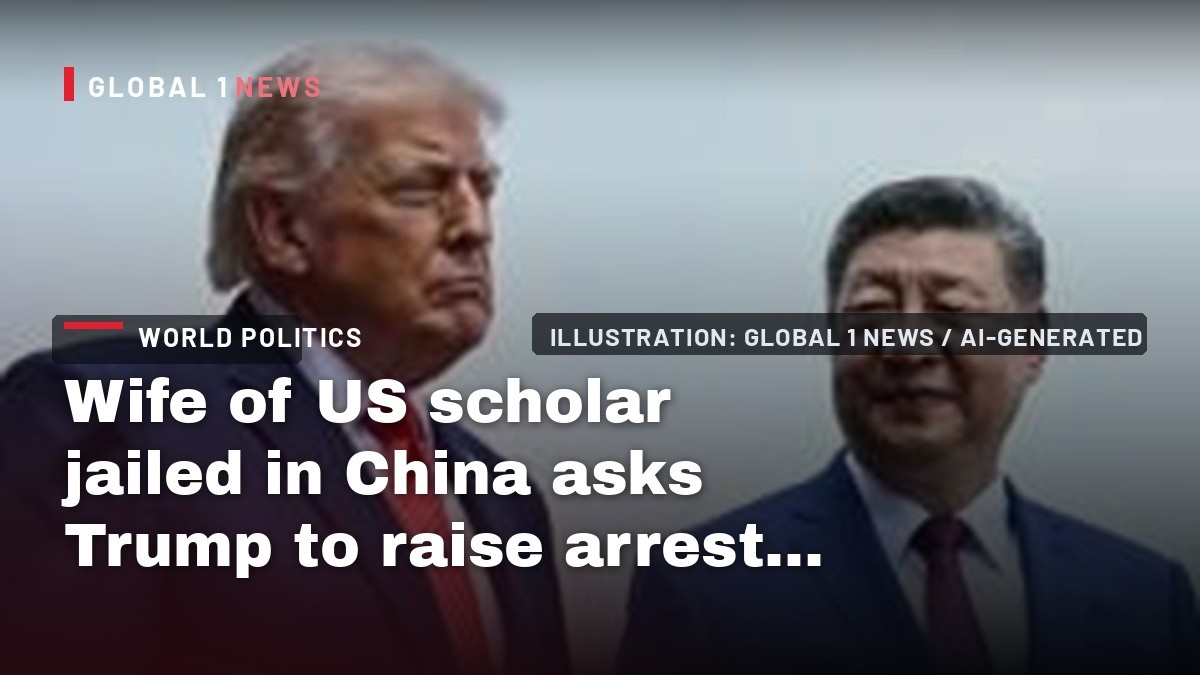
As President Donald Trump prepares to host Chinese President Xi Jinping at the White House next week, the diplomatic agenda is being punctuated by a growing chorus of American families pleading for the release of relatives detained in China. The case of U Min Zin—a Myanmar‑focused think‑tank director arrested in Kunming on June 3 on charges of spying and endangering national security—has become a focal point of this human‑rights dimension of the summit. Zin’s wife, Sylvia Zin, testified before the House Foreign Affairs Committee’s East Asia and Pacific Subcommittee, urging the president to raise her husband’s plight alongside broader concerns about China’s use of detention as a lever in international negotiations. The episode underscores how Beijing’s “long arm” of repression continues to shape the calculus of U.S.–China engagement, even as both leaders seek to manage competition in trade, technology, and regional security.
Geopolitical backdrop to the Trump‑Xi summit
The upcoming meeting marks the second high‑level encounter between Trump and Xi within a few months. Xi’s state visit to Washington follows his own hosting of Trump in Beijing in May, a sequence that reflects a mutual interest in stabilising a relationship strained by trade disputes, technology bans, and divergent visions for the Indo‑Pacific. Yet the summit arrives against a backdrop of heightened Beijing vigilance over foreign scholars and analysts whose work touches on China’s strategic interests. The arrest of U Min Zin, a director at the Myanmar Institute for Strategic and Policy Studies, exemplifies Beijing’s willingness to target individuals whose research “inconvenienced” the regime, according to remarks by Congresswoman Young Kim.
From a strategic perspective, the detention of scholars serves multiple purposes for the Chinese Communist Party. First, it signals to foreign researchers that sensitive topics—particularly those involving China’s role in neighboring states—are subject to strict scrutiny. Second, it creates a pool of leverage that can be deployed in diplomatic negotiations, as evidenced by the timing of Zin’s arrest just weeks before the Trump‑Xi summit. The pattern aligns with a broader Chinese practice of using “hostage diplomacy” to extract concessions or to deter perceived challenges to Beijing’s narrative.
Family advocacy and congressional action in Washington
In the days leading up to the summit, families of detained Americans converged on Capitol Hill, seeking to amplify their cases within the U.S. policy apparatus. Sylvia Zin’s appearance before the House Foreign Affairs Committee’s East Asia and Pacific Subcommittee was part of a hearing titled “Lives, Not Leverage: The Long Arm of China and North Korea’s Repression.” During her testimony, Zin expressed confidence that President Trump’s “historic record on bringing wrongfully detained Americans home” would translate into concrete action at the summit. She also invoked the case of Chen Youlin, a U.S. seismologist monitoring North Korean nuclear tests, who has been imprisoned for two years.
Congresswoman Young Kim opened the hearing with a stark warning: “If you travel to China, Beijing may take you hostage as leverage in diplomatic negotiation.” This framing positions the detainee issue not merely as a humanitarian concern but as a structural element of China’s coercive diplomacy. By linking the personal tragedies of families to the strategic calculus of U.S. foreign policy, the subcommittee sought to ensure that the summit agenda includes explicit discussion of wrongful detentions.
The profile of the detainees: scholars and scientists
U Min Zin’s background illustrates why his case resonates within both academic and policy circles. A former student activist during Myanmar’s 1988 pro‑democracy movement, Zin later founded the Myanmar Institute for Strategic and Policy Studies, a think tank that scrutinises China’s influence in Myanmar, including Beijing’s economic investments and security cooperation. His expertise places him at the intersection of two sensitive arenas: China’s regional ambitions and the political volatility of Myanmar. The Chinese authorities’ decision to charge him with espionage suggests an intent to deter similar research that could expose Beijing’s strategic calculations.
Chen Youlin, the other high‑profile detainee highlighted by Sylvia Zin, is a U.S. seismologist tasked with monitoring nuclear tests in North Korea. His prolonged detention—spanning two years—reflects Beijing’s broader pattern of holding individuals whose work touches on security‑sensitive topics. Both cases have been designated by the U.S. State Department as “wrongfully detained,” a label that triggers involvement of the Special Envoy for Hostage Affairs and elevates the diplomatic priority of securing their release.
Historical precedent: the Jin Mingri release
The Trump‑Xi dialogue is not the first instance where the U.S. president has leveraged a summit to negotiate the freedom of an American detainee. In a previous encounter, Trump pressed Xi for the release of underground church leader Jin Mingri, who was freed two months after the request. This precedent demonstrates that high‑level diplomatic engagements can produce tangible outcomes for detained Americans, reinforcing the families’ hopes that similar leverage will be applied to the current cases.
Nevertheless, the Jin Mingri episode also illustrates the contingent nature of such releases. While the Chinese authorities acquiesced, they framed the decision as a “billionaire testing China’s limits,” suggesting that the outcome was shaped by broader considerations of domestic control and international image. The lesson for Washington is that securing detainee releases often requires aligning the request with Beijing’s strategic interests or presenting it as a goodwill gesture that does not undermine the Party’s authority.
Implications for U.S.–China diplomatic dynamics
The convergence of the detainee issue with the Trump‑Xi summit has several strategic implications. First, it forces the United States to balance its broader agenda—trade, technology restrictions, and regional security—against the moral imperative of protecting its citizens abroad. By elevating the detainee cases within congressional hearings, U.S. lawmakers signal that any perceived acquiescence on other issues could be politically costly if it appears to neglect the welfare of Americans.
Second, the episode may influence Beijing’s negotiating posture. If the United States publicly ties progress on broader issues to the release of detainees, China could interpret this as an attempt to extract concessions, potentially hardening its stance on unrelated matters such as Taiwan or the South China Sea. Conversely, a discreet, behind‑the‑scenes resolution could preserve the façade of a cooperative bilateral relationship while still achieving humanitarian goals.
Strategic outlook for future engagements
Looking ahead, the handling of the Zin and Chen cases will likely shape the template for how wrongful detentions are addressed in future U.S.–China engagements. Should the Trump‑Xi summit produce a concrete commitment to release these individuals, it would reinforce the efficacy of high‑level diplomatic pressure and could encourage families to pursue similar avenues. A failure to secure releases, however, may embolden Beijing to continue leveraging detentions as a bargaining chip, especially as tensions over Taiwan, technology bans, and regional influence intensify.
For policymakers, the key will be to institutionalise mechanisms that reduce reliance on ad‑hoc diplomatic pleas. The designation of “wrongfully detained” by the State Department, coupled with the involvement of the Special Envoy for Hostage Affairs, provides a structural framework for advocacy. Strengthening consular access, expanding multilateral pressure through allies, and integrating detainee considerations into broader strategic dialogues could mitigate the human cost of geopolitical rivalry.
Conclusion: the human dimension of great‑power competition
The personal anguish expressed by Sylvia Zin—waiting monthly for consular visits, enduring long interrogations, and fearing for her husband’s health—embodies the human toll of Beijing’s coercive diplomacy. As President Trump prepares to meet President Xi, the summit will test not only the resilience of U.S.–China relations but also the United States’ commitment to safeguarding its citizens abroad. The outcome will reverberate beyond the individual cases, influencing how both powers navigate the delicate balance between strategic competition and humanitarian responsibility in an increasingly contested Indo‑Pacific order.
This article was produced with AI-assisted research and editorial support. Reporting is based on the source material cited below. Sources: BBC News China; bbc.co.uk; Global1.News (19 September 2026).
By Prof. Marcus Chen, Staff Writer
What's Your Reaction?
 Like
0
Like
0
 Dislike
0
Dislike
0
 Love
0
Love
0
 Funny
0
Funny
0
 Wow
0
Wow
0
 Sad
0
Sad
0
 Angry
0
Angry
0
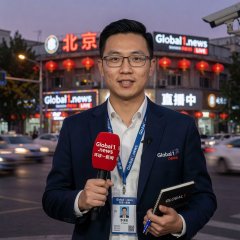
World Politics Analyst at Global1.News. Based in Beijing, covering US-China relations, global trade, and geopolitical strategy. Brings deep analytical perspective to the power dynamics shaping international affairs.












Comments (0)