
Valorem eyes data centers in Savonlinna and Kankaanpää, Finland
Valorem’s latest push into Finland’s data‑center frontier is another reminder that the energy‑to‑cloud pipeline is no longer a niche play. Why Valorem’s Finnish Foray Matters Valorem’s move is not a random footnote; it’s a strategic expansion that leverages its existing energy footprint.
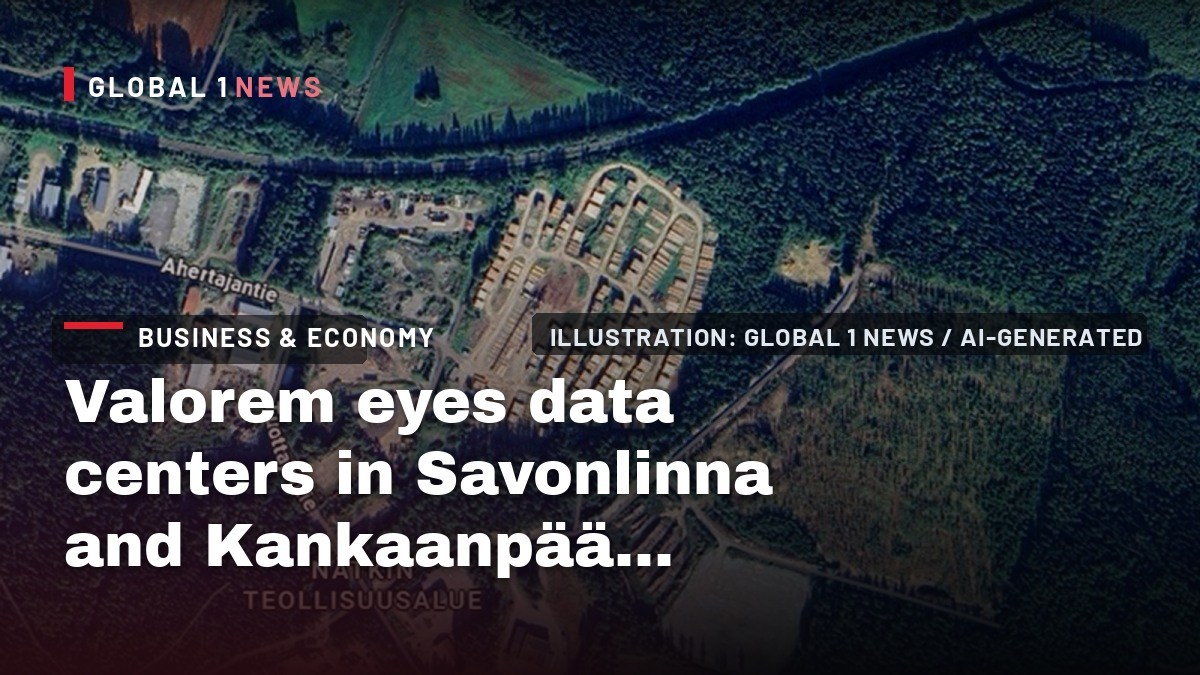
Valorem’s latest push into Finland’s data‑center frontier is another reminder that the energy‑to‑cloud pipeline is no longer a niche play. The French firm, already sitting on a hefty portfolio of wind, solar and hydro projects across Europe, is now lining up a 30‑50 MW data centre in Savonlinna with an eye on scaling to over 100 MW by 2032. For anyone running an independent hosting operation, the headline‑grabbing “green” angle masks a very real business‑risk calculus: can you afford to watch a big‑energy player turn its renewable assets into a data‑centre empire?
Why Valorem’s Finnish Foray Matters
Valorem’s move is not a random footnote; it’s a strategic expansion that leverages its existing energy footprint. The company already boasts about 1.5 GW of wind, solar and hydro capacity in Finland alone, and more than 8.5 GW across Europe. By pairing a data‑centre campus with its own renewable generation, Valorem can under‑price power for itself and potentially undercut rivals that must buy electricity on the open market.
For independent hosting providers, that creates a two‑fold risk. First, the cost advantage Valorem enjoys could force price wars that squeeze margins for smaller players. Second, the integration of waste‑heat into the local district‑heating network signals a level of municipal partnership that can be hard to replicate without similar energy assets. In short, Valorem is building a vertically integrated value chain that could tilt the competitive landscape in its favour.
The Savonlinna Site: Scale and Timing
The Savonlinna proposal is anchored on a 32‑hectare parcel in the Nätkin industrial area. The first phase is slated to deliver between 30 and 50 MW from 2028, with a roadmap to exceed 100 MW by 2032. Those numbers are modest compared with hyperscaler megasites, but they are significant for a regional market that has historically relied on smaller colocation outfits.
From a founder’s perspective, the timeline is crucial. A 2028 start‑up means a four‑year lead time for planning, permitting and construction. That window is ample for competitors to either pre‑emptively secure capacity elsewhere or double‑down on niche services that don’t compete on raw power. However, the fact that the city council is already reviewing a zoning amendment suggests Valorem has already cleared the political hurdle, which can be a major bottleneck for any new data‑centre project.
Energy Leverage: The Real Cost Driver
Valorem’s energy heft is the real headline. With 1.5 GW of Finnish projects already in the mix, the firm can feed its data centre with renewable power at a cost that most independent operators can’t match. The ability to tap into its own wind, solar or hydro generation means Valorem can offer power rates that are insulated from market volatility – a sweetener for customers chasing sustainability credentials.
For smaller hosting firms, the implication is clear: if you can’t match that power cost advantage, you need to differentiate elsewhere. That could mean focusing on ultra‑low latency, bespoke compliance regimes, or premium support. Relying on price competition alone against a vertically integrated player is a losing proposition.
Heat Reuse: A Double‑Edged Sword
The Savonlinna plan includes feeding waste heat into the local district‑heating network. It’s a clever sustainability hook that also builds goodwill with the municipality. From an operational standpoint, reusing heat can improve overall efficiency and potentially unlock subsidies or tax incentives tied to green initiatives.
But there’s a catch for independent providers. If a municipal utility starts to rely on data‑centre heat, it may become less willing to host competing facilities that don’t offer the same benefit. In other words, Valorem’s heat‑reuse strategy could lock in a preferential relationship with the city, making it harder for rivals to gain a foothold.
Geographic Spread: Beyond Savonlinna
Valorem isn’t stopping at Savonlinna. The firm is also eyeing a 60 MW data centre and solar‑plus‑storage campus on 55 hectares in Eurajoki, Western Finland. Additionally, there’s a project brewing in the Halme industrial area of Kankaanpää, though details remain scarce. This multi‑site approach spreads risk for Valorem and gives it a broader footprint to serve diverse Finnish markets.
For local hosting companies, the lesson is to watch not just the headline project but the broader rollout. A network of Valorem sites could create a de‑facto regional backbone, attracting customers who want a single provider for multiple locations. Independent operators will need to either specialize deeply or form alliances to stay relevant.
Regulatory and Municipal Dynamics
The zoning amendment for Savonlinna is moving to the city council by the end of September. That’s a relatively swift municipal process, indicating strong local support. In Finland, city councils have considerable sway over land use, and their backing can accelerate permitting, infrastructure hookups and community acceptance.
From a risk‑management angle, any independent provider looking to develop in the same region must factor in the political capital Valorem has already built. Securing similar municipal goodwill without a comparable energy portfolio will be an uphill battle, requiring either a compelling community benefit or a niche service that fills a gap Valorem isn’t addressing.
Actionable Takeaways for Independent Hosting Founders
First, double‑check your power cost model. If you’re buying electricity at market rates, Valorem’s integrated supply could undercut you on price alone. Consider locking in long‑term renewable PPAs or exploring on‑site generation to level the playing field.
Second, differentiate on service layers that a pure‑energy player can’t replicate. Think ultra‑low latency routes, bespoke compliance (e.g., financial‑sector data residency), or managed security services that add real value beyond raw compute.
Third, engage early with local municipalities. Valorem’s success hinges on zoning approvals and heat‑reuse agreements. If you can demonstrate community benefits—be it job creation, local tech education, or infrastructure upgrades—you may carve out a niche despite the energy giant’s presence.
Finally, keep an eye on the broader Valorem pipeline. Their Eurajoki and Kankaanpää projects will likely follow a similar model, creating a networked ecosystem that could attract larger enterprise customers. Independent providers should either partner with such ecosystems or double‑down on hyper‑specialized offerings that larger players can’t scale quickly.
In the end, Valorem’s Finnish push is a textbook case of an energy firm leveraging its core asset—power—to enter a data‑centre market. For founders running real hosting infrastructure, the message is simple: adapt or get squeezed out. Align your power strategy, sharpen your service differentiation, and lock in municipal allies before the next zoning amendment passes.
— Allan Ali, Founder
This article was produced with AI-assisted research and editorial support. Reporting is based on the source material cited below. Sources: Data Center Dynamics; datacenterdynamics.com; Global1.News (22 September 2026).
By Allan Ali, Global1.News
What's Your Reaction?
 Like
0
Like
0
 Dislike
0
Dislike
0
 Love
0
Love
0
 Funny
0
Funny
0
 Wow
0
Wow
0
 Sad
0
Sad
0
 Angry
0
Angry
0

Publisher of Global1.News. Automation architect, systems builder, and the guy making sure the truth gets published.















Comments (0)