
Haaretz: Saudi crown prince opposes Israeli involvement in war against Houthis
The disagreement underscores the delicate balance that Gulf states and Israel must maintain as the conflict in Yemen threatens to spill over into the Red Sea and broader maritime trade routes.
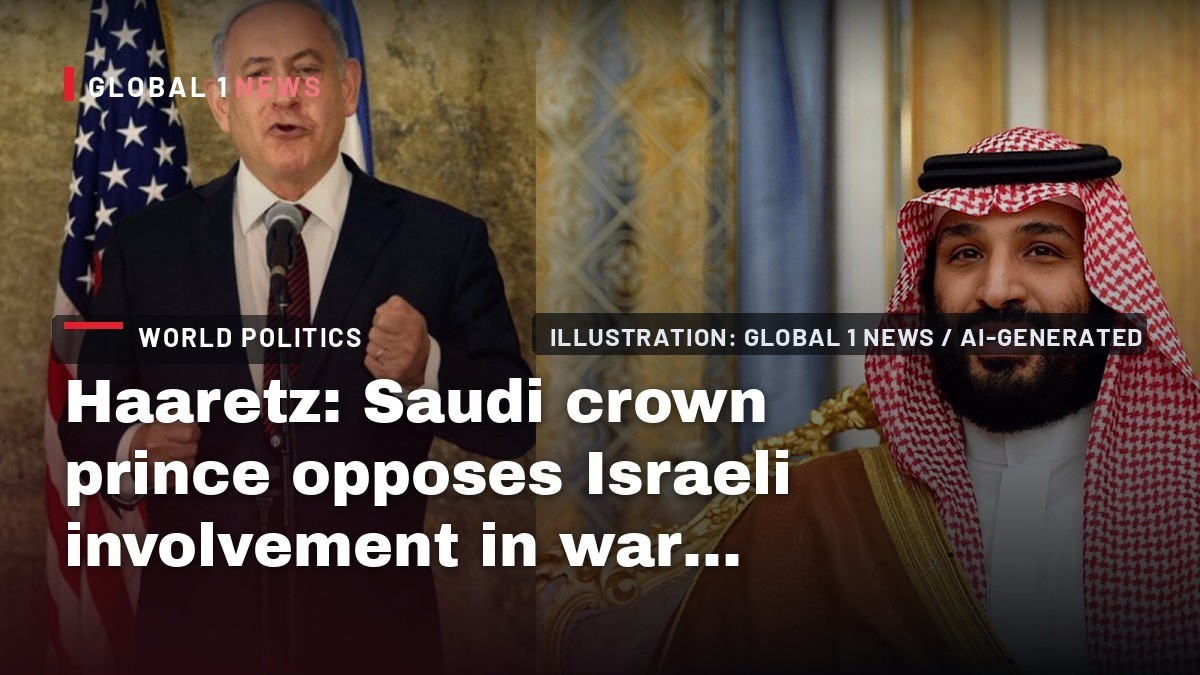
In a rare public clash between two of the region’s most powerful leaders, Saudi Crown Prince Mohammed bin Salman has reportedly rejected Israeli Prime Minister Benjamin Netanyahu’s push for direct Israeli participation in the war against Yemen’s Houthi rebels, according to a report in the Israeli daily Haaretz. The disagreement underscores the delicate balance that Gulf states and Israel must maintain as the conflict in Yemen threatens to spill over into the Red Sea and broader maritime trade routes. While the Saudis cite regional security concerns, Israel’s desire for a more assertive role reflects a broader strategic calculation about its place in Middle‑East security architecture.
Saudi Concerns Over Regional Escalation
Riyadh’s opposition, as described in the report, is rooted in apprehension that Israeli involvement could widen the war in Yemen and draw additional actors into the fray. The Crown Prince’s stance signals a cautionary approach to any escalation that might jeopardise the fragile security environment of the Red Sea, a vital artery for global commerce and for Saudi oil exports. By resisting Israel’s entry, Saudi Arabia aims to limit the risk of a broader confrontation that could involve Iran, Hezbollah and other regional militias.
These concerns are not merely geopolitical. The Saudi position reflects a sensitivity to the humanitarian toll of the Yemeni war, which has already inflicted massive civilian suffering. An expansion of hostilities could exacerbate the already dire conditions for millions of Yemenis, many of whom are dependent on aid that is hampered by ongoing blockades and air strikes.
Israel’s Strategic Calculus
Prime Minister Netanyahu’s push for direct Israeli military action against the Houthis, as reported, indicates a shift toward a more proactive security posture. Israeli officials have previously been advised to avoid leading the confrontation, favouring instead a coalition‑building approach that would share the burden of countering Houthi missile and drone attacks on maritime targets. Nonetheless, Netanyahu’s advocacy for involvement suggests a desire to assert Israel’s relevance in regional security discussions and to counter perceived Iranian influence.
From Israel’s perspective, participation could also serve to demonstrate its capability to protect its own maritime interests, especially as Houthi attacks have increasingly targeted shipping lanes that are vital for Israeli trade. Yet the report notes that the Crown Prince’s opposition does not stem from a denial of the Houthi threat’s seriousness, but rather from divergent views on the limits of Israel’s role.
Potential for Wider Conflict
The report warns that direct Israeli involvement could trigger further responses from Iran and Hezbollah, both of which have expressed solidarity with the Houthis. Such a development would risk turning a localized Yemeni conflict into a broader regional war, drawing in multiple state and non‑state actors. The possibility of Iranian retaliation, whether through proxy forces or direct attacks, raises the stakes for any escalation.
Hezbollah’s alignment with Iranian regional policy means that any perceived encroachment by Israel could prompt the Lebanese militia to open a new front, further destabilising an already volatile border region. The Crown Prince’s opposition, therefore, can be seen as an attempt to contain the conflict within Yemen’s borders and prevent a chain reaction that could engulf neighboring states.
Humanitarian Implications
Beyond the strategic calculations, the human cost of expanding the war cannot be overstated. Yemen’s civilian population continues to endure famine, disease and displacement. An intensification of hostilities, especially if it involves new aerial or naval components from Israel, could exacerbate the destruction of infrastructure, limit humanitarian access and increase civilian casualties.
International humanitarian law obliges all parties to distinguish between combatants and civilians and to take precautions to minimise civilian harm. The prospect of additional military actors raises concerns about adherence to these obligations, particularly in a conflict where air strikes have already caused significant civilian loss of life.
Diplomatic Maneuvering and Coalition Building
Previous Israeli media reports, cited in the article, suggest that military officials have recommended a coalition‑based strategy rather than unilateral Israeli action. This approach would involve regional and international partners sharing intelligence, surveillance and, potentially, operational responsibilities. Such a coalition could mitigate the risk of unilateral escalation while still addressing the Houthi threat to shipping.
Saudi Arabia’s stance, while opposing direct Israeli participation, does not preclude cooperation within a broader coalition framework. Riyadh’s emphasis on “various scenarios” in response to Houthi attacks indicates a willingness to engage in coordinated defense measures, provided they align with Saudi security calculations and do not provoke further regional destabilisation.
Implications for Future Israeli‑Saudi Relations
The public disagreement highlights the complexities of the emerging, albeit tentative, rapprochement between Israel and Saudi Arabia. While both nations share concerns about Iranian influence, their divergent approaches to the Yemeni conflict reveal limits to their convergence. The Crown Prince’s opposition may signal a broader caution within Saudi policy circles about over‑committing to actions that could jeopardise Riyadh’s regional standing.
Nevertheless, the fact that the disagreement is being aired through media channels rather than behind closed doors suggests a degree of transparency in the diplomatic dialogue. This openness could allow both sides to negotiate a compromise that balances Israel’s security interests with Saudi Arabia’s regional stability concerns, possibly through a coordinated, multilateral response to Houthi aggression.
International Law and the Red Sea Security Landscape
The Red Sea’s status as an international waterway imposes obligations under international law to ensure the safety of navigation and the protection of civilian vessels. Any escalation that involves new military actors must respect these norms, including the principle of proportionality and the duty to avoid unnecessary harm to civilian shipping.
As the Crown Prince and the Israeli prime minister grapple with their respective security imperatives, the international community will be watching closely to see how the conflict’s expansion is managed. The outcome of this disagreement will shape not only the immediate security of the Red Sea but also the broader legal and humanitarian framework governing regional conflicts.
This article was produced with AI-assisted research and editorial support. Reporting is based on the source material cited below. Sources: Middle East Monitor; middleeastmonitor.com; Global1.News (13 October 2026).
By Fatima Al-Rashid, Staff Writer
What's Your Reaction?
 Like
0
Like
0
 Dislike
0
Dislike
0
 Love
0
Love
0
 Funny
0
Funny
0
 Wow
0
Wow
0
 Sad
0
Sad
0
 Angry
0
Angry
0

Gulf/MENA Correspondent at Global1.News. Based in Doha, covering Gulf politics, energy markets, diplomacy, and development across the Middle East and North Africa. Tracks the economic transformation of the Gulf states.












Comments (0)