
Anutin joins Bhutan’s Project 108 ceremony as sole foreign leader invitee
Prime Minister Anutin Charnvirakul arrived in the southern Bhutanese town of Gelephu on the morning of 1 November 2026, becoming the sole foreign leader invited to the opening ceremony of the kingdom’s ambitious Project 108.
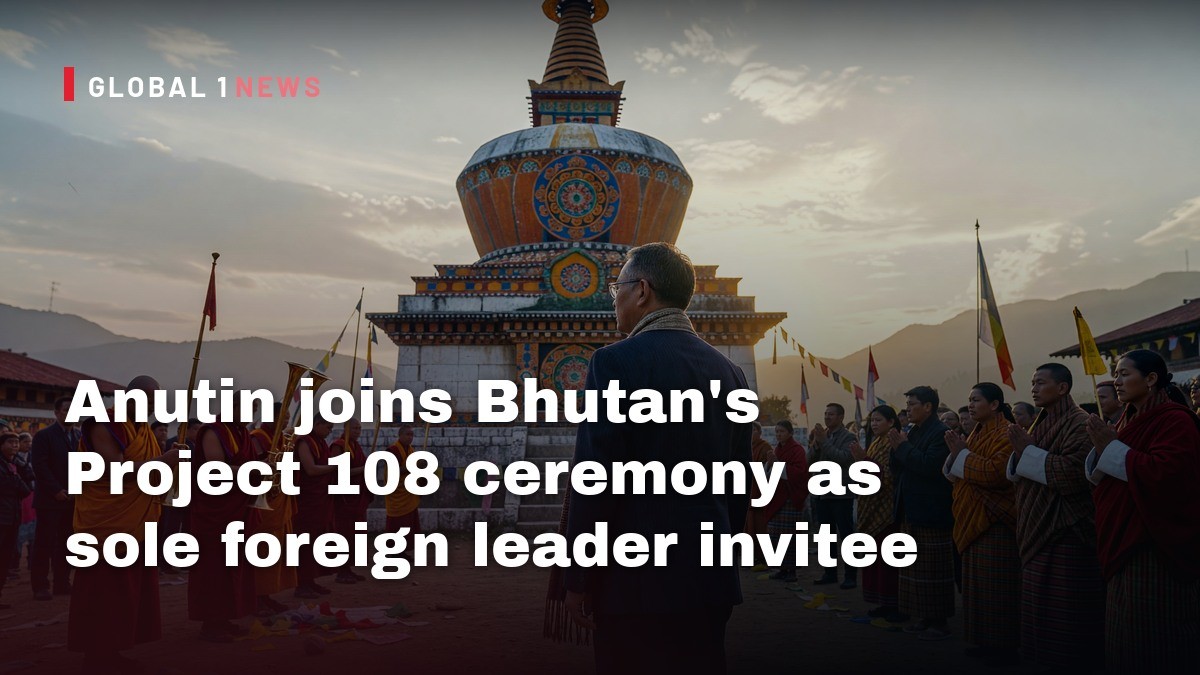
Prime Minister Anutin Charnvirakul arrived in the southern Bhutanese town of Gelephu on the morning of 1 November 2026, becoming the sole foreign leader invited to the opening ceremony of the kingdom’s ambitious Project 108. Accompanied by his wife and a Thai delegation, he stepped off the plane at 09:00 local time (08:00 Thailand time) and was greeted by Bhutan’s own Prime Minister Tshering Tobgay along with senior ministers and the governor of the newly‑planned Gelephu Mindfulness City. The warm welcome underscored the deepening friendship between Thailand and Bhutan, a bond rooted in shared Buddhist values and a mutual interest in people‑centred development.
Project 108: A Royal Vision of Enlightenment
Project 108 is a royal initiative launched by Bhutan’s fifth king, Jigme Khesar Namgyel Wangchuck, to erect 108 Jangchub Chortens—Stupas of Enlightenment—along the banks of the Mao Chhu River near Gelephu. Each stupa is designed to rise about 15 metres, spaced 108 metres apart, creating a rhythmic line of sacred architecture that mirrors the Buddhist concept of the 108 defilements to be overcome on the path to enlightenment. The scale of the undertaking reflects the king’s desire to weave spiritual symbolism into the physical landscape, a practice that resonates with Thai traditions of integrating religious monuments into everyday life.
The ceremony marked the first step in a massive coordinated effort: volunteers from across Bhutan are expected to raise all 108 stupas simultaneously within a 24‑hour window. More than 40,000 volunteers are slated to take part, a testament to the collective spirit that both Bhutan and Thailand cherish. For Thailand, observing this massive communal act offers a living illustration of the Buddhist principle of “sangha” – the supportive community that sustains spiritual practice.
Gelephu Mindfulness City: A Model for Sustainable Urban Growth
The site of Project 108 lies within the Gelephu Mindfulness City (GMC), a special administrative region being shaped as a new model city. The GMC’s guiding pillars—well‑being, sustainability, nature, and economic growth—echo Thailand’s own “sufficiency economy” philosophy championed by the late King Bhumibol Adulyadej. Government spokesperson Aekkapop Pienprasert highlighted that Anutin’s visit was not merely ceremonial; it offered Thailand a chance to exchange ideas on building cities that prioritize people over profit.
In the GMC, the stupas will serve both as spiritual landmarks and as anchors for green infrastructure. The emphasis on nature and sustainability aligns with Thailand’s ongoing efforts to integrate Buddhist mindfulness into urban planning, such as the recent development of “green corridors” in Bangkok. Observing Bhutan’s approach may inspire Thai policymakers to deepen the integration of ecological stewardship and spiritual well‑being in future projects.
The Symbolic Timing of the Ceremony
The opening ceremony was deliberately held on 1 November, a date that carries layered significance in Bhutanese culture. It coincided with Lhabab Düchen, an important day in Vajrayana Buddhism that commemorates the Buddha’s descent from the heavenly realm back to earth. The same day also marks the anniversary of King Jigme Khesar’s coronation, intertwining the religious and monarchical narratives that underpin Bhutan’s national identity.
For Thai observers, the alignment of the ceremony with Lhabab Düchen offers a poignant reminder of the shared Buddhist calendar that binds the region’s spiritual life. The day’s rituals—sounding of dungchen (long horns) and the singing of the national anthem—provided a vivid tableau of Bhutan’s reverence for tradition, a sentiment that Thai Buddhists find familiar in their own ceremonial practices.
Diplomatic Warmth Between Thailand and Bhutan
Anutin’s presence, as the only foreign leader invited, signaled Bhutan’s confidence in its relationship with Thailand. The warm reception by Prime Minister Tshering Tobgay and senior ministers, including Interior Minister Lyonpo Lungten Dorji and Foreign Minister Lyonpo D.N. Dhungyel, reflected a mutual respect cultivated over years of bilateral cooperation in tourism, cultural exchange, and environmental stewardship.
Both nations have long shared a commitment to Buddhist values in governance. Thailand’s recent emphasis on “mindful governance” under Prime Minister Anutin’s interior portfolio finds a natural counterpart in Bhutan’s Gross National Happiness framework. The visit thus reinforced a diplomatic dialogue that goes beyond trade numbers, focusing instead on shared ethical foundations.
Royal Presence and Traditional Ceremonial Elements
Later in the morning, King Jigme Khesar Namgyel Wangchuck and Queen Jetsun Pema arrived at the ceremony venue, underscoring the royal patronage that fuels Project 108. Their presence added gravitas to the event, as the Bhutanese monarchy traditionally embodies the nation’s spiritual and cultural aspirations.
The ceremony featured the resonant blast of dungchen, long horns whose deep tones echo across the valleys, marking the symbolic commencement of the stupas’ construction. Following the horn calls, participants sang the national anthem, weaving together patriotic and spiritual devotion. Such rituals resonate with Thai ceremonial customs, where royal and religious symbolism often intersect, reinforcing the cultural bridge between the two kingdoms.
Future Collaboration and Shared Visions
After the formal proceedings, Anutin, his wife, and a small Thai delegation met privately with the King and Queen. The audience, though brief, provided a forum to discuss how Thailand might contribute to the Gelephu Mindfulness City’s development. Topics likely included sustainable urban design, community participation models, and the integration of mindfulness practices into public services—areas where Thailand has accumulated experience through its own “mindful” initiatives.
Returning to Thailand later that evening, the Thai delegation was expected to arrive around 20:00, carrying back not only souvenirs but also insights that could inform future Thai‑Bhutanese projects. The visit exemplifies a growing regional trend where neighboring countries look to each other for inspiration on how to blend development with spiritual well‑being, a hallmark of Southeast Asian approaches to modernity.
Implications for the Region’s Buddhist Heritage
Project 108, set against the backdrop of Lhabab Düchen and the king’s coronation anniversary, stands as a vivid illustration of how Buddhist heritage can shape contemporary nation‑building. For Thailand, the ceremony offered a living case study of how sacred architecture can anchor large‑scale urban initiatives, reinforcing the notion that development need not be divorced from spiritual values.
As Southeast Asia navigates rapid economic change, the Bhutan‑Thailand exchange underscores a shared aspiration: to craft cities and societies that honor the inner life of their citizens as much as their material prosperity. The Gelephu Mindfulness City, with its 108 towering stupas, may soon become a pilgrimage site for those seeking inspiration on how to harmonize progress with mindfulness—a lesson that Thai planners and citizens alike will likely carry forward.
This article was produced with AI-assisted research and editorial support. Reporting is based on the source material cited below. Sources: Khaosod English; khaosodenglish.com; Global1.News (01 November 2026).
By Ann Srisawat, Staff Writer
What's Your Reaction?
 Like
0
 Dislike
0
 Love
0
 Funny
0
 Wow
0
 Sad
0
 Angry
0

Southeast Asia Correspondent at Global1.News. Based in Bangkok, covering Thai and Southeast Asian politics, economy, technology, and culture. Deep regional perspective on one of the world's most dynamic regions.











Comments (0)