
Trump's favorite 2026 campaign target is Biden: nearly 900 mentions and counting
US President Donald Trump has turned former President Joe Biden into a recurring talking point, mentioning his predecessor almost 900 times this year, according to a Reuters review of speeches, interviews and Truth Social posts.
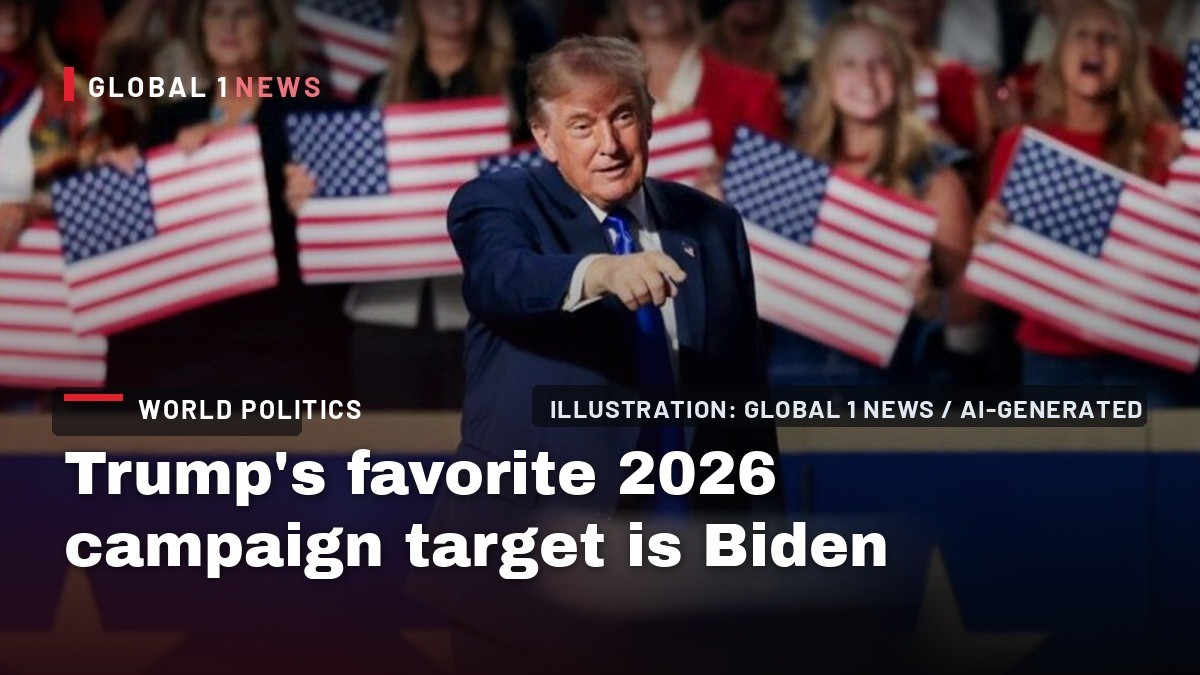
US President Donald Trump has turned former President Joe Biden into a recurring talking point, mentioning his predecessor almost 900 times this year, according to a Reuters review of speeches, interviews and Truth Social posts. The sheer volume of references—averaging three mentions per day—underscores a strategic effort to keep the public focus on perceived failures of the Biden administration as Republicans scramble to protect a fragile majority in Congress ahead of the November 3 midterm elections.
Scale and Timing of the Biden References
The Reuters analysis counted at least 890 Biden mentions since January 1, 2026, spanning roughly 200 public events and interviews and about 190 posts on Trump’s Truth Social platform. The frequency rose sharply during high‑profile moments, such as the Republican midterm convention in Dallas on September 9, where Trump explicitly blamed “four years of disaster, bedlam and death” on Biden, and the July NATO summit in Turkey, where he set a personal record of 16 mentions in a single day.
These numbers illustrate a deliberate pattern: Trump repeatedly inserts Biden into discussions on the economy, immigration and foreign policy, the three issue clusters where he has invoked the former president most often—210, 168 and 138 times respectively. The persistence of this tactic, even as Trump’s own approval ratings have slipped and the war with Iran drags on, points to a calculated reliance on a single political foil to deflect scrutiny from his administration’s challenges.
Economic Blame‑Shifting
Economic concerns dominate Trump’s discourse on Biden. He has linked the former president to rising housing costs, a shortage of military munitions and the perceived decline of the steel industry. In a recent Truth Social post, Trump asserted that “price increases throughout America were caused by Sleepy Joe Biden and the Biden Administration, not by ‘TRUMP’.” This framing aligns with his broader narrative that the United States is stronger under his leadership, despite public opinion polls suggesting that many Americans still hold him responsible for high living costs.
Historical context is invoked to bolster the claim: inflation peaked at more than 9 % during Biden’s tenure, a figure the article attributes in part to pandemic‑related supply‑chain disruptions, the Russian invasion of Ukraine and expansive fiscal stimulus. Trump’s own record shows a lower average inflation rate since he took office—2.94 % per month versus 4.95 % under Biden—yet recent data indicated a 3.4 % rate in the last month, prompting Trump to double‑down on blaming his predecessor rather than addressing the underlying drivers of price pressure.
Immigration as a Recurrent Battleground
Immigration emerges as the second most frequent arena for Biden attacks, with 168 references. Trump has repeatedly cast Biden’s border policies as the root cause of what he describes as “record levels of illegal immigration.” The narrative intensified after a January incident in Minnesota, where federal agents killed two American citizens protesting at the border. Trump seized on the episode, accusing Biden’s “open border policies” of fueling the unrest.
Even within the White House, Trump’s preoccupation with the border has drawn internal pushback. He recounted in August that advisers urged him to move beyond the topic, noting that his speechwriters warned, “Nobody wants to hear about the border anymore. You’ve done it.” Nonetheless, Trump persisted, emphasizing that “Biden couldn’t do it,” thereby reinforcing a contrast between his own tough‑on‑immigration stance and what he portrays as Biden’s leniency.
Foreign Policy and the Iran Conflict
Trump’s references to Biden in the realm of foreign policy number 138, with at least 37 mentions directly tied to the ongoing war with Iran. He accuses Biden of failing to be aggressive enough toward Tehran and of “creating a monster with Iran” through the 2015 nuclear deal negotiated under President Obama, in which Biden served as vice president. This rhetoric mirrors Trump’s broader shift toward a more confrontational posture against Iran, a stance that has evolved over the past seven months of the conflict.
During the July NATO summit, Trump linked Biden to a shortage of military munitions, suggesting that the former administration’s policies contributed to logistical shortfalls now affecting the war effort. By framing the Iran conflict as a continuation of Biden’s perceived shortcomings, Trump seeks to portray his own administration as the decisive force confronting Tehran, even as the war drags on without a clear resolution.
Political Strategy Behind the Obsession
Republican strategists acknowledge that Trump’s relentless focus on Biden serves a tactical purpose. Ryan Williams, a GOP strategist, described the former president as a “foil” that simplifies the political narrative, allowing Trump to “deflect any problems he’s currently facing.” Veteran strategist Charlie Black warned that such backward‑looking blame‑shifting is risky for an incumbent, emphasizing that “politics is always about the future and never about the past.”
The strategy also resonates with Trump’s base. At the Dallas midterm convention, supporters expressed the belief that Biden was responsible for inflation, despite polling that suggests Trump himself draws more ire over the issue. By repeatedly naming Biden, Trump reinforces a clear, if simplistic, causal chain that aligns with his supporters’ expectations and distracts from policy details that might otherwise dominate the conversation.
Reactions from the Biden Camp and Former Officials
The Biden camp has largely refrained from direct engagement. T.J. Ducklo, a spokesman for President Biden, declined comment, while former senior Biden official Meghan Hays labeled Trump’s focus an “obsession,” arguing that the former president has not moved beyond “re‑litigating 2020.” Hays contended that the sheer volume of mentions—“nine hundred mentions in less than a year”—signals a preoccupation with personal rivalry rather than governance.
White House spokeswoman Olivia Wales defended Trump’s approach, framing it as a necessary effort to “clean up his mess” and strengthen the United States. This official endorsement reflects a broader pattern in American politics where incumbents often cast their predecessors as scapegoats to rally their base, even when the incumbent faces mounting criticism on the same issues.
Implications for the Midterm Election Landscape
As the midterm elections approach, Trump’s Biden‑centric rhetoric is likely to shape Republican messaging nationwide. By anchoring campaign talks around a single, familiar adversary, the GOP can present a unified narrative that contrasts its current agenda with the alleged failures of the previous administration. However, the strategy carries inherent risks: overreliance on a personal target may alienate swing voters who seek concrete policy proposals rather than perpetual blame‑games.
Moreover, the data suggests that public sentiment on key issues such as inflation and immigration remains mixed. While some Trump supporters attribute high prices to Biden, broader polling indicates that Trump himself remains the primary source of voter dissatisfaction on economic matters. If the electorate prioritizes tangible outcomes over partisan rhetoric, the GOP’s emphasis on Biden could backfire, especially in districts where economic pressures are acutely felt.
In sum, the near‑900 mentions of Joe Biden in 2026 reveal more than a personal vendetta; they expose a calculated political calculus aimed at shaping the narrative ahead of a pivotal midterm election. Whether this approach will translate into electoral gains remains uncertain, but it undeniably underscores how former presidents continue to serve as potent symbols in America’s ever‑evolving political theater.
This article was produced with AI-assisted research and editorial support. Reporting is based on the source material cited below. Sources: Al-Monitor; al-monitor.com; Global1.News (21 September 2026).
By Hannah Berg, Staff Writer
What's Your Reaction?
 Like
0
Like
0
 Dislike
0
Dislike
0
 Love
0
Love
0
 Funny
0
Funny
0
 Wow
0
Wow
0
 Sad
0
Sad
0
 Angry
0
Angry
0

Israel Correspondent at Global1.News. Based in Tel Aviv, covering Israeli politics, security, technology, and society. Provides balanced, deeply-sourced reporting on one of the most closely-watched regions in the world.














Comments (0)