
Trump’s Drill Reduction Gambit: The Unraveling of a 70-Year Alliance and China’s Quiet Vantage Point
President Trump has ordered the Pentagon to substantially reduce joint military exercises with South Korea, citing his relationship with Kim Jong Un and Seoul's refusal to join US action on Iran. A strategic analysis of the fallout for Northeast Asia, North Korea's leverage, and China's opening.
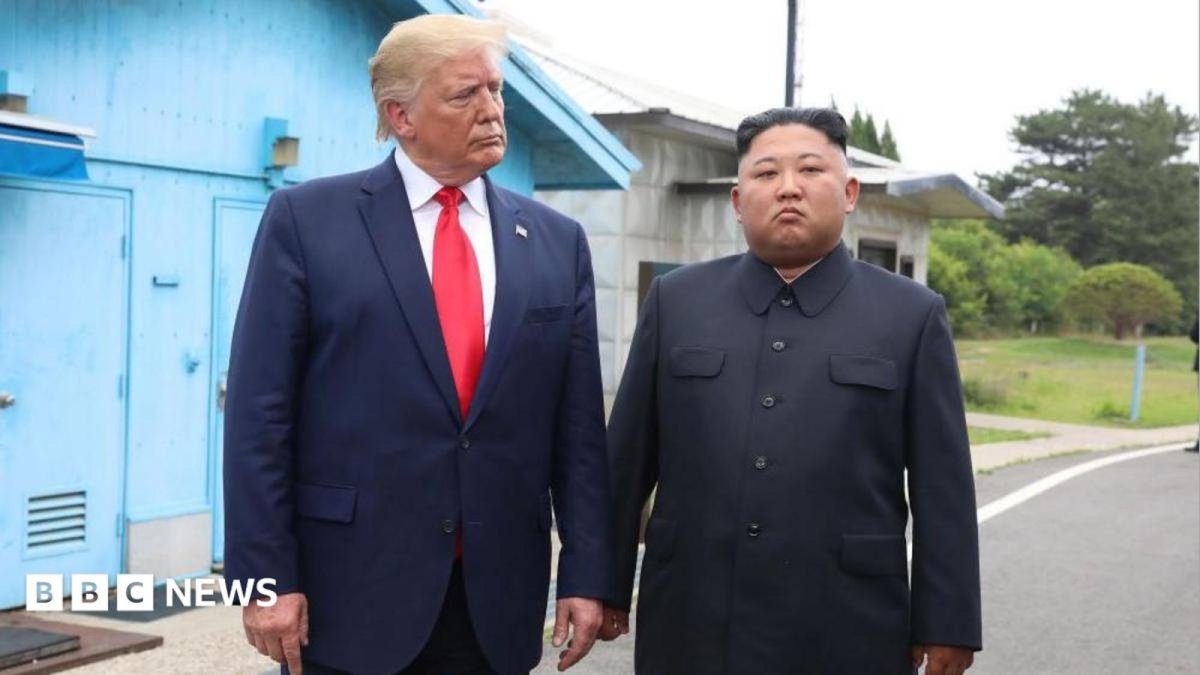
The announcement by former President Donald Trump on August 16, 2026, that he has ordered the Pentagon to "substantially reduce" joint military exercises with South Korea represents more than a transactional grievance with an ally. It signals a potential tectonic shift in the security architecture of Northeast Asia—a region where the United States has maintained a forward-deployed military presence for over seven decades. By linking the fate of the Ulchi Freedom Shield drills to Seoul’s refusal to participate in Washington’s military campaign against Iran, Trump has effectively weaponized the alliance’s most visible symbol of deterrence. For Beijing, which has long viewed the US-ROK alliance as a containment mechanism, this development offers a strategic opening, even as it complicates the delicate balance of power on the Korean Peninsula.
North Korea has emerged from its involvement in the Ukraine war with hardened troops and new tactical knowledge, while South Korea’s president, Lee Jae Myung, pursues a peace initiative that Pyongyang has publicly ridiculed. The confluence of these factors—a disgruntled American patron, a battle-hardened northern adversary, and a southern capital seeking diplomatic agency—creates a volatile cocktail with profound implications for China’s position in the region.
The Announcement: A Presidential Edict and a Ministry’s Pushback
In a series of posts on Truth Social on Sunday, August 16, 2026, President Trump declared that the United States would "substantially reduce" its participation in joint exercises with South Korea. Citing his "very good relationship" with North Korean leader Kim Jong Un, Trump framed the drills as both financially burdensome and diplomatically provocative. "These exercises are not only costly, with much of these costs paid for by the United States of America (as usual!), but send a signal that is totally inappropriate and hostile," he wrote. He further noted that North Korea "has been unthreatening and respectful" during his tenure, a characterization that stands in stark contrast to Pyongyang’s recent ballistic missile tests, which were banned by the United Nations.
The president’s directive to Secretary of Defense Pete Hegseth is an order to scale back, not a cancellation—Trump acknowledged it was "too late to cancel" the annual drills, which are scheduled to run for 11 days from August 17 to 27. The response from Seoul was immediate and firm. South Korea’s Ministry of Defence stated that the exercises would "proceed as previously notified and scheduled," indicating a clear divergence between Washington’s political messaging and operational reality. This bureaucratic friction underscores the limits of presidential fiat when confronted with entrenched alliance protocols.
The Iran Connection: Leverage, Frustration, and the Price of Abstention
Embedded within Trump’s announcement was a pointed reference to Seoul’s refusal to join the US-led "denuclearisation" of Iran. "While somewhat unrelated (?), I recently asked the President of South Korea if they would like to join us in the Denuclearization of the Islamic Republic of Iran, and they said, 'No thanks!'" Trump wrote. The rhetorical linkage is a classic Trumpian negotiating tactic: conflating disparate issues to extract concessions. It reveals a deeper strategic frustration—Washington is engaged in hostilities with Iran and has pressed allies for direct military or logistical support, only to be rebuffed by key partners including Japan, France, and the UK, in addition to South Korea.
By tying the reduction of drills to Seoul’s abstention, Trump is signaling that alliance benefits are conditional on loyalty to American global priorities. This transactional approach undermines the foundational principle of extended deterrence—the notion that the US nuclear umbrella is unconditional. For South Korea, the message is clear: failure to align with Washington’s broader geopolitical agenda carries tangible security costs. This linkage also provides Beijing with a narrative tool, allowing China to portray the US as an unreliable patron that prioritizes its own Middle East entanglements over the security of its Asian allies.
North Korea’s Response: Defiance and the "Nuclear Alliance" Accusation
Pyongyang’s reaction to the scheduled drills was predictably hostile, even before Trump’s announcement. On Friday, August 14, a spokesperson for North Korea’s Ministry of Foreign Affairs condemned US-Japan-South Korea military cooperation as a "nuclear alliance" and warned that Pyongyang "will respond to a new level of threat with a new level of deterrent." This rhetoric was accompanied by action: North Korea conducted ballistic missile tests this month, with the second test detected by South Korea, the US, and Japan on Friday. These launches, banned by UN Security Council resolutions, underscore Pyongyang’s continued commitment to expanding its nuclear and missile programs.
Adding to the diplomatic friction, Kim Yo Jong, the powerful sister of North Korean leader Kim Jong Un, delivered a blistering rejection of President Lee Jae Myung’s peace overtures on August 14. She dismissed his proposal for talks to officially end the 1950-53 Korean War as a "shabby, deceptive farce" and a "pipe dream," declaring that South Korea "cannot be a diplomatic partner" of the North. This dual-track response—military provocation and diplomatic dismissal—suggests Pyongyang sees little value in engaging with Seoul, preferring instead to deal directly with Washington. Trump’s recent posting of an old photograph with Kim, accompanied by a message about their "great friendship," may be an attempt to revive that direct channel, but the collapse of the 2019 Hanoi summit and subsequent nuclear expansion suggest a deep well of mistrust.
Ulchi Freedom Shield: The Exercise Under Fire
The Ulchi Freedom Shield (UFS) is one of two major annual exercises conducted by the US and South Korea, combining command-post simulations with field training that includes live, virtual, constructive, and field-based components. This year’s iteration, involving 18,000 South Korean soldiers, is designed to prepare for defence against the nuclear-armed North. The drills are expected to include operations to counter drones, disrupt GPS signals, and counter cyberattacks, reflecting an adaptation to North Korea’s evolving capabilities. These are not mere ceremonial maneuvers; they are the practical embodiment of the US-ROK mutual defence treaty, in place since 1953, and the two militaries have held joint exercises for more than 70 years, since 1955.
The exercises have been a recurring point of contention. In 2018, Trump suspended them entirely during denuclearisation negotiations with Kim, and they were scaled back in 2020 due to the Covid-19 pandemic. Each suspension has been met with concern from South Korean military officials and regional analysts, who argue the drills are essential for maintaining readiness and interoperability. US military spokesperson Ryan Donald acknowledged the ongoing threat, stating that "our training accounts for that threat," a reference to North Korean soldiers returning from the battlefield in Ukraine. With approximately 28,500 American military personnel stationed in South Korea, the credibility of the alliance hinges on the regularity and intensity of these joint exercises.
The Ukraine War Dimension: Battle-Hardened Troops and New Tactics
A critical, often underappreciated factor in this calculus is the transformation of North Korea’s military capabilities through its involvement in Russia’s war on Ukraine. US military officials have warned that North Korean troops deployed to aid Russian forces are learning new battlefield tactics, particularly in the domains of drones and electronic warfare. This is a qualitative leap for a military that has traditionally relied on massed artillery and asymmetric threats. The integration of these lessons into North Korea’s training and doctrine could significantly alter the balance of power on the peninsula.
For South Korea, this is a daunting prospect: an adversary that is not only nuclear-armed but also combat-experienced and tactically modernized. The reduction of joint exercises therefore comes at the worst possible time—the UFS drills were specifically designed to counter these evolving threats, including drone swarms and GPS jamming. By ordering a reduction, Trump is effectively asking Seoul to face a more capable adversary with less preparation. This dimension adds urgency to the strategic debate, as the credibility of US extended deterrence is not merely a matter of political will but of tangible military readiness.
Historical Precedent: The 2018 Suspension and Its Aftermath
Trump’s current actions are not without precedent. During his first term, he met Kim Jong Un three times, including the historic 2018 summit in Singapore, after which he called the military drills "expensive" and "provocative." He subsequently suspended them entirely, a decision hailed by Pyongyang but criticized by many US and South Korean officials as a concession without commensurate returns. The suspension was extended in 2020 due to the pandemic, but the underlying strategic logic remained contested. The collapse of the 2019 Hanoi summit, where negotiations broke down over the scope of denuclearisation and sanctions relief, marked the end of this high-profile diplomacy. Trump also became the first sitting US president to set foot in North Korea, visiting in 2019.
Since then, Pyongyang has accelerated its nuclear and missile programs, viewing the diplomatic interlude as a failure. The current situation echoes 2018, but with a critical difference: North Korea is now a more formidable military power, and the US is distracted by a war with Iran. Trump’s decision to reduce drills is therefore not a bold peace initiative but a strategic retrenchment driven by competing priorities. The historical record suggests such unilateral concessions rarely yield lasting diplomatic breakthroughs—they often embolden the adversary while alienating the ally.
China’s Strategic Stake: A Window of Opportunity
For Beijing, the US-ROK alliance has long been a primary obstacle to its regional ambitions. The presence of American troops and the regular conduct of joint exercises are seen as a containment mechanism aimed at China. A reduction in these drills, even if temporary, offers China a strategic opening. It weakens the credibility of US extended deterrence, potentially pushing South Korea to seek a more balanced foreign policy that includes closer ties with Beijing. This aligns with China’s broader objective of promoting a "multi-polar" Asia, where no single power dominates the security architecture.
However, China’s calculus is not straightforward. A weakened US-ROK alliance could embolden North Korea, leading to increased instability on China’s border. Beijing has historically valued a stable, if tense, status quo on the peninsula, as it prevents both a US-backed unification and a North Korean collapse. The current situation, where Pyongyang is aligned with Moscow and battle-hardened from Ukraine, presents both opportunities and risks for China. On one hand, a more assertive North Korea can serve as a strategic counterweight to US influence. On the other, it could drag China into a conflict it does not want. Beijing’s response will likely be cautious, seeking to exploit the alliance rift without triggering a broader conflagration.
Strategic Implications: The Credibility of Extended Deterrence
The reduction of joint exercises, if implemented, would have profound implications for the credibility of US extended deterrence in Northeast Asia. Analysts note that the drills are not merely about military readiness; they are a political signal of commitment. A reduction, even a "substantial" one, sends a message to both allies and adversaries that the US is unwilling to bear the costs of its security guarantees. This could prompt South Korea to accelerate its own nuclear weapons program, a move that would be deeply destabilizing and would likely trigger a regional arms race involving Japan.
For the wider Indo-Pacific, the implications are equally significant. Japan, a key partner in trilateral military cooperation with the US and South Korea, will be watching closely. A reduction in US commitment to Seoul could undermine confidence in Washington’s broader regional posture, including its commitments to Taiwan and the Philippines. The second-order effects for ASEAN and the Global South are also notable: a perception of US unreliability could push these states closer to China, reshaping the regional order in Beijing’s favor. The coming weeks will be critical in determining whether Trump’s order is a negotiating tactic or a genuine strategic shift. For now, the drills are scheduled to proceed, but the political foundation on which they rest has been profoundly shaken.
This article was produced with AI-assisted research and editorial support. Sources: BBC News, Al Jazeera, Reuters, The Guardian.
By Prof. Marcus Chen, Staff WriterWhat's Your Reaction?
 Like
0
Like
0
 Dislike
0
Dislike
0
 Love
0
Love
0
 Funny
0
Funny
0
 Wow
0
Wow
0
 Sad
0
Sad
0
 Angry
0
Angry
0

World Politics Analyst at Global1.News. Based in Beijing, covering US-China relations, global trade, and geopolitical strategy. Brings deep analytical perspective to the power dynamics shaping international affairs.














Comments (0)