
Türkiye revokes license of Iranian Bank Mellat
Turkey’s recent decision to withdraw the operating licence of Iran’s Bank Mellat marks a noteworthy escalation in the financial front of the broader geopolitical tug‑of‑war between Tehran and the West.
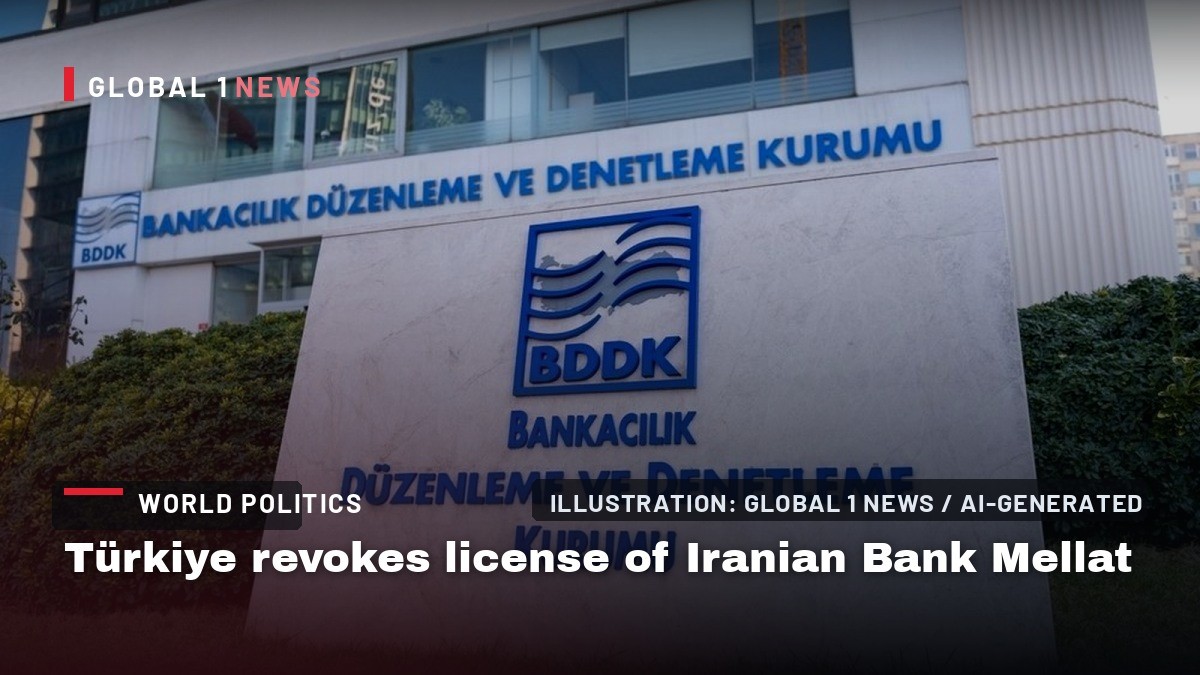
Turkey’s recent decision to withdraw the operating licence of Iran’s Bank Mellat marks a noteworthy escalation in the financial front of the broader geopolitical tug‑of‑war between Tehran and the West. The move, announced in the Official Gazette on Saturday, follows a pattern of tightening regulatory scrutiny on Iranian‑linked institutions across the region, reflecting Ankara’s delicate balancing act between its historic ties to Iran and its growing alignment with Western sanctions regimes. As the Gulf’s Sunni‑Shia competition intertwines with great‑power rivalry, the revocation of Mellat’s licence underscores how financial tools are being wielded to shape regional security calculations.
Regulatory rationale behind the licence revocation
The Turkish banking regulator invoked article 71b of the national banking law to justify the action, stating that the continued operation of Bank Mellat “poses a threat to the rights of depositors and participation fund holders and to the security and stability of the financial system.” This language signals a concern not merely about sanctions compliance but about systemic risk to Turkish depositors and the broader financial architecture.
OpenSanctions, an open‑source database tracking entities under U.S., EU and U.K. sanctions, classifies Bank Mellat as a sanctioned institution that provides financial support to the Iranian government. The regulator’s reference to the law’s protective clause thus links the decision to both depositor protection and the imperative to avoid indirect sanction breaches, a duality that mirrors Ankara’s recent regulatory tightening on other Iran‑linked banks.
Context of recent sanctions on Turkish banks
Two weeks prior to the Mellat decision, Washington imposed sanctions on a smaller Turkish bank alleged to have ties to Iran’s Islamic Revolutionary Guard Corps (IRGC). That sanction targeted a domestic institution for facilitating financial flows that could support the IRGC, a group designated by the United States as a terrorist organization. The timing suggests that the Mellat licence revocation is part of a coordinated response to external pressure, rather than an isolated regulatory act.
By acting swiftly after the U.S. sanction, Turkish authorities demonstrate a willingness to align with Western expectations while preserving the credibility of their own financial system. This alignment is particularly salient given Turkey’s strategic position at the crossroads of energy routes and its role as a conduit for regional capital flows.
Implications for Iran‑Turkey economic ties
Bank Mellat is among Iran’s largest private banks, with the Iranian government identified as its largest shareholder. The revocation therefore strikes at a conduit through which Tehran has historically accessed Turkish financial markets. While the source material does not quantify the volume of Mellat’s operations in Turkey, the regulator’s emphasis on depositor risk implies that the bank maintained a substantive presence in the Turkish banking sector.
For Iran, the loss of a licence in a neighboring market adds to the cumulative pressure from sanctions that have already limited its ability to engage with the global financial system. Ankara’s decision may compel Iranian firms to seek alternative pathways, potentially increasing reliance on informal money‑transfer networks or shifting trade routes toward other regional partners less constrained by Western sanctions.
Strategic calculations within Ankara
Turkey’s foreign policy has long navigated a tightrope between its Sunni‑majority identity, historic ties to Iran, and its aspirations for closer integration with the West. The Mellat licence revocation reflects a strategic pivot that prioritises financial stability and diplomatic alignment with the United States and European allies over the maintenance of legacy economic links with Tehran.
By invoking a domestic legal provision rather than a purely political statement, the regulator frames the action as a routine safeguard, thereby insulating the decision from accusations of political bias. This approach allows Ankara to manage domestic sensitivities, as many Turkish businesses and communities maintain commercial relationships with Iran, while still signalling compliance with international sanction frameworks.
Potential ripple effects on regional banking
The decision sets a precedent for how other regional regulators might treat Iranian‑linked banks. Countries with significant Iranian financial exposure—such as the United Arab Emirates, Qatar and Saudi Arabia—could interpret Turkey’s move as an indicator of escalating regulatory scrutiny. While the source material does not mention any coordinated regional policy, the pattern of sanctions and licence withdrawals suggests a converging trend toward tighter financial controls.
Moreover, the emphasis on depositor protection may encourage banks across the Gulf to reassess the risk profiles of Iranian counterparties. Institutions that previously tolerated limited exposure might now adopt stricter due‑diligence standards, especially if they operate in jurisdictions where Western sanctions enforcement is robust.
Impact on the broader sanctions regime
The revocation of Bank Mellat’s licence illustrates how secondary sanctions—measures taken by third‑party states to enforce primary sanctions—are gaining traction. By acting on a bank that is already subject to U.S., EU and U.K. sanctions, Turkey amplifies the isolation of Iranian financial actors, reinforcing the multilayered pressure applied by the West.
This layered approach complicates Iran’s attempts to circumvent sanctions through alternative financial corridors. As more jurisdictions tighten their regulatory nets, the cost and complexity of maintaining sanctioned relationships increase, potentially driving Tehran to seek deeper cooperation with non‑Western powers such as Russia or China, which have historically offered more flexible financial arrangements.
Outlook for Iran‑Turkey relations and regional stability
While the licence revocation is a clear setback for Iran’s banking outreach, it is unlikely to fundamentally alter the broader strategic relationship between Ankara and Tehran. Historical ties, shared interests in regional stability, and mutual economic dependencies will continue to shape bilateral interactions. However, the episode underscores a growing divergence in how each country navigates the sanctions landscape.
In the medium term, Turkey is likely to continue calibrating its regulatory posture, balancing the need to protect its financial system against depositor risk with the diplomatic imperative to maintain constructive ties with Iran. For Tehran, the loss of Mellat’s Turkish licence adds to an expanding list of financial constraints, prompting a reassessment of how to sustain external financing amid tightening sanctions. The evolving financial front will remain a key barometer of the broader Sunni‑Shia and great‑power contest playing out across the Middle East, with energy security and trade routes further amplifying the stakes.
This article was produced with AI-assisted research and editorial support. Reporting is based on the source material cited below. Sources: Daily Sabah Middle East; dailysabah.com; Global1.News (21 September 2026).
By Malik Hassan, Staff Writer
What's Your Reaction?
 Like
0
Like
0
 Dislike
0
Dislike
0
 Love
0
Love
0
 Funny
0
Funny
0
 Wow
0
Wow
0
 Sad
0
Sad
0
 Angry
0
Angry
0

Middle East Correspondent at Global1.News. Based in Beirut, covering politics, conflict, energy, and society across the Middle East. Brings context and depth to a region often reduced to headlines.















Comments (0)