
Tnuva Returns to Full Supply as Cottage and White Cheese Shortage Finally Eases
Tnuva Returns to Full Supply as Cottage and White Cheese Shortage Finally Eases Shelves Full Again After Weeks of Empty Dairy Aisles After weeks of frustration for Israeli consumers, the cottage cheese and white cheese shortage that gripped the country appears to be over.
Tnuva Returns to Full Supply as Cottage and White Cheese Shortage Finally Eases
Shelves Full Again After Weeks of Empty Dairy Aisles
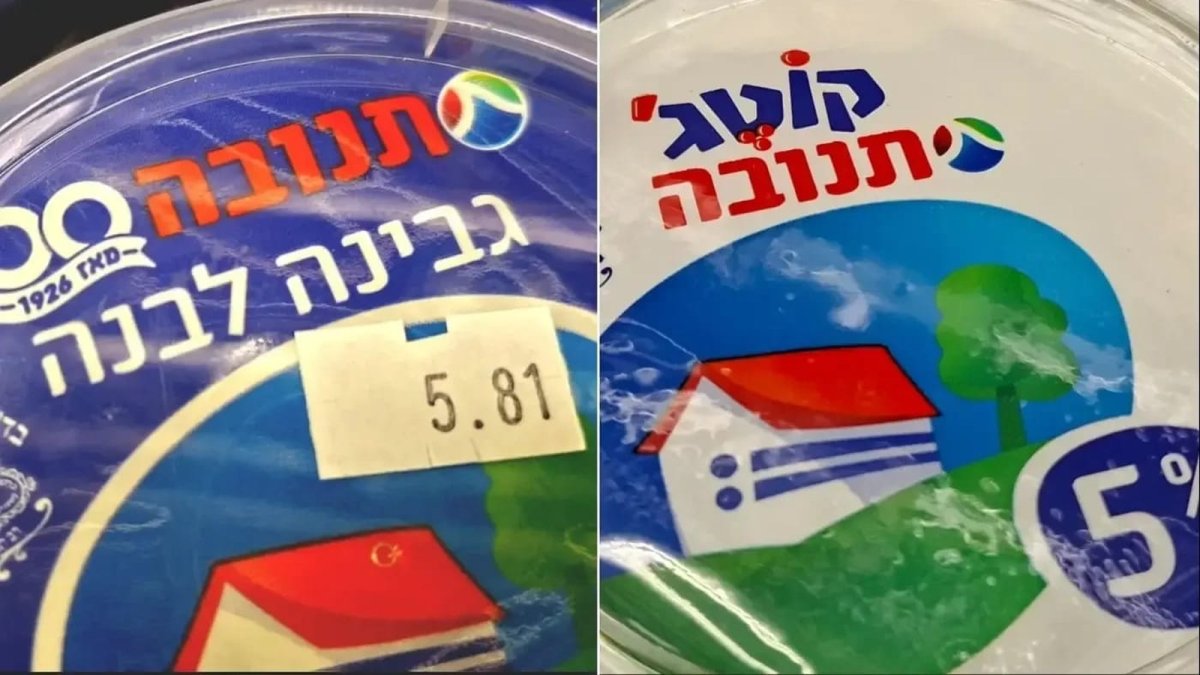
After weeks of frustration for Israeli consumers, the cottage cheese and white cheese shortage that gripped the country appears to be over. Over the past two weeks, Tnuva has returned to supplying retail chains with normal quantities, and market sources told Walla that the change on the ground has only been felt in recent days. Goods are now remaining on shelves throughout the day and are still available in the evening — a stark contrast to the scenes that played out in supermarkets across the country before and after the Shavuot holiday.
The restoration of supply marks the end of a painful chapter for Israeli households, where dairy products are not just a staple but a cultural cornerstone. From Tel Aviv's urban supermarkets to the smaller makolet stores in the periphery, the sight of empty shelves where cottage cheese tubs once stood became a daily frustration.
The Cottage Cheese Crisis That Started It All
The ordeal began with cottage cheese, which vanished from shelves even before Shavuot. For long weeks, retail chains struggled to receive the quantities they ordered from Tnuva, and in some branches, the product disappeared shortly after arrival. The timing could not have been worse — Shavuot is traditionally one of the biggest dairy consumption periods in Israel, with families stocking up on cheeses for the holiday meals.
As the shortage persisted, consumers began turning to white cheese as a substitute. Demand surged rapidly, and within a short time, a shortage of that product developed as well. The shelves usually filled with tubs of cottage and white cheese were instead stocked with labneh, sour cream, and other dairy products — a visible sign that something was deeply wrong in the supply chain of Israel's largest dairy producer.
Root Cause: A Malfunction at Alon Tavor
The root of the crisis lay in a malfunction in the automated warehouse system at Tnuva's Alon Tavor dairy, located in the Lower Galilee near Afula. As revealed by Walla, the issue was not on the production line. The cottage cheese was produced, packaged, and ready for distribution, but some of it could not leave the dairy and reach distribution trucks due to disruptions in the system managing pallet movement in the warehouse.
This distinction is crucial. Tnuva was not failing to produce enough cheese — it was failing to move it out of its own facility. The bottleneck was logistical, not productive. Alon Tavor is one of the largest and most advanced dairy plants in Israel, and its automated warehouse is designed to move massive volumes from production lines to distribution vehicles.
German Supplier Dematic and the War Factor
The warehouse system is operated by the German company Dematic, a global leader in automated material handling solutions. A visit by the team scheduled to arrive at Tnuva during Operation Roaring Lion was canceled due to the war. This cancellation proved to be a critical juncture in the crisis. With the German specialists unable to travel to Israel, the company's staff attempted to assist Tnuva teams remotely via phone and Zoom calls.
Meanwhile, Tnuva employees operated part of the system manually, allowing goods to be dispatched — though not at the usual pace. This stopgap measure kept products moving at a significantly reduced rate. The situation highlights a broader vulnerability in Israel's critical infrastructure: reliance on foreign technical expertise that can be disrupted by security events.
Demand Surge Compounds Logistical Problems
Compounding the logistical problem was a roughly 4% increase in demand for dairy products since the beginning of the year. This surge was driven in part by a drop in the number of Israelis traveling abroad due to the security situation. With more Israelis staying home, dairy consumption rose accordingly, making restocking difficult — and any additional delay was felt immediately in retail stores.
The 4% figure may sound modest, but in the dairy market, it is significant. Dairy products have relatively short shelf lives, and the supply chain is calibrated to match demand closely. A 4% increase in demand, combined with a warehouse malfunction, creates a perfect storm — every day of reduced output from Alon Tavor translated directly into empty shelves across the country.
Spillover Effect: From Cottage to White Cheese
The disruption in cottage cheese supply eventually spilled over to white cheese. Consumers unable to find cottage cheese switched to white cheese, and the growing demand began clearing those shelves as well. This cascading effect is a classic example of substitution dynamics in food markets — when one staple disappears, consumers shift to the closest alternative, creating pressure on that product as well.
The shortage was especially noticeable due to the market structure. Tnuva is Israel's largest producer in the white cheese category, while Strauss holds about 30% of the market. This concentration means that when Tnuva's supply falters, there is no easy alternative source to fill the gap. Smaller producers simply do not have the capacity to absorb a sudden surge in demand for a category dominated by two major players.
Market Concentration and Consumer Vulnerability
The crisis has reignited discussions about market concentration in Israel's food sector. Tnuva's dominant position in dairy means that its operational problems become national problems. When the country's largest producer of a staple food faces a logistical breakdown, consumers have limited options — this is a matter of food security and daily life for millions of Israelis.
The dairy market in Israel has long been characterized by a small number of large players, and this crisis demonstrates the fragility that comes with such concentration. While Tnuva has now returned to normal supply levels, the episode raises questions about resilience in critical food supply chains. Should there be more backup systems? More domestic technical expertise? These are questions policymakers and industry leaders will need to address.
Lessons for Israel's Supply Chain Resilience
The Tnuva crisis offers broader lessons for Israel's economy and its approach to supply chain management. The reliance on a German company for critical warehouse automation, combined with the cancellation of on-site visits due to security events, highlights the need for greater self-sufficiency in technical support. Remote assistance via phone and Zoom can help, but it is not a substitute for hands-on expertise when complex automated systems fail.
This episode also underscores the interconnectedness of Israel's economy with global supply chains: a war-related cancellation of a technical visit had direct consequences for dairy shelves in Israeli supermarkets. In an era of ongoing security challenges, Israeli companies may need to invest more in local technical capabilities and contingency planning — the manual operation of the warehouse by Tnuva employees was a testament to their dedication, but not a sustainable long-term solution.
Impact on Israeli Households and Daily Life
For Israeli households, the shortage was more than an inconvenience — it was a disruption of daily routines. Cottage cheese and white cheese are not luxury items; they are breakfast staples, lunchbox fillers, and dinner ingredients. Parents packing school lunches, families preparing Shavuot meals, and individuals on tight budgets all felt the impact.
The timing of the crisis, coinciding with the security situation and the Shavuot holiday, added to the sense of uncertainty. Israelis were already dealing with the stresses of war, and the inability to find basic dairy products at the supermarket added another layer of frustration. That the shortage was caused by a technical malfunction rather than a production failure offered little comfort to consumers who simply wanted to buy cottage cheese.
Looking Ahead: Stability Restored, Questions Remain
Now, after two weeks of supply at normal levels, the gaps finally appear to be closed. Tnuva has resumed regular deliveries to retail chains, and shelves are staying stocked throughout the day. The crisis appears to be over, at least for now. But the episode has left lasting questions about how Israel's food supply chain can be made more resilient against future disruptions — whether they stem from technical failures, security events, or both.
For Tnuva, the challenge will be to ensure that the Alon Tavor warehouse system is fully stabilized and that contingency plans are in place for future malfunctions. For the broader economy, the crisis serves as a reminder that even the most advanced automated systems can fail, and that redundancy and local expertise are essential to supply chain resilience. For Israeli consumers, the return of cottage cheese to the shelves is a welcome relief — but the memory of empty dairy aisles will not fade quickly.
As Israel continues to navigate a complex security environment and an evolving economic landscape, the lessons from this dairy crisis will likely inform discussions about food security, market concentration, and robust supply chain infrastructure. The cottage cheese shortage may be over, but its implications will be felt for some time to come.
By Hannah Berg, Staff Writer
This article was produced with AI-assisted research and editorial support. Sources: Jerusalem Post (Walla)
What's Your Reaction?
 Like
0
Like
0
 Dislike
0
Dislike
0
 Love
0
Love
0
 Funny
0
Funny
0
 Wow
0
Wow
0
 Sad
0
Sad
0
 Angry
0
Angry
0

Israel Correspondent at Global1.News. Based in Tel Aviv, covering Israeli politics, security, technology, and society. Provides balanced, deeply-sourced reporting on one of the most closely-watched regions in the world.















Comments (0)