
Three party leaders confirm participation in Grenada election debate
As the Caribbean heads toward another pivotal general election, Grenada is set to host a televised showdown that could shape the island’s trajectory for years to come.
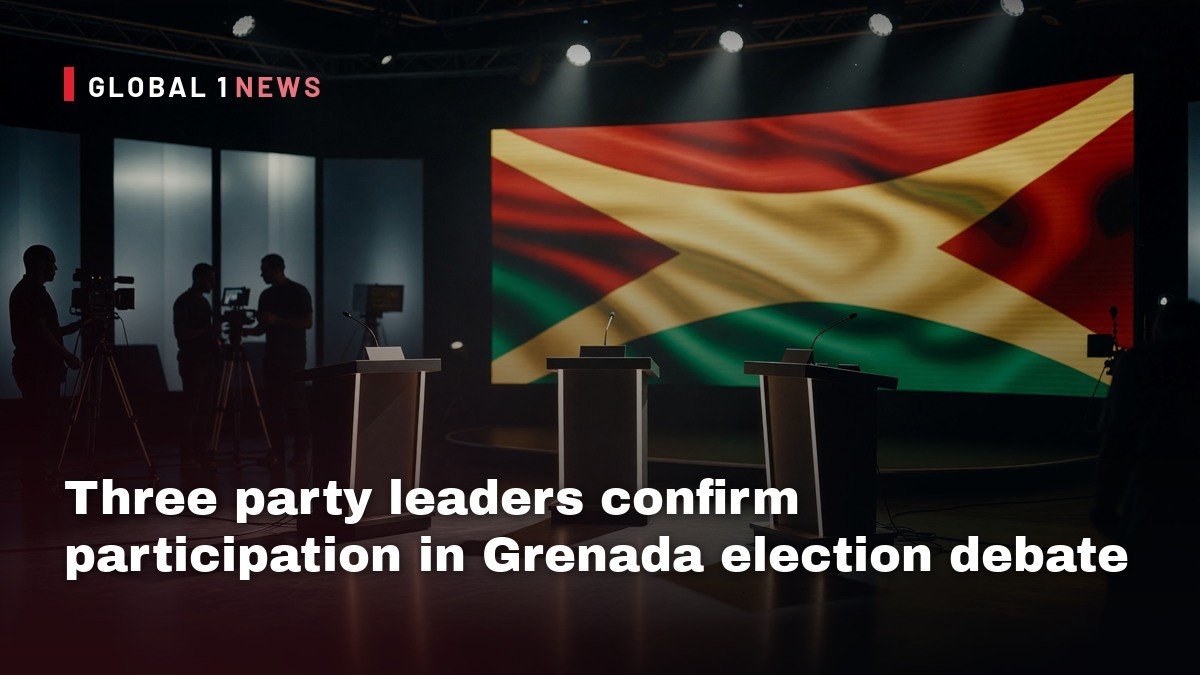
As the Caribbean heads toward another pivotal general election, Grenada is set to host a televised showdown that could shape the island’s trajectory for years to come. On 28 October, the three biggest parties – the National Democratic Congress, the New National Party and the Democratic People’s Movement – will take the stage at the Grenada Trade Centre for a two‑hour debate titled “Grenada’s Choice 2026: The National Leaders’ Debate”. The event, organised by a coalition of media bodies and the Grenada Conference of Churches, promises 90 minutes of structured discussion on the issues that matter most to Grenadians, from the soaring cost of living to the future of tourism and agriculture.
Setting the scene: why the debate matters
The timing of the debate could not be more crucial. With the general election slated for 5 November, the leaders will be speaking to the electorate just eight days before voters head to the polls. This gives the audience a rare chance to hear the three contenders articulate their visions side by side, rather than through the filtered lens of campaign rallies or sound‑bite‑filled press releases.
In a region where political discourse often unfolds in heated town‑hall meetings, the Grenada Trade Centre will provide a formal arena, complete with a live audience and a structured format. Organisers have emphasised that the debate will be anchored by the theme “The Issues. The Choices. Grenada’s Future”, signalling a focus on substantive policy rather than partisan posturing.
The contenders and their political pedigrees
Prime Minister Dickon Mitchell, the incumbent leader of the National Democratic Congress, brings a legal background to the podium. He entered frontline politics in 2021 and steered the NDC to victory in the 2022 general election, positioning himself as a reform‑oriented premier keen on steering Grenada through post‑pandemic recovery.
Opposition Leader Emmalin Pierre represents the New National Party. A former teacher and government minister, Pierre broke new ground as the NNP’s first female political leader and was appointed Leader of the Opposition in March 2025. Her experience in education and ministerial portfolios gives her a platform to critique the current administration while proposing alternatives.
Peter David, the Democratic People’s Movement candidate, has a long‑standing record in Grenadian politics. He has represented the Town of St George in four general elections since 2003 and has held ministerial portfolios covering foreign affairs, tourism and agriculture, giving him a breadth of experience across key sectors of the island economy.
What the debate will cover
The organisers have outlined a comprehensive agenda that mirrors the pressing concerns of everyday Grenadians. Topics will include the economy and cost of living – a hot button issue as households grapple with rising prices for food, fuel and utilities. Healthcare and education will also be on the docket, reflecting the twin pillars of social development that Caribbean governments have struggled to fund adequately in recent years.
Employment and governance will round out the discussion, with the leaders expected to lay out plans for job creation, especially for the youth, and to address calls for greater accountability in public office. The inclusion of long‑term development hints that the debate may also touch on climate resilience, a topic that has become increasingly urgent for small island states facing the twin threats of sea‑level rise and more intense hurricane seasons.
Electoral stakes: candidate numbers and party reach
While the debate will feature the three biggest parties, the election itself will see a broader field of contestants. The National Democratic Congress and the New National Party are each fielding fifteen candidates across the island’s constituencies, signalling a full‑scale contest for parliamentary control.
The Democratic People’s Movement, by contrast, is contesting nine seats. This reflects its more limited organisational capacity but also its strategic focus on constituencies where it believes it can make a decisive impact, particularly in areas tied to tourism and agriculture where its former ministerial experience may resonate with voters.
Other, smaller parties are also in the race, though their leaders will not be part of the televised debate. Their presence adds another layer of complexity to the electoral calculus, as they could siphon votes in tightly contested constituencies, potentially influencing the overall balance of power.
Broadcast reach and community involvement
The debate is being co‑produced by the Media Workers Association of Grenada, Grenada Broadcasting Network, The Bubb Report and the Grenada Conference of Churches. This partnership ensures that the event will be broadcast across multiple platforms, reaching audiences not just in the capital but also in remote villages where radio remains a primary source of information.
Live audience members will also play a role, providing a palpable sense of community engagement. While the exact arrangements for moderators and audience logistics are still being finalised, the involvement of the Conference of Churches underscores a desire to embed the debate within a broader moral and civic framework, reminding participants that the stakes extend beyond party politics to the wellbeing of the entire nation.
Implications for the wider Caribbean
Grenada’s debate is part of a growing trend across the Caribbean, where small‑state electorates are demanding more transparent and policy‑focused political discourse. Neighbours such as Trinidad and Tobago, Jamaica and Barbados have all seen similar televised debates in recent election cycles, reflecting a regional shift towards greater public scrutiny of leaders.
For Caribbean investors and development partners, the outcomes of the debate – and the subsequent election – will be closely watched. Grenada’s economy, heavily reliant on tourism, offshore financial services and agriculture, stands at a crossroads. The proposals put forward on 28 October could shape the island’s approach to diversifying its economic base, attracting sustainable tourism, and navigating the energy transition as the region grapples with the future of fossil‑fuel‑dependent power generation.
What voters should listen for
With the ballot due on 5 November, Grenadians will be weighing the leaders’ promises against the lived realities of high household expenses, limited healthcare resources and a job market still recovering from pandemic disruptions. Voters will need to assess not just the breadth of each party’s platform but also the feasibility of implementation, especially in areas like renewable energy and climate adaptation where capital is scarce.
Ultimately, the debate offers a moment for citizens to hear directly from the people who will shape policy for the next parliamentary term. As the Caribbean continues to navigate global economic headwinds, the choices made in Grenada will reverberate beyond its borders, offering a snapshot of how small island democracies are confronting the challenges of the twenty‑first century.
This article was produced with AI-assisted research and editorial support. Reporting is based on the source material cited below. Sources: Now Grenada; nowgrenada.com; Global1.News (27 October 2026).
By Sharon Sahatoo, Staff Writer
What's Your Reaction?
 Like
0
 Dislike
0
 Love
0
 Funny
0
 Wow
0
 Sad
0
 Angry
0

Caribbean Correspondent at Global1.News. Based in Port of Spain, Trinidad, covering Caribbean politics, economy, energy, climate, and culture. Amplifying the voices and stories of the Caribbean region.










Comments (0)