
The New Delhi BRICS Summit Sends Powerful Messages to America
The 18th BRICS summit, hosted by India in New Delhi, concluded with a joint declaration that signals a decisive shift in the coalition’s posture toward the United States and the broader liberal international order.
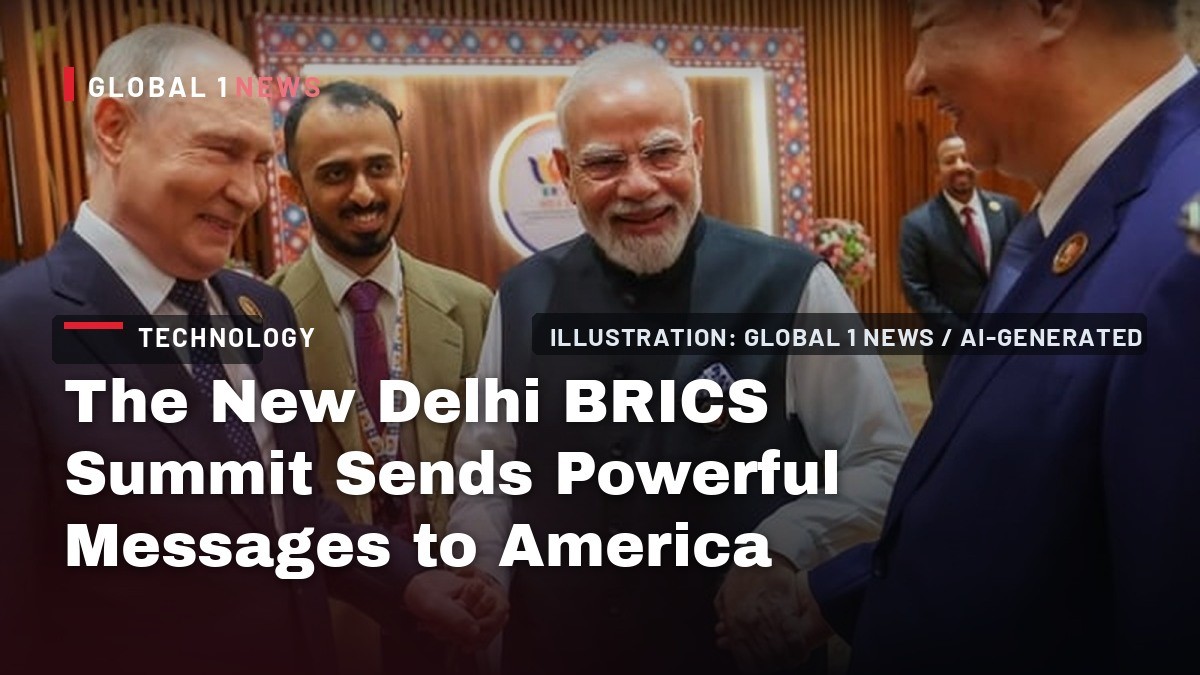
The 18th BRICS summit, hosted by India in New Delhi, concluded with a joint declaration that signals a decisive shift in the coalition’s posture toward the United States and the broader liberal international order. While the language remains measured, the document reflects a growing confidence among the six members to act as “rule makers” rather than “rule takers,” a phrase repeatedly emphasized by Prime Minister Narendra Modi. This article examines the declaration’s key provisions, the diplomatic choreography that secured unanimity, and the implications for Japan, the United States, and the wider Global South.
From Fragmentation to Consensus: India’s Diplomatic Orchestration
The summit’s most notable achievement was the unanimous endorsement of a joint declaration—a result that seemed unlikely just months earlier. At the May meeting of BRICS foreign ministers, deep divisions—particularly India’s reluctance to condemn Israel and the United States over recent attacks on Iran—had prevented any consensus. A separate wording dispute between the United Arab Emirates and Iran further derailed the earlier attempt, leaving the chair to issue only a summary of discussions.
India’s Ministry of External Affairs and its BRICS sherpas worked intensively to draft language acceptable to all members. The process required “significant compromises” from each side, yet ultimately produced a document that all six nations could sign. This diplomatic feat underscores India’s emerging role as a broker within the grouping, capable of reconciling the strategic rivalry between India and China and the outright conflict between the UAE and Iran.
Reframing the Global Order: A Defender, Not a Challenger
Contrary to narratives that portray BRICS as an anti‑American bloc, the New Delhi declaration frames the coalition as a “defender of the fundamental principles” of the liberal order—state sovereignty, international law, and mutual respect. The text argues that the United States is “weakening” the order through “double standards and unilateral actions,” particularly by undermining institutions such as the International Criminal Court and the International Court of Justice.
By positioning itself as a corrective force rather than a revolutionary one, BRICS seeks to preserve the liberal framework while demanding that it be applied equitably. This nuanced stance allows the grouping to appeal to countries in the Global South that are wary of Western sanctions and trade practices, while avoiding a direct confrontation that could alienate potential partners.
Targeted Critique of U.S. Trade and Sanctions Policies
The declaration contains a pointed condemnation of unilateral tariff and non‑tariff measures that “distort trade and violate WTO rules.” It also denounces “unilateral economic and secondary sanctions” imposed outside the United Nations Security Council’s authority, describing them as contrary to international law and harmful to development, health, and food security—particularly in the Global South.
These criticisms align closely with the interests of China, which secured a strong rebuke of sanctions aimed at it, and with broader concerns among developing economies about the extraterritorial reach of U.S. financial regulations. By highlighting the adverse impact on vulnerable populations, the declaration seeks to rally moral and political support against what it portrays as coercive economic tools.
India’s Focus on Cross‑Border Terrorism
India succeeded in embedding its long‑standing priority of combating cross‑border terrorism into the joint text. The declaration condemns the April 22, 2025 terrorist attack in Jammu and Kashmir, which claimed 26 lives, and calls for action against terrorist financing and safe havens. Although the document does not name Pakistan, the language clearly advances India’s narrative that its neighbor fuels instability in the region.
This inclusion serves a dual purpose: it legitimizes India’s security concerns on an international platform and signals to other BRICS members that terrorism is a shared threat warranting collective attention. For Japan, which also faces challenges from extremist groups in the Indo‑Pacific, the emphasis on a coordinated response may offer a basis for deeper security cooperation with BRICS, particularly India.
The Iran Issue: A Delicate Balance
The declaration’s treatment of the conflict surrounding Iran is noteworthy for its nuanced wording. While it refrains from naming the United States or Israel directly, it condemns “escalating tensions in West Asia” and denounces attacks on civilian infrastructure and Iran’s peaceful nuclear facilities, which operate under full International Atomic Energy Agency safeguards. By affirming the protected status of Iran’s nuclear infrastructure, the text implicitly criticizes the attacks carried out by the United States and Israel.
At the same time, the declaration offers no comparable criticism of Iran’s own actions toward its Gulf neighbors. This asymmetry reflects a diplomatic compromise designed to maintain cohesion among members with divergent interests—China, for example, is a major purchaser of Iranian oil and thus keen to protect Iranian assets, while Russia seeks to avoid antagonizing Iran as a strategic partner.
Palestine and Lebanon: Implicit Censure of Israel
The final sections of the declaration focus on Palestine and Lebanon, delivering a “profound indictment of Israel” without always naming the state. The text condemns forced displacement, starvation as a method of warfare, attacks on civilians and civilian infrastructure, and the obstruction of humanitarian assistance. It reaffirms the right of Palestinians to self‑determination, return, and full United Nations membership, and endorses a sovereign Palestinian state within internationally recognised borders.
By framing these concerns in terms of humanitarian law and international norms, the declaration strengthens BRICS’s moral standing among nations critical of Israel’s policies, while preserving the coalition’s broader “not anti‑American” posture. This approach may influence Japan’s diplomatic calculations, as Tokyo balances its historic alliance with the United States against growing calls for a more balanced stance on Middle‑East conflicts.
Implications for Japan and the Future of BRICS
For Japan, the New Delhi declaration presents both challenges and opportunities. The explicit criticism of unilateral sanctions and the emphasis on state sovereignty resonate with Japanese concerns about export controls and supply‑chain resilience. At the same time, the document’s tacit support for positions aligned with India’s security agenda—particularly regarding cross‑border terrorism—offers a potential avenue for deeper bilateral cooperation.
Looking ahead, the ability of BRICS to produce a unanimous declaration despite internal rivalries suggests a maturing coordination mechanism. If the coalition continues to present itself as a “course‑correcting” force rather than a direct challenger, it may attract additional partners from the Global South, thereby reshaping the architecture of global governance. Japan will need to monitor how this evolving bloc balances its internal divergences with collective action, especially as the United States appears increasingly inclined to “weaken” the liberal order it once underpinned.
This article was produced with AI-assisted research and editorial support. Reporting is based on the source material cited below. Sources: The Diplomat; thediplomat.com; Global1.News (19 September 2026).
By Kenji Tanaka, Staff Writer
What's Your Reaction?
 Like
0
Like
0
 Dislike
0
Dislike
0
 Love
0
Love
0
 Funny
0
Funny
0
 Wow
0
Wow
0
 Sad
0
Sad
0
 Angry
0
Angry
0

Japan Correspondent at Global1.News. Tokyo-based voice covering Japanese politics, technology, economy, and culture. Tracks the intersection of tradition and innovation in one of the world's most dynamic societies.















Comments (0)