
Thai badminton player suspended over banned substance
Thai women’s singles badminton star Pitchamon “Pink” Opatniputh has been placed under a provisional suspension after an out‑of‑competition test in Nagoya returned a positive result for furosemide, a diuretic listed by the World Anti‑Doping Agency (WADA) as a prohibited masking agent.
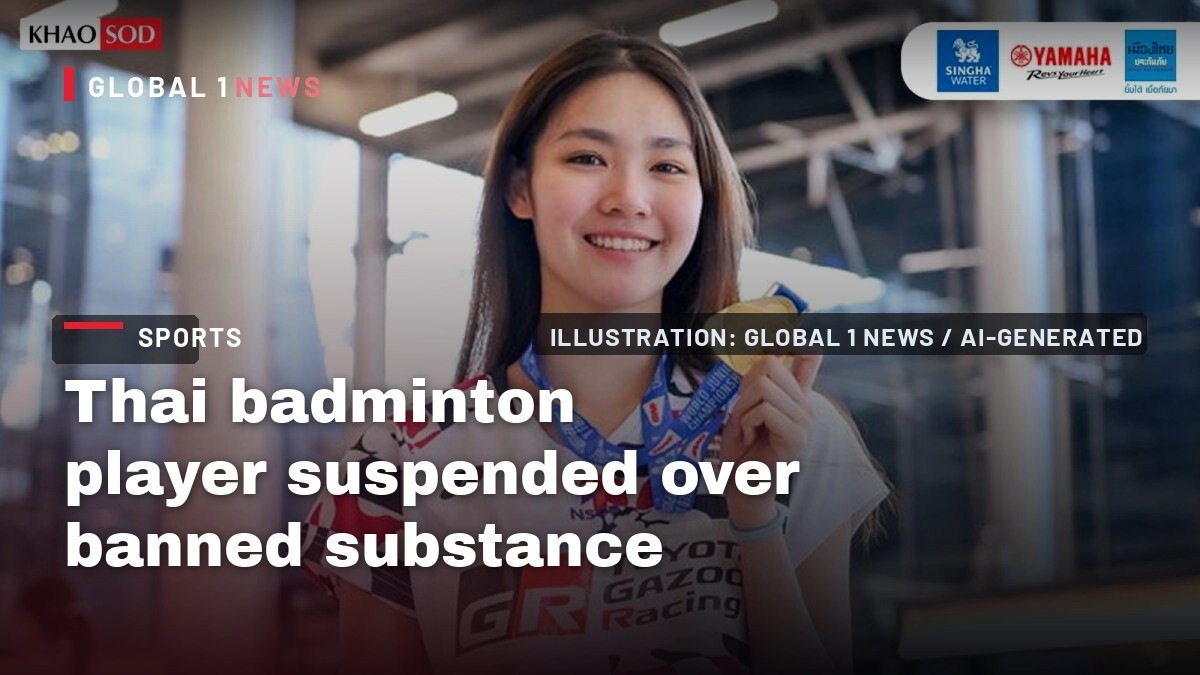
Thai women’s singles badminton star Pitchamon “Pink” Opatniputh has been placed under a provisional suspension after an out‑of‑competition test in Nagoya returned a positive result for furosemide, a diuretic listed by the World Anti‑Doping Agency (WADA) as a prohibited masking agent. The decision, announced by the International Testing Agency (ITA) on 22 September 2026, bars Pitchamon from competing, training, coaching or taking part in any activity at the 2026 Asian Games in Japan while the case is reviewed. The development has reverberated through the Thai sporting community, prompting officials to reaffirm their commitment to clean sport and to consider stronger education on medication and nutrition for athletes.
How the test was conducted and what the substance means
The ITA, acting on behalf of the Olympic Council of Asia (OCA), collected Pitchamon’s sample during an out‑of‑competition test on 17 September in Nagoya. Laboratory analysis identified furosemide, a substance classified under WADA’s S5 category for diuretics and masking agents. Because furosemide can conceal the presence of other performance‑enhancing drugs, it is prohibited at all times, both in and out of competition. The finding was described as an “adverse analytical finding,” triggering an immediate provisional suspension.
Under WADA rules, a provisional suspension does not equate to a final sanction. It simply means the athlete is temporarily barred from competition while the anti‑doping authorities complete their investigation. Pitchamon retains the right to request a B‑sample analysis and to challenge the provisional measure before the Court of Arbitration for Sport Anti‑Doping Division (CAS ADD). The ITA has declined further comment until the case concludes.
Immediate impact on the Asian Games and the Thai team
The provisional suspension means Pitchamon will miss the remainder of the 2026 Asian Games, which close on 4 October. Her absence is particularly significant because the Thai women’s badminton team no longer has any individual events scheduled, and the team is set to return to Thailand on 25 September. While the team’s medal hopes are not directly affected, the incident casts a shadow over Thailand’s broader participation in the Games and raises questions about the adequacy of pre‑event education on prohibited substances.
Sports and Tourism Minister Surasak Phancharoenworakul confirmed that Pitchamon traveled to Japan with the national badminton squad on 16 September and underwent the anti‑doping test before the ITA reported the adverse finding. He emphasized that the authorities will await the result of the B‑sample analysis and that any final decision will be made in accordance with the applicable anti‑doping rules.
Legal avenues and potential sanctions
Pitchamon’s next steps involve a formal request for B‑sample testing, a process that allows the athlete to verify the initial laboratory result. If the B‑sample also returns a positive finding for furosemide, the athlete could face a ban of up to two years, according to reports cited in the original announcement. The exact length of any sanction would depend on factors such as the athlete’s intent, prior record, and the specific circumstances surrounding the ingestion of the prohibited substance.
The possibility of a two‑year ban underscores the seriousness with which the anti‑doping community treats diuretics. While furosemide is not a performance‑enhancing drug in the traditional sense, its ability to mask other substances makes it a potent tool for evading detection. The legal framework provided by CAS ADD ensures that athletes have a fair hearing, but the provisional suspension already removes Pitchanum from the most visible stage of her sport at a critical moment in her career.
Ministerial response and future preventive measures
Minister Surasak Phancharoenworakul expressed confidence that Thai athletes had taken appropriate precautions regarding banned substances. He noted that the OCA already requires participating nations to educate their athletes about prohibited substances before the Games. Nonetheless, the minister indicated that this incident will prompt officials to reinforce guidance on food and medication, aiming to prevent similar cases during the current Asian Games and in future competitions.
Such reinforcement may involve more rigorous pre‑travel briefings, distribution of updated prohibited substance lists, and closer collaboration with team doctors and nutritionists. By tightening these protocols, Thailand hopes to safeguard its athletes from inadvertent violations and to uphold the nation’s reputation for integrity in sport—a value deeply rooted in Buddhist principles of honesty and right conduct.
Broader implications for Thai sport and regional anti‑doping efforts
The case arrives at a time when Southeast Asian nations are intensifying anti‑doping cooperation, especially as the region prepares for upcoming multi‑sport events. Thailand’s experience may serve as a cautionary tale for neighboring countries, highlighting the need for comprehensive education programs that address not only performance‑enhancing drugs but also substances like diuretics that can be used to conceal other violations.
In the Buddhist cultural context, the principle of “right livelihood” encourages athletes to pursue success through ethical means. Incidents such as Pitchamon’s provisional suspension challenge the sporting community to reflect on how best to align competitive ambition with moral responsibility. The Thai Olympic Committee and national sports federations are likely to use this moment to deepen their commitment to clean sport, reinforcing the message that true achievement stems from disciplined training and fair play.
Public reaction and the athlete’s personal perspective
While the source material does not include direct quotes from Pitchamon, the public response in Thailand has been one of concern and empathy. Fans of the “Pink” nickname have expressed support for her right to a fair hearing, while also urging caution and vigilance in adhering to anti‑doping regulations. Social media discussions have emphasized the importance of athletes being fully aware of the substances they ingest, whether through medication, supplements, or traditional remedies.
The provisional nature of the suspension means that Pitchamon’s career is not yet definitively altered. If the B‑sample clears her, she could return to competition after the Games, though the stigma of the allegation may linger. Conversely, a confirmed adverse finding could lead to a significant hiatus from international play, affecting both her personal trajectory and the Thai badminton program’s depth of talent.
Looking ahead: lessons for the 2026 Asian Games and beyond
The Asian Games, now in their 20th edition, will close on 4 October, concluding a period marked by both athletic triumphs and the sobering reminder of anti‑doping vigilance. Pitchamon’s case illustrates how quickly an athlete’s fortunes can change when a prohibited substance is detected, even in an out‑of‑competition setting. It also underscores the importance of robust testing protocols that extend beyond the competition venue, ensuring a level playing field throughout the entire event cycle.
As Thailand prepares for future international competitions, the ministry’s pledge to reinforce guidance on food and medication may translate into more detailed briefings for athletes traveling abroad, tighter coordination with medical staff, and perhaps the development of a national anti‑doping education portal. By embedding these safeguards within the cultural fabric of Thai sport—drawing on Buddhist values of mindfulness and responsibility—the nation can strive to prevent inadvertent violations and preserve the honor of its athletes on the world stage.
This article was produced with AI-assisted research and editorial support. Reporting is based on the source material cited below. Sources: Khaosod English; khaosodenglish.com; Global1.News (22 September 2026).
By Ann Srisawat, Staff Writer
What's Your Reaction?
 Like
0
Like
0
 Dislike
0
Dislike
0
 Love
0
Love
0
 Funny
0
Funny
0
 Wow
0
Wow
0
 Sad
0
Sad
0
 Angry
0
Angry
0

Southeast Asia Correspondent at Global1.News. Based in Bangkok, covering Thai and Southeast Asian politics, economy, technology, and culture. Deep regional perspective on one of the world's most dynamic regions.














Comments (0)