
Teodoro Slams China's 'Squid Tactic,' Calls Threat vs Filipinos 'Blackmail'
Defense Secretary Gilberto Teodoro Jr. slammed China's 'squid tactic' of disinformation through avoidance, calling its warning that Filipinos would 'bear the brunt' extortion and blackmail. The dispute follows China's action against 100-plus Filipinos and Philippine arrests of Chinese nationals.
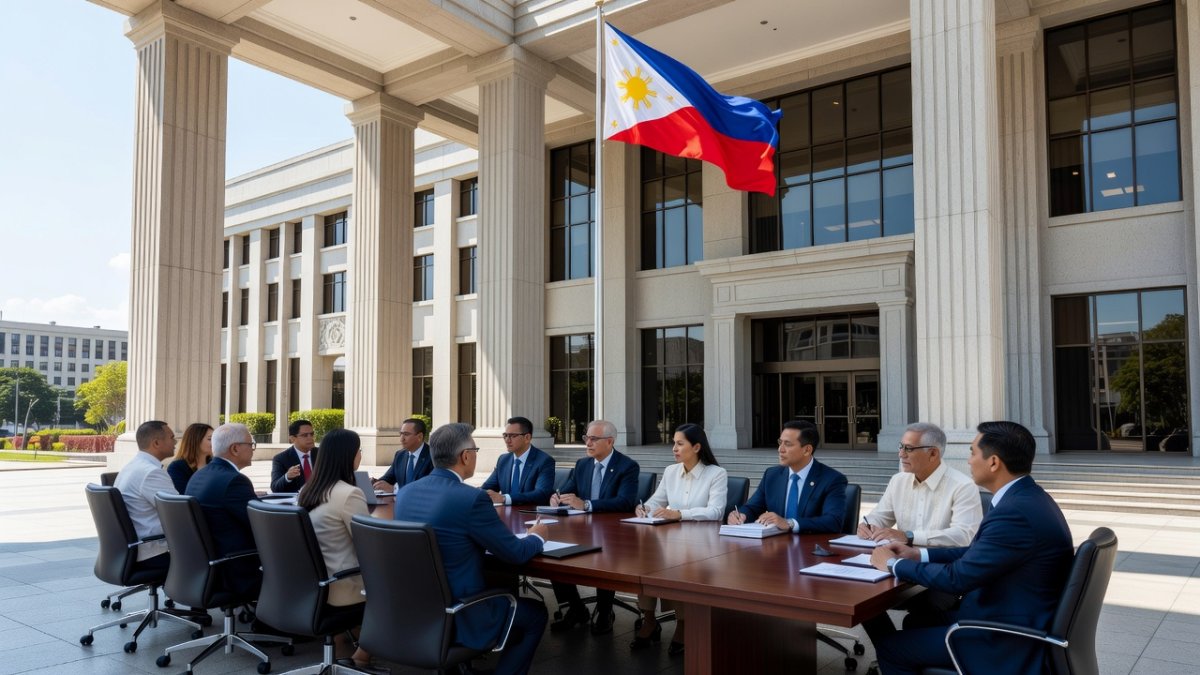
MANILA, Philippines — Defense Secretary Gilberto Teodoro Jr. has fired back at Beijing, accusing China of using what he calls a "squid tactic" of disinformation through avoidance, and describing its warning against Filipinos as "extortion and blackmail beyond doubt."
In a strongly worded statement posted on Facebook on Saturday, August 15, Teodoro said the Chinese Foreign Ministry continued to dodge what he called the "crucial issue" — whether the Chinese nationals arrested in the Philippines were involved in illegal activities.
"The plain and simple answer is yes," Teodoro said, citing allegations that the individuals were involved in the "regurgitation of substandard, radioactively tainted steel," dumping untreated polluted water into rivers, and releasing untreated toxic fumes.
The defense chief said these allegations were backed by "indisputable and legally admissible evidence" gathered by law enforcement authorities through valid search warrants issued by Philippine courts.
His statement came after China announced it had taken action against more than 100 Filipinos for alleged illegal employment and illegal residence. Chinese Foreign Ministry spokesman Guo Jiakun said on August 10 that Chinese immigration authorities had conducted special operations against the Filipinos in accordance with Chinese law and that their rights were protected.
The move came amid tensions over the Philippines' detention of Chinese nationals following a May raid on a steel firm in Misamis Oriental.
A 'Squid Tactic' of Evasion
Teodoro did not mince words when describing China's response to the arrests. He said the latest Chinese Foreign Ministry statement against him was "a classic squid tactic—disinformation through avoidance."
The analogy, drawn from the way a squid releases ink to confuse predators while escaping, captures what Teodoro sees as Beijing's strategy of clouding the issue rather than addressing the substance of the allegations.
He said Chinese officials appeared to focus on the suspects' visas and passports rather than the alleged illegal activities — a deflection, in his view, from the core question of whether the Chinese nationals were running criminal enterprises on Philippine soil.
Teodoro emphasized that the Chinese nationals arrested in the Philippines were not merely rank-and-file workers but the "principals" of allegedly illegal enterprises. He stressed that the arrests were carried out through search warrants issued by Philippine courts, underscoring the legal basis of the operations.
The defense chief also accused Chinese embassy officials of intervening in local law enforcement processes. "The answer, as revealed in a Senate hearing, is yes," he said, referring to questions about whether Chinese diplomats had attempted to interfere with Philippine law enforcement.
'Bear the Brunt' Warning Called Blackmail
Perhaps the most pointed part of Teodoro's statement was his rejection of China's warning that Filipinos would "bear the brunt" of its actions. He described the warning as an indiscriminate threat to retaliate against all Filipinos.
"Threatening that they will 'bear the brunt' is an indiscriminate threat to retaliate against all Filipinos, which is, plain and simple, extortion and blackmail beyond doubt!" Teodoro said.
"The Filipino people will not fall for this," he added.
Teodoro ended his statement with a defiant message in Filipino: "Di tayo pasisiil!" — "We will not allow ourselves to be oppressed."
The strong language reflects the escalating rhetoric between Manila and Beijing, which have been locked in repeated confrontations in the South China Sea. But this latest dispute is different — it centers not on contested waters or shoals, but on the treatment of ordinary people caught in the crossfire of diplomatic tensions.
Filipino Workers in China: Families Left Worried
For the families of the more than 100 Filipinos detained in China, the diplomatic war of words offers little comfort. These are not diplomats or soldiers — they are teachers, caregivers, office workers, and skilled laborers who sought opportunities abroad to support their families back home.
The Department of Foreign Affairs has directed officials and personnel of the Philippine embassy in Beijing to provide immediate assistance to the arrested Filipinos, according to a report from Philstar.com. The embassy is expected to help with legal representation, consular visits, and coordination with Chinese authorities on the status of the detainees.
For many Filipino families, the news hits close to home. The Philippines has long been one of the world's largest exporters of labor, with millions of Overseas Filipino Workers (OFWs) deployed across the globe. China, while not traditionally a top destination, has seen a growing number of Filipinos working there in recent years — in English teaching, manufacturing, and other sectors.
When tensions rise between governments, it is often these workers who feel the impact first. A sudden crackdown on illegal employment can sweep up those who may have overstayed visas or worked without proper permits, separating them from their families for months or even years.
In barangays across the Philippines, from Ilocos to Mindanao, families are waiting for news. They gather around smartphones, checking messages from loved ones in China, hoping for word that they are safe. The uncertainty is agonizing — not knowing whether a relative will be released, deported, or face criminal charges.
Philippine Law Enforcement Under Scrutiny
The dispute also puts Philippine law enforcement agencies under the spotlight. The May raid on the steel firm in Misamis Oriental was conducted by authorities acting on court-issued search warrants — a process that Teodoro was careful to highlight in his statement.
By emphasizing the legal basis of the arrests, Teodoro is making a pointed argument: that the Philippines is not arbitrarily detaining Chinese nationals, but rather enforcing its laws against alleged criminal activity. The allegations — substandard steel, polluted water, toxic fumes — paint a picture of enterprises that may have been harming local communities and the environment.
For residents of Misamis Oriental, the raid may have been a long-awaited response to concerns about pollution and unsafe materials in their area. The release of untreated toxic fumes and dumping of polluted water into rivers would affect not just the environment but the health and livelihoods of nearby communities — farmers who depend on clean irrigation, fisherfolk who rely on healthy waterways, and families who draw drinking water from local sources.
The Philippine National Police and other law enforcement agencies have not released detailed information about the ongoing cases, but Teodoro's statement suggests that the evidence gathered is substantial. He described it as "indisputable and legally admissible," a strong endorsement of the work done by Philippine authorities.
Senate Involvement and Diplomatic Tensions
Teodoro's reference to a Senate hearing indicates that the issue has reached the halls of Congress. The Senate, which has historically taken an active role in scrutinizing foreign relations and protecting OFW rights, appears to be examining the extent of Chinese embassy intervention in local law enforcement.
This is not the first time the Senate has waded into diplomatic disputes. In past years, senators have held inquiries into alleged abuses against OFWs abroad, questioned the terms of military agreements with foreign powers, and pressed the executive branch on its handling of territorial disputes in the South China Sea.
The involvement of the Senate adds a layer of democratic accountability to the issue. It means that the concerns of ordinary Filipinos — not just the calculations of diplomats and defense officials — are being heard in the national conversation.
The timing of the dispute is also significant. It comes amid already strained relations between Manila and Beijing, which have been marked by repeated confrontations in the South China Sea. The arrest of Chinese workers in Misamis Oriental has added a new dimension to the tension — one that directly affects people's lives and livelihoods.
What This Means for Ordinary Filipinos
For the average Filipino, the dispute between Manila and Beijing may seem distant — a matter for diplomats and defense officials. But the implications are deeply personal.
First, there are the families of the detained workers in China. They are waiting, hoping, and praying for their loved ones' safe return. Every day of uncertainty is a day of anxiety, a day when children ask when their parent is coming home, when spouses struggle to make ends meet without the remittances that sustain their households.
Second, there are the communities in Misamis Oriental and elsewhere that may have been affected by the alleged illegal activities of the Chinese nationals. If the allegations of pollution and substandard materials are true, these communities have been living with the consequences — contaminated water, polluted air, and potentially unsafe infrastructure.
Third, there is the broader question of how the Philippines navigates its relationship with China. The South China Sea disputes have already created a complex dynamic, with the Philippines balancing its security interests, economic ties, and the welfare of its citizens. This latest dispute adds another layer of complexity.
Teodoro's defiant message — "Di tayo pasisiil!" — resonates with a sense of national pride that many Filipinos share. It echoes the spirit of bayanihan, the communal unity that has long defined Filipino culture. When one Filipino is threatened, the community stands together.
But pride alone does not bring workers home or resolve diplomatic tensions. What is needed is a careful, principled approach that protects Filipino citizens abroad while upholding the rule of law at home.
The Philippine embassy in Beijing has been directed to provide immediate assistance to the arrested Filipinos, according to the Department of Foreign Affairs. This is a welcome step, but it is only the beginning. The families of the detained workers need more than consular visits — they need answers, they need transparency, and they need their loved ones home.
As the diplomatic war of words continues, it is worth remembering that behind the statements and the accusations are real people — Filipino workers in China, Chinese nationals in Philippine detention, and families on both sides who are caught in the middle. The challenge for both governments is to resolve this dispute in a way that respects the law, protects the innocent, and preserves the dignity of all involved.
For now, the Filipino people wait and watch. They wait for news of their loved ones in China. They watch as their leaders stand firm against what they see as intimidation. And they hold on to the hope that this dispute, like so many before it, will eventually be resolved through dialogue and diplomacy — not through threats and retaliation.
This article was produced with AI-assisted research and editorial support. Sources: PhilStar (philstar.com), GMA News Online, and public statements from the Department of National Defense.
By Bella Reyes, Staff Writer
What's Your Reaction?
 Like
0
Like
0
 Dislike
0
Dislike
0
 Love
0
Love
0
 Funny
0
Funny
0
 Wow
0
Wow
0
 Sad
0
Sad
0
 Angry
0
Angry
0

Philippines/Southeast Asia Correspondent at Global1.News. Manila-based journalist covering Philippine politics, environment, maritime security, and social issues. Passionate about marine conservation and the communities protecting the Philippines' natural heritage.














Comments (0)