
Sinaloa Cartel War Upends Lives in Culiacán and Beyond
In a new DW Reporter investigation published this week, families across Sinaloa describe how cartel violence has upended daily routines in neighborhoods and rural communities.
In a new DW Reporter investigation published this week, families across Sinaloa describe how cartel violence has upended daily routines in neighborhoods and rural communities. Mothers search for children who vanished without trace, while residents in places like Villa Juárez navigate streets marked by shootings and fear. The reporting highlights the personal toll on ordinary Mexican households caught between warring factions.
Sinaloa Cartel War Upends Lives in Culiacán and Beyond
Culiacán, Sinaloa – Mexico — A DW News investigation released August 2, 2026, captures the voices of hitmen, politicians, and families describing how the Sinaloa Cartel conflict has reshaped life in the state. Since the September 9, 2024, offensive by La Mayiza against Los Chapitos, more than 2,415 homicides have been recorded, with Noroeste newspaper tallying 3,353 homicides and 3,957 kidnappings by June 2026. Communities from Culiacán to Mazatlán now contend with daily violence that closes schools and cancels public events.
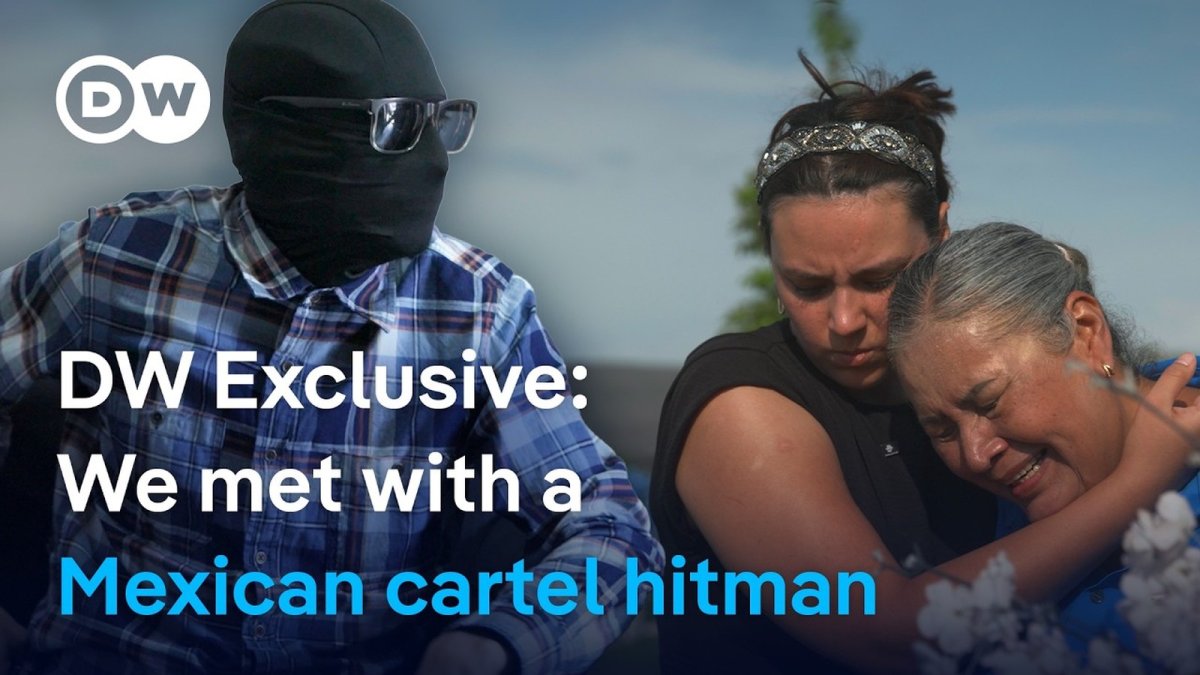
Inside Sinaloa's Cartel War
The split between Los Chapitos, led by Iván Archivaldo Guzmán and Jesús Alfredo Guzmán Salazar, and La Mayiza, headed by Ismael Zambada's sons Mayito Flaco and Mayito Gordo, erupted after Ismael "El Mayo" Zambada was captured in the United States on July 25, 2024. That same day, former Culiacán mayor Héctor Cuén Ojeda was found dead. La Mayiza launched its offensive on September 9, 2024, resulting in more than 50 deaths in the first week, with bodies marked by faction symbols such as sombreros and pizza slices.
September 17, 2024, saw a record 30 murders in Culiacán in one day, contributing to the worst 30-day period in the city's history with 140 deaths. May 2026 became the deadliest month so far, with 135 violent deaths, including 30 killed in 72 hours from May 31 to June 2. On July 21, 2026, El Mayo received a life sentence in the United States and was ordered to pay $15 billion in drug trafficking profits.
Corruption and Impunity in Sinaloa
On April 30, 2026, the US Justice Department unsealed an indictment charging Governor Rubén Rocha Moya and nine other officials with drug trafficking conspiracy and weapons charges. The indictment alleges that Rocha Moya, in office since November 2021, conspired with Sinaloa Cartel leaders aligned with Los Chapitos in exchange for political support and bribes during his 2021 campaign. INE documented cartel-linked electoral violence, including theft of ballot boxes and armed presence at voting booths in northern Sinaloa.
Co-defendant Enrique Díaz Vega, who later became the governor's secretary of administration and finance, allegedly supplied the cartel with a list of opponents' names and addresses so they could be pressured to drop out of the 2021 race. DEA administrator Terrance Cole stated on the day the indictment was unsealed that the Sinaloa Cartel is not just trafficking deadly drugs but operates as a designated terrorist organization that relies on corruption and bribery to drive violence and profit. US Attorney Jay Clayton of the Southern District of New York added that the charges should send a clear message to officials around the globe who work with narco-traffickers: no matter the title or position, authorities remain committed to bringing them to justice.
Rocha Moya rejected the charges as baseless and took a 30-day leave that expired June 1, 2026, without returning to office. FGR opened its own investigation, while SRE received extradition requests. Three co-defendants surrendered and are in custody at Brooklyn MDC, and Sheinbaum invoked sovereignty in early May 2026.
Life in Villa Juárez and Other Hard-Hit Communities
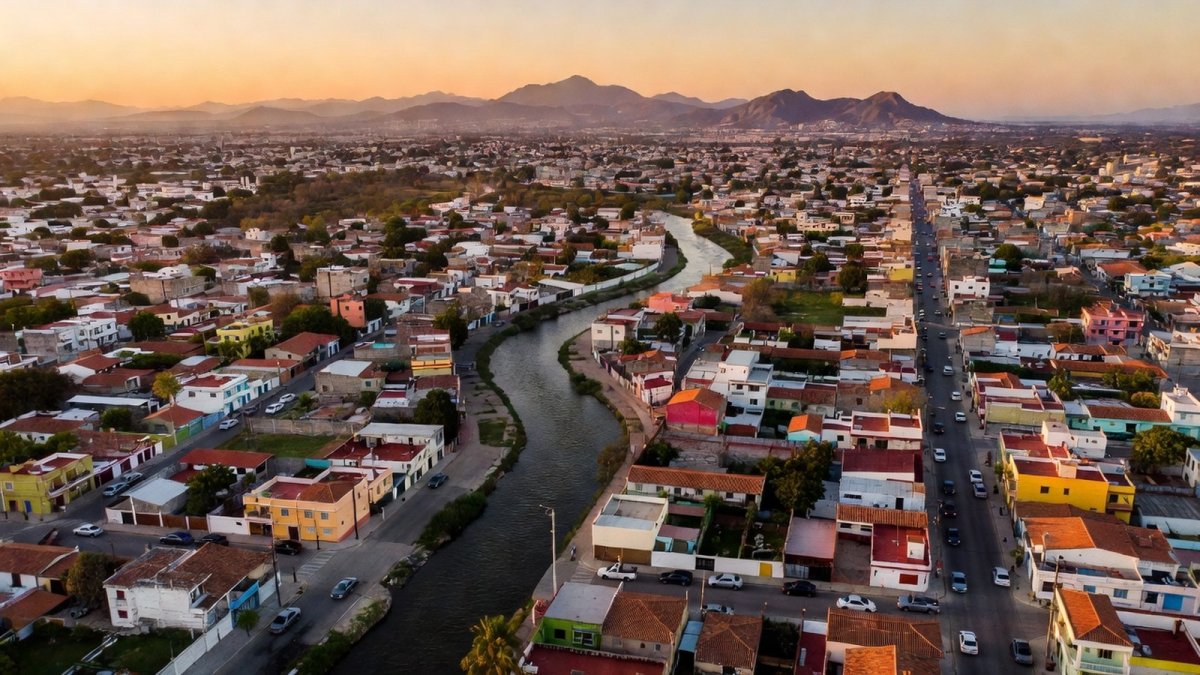
Villa Juárez, a sindicatura of Navolato municipality south of Culiacán, has seen repeated armed attacks and executed bodies left on roads. La Mayiza operations include a plane burned on the La Luna airstrip on June 27, 2025, and a December 2025 attack in the Las Cañitas neighborhood that killed a minor and wounded four others. Residents report living amid constant fear as children grow up hearing gunfire.
Culiacán municipal police have lost at least 144 officers to retirement or early departure since September 2024, with at least 34 officers killed. In Escuinapa, four officers were ambushed and killed on March 31, 2026, and a fifth was killed at his home on April 8, leading 32 officers, about 40 percent of the force, to resign.
The pressure on local forces continues. In Villa Unión, Mazatlán, authorities captured "El 20," the alleged leader of the Pacific Cartel, a group aligned with Los Chapitos, on July 28, 2026. Violence in southern Sinaloa intensified after the Escuinapa police collapse, with drone-delivered explosives and armed confrontations striking the area over the July 12 weekend that followed five agents killed in nine days. A riot in Module 7 of Aguaruto state prison in Culiacán on May 31 left seven dead, adding pressure to an already strained security system.
The Crisis of the Disappeared
Sabuesos Unidas AC reported nearly 5,800 disappearances in Sinaloa since September 2024 as of May 14, 2026, nearly triple the 2,133 previously tallied by Noroeste. This averages more than five people disappearing per day, with most bodies never recovered. Families continue searching rural areas and landfills for any trace of their loved ones.
The DW Reporter account features female opposition politicians who describe being kidnapped and threatened during the campaign period. A suspected hitman explains how the groups murder and intimidate while shaping political processes, offering testimony that sits at the heart of the investigation.
Alma, featured in the DW investigation, has spent months looking for her missing relatives while raising awareness through public actions. Mexico's national registry counts more than 120,000 people officially disappeared across the country, and journalists describe disappearances as the primary form of lethal violence in the current conflict.
Displacement and Economic Pain
Academic estimates from Universidad Autónoma de Sinaloa place the number of displaced families above 9,000, compared with the state's official count of 1,763. At least 50 rural communities have been abandoned, and Badiraguato municipality saw its population drop from 37,757 to 26,542. Concordia documented 261 displaced families by mid-2025, the highest single-municipality total.

Improvised camps near the Culiacán landfill lack adequate food, water, and medical care. In Mazatlán, homicides from January to September 2025 reached 95, a 227 percent increase over the same period in 2024, affecting tourism and small businesses that once relied on visitors.
The economic reality of the war reaches beyond the violence. More than 44 million fentanyl pills were seized in 2025, with the kilogram price in Culiacán hovering around six thousand dollars. Sinaloa remains the heart of this trade, leaving small businesses and workers to navigate an economy still tied to the same routes that fuel the conflict.
Reactions and Political Fallout
President Claudia Sheinbaum stated on July 28, 2026, that narco allegations against Morena figures would not harm the party ahead of the 2027 election, citing a poll showing Morena at 38 percent, with 36 percent undecided, PRI at 10 percent, and PAN at 8 percent. She insisted that her government does not protect or cover for anyone, and that legal action follows whenever the Attorney General's Office or the Security Cabinet finds evidence of collusion. Ricardo Monreal acknowledged that the "narco-party" narrative has affected public support. Morena has begun anti-corruption screening for 2027 candidates involving party and federal Security Cabinet checks.
Brookings analyst Vanda Felbab-Brown observed that the indictment marks a change in US strategy toward pursuing a sitting government official. FGR ruled US extradition documentation insufficient on May 10, 2026. On May 21, Sheinbaum said Interpol had issued a Red Notice for Rocha Moya, though FGR spokesperson Ulises Lara López later stated no active notice existed, creating a credibility gap with Security Secretary Omar García Harfuch's comments on the US arrest warrant.
What to Watch For
Sinaloa's next gubernatorial election is scheduled for June 2027, and it will be the first such vote since the war began, so candidate vetting and security measures are expected to shape the entire campaign. Analysts from InSight Crime point to Mayito Flaco and Chapo Isidro as likely leaders of a reconfigured cartel after La Mayiza gained control of roughly 90 percent of former Chapitos territory. Unconfirmed March 2026 reports suggested Iván Archivaldo Guzmán and Mayito Flaco may have explored ending hostilities.
Security Secretary Omar García Harfuch reported on July 7, 2026, that federal operations since October 2024 achieved a 44 percent homicide reduction and seized 94.5 tonnes of drugs. An International Crisis Group report from the same day described the cartel as fragmented into four factions with more than 20 active cells. Three fugitive co-defendants remain non-compliant, and extradition proceedings and cartel reconfiguration remain central issues for communities still searching for stability.
Ordinary families in Sinaloa continue to bear the heaviest burden as the conflict evolves, with mothers, small business owners, and displaced residents waiting for concrete steps toward safety and accountability from both state and federal authorities.
By Rosa Martinez, Staff Writer
This article was produced with AI-assisted research and editorial support. Reporting is based on sources cited in the article.
What's Your Reaction?
 Like
0
Like
0
 Dislike
0
Dislike
0
 Love
0
Love
0
 Funny
0
Funny
0
 Wow
0
Wow
0
 Sad
0
Sad
0
 Angry
0
Angry
0
Latin America/Andes Correspondent at Global1.News. Based in Bogota, covering politics, environment, energy, and social movements across the Andean region. Passionate about environmental journalism and communities protecting their land.












Comments (0)