
Settler Violence Is 'State Terrorism': Israeli Lawmaker's Warning From Taybeh Amid West Bank Surge
Israeli lawmaker Ofer Cassif has called West Bank settler violence 'clear state terrorism,' describing settlers as proxies of the government, as the Israeli army seals the Christian village of Taybeh and settler attacks surge across the occupied territory.
In a recent Middle East Eye report, Israeli Knesset member Ofer Cassif delivered a stark condemnation of settler violence in the occupied West Bank, describing it as state-sponsored terrorism and a tool of ethnic cleansing. Speaking to Al Jazeera from the town of Taybeh, Cassif, a Hadash party lawmaker known for his opposition to the occupation, did not mince words: settlers, he said, are "proxies of the government," and their attacks are part of a broader, systematic campaign against Palestinian presence on the land.
Settler Violence Is 'State Terrorism': Israeli Lawmaker's Warning From Taybeh Amid West Bank Surge
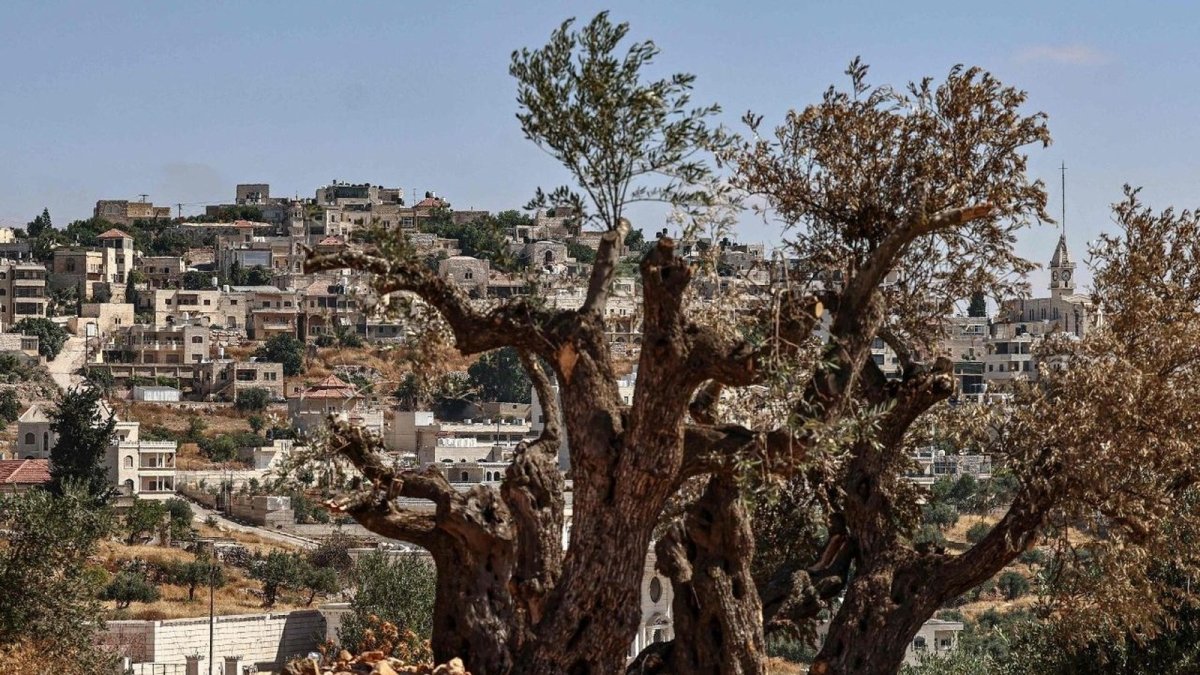
Taybeh, Occupied West Bank – August 12, 2026 — The ancient stone houses and olive groves of Taybeh, the last entirely Christian village in the occupied West Bank, have become the latest flashpoint in a summer of escalating violence. As Israeli forces declared the town a closed military zone earlier this week, the words of Ofer Cassif echo with a particular urgency. "This is a clear state terrorism," Cassif said in the Middle East Eye video report. "They financed it, they support it and they encourage it. This is a part of the extermination project of the ethnic cleansing." His comments, made from the heart of a community under siege, cut through the diplomatic euphemisms that often surround discussions of settler violence, naming the Israeli state as the direct sponsor of the attacks that have terrorized Palestinian communities across the West Bank for months.
Cassif's Accusation: Settlers as 'Proxies of the Government'
Cassif's characterization of settlers as "proxies of the government" is not a casual turn of phrase. It speaks to a deeply entrenched reality in the occupied territories, where Israeli settlements — considered illegal under international law — are built, funded, and protected by the state. The Knesset member's assertion that the state finances, supports, and encourages settler violence aligns with years of documentation by human rights groups, which have repeatedly noted the impunity afforded to settlers and the active military protection they often receive during attacks on Palestinian villages.
The timing of Cassif's interview is significant. It came just days after the Israeli army declared Taybeh a closed military zone on Sunday, August 9, 2026. The order, which applies to Israelis and not Palestinians, was ostensibly aimed at preventing growing attacks on Palestinians by Israeli settlers, according to Reuters. But for residents of Taybeh, the closure feels less like protection and more like a siege — a recognition that the state is aware of the violence but chooses to manage it by sealing off the victims rather than restraining the perpetrators.
Cassif's use of the term "ethnic cleansing" is deliberately provocative, but it reflects a growing consensus among Palestinian communities and international legal experts that the pattern of settler violence, land seizures, and forced displacement in the West Bank constitutes a systematic effort to depopulate Palestinian areas. The Knesset member's willingness to speak these words on camera, from a village that embodies the fragility of Palestinian Christian presence, gives the accusation a visceral power that statistics alone cannot convey.

The Taybeh Emergency: A Christian Community Under Pressure
Taybeh is not just any Palestinian village. Mentioned in the Bible as Ephraim, it is the last entirely Christian village in the occupied West Bank, a living testament to a once-thriving Palestinian Christian community that has dwindled over decades of occupation and emigration. Located northeast of Ramallah, its residents have long prided themselves on their resilience, maintaining their ancient traditions, their winery, and their church in the face of relentless pressure. But the events of recent weeks have pushed the community to a breaking point.
Father Bashar Fawadleh, the Latin parish priest of Christ the Redeemer church in Taybeh for the past five years, described to Vatican News a harrowing incident that occurred on August 5, 2026. Settlers broke into a home belonging to a family from his parish — not once, but multiple times. They occupied the land, brought a flock of sheep up to the house, and cut through the fencing. Father Fawadleh called it "a deliberate strategy of harassment designed to create a climate of fear and pressure Palestinian families into leaving their land." His plea was simple and desperate: "Do not forget Taybeh! Taybeh must not vanish into silence."
The priest's words carry the weight of history. Palestinian Christians, once a significant minority in the Holy Land, have seen their numbers dwindle dramatically over the past century. The combination of occupation, economic hardship, and now targeted harassment by settlers threatens to accelerate this exodus. For Father Fawadleh, the attack on his parishioner's home is not an isolated incident but part of a coordinated campaign to make life so unbearable that families choose to leave voluntarily — a process that international law defines as forced displacement. The Israeli army's decision to close Taybeh to non-resident Israelis, while ostensibly a protective measure, does little to address the underlying threat. The settlers who attacked the family are not outsiders; they are neighbors from nearby outposts, and the closure does nothing to remove them or hold them accountable.
The Tell Killings and the Demolition of Farouq Ramadan's Home
The violence that has gripped Taybeh is part of a broader wave of attacks that has swept across the West Bank in recent weeks. Nowhere has this been more tragically illustrated than in the village of Tell, near Nablus, where a deadly clash on July 24, 2026, left one settler, one Israeli soldier, and four Palestinians dead. Among the Palestinian dead was Farouq Ramadan, a resident of Tell who, according to accounts from the village, had grabbed a settler's weapon during the attack in an attempt to defend his community.
The circumstances of Ramadan's death have become a point of contention. An analysis by +972 Magazine, based on video footage of the incident, concluded that Ramadan was killed while unarmed, calling into question the Israeli military's version of events. The Israeli narrative, which has been echoed in official statements, suggests that the Palestinians were the aggressors. But the video evidence, as analyzed by the Israeli-Palestinian publication, paints a different picture — one of a man killed while trying to protect his home and neighbors from an armed incursion.
The tragedy of Ramadan's death was compounded on August 12, 2026, when Israeli forces demolished his home in Tell, weeks after he was killed. The demolition, reported by AFP and Middle East Eye, is a cruel postscript to an already devastating loss. For the family of Farouq Ramadan, the destruction of their home is not just the loss of a physical structure; it is the erasure of their history, their memories, and their future in the village. It is a punishment that extends beyond the grave, a message to the entire community that resistance — even the desperate act of grabbing a weapon to defend one's family — will be met with collective punishment.
The demolition also serves a strategic purpose. By destroying the homes of those killed or detained during clashes, the Israeli military seeks to deter future resistance and to fragment Palestinian communities. It is a tactic that has been used for decades, and it continues to be deployed with impunity despite widespread international condemnation. For the residents of Tell, the sight of Farouq Ramadan's home being reduced to rubble is a stark reminder that the occupation spares no one, not even the dead.
International Response: Danon's Defiance and the UN's Documentation
As the violence has escalated, so too has the international community's attention — though with mixed results. On August 11-12, 2026, Israel's ambassador to the UN, Danny Danon, addressed the UN Security Council with a message of defiance. "Not going anywhere," he declared, asserting that Jews have a right to settle in the West Bank and rejecting the term "settler violence" outright. Danon's remarks were a direct rebuke to the growing international consensus that settlement expansion and settler violence are illegal under international law and a major obstacle to peace.
Danon's dismissal of the term "settler violence" is particularly galling to Palestinian communities who have lived through the recent surge in attacks. For them, the violence is not a matter of semantics; it is a daily reality. The UN Office for the Coordination of Humanitarian Affairs (OCHA), in a report dated August 7, 2026, documented the scope of the problem with chilling precision. At least 37 Palestinians were injured by Israeli forces or Israeli settlers in the period covered by the report, and 35 settler attacks that resulted in casualties, property damage, or both were documented. The report details specific incidents: on July 31, settlers carried out three attacks that injured a nine-year-old Palestinian child with live ammunition, injured two adults with pepper spray, and damaged two Palestinian-owned vehicles. Settlers physically assaulted two elderly Palestinian farmers in Beitillu in the Ramallah governorate, and a 59-year-old Palestinian bus driver was seriously injured after being assaulted by a group of Israelis in East Jerusalem.
The OCHA report also highlighted the ongoing threat of forced displacement. Approximately 200 Palestinian households across East Jerusalem are at risk of forced displacement due to ongoing eviction cases before Israeli courts, the majority initiated by Israeli settler organizations. These eviction cases, which have been a flashpoint for violence in recent years, represent a legalistic approach to ethnic cleansing — using the courts to achieve what violence alone cannot. The international community, including the UN Security Council, has repeatedly called for an end to settlement expansion and settler violence, but these calls have been met with indifference or outright defiance from Israeli officials like Danon.
Analysis: What This Means for Palestinians on the Ground
The convergence of events in recent weeks — the surge in settler violence, the closure of Taybeh, the killing and home demolition in Tell, and the defiant statements from Israeli officials at the UN — paints a grim picture of the situation in the occupied West Bank. For Palestinians, the message is clear: the international community's words are not backed by action, and the occupation continues to tighten its grip with impunity.
The violence is not random; it is systematic. The attacks on Taybeh, Tell, Beitillu, and Kusra — where settlers clashed with Israeli soldiers and blocked roads on August 12 after the army dismantled a nearby tent — are part of a coordinated effort to expand settlements and displace Palestinian communities, particularly in Area C, which is under full Israeli military control. The settlers are not rogue actors; they are, as Cassif said, "proxies of the government," operating with the knowledge that they will not be held accountable. The Israeli military's occasional interventions, such as the closure of Taybeh, are not acts of protection but of management — attempts to control the fallout of a policy that the state itself has enabled and encouraged.
For the residents of Taybeh, the stakes could not be higher. The village is a symbol of Palestinian Christian presence in the Holy Land, a community that has survived centuries of upheaval. But the current pressure — the break-ins, the sheep brought into homes, the fencing cut down — is designed to break their will. Father Fawadleh's plea, "Do not forget Taybeh! Taybeh must not vanish into silence," is a cry not just for his community but for all of Palestine. If Taybeh falls, if its families are driven out, it will be a signal that no Palestinian community is safe.
The situation is further complicated by the lack of meaningful international pressure. The UN Security Council has passed resolutions condemning settlement expansion, but these have been ignored. The United States and other Western powers have offered verbal criticism but have taken no concrete steps to hold Israel accountable. Meanwhile, the Israeli government, emboldened by this impunity, continues to expand settlements and support settler violence. The result is a slow-motion catastrophe that is unfolding in real time, documented by organizations like OCHA and reported by journalists like those at Middle East Eye, but met with a shrug from the international community.
As the summer of 2026 draws to a close, the people of the occupied West Bank face an uncertain and dangerous future. The violence shows no signs of abating, and the political will to address it seems absent. But the resilience of communities like Taybeh and Tell offers a glimmer of hope. They have endured occupation for decades, and they continue to resist, not through violence but through their presence, their faith, and their determination to remain on their land. The question is whether the international community will finally heed their call, or whether it will allow Taybeh to vanish into silence, as Father Fawadleh fears.
The coming months will be critical. With the Israeli government seemingly committed to a policy of settlement expansion and the international community unwilling to act, the situation is likely to deteriorate further. But the voices of those like Ofer Cassif, who risk political isolation to speak the truth, and Father Fawadleh, who pleads for his community's survival, remind us that the struggle is not over. The world is watching, and the people of Taybeh, Tell, and every Palestinian village under threat are counting on us not to look away.
By Fatima Al-Rashid, Staff Writer
This article was produced with AI-assisted research and editorial support. Reporting is based on sources cited in the article.
What's Your Reaction?
 Like
0
Like
0
 Dislike
0
Dislike
0
 Love
0
Love
0
 Funny
0
Funny
0
 Wow
0
Wow
0
 Sad
0
Sad
0
 Angry
0
Angry
0
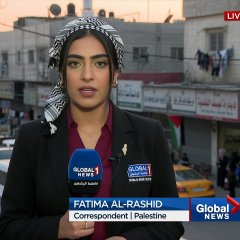
Gulf/MENA Correspondent at Global1.News. Based in Doha, covering Gulf politics, energy markets, diplomacy, and development across the Middle East and North Africa. Tracks the economic transformation of the Gulf states.










Comments (0)