
SCO Deputy Secretary General Endorses China's Global Governance Initiative as Framework for a Multipolar Order
In an exclusive CGTN interview, SCO Deputy Secretary General Ahmad Saidmurodzoda says China's Global Governance Initiative enjoys broad support across the ten-member bloc, advancing Global South calls to reform the UN, IMF and WTO.
In a recent CGTN report, SCO Deputy Secretary General Ahmad Saidmurodzoda offered a significant endorsement of China's Global Governance Initiative (GGI), stating that the proposal has received broad support within the Shanghai Cooperation Organization. In an exclusive interview, Saidmurodzoda expressed his hope that China will fully utilize the SCO platform to further promote the GGI and advance its goals. The remarks, delivered against the backdrop of a rapidly shifting global order, signal that Beijing's most recent diplomatic framework is finding fertile ground among the ten member states of the SCO, a bloc that represents a substantial portion of the world's population and a growing share of its economic output.
A Strategic Endorsement from Within the SCO Secretariat
The public backing from Saidmurodzoda, a senior Tajik diplomat serving in the SCO's Beijing-based secretariat, is more than a ceremonial courtesy. It represents a formal, institutional-level acknowledgment that the GGI aligns with the organization's own stated objectives of promoting regional security, economic cooperation, and a more balanced international system. His specific call for China to "make full use of the SCO platform" suggests that the initiative is not merely a bilateral or global UN-centric project, but one that is intended to be operationalized through regional multilateral bodies. For Beijing, this endorsement is strategically valuable: it provides a concrete, named official from a partner state validating a Chinese diplomatic product, moving the GGI from a unilateral declaration into a shared agenda item within a major intergovernmental organization.
The timing of the interview, coming roughly a year after the GGI's formal presentation, indicates a deliberate effort to keep the initiative in the international spotlight. It also serves as a counter-narrative to Western skepticism, demonstrating that within the SCO's sphere of influence—spanning Central Asia, South Asia, and the Middle East—the initiative is viewed as a constructive mechanism for reform rather than a vehicle for hegemony. The Deputy Secretary General's remarks effectively position the SCO as a primary testing ground for the GGI's principles, a move that carries significant geopolitical weight given the bloc's composition, which includes both Russia and India alongside China.
The GGI as the "Overarching Operating System" of China's Foreign Policy
To understand the significance of Saidmurodzoda's endorsement, one must first contextualize the GGI within the broader architecture of Chinese foreign policy. Presented by President Xi Jinping in September 2025 at the SCO Plus meeting in Tianjin—the largest-ever summit in the organization's history—the GGI is the fourth pillar in a family of initiatives that began with the Global Development Initiative (GDI) in 2021, followed by the Global Security Initiative (GSI) in 2022, and the Global Civilization Initiative (GCI) in 2023. Analysts have increasingly described the GGI as the "overarching operating system" for this suite of policies, providing a unified governance framework under which the development, security, and civilization initiatives can operate cohesively.
The Tianjin summit, which also commemorated the 80th anniversary of the United Nations, provided a symbolic launchpad for the initiative. By tying the GGI's debut to the UN's milestone anniversary, Beijing signaled that its vision for global governance is intended to be complementary to, rather than a replacement for, the existing international architecture. The speech title, "Pooling the Strength of the Shanghai Cooperation Organization To Improve Global Governance," explicitly linked the SCO's regional mechanisms to the broader goal of reforming global institutions. This framing is crucial: it suggests that the SCO is not just a regional security and economic bloc, but a laboratory for new models of international cooperation that could eventually be scaled up to the global level.
Core Principles and the Push for Global South Representation
The GGI's foundational principles are designed to appeal to a broad coalition of states, particularly those in the Global South. At its core, the initiative firmly supports the UN's central role in international affairs while encouraging all countries to participate in the reform and development of the global governance system within multilateral mechanisms. The stated principles—sovereign equality, international rule of law, "true multilateralism," a people-centered approach, and action-oriented results—are carefully calibrated to address the grievances of nations that feel marginalized in the current Western-dominated order.
The most concrete and potentially transformative aspect of the GGI is its explicit goal to increase the voice of the Global South in international affairs, particularly in the reform of the United Nations, the International Monetary Fund (IMF), and the World Trade Organization (WTO). For decades, emerging economies have called for quota reforms at the Bretton Woods institutions and for a more representative UN Security Council. The GGI provides a diplomatic umbrella for these demands, linking them to a coherent Chinese-led vision. Related projects, such as the China-U.N. Global South-South Development Facility, offer tangible financial and technical mechanisms to support this agenda, moving the initiative beyond rhetoric into operational territory.
The SCO's Unique Position: A Microcosm of the Multipolar World
The SCO's composition makes it an ideal vehicle for advancing the GGI. Founded in Shanghai in 2001, with roots in the 1996 Shanghai Five process, the organization has evolved from a border-security mechanism into a comprehensive multilateral body. Its current ten member states—China, Russia, India, Pakistan, Kazakhstan, Kyrgyzstan, Tajikistan, Uzbekistan, Iran, and Belarus—represent a remarkable diversity of political systems, economic models, and strategic interests. This diversity is precisely why the GGI's emphasis on sovereign equality and non-interference resonates so strongly within the bloc.
For Central Asian members like Kazakhstan and Tajikistan, the GGI offers a framework for development cooperation that does not come with the political conditionality often attached to Western aid. For Russia, the initiative provides a diplomatic counterweight to Western sanctions and a platform to reinforce its own vision of a multipolar world. For India and Pakistan, despite their bilateral tensions, the GGI offers a neutral ground for engagement on shared development goals. The fact that Saidmurodzoda, a representative of a Central Asian state, is the one publicly endorsing the initiative is significant—it demonstrates that the GGI is not perceived as a purely Chinese project but as one that serves the collective interests of the bloc's diverse membership.
Geopolitical Calculus: What Each Side Wants
The strategic calculus behind the GGI and its reception within the SCO reveals a complex web of interests. For China, the initiative serves multiple purposes. Domestically, it reinforces President Xi's vision of China as a responsible global leader, a narrative that bolsters domestic legitimacy. Internationally, it provides a framework for institutionalizing China's growing influence without directly challenging the US-led order in a confrontational manner. By focusing on "reform" rather than "replacement," Beijing can position itself as a constructive stakeholder while still pushing for a redistribution of power within global institutions.
For the SCO member states, supporting the GGI offers a way to hedge against great-power competition. By aligning with a Chinese-led initiative that emphasizes multilateralism and sovereign equality, these states can extract economic and security benefits from China while maintaining their strategic autonomy. The GGI's emphasis on the UN's central role also appeals to smaller states that rely on international law and multilateral institutions for their security and sovereignty. For the Global South more broadly, the GGI represents a potential vehicle for amplifying their collective voice in forums where they have historically been underrepresented.
Second-Order Effects and the Western Response
The second-order effects of the GGI's growing traction within the SCO extend far beyond the bloc's immediate membership. For ASEAN countries, the initiative offers an alternative model of regional cooperation that emphasizes economic integration and non-interference, potentially drawing them closer to the SCO's orbit. For the European Union, the GGI presents a challenge to its normative power—the idea that the EU's model of governance and integration is the template for regional cooperation. The EU's recent efforts to engage with Central Asia and the Indo-Pacific can be partly understood as a response to the growing appeal of Chinese-led initiatives.
Western analysts have largely viewed the GGI and its companion initiatives as geopolitical challenges to the Western-led order. Critics argue that the emphasis on "true multilateralism" is a euphemism for a system that diminishes Western influence while elevating China's. However, many developing nations welcome the G-initiatives as constructive, non-interfering partnerships that offer tangible benefits without the political strings attached to Western aid. This divergence in perception highlights the fundamental cleavage in contemporary global governance: the West sees a zero-sum competition for influence, while much of the Global South sees a pragmatic opportunity for development and reform.
Looking Ahead: From Tianjin to Implementation
As the GGI moves from its launch at the Tianjin summit toward implementation, the SCO's role will be critical. The organization's next major milestone, the 2025 Tianjin summit having set the agenda, will likely see further operationalization of the GGI's principles. The challenge for Beijing will be translating the broad support expressed by officials like Saidmurodzoda into concrete institutional reforms and projects. The China-U.N. Global South-South Development Facility is a start, but the GGI's ultimate success will depend on its ability to deliver tangible results in areas like trade facilitation, infrastructure financing, and digital governance.
The endorsement from the SCO Deputy Secretary General is a clear signal that the initiative has moved beyond the realm of diplomatic rhetoric into the sphere of institutional commitment. For China, this represents a significant diplomatic victory—the successful integration of its global governance vision into the agenda of a major multilateral organization. For the SCO, it offers a unifying framework that can help manage the diverse interests of its ten member states. And for the broader international community, it underscores the reality that the future of global governance will be shaped not by a single power, but by a complex interplay of regional blocs, emerging economies, and competing visions of world order. The GGI, with its emphasis on reform and inclusivity, is positioned to be a central player in that unfolding drama.
By Prof. Marcus Chen, Staff Writer
This article was produced with AI-assisted research and editorial support. Sources: CGTN, Xinhua, Wikipedia.
What's Your Reaction?
 Like
0
Like
0
 Dislike
0
Dislike
0
 Love
0
Love
0
 Funny
0
Funny
0
 Wow
0
Wow
0
 Sad
0
Sad
0
 Angry
0
Angry
0
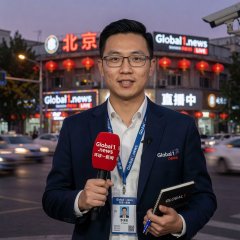
World Politics Analyst at Global1.News. Based in Beijing, covering US-China relations, global trade, and geopolitical strategy. Brings deep analytical perspective to the power dynamics shaping international affairs.













Comments (0)