
Tourist police arrest driver accused of posing as officer using AI-edited images
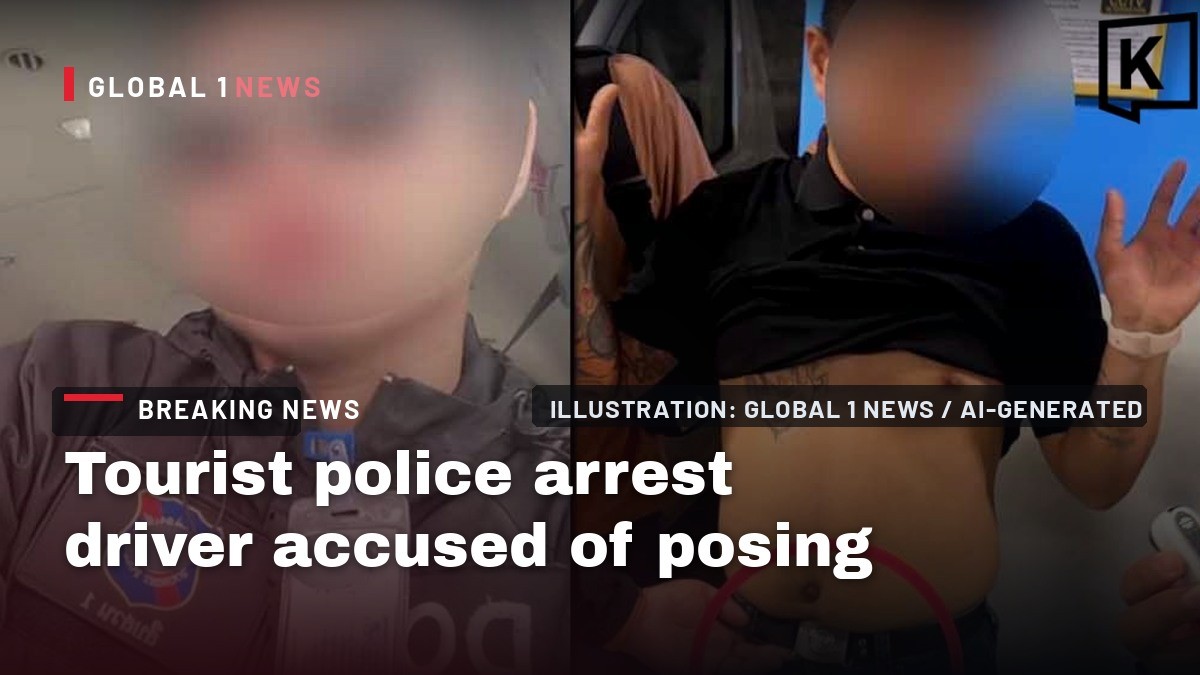
A Driver's Double Life: The Cautionary Tale of a Fake Police Officer in the Digital Age BANGKOK — In a story that reads like a script for a Thai drama, tourist police have arrested a 29-year-old government driver accused of living a double life. The man, identified as Yuenyong, allegedly used photo-editing software and artificial intelligence to create convincing images of himself as a police officer, complete with arrest scenes and posed photographs alongside police teams.
A Driver's Double Life: The Cautionary Tale of a Fake Police Officer in the Digital Age
BANGKOK — In a story that reads like a script for a Thai drama, tourist police have arrested a 29-year-old government driver accused of living a double life. The man, identified as Yuenyong, allegedly used photo-editing software and artificial intelligence to create convincing images of himself as a police officer, complete with arrest scenes and posed photographs alongside police teams. The arrest, which took place on Wednesday at the Chaeng Watthana Government Complex in Bangkok, has sent ripples through the capital's bureaucratic heart, raising questions about trust, identity, and the persuasive power of digital manipulation.
The case began with a simple complaint from an official at the sprawling government complex, a hub that houses numerous ministries and agencies along Chaeng Watthana Road. The official reported that a government driver had been dressing like an investigative police officer, claiming to hold the rank of police lance corporal with the Tourist Police Bureau. What followed was a meticulous investigation that peeled back layers of deception, revealing a web of prior criminal charges and a motive rooted in the all-too-human desire for social approval.
For Thai readers, this story touches a nerve. In a culture where respect for authority and the uniform runs deep, the idea of someone exploiting that trust for personal gain feels particularly jarring. It also serves as a stark reminder of how technology, while a tool for connection, can be twisted into a weapon of deceit. As we navigate the digital landscape, the line between reality and fabrication grows ever thinner, and this case from the heart of Bangkok's government district illustrates that challenge with unsettling clarity.
The Investigation Unfolds at Chaeng Watthana
The operation was ordered by Tourist Police Bureau chief Pol. Lt. Gen. Saksira Phueak-am and deputy chief Pol. Maj. Gen. Phongsayam Meekhanthong, who directed investigators led by Pol. Col. Man Rotthong to look into the matter. The team moved swiftly, visiting the Chaeng Watthana Government Complex to examine the suspect's social media accounts. There, they identified Yuenyong, who had allegedly posted a series of images online portraying himself as a police officer in various stages of duty.
According to investigators, Yuenyong used sophisticated photo-editing programs and AI technology to alter images, making it appear that he was actively performing police work. The photographs showed him arresting suspects, standing alongside police arrest teams, and generally projecting an image of authority and competence. To the untrained eye, the images were convincing, a testament to how far digital tools have come in blurring the boundaries of reality.
The investigation confirmed that Yuenyong was indeed employed as a driver for a government agency at the complex. This detail added a layer of irony to the case, as he was operating under the very noses of the officials he sought to impersonate. Police monitored his activities, collected evidence from his social media accounts, and conducted a thorough check of his criminal record. What they found painted a picture of a man with a troubled past, one that stood in stark contrast to the polished image he projected online.
A Troubled Past and a Trail of Charges
The background check revealed that Yuenyong was no stranger to the law. Investigators found that he had been linked to several cases, including drug use and possession, joint fraud, and the transportation of undocumented migrant workers. In each of these cases, he had been released on bail but subsequently fled, leaving a trail of unresolved legal matters in his wake. This pattern of behavior suggested a man who was adept at evading responsibility, a trait that would serve him poorly in the face of the current charges.
More significantly, Yuenyong was wanted under an arrest warrant issued by the Maha Sarakham Provincial Court, No. 376/2024, dated June 27, 2024. The warrant was related to a charge of allegedly entering false information into a computer system, a crime that carries serious penalties under Thailand's Computer Crime Act. This prior warrant added a layer of urgency to the investigation, as police were dealing with a fugitive who had managed to remain at large while working in a government capacity.
The connection to Maha Sarakham, a province in the northeastern Isaan region, is noteworthy. It serves as a reminder that issues of crime and deception are not confined to Bangkok's urban sprawl but reach into the heartland of Thailand. For readers in the Isaan region, this case may resonate on a personal level, highlighting the need for vigilance in both physical and digital spaces, regardless of one's location.
The Arrest and the Confession
Investigators eventually located Yuenyong lying inside a van parked on the B1 floor of Building C at the government complex. The arrest was carried out without incident, though a search of the vehicle allegedly found equipment associated with drug use, adding another charge to the growing list. The discovery underscored the depth of the suspect's involvement in illicit activities, painting a picture of a man whose life was far removed from the respectable image he had crafted online.
In a surprising turn, Yuenyong reportedly confessed to all charges. He told investigators that he had created the images and pretended to be a police officer because he wanted to impress several women he was dating after meeting them through social media. The confession, delivered with a candor that belied the seriousness of the situation, revealed a motive that was both simple and deeply human. He also admitted that the police identification card he used was self-made, a homemade prop in a performance that had spiraled out of control.
The confession raises uncomfortable questions about the pressures of modern dating and the lengths to which some will go to project an image of success. In Thailand's vibrant social media culture, where curated personas are the norm, Yuenyong's actions represent an extreme example of a broader phenomenon. The desire to impress, to be seen as successful and powerful, can lead individuals down dangerous paths, particularly when technology makes it easier than ever to fabricate a false reality.
Legal Implications and the Path Forward
Police took Yuenyong to the Maha Sarakham Provincial Court for further legal proceedings, where he will face the full weight of the charges against him. These include impersonating a police officer, a serious offense in Thailand that carries significant penalties, as well as the prior charges related to drug use, fraud, and the transportation of undocumented migrants. The case will now move through the Thai legal system, a process that could take months or even years to resolve.
For the Royal Thai Police, this case represents a victory in their ongoing efforts to maintain the integrity of the force. Impersonation of police officers undermines public trust in law enforcement, a cornerstone of a functioning society. By swiftly investigating and arresting Yuenyong, the Tourist Police Bureau has sent a clear message that such behavior will not be tolerated. The case also highlights the importance of digital literacy, as the ability to spot manipulated images becomes an increasingly vital skill in an age of AI-generated content.
The legal implications extend beyond the individual case. As AI technology becomes more sophisticated, the potential for misuse grows exponentially. This case serves as a cautionary tale for lawmakers and law enforcement agencies across the ASEAN region, who must grapple with the challenges posed by rapidly evolving digital tools. Thailand, as a regional leader in technology adoption, is at the forefront of these efforts, and the handling of this case will be watched closely by neighboring countries facing similar issues.
A Warning for the Digital Age
For the Thai public, this story offers several lessons. First, it underscores the importance of verifying identities, particularly when dealing with individuals met online. The ease with which Yuenyong created a convincing false persona should give pause to anyone who places blind trust in social media profiles. Second, it highlights the need for robust digital literacy education, equipping citizens with the tools to critically evaluate the images and information they encounter online.
The case also touches on broader themes of trust and authority in Thai society. The uniform of a police officer carries significant weight, representing the state's power to protect and serve. When that uniform is worn by someone unworthy, it erodes the very foundations of that trust. For the Tourist Police Bureau, which works tirelessly to ensure the safety of visitors to Thailand's many attractions, this case is a reminder of the importance of vigilance in maintaining the public's confidence.
As Yuenyong awaits his day in court, his story serves as a cautionary tale about the dangers of living a lie. In a world where digital tools can make anyone appear to be anything, the importance of authenticity and honesty has never been more critical. For the women he sought to impress, the revelation of his deception must have been a shocking betrayal. For the public, it is a reminder that what we see online is not always what it seems.
The investigation, led by Pol. Col. Man Rotthong and his team, was conducted with professionalism and efficiency, reflecting the high standards of the Tourist Police Bureau. Their work in bringing this case to a swift resolution demonstrates the commitment of Thai law enforcement to upholding the law and protecting the public from those who would exploit their trust. As Thailand continues to navigate the complexities of the digital age, cases like this will serve as important reference points for both law enforcement and the public alike.
In the end, this is a story about the human desire for connection and the lengths to which some will go to achieve it. It is also a story about the power of technology to both enhance and undermine our lives. As we move forward, the challenge will be to harness the benefits of AI and digital tools while guarding against their potential for harm. For now, the case of Yuenyong stands as a reminder that in the digital age, trust must be earned, not assumed.
By Ann Srisawat, Staff Writer
This article was produced with AI-assisted research and editorial support. Sources: Khaosod English.
What's Your Reaction?
 Like
0
Like
0
 Dislike
0
Dislike
0
 Love
0
Love
0
 Funny
0
Funny
0
 Wow
0
Wow
0
 Sad
0
Sad
0
 Angry
0
Angry
0

Southeast Asia Correspondent at Global1.News. Based in Bangkok, covering Thai and Southeast Asian politics, economy, technology, and culture. Deep regional perspective on one of the world's most dynamic regions.














Comments (0)