
Saudi Textbooks Drop Anti-Israel Phrases, No Recognition Yet
Saudi Arabia has reportedly removed the sentence "The Muslims will never give up Jerusalem" from a Grade 11 Arabic textbook, per an IMPACT-se review of the 2024-2026 curriculum. The changes soften anti-Israel language but stop short of recognizing Israel on maps.
In a recent i24NEWS English report, Saudi Arabia's quiet but significant educational shift came into focus: the removal of the sentence "The Muslims will never give up Jerusalem" from a Grade 11 Arabic Language textbook. The finding, published by the Ramat Gan-based Institute for Monitoring Peace and Cultural Tolerance in School Education (IMPACT-se), is being framed as part of a broader "coexistence shift" in Saudi educational materials — a development with direct implications for Israeli policymakers, regional diplomacy, and the long-shot prospect of normalization between Jerusalem and Riyadh.
Saudi Textbooks Drop Anti-Israel Language, But Recognition Remains Elusive
Jerusalem, Israel — The sentence "The Muslims will never give up Jerusalem" has been removed from a Grade 11 Arabic Language textbook in Saudi Arabia, according to IMPACT-se's "Review of Saudi Textbooks 2024-2026," published in late July. The review examined 136 textbooks used during the 2024-25 and 2025-26 academic years, marking the latest chapter in a gradual moderation of Saudi educational content that Israeli analysts have tracked for years.
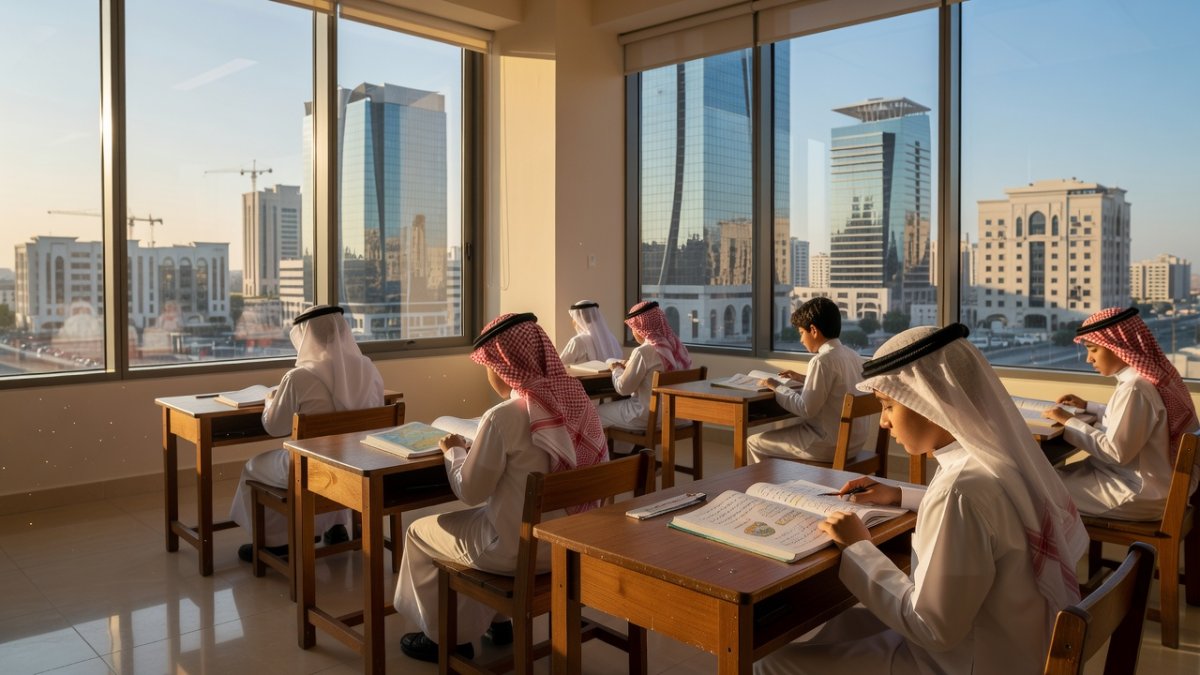
What Changed in the Saudi Curriculum
The IMPACT-se review documented several notable revisions. Beyond the Jerusalem sentence removal from the Arabic writing exercise, a Grade 11 History textbook replaced the phrase "the Zionist enemy" with "the Israeli occupation." Multiple Social Studies textbooks that previously labeled internationally recognized Israeli territory as "Palestine" on maps now leave the territory unnamed. A removed lesson titled "The Zionist Danger," previously included in a Hadith textbook for Grades 10-12, had accused Israel of seeking territorial expansion from the Nile River to the Euphrates to establish "Greater Israel."
According to the report, all instances previously classified as antisemitic were removed from the latest curriculum reviewed. The changes stop short of formal recognition: Israel remains absent from many maps used in the curriculum, and textbooks still describe Israel as an "occupying state," including in relation to periods before 1967. The Saudi Ministry of Education has not publicly confirmed the changes, and the findings rely on IMPACT-se's independent review of the materials.
These curriculum reforms are part of a broader trajectory since 2020, when Saudi Arabia began revising content across multiple subjects under Crown Prince Mohammed bin Salman's Vision 2030 framework. IMPACT-se's summary described the Saudi curriculum as "continuing its trajectory of positive educational reform, further strengthening messages of peace, coexistence, and critical thinking while reducing extremist content," with "ongoing progress in how textbooks present religious minorities, gender equality, and tolerance."
IMPACT-se's Role in Tracking Regional Education
IMPACT-se, based in Ramat Gan, has long tracked Arab curriculum reform as a leading indicator of normalization readiness. The organization works with the Seymour Fox School of Education at Hebrew University Jerusalem, giving its findings academic weight in Israeli policy circles. For years, IMPACT-se's reports have been cited by Israeli officials and foreign ministries as evidence of whether regional partners are preparing their populations for peaceful coexistence.
The organization's methodology involves systematic review of textbooks across multiple countries, cataloging references to Israel, Jews, Zionism, and other religious minorities. The Saudi review is part of a broader portfolio that includes Palestinian Authority, Jordanian, Egyptian, and Gulf state curricula. The removal of antisemitic content and the softening of anti-Israel language in Saudi materials represents a measurable shift from the rhetoric that dominated Saudi educational materials for decades.

Regional Context: Normalization Talks and Regional Shifts
The textbook changes come amid on-again, off-again normalization talks between Jerusalem and Riyadh. Prime Minister Benjamin Netanyahu and Crown Prince Mohammed bin Salman reportedly spoke around recent Arab League meetings, though MBS reportedly rejected a Netanyahu request for a face-to-face meeting. The diplomatic dance has been complicated by regional developments, including the November 2025 US announcement of F-35 sales to Saudi Arabia without conditioning the sale on peace with Israel.
The so-called Mecca Pact — a defense axis comprising Turkey, Saudi Arabia, and Pakistan — has raised questions in Israel about the viability of normalization. Israeli defense officials have watched the pact warily, uncertain whether it represents a genuine strategic alignment against Israeli interests or a symbolic gesture with limited operational significance. The F-35 sale, meanwhile, was seen in Jerusalem as a US signal that Washington is willing to advance Saudi military capabilities regardless of the normalization track.
Israel's October 27, 2026 elections loom, and Netanyahu's government has sought normalization with Saudi Arabia as a signature achievement. The Abraham Accords of 2020 normalized Israel's relations with the UAE, Bahrain, Morocco, and Sudan, but Saudi Arabia has long been viewed as the ultimate prize — a nation with religious significance, regional heft, and the ability to shift the broader Arab-Israeli dynamic.
Diplomatic and International Reactions
The IMPACT-se report has not yet drawn official comment from the Israeli Foreign Ministry or the Prime Minister's Office. However, Israeli officials familiar with the normalization track have privately noted that educational reform is a prerequisite for any sustainable peace agreement. The logic is straightforward: treaties signed by governments must be sustained by populations, and textbooks shape the next generation's attitudes toward former enemies.
In Washington, the report is likely to be viewed as supporting the Trump administration's efforts to broker a Saudi-Israeli normalization deal. The US has invested significant diplomatic capital in the file, viewing it as a cornerstone of regional stability. The F-35 sale, announced without conditioning on peace with Israel, was seen by some analysts as a US attempt to build Saudi confidence while keeping the normalization door open.
European governments with strong ties to the Gulf have also monitored Saudi educational reforms closely. Curriculum moderation has been a recurring theme in international engagement with Gulf states, and the reported Saudi changes align with long-standing Western calls on regional partners to remove content that delegitimizes other nations.
Analysis and What This Means
The removal of "The Muslims will never give up Jerusalem" from Saudi textbooks is symbolically significant but substantively limited. For Israeli readers, the change signals that Riyadh is preparing its population for a potential shift in relations — but the persistence of maps omitting Israel and the continued framing of Israel as an "occupying state" indicate that formal recognition remains a distant prospect.
The timing matters. With Israeli elections scheduled for October 27, 2026, Netanyahu needs a diplomatic win. Normalization with Saudi Arabia would be the crown jewel of his foreign policy legacy, surpassing the Abraham Accords in strategic importance. The textbook changes, while incremental, provide Israeli officials with evidence that Saudi Arabia is serious about long-term coexistence — a narrative that could bolster Netanyahu's case that normalization is achievable.
However, the caution flags are equally important. The Saudi Ministry of Education has not confirmed the changes, and the report is based on IMPACT-se's independent review. The changes stop well short of recognition: Israel is still absent from maps, and the "Israeli occupation" framing persists even for pre-1967 periods. The removal of the "Zionist Danger" lesson is notable, but it does not constitute an endorsement of Israeli legitimacy.
For the broader region, the Saudi educational shift reflects a generational change. Crown Prince Mohammed bin Salman's Vision 2030 is not merely an economic diversification plan; it is a social and cultural reorientation that includes rethinking how Saudi students learn about the world. The moderation of anti-Israel content is part of a larger pattern of reducing extremist content across the curriculum, including content related to religious minorities and gender equality.
The implications for Israeli daily life are indirect but real. If normalization proceeds, Israeli tourists, businesspeople, and diplomats would encounter a Saudi population educated with less hostile materials. The absence of antisemitic content in textbooks is a prerequisite for any meaningful people-to-people contact. For Israeli security officials, educational reform in Saudi Arabia reduces the ideological fuel that has historically fed regional conflict.
The path to normalization remains fraught. The Mecca Pact, the F-35 sale, and the unresolved Palestinian issue all complicate the track. But the textbook changes, however incremental, provide a measurable indicator that Saudi Arabia is moving in a direction that could eventually make normalization possible. IMPACT-se's report offers Israeli policymakers a tool to assess Saudi readiness and to make the case that the window for a historic agreement may be opening.
For now, the changes are reported, not confirmed. The Saudi Ministry of Education has remained silent, and the textbooks in question are not yet available for public scrutiny in Israel. But the trajectory is clear: Saudi Arabia is slowly, cautiously, and deliberately moderating its educational content. Whether that moderation leads to normalization depends on factors far beyond the classroom — but the classroom is where the foundation is being laid.
By Hannah Berg, Staff Writer
This article was produced with AI-assisted research and editorial support. Reporting is based on sources cited in the article.
What's Your Reaction?
 Like
0
Like
0
 Dislike
0
Dislike
0
 Love
0
Love
0
 Funny
0
Funny
0
 Wow
0
Wow
0
 Sad
0
Sad
0
 Angry
0
Angry
0
Israel Correspondent at Global1.News. Based in Tel Aviv, covering Israeli politics, security, technology, and society. Provides balanced, deeply-sourced reporting on one of the most closely-watched regions in the world.












Comments (0)