
Sacha has never been ordinary
When the Springboks’ fly‑half Sacha Feinberg‑Mngomezulu steps onto the field, the roar from the stands is not just for the colour of the jersey but for the promise of a player who refuses to be ordinary.
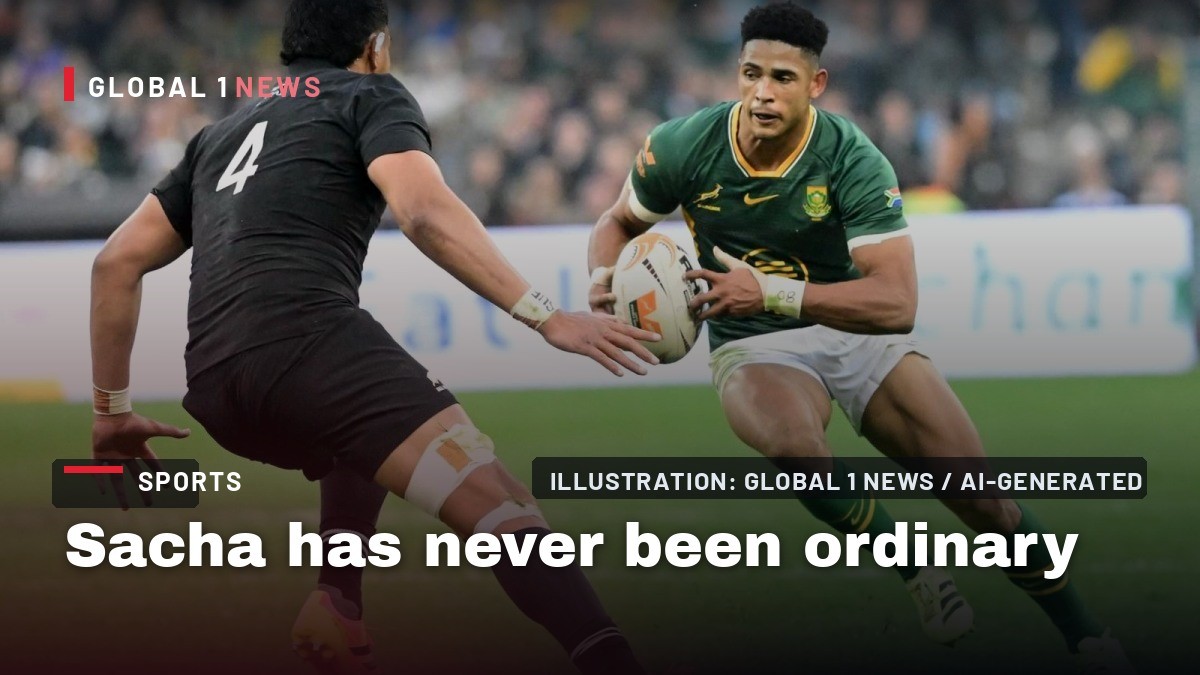
When the Springboks’ fly‑half Sacha Feinberg‑Mngomezulu steps onto the field, the roar from the stands is not just for the colour of the jersey but for the promise of a player who refuses to be ordinary. Mark Keohane’s recent column in the Sunday Times, re‑published in SARugbyMag, makes a compelling case that Sacha’s brilliance should be measured by the things he gets right, not by the lofty expectations he has set for himself. As we head into the crucial phases of the 2026 Rugby World Cup, the South African public and pundits alike need to re‑calibrate how they assess the 24‑year‑old’s contribution to the national side.
Setting the scene: a spectacular 37‑point display
Keohane points out that the memory of Sacha’s 37‑point haul against Argentina in Durban last year still looms large over his reputation. That performance, a dazzling showcase of kicking precision and attacking flair, has become the benchmark against which every subsequent Test is measured. The column argues that this single spectacular outing has distorted the public’s perception of what constitutes a good Test from a young fly‑half still finding his footing at the highest level.
While the 37‑point night was a highlight, it also created an unrealistic yardstick. Fans and analysts, accustomed to that level of output, may overlook the subtler, yet equally important, aspects of Sacha’s game – his physicality, his line‑kicking under pressure, and his willingness to carry the ball into contact. These attributes, Keohane notes, are the building blocks of a well‑rounded play‑maker, even if they do not always translate into a flood of points on the scoreboard.
Consistency against the All Blacks
One of the strongest arguments in Keohane’s column is Sacha’s record against New Zealand. He started all four Tests in the recent series and, remarkably, finished on the winning side in six of his seven career appearances against the All Blacks. That statistic, drawn directly from the column, underscores a consistency that many critics overlook when they focus solely on individual match scores.
Beyond the raw numbers, Keohane observes that Sacha’s influence grew as the series progressed. Early on, his role was more conventional, but as the contests unfolded, his physicality and line‑kicking became pivotal in dictating territory and tempo. The ability to adapt and expand his skill set against the world’s toughest opposition is a testament to his evolving game management.
Versatility as a tactical asset
Rassie Erasmus’s decision to shift Sacha from fly‑half to fullback during the series is highlighted as a strategic masterstroke rather than a sign of deficiency. Keohane stresses that this positional flexibility allowed Erasmus to introduce Manie Libbok at fly‑half later in matches, creating a dynamic shift that kept opponents guessing. The column frames this move as a strength, showcasing Sacha’s adaptability and the depth of talent within the Springbok squad.
Such versatility is rare among modern fly‑halves, who often specialise in a single role. Sacha’s comfort in the back three, coupled with his ability to execute line kicks and counter‑attack from deeper positions, adds a valuable dimension to the Springboks’ attacking arsenal. For South African fans, this means a broader tactical palette and more opportunities to see their heroes in varied roles on the field.
Comparisons with the All Blacks’ play‑maker
Keohane draws a direct comparison between Sacha and the All Blacks’ fly‑half Ruben Love. He notes that Love started the series strongly at Ellis Park but saw his influence wane in Cape Town and at FNB Stadium, eventually being dropped for the Baltimore Test. By contrast, Sacha’s impact grew, reinforcing the argument that his contributions are not merely flash in the pan but part of a sustained upward trajectory.
This juxtaposition serves a dual purpose: it highlights the competitive nature of international rugby and underscores the importance of consistency over fleeting brilliance. For South African supporters, seeing their play‑maker outshine a rival’s counterpart in the latter stages of a series adds a layer of pride and validates the Springboks’ selection choices.
The inevitability of mistakes
Keohane does not shy away from acknowledging that Sacha’s willingness to back himself inevitably leads to errors. The column admits that spectacular moments are often accompanied by mis‑steps, a natural by‑product of a player who constantly pushes the boundaries of his own game. However, the emphasis is placed squarely on the totality of his performance rather than isolated slip‑ups.
This balanced perspective is crucial for a nation that has, at times, been unforgiving of its sporting heroes. By framing mistakes as part of a broader narrative of growth and contribution, Keohane invites fans to adopt a more nuanced view – one that celebrates the positives while understanding the learning curve inherent in elite sport.
Why South Africans should feel fortunate
At the heart of the column lies a simple, resonant message: “He is special and South Africans should be fortunate he wears Springboks green and gold.” This sentiment taps into the deep emotional connection between South Africans and their national teams. The pride of seeing a home‑grown talent excel on the world stage is a unifying force, especially in a country where sport often bridges social and cultural divides.
For a nation still navigating the complexities of transformation and representation in sport, Sacha’s rise offers a narrative of meritocracy blended with inclusivity. His presence in the squad, and his ability to perform at the highest level, reinforces the idea that talent from all backgrounds can thrive under the Springbok banner.
Looking ahead: the 2026 World Cup and beyond
As the Springboks gear up for the 2026 Rugby World Cup, the insights from Keohane’s column provide a roadmap for how Sacha’s role may evolve. His proven track record against the All Blacks, his versatility across back‑line positions, and his growing game‑management acumen suggest he will be a central figure in South Africa’s campaign.
Fans and analysts should watch for how Rassie Erasmus continues to utilise Sacha’s skill set – whether as a primary play‑maker at fly‑half, a territorial asset at fullback, or a hybrid role that leverages his physicality and kicking prowess. Whatever the configuration, the message is clear: celebrate the things he gets right, and recognise that his journey is still unfolding. In doing so, South Africans can continue to rally behind a player who embodies the spirit, resilience, and flair that define our beloved Springboks.
This article was produced with AI-assisted research and editorial support. Reporting is based on the source material cited below. Sources: SARugbyMag; sarugbymag.co.za; Global1.News (20 September 2026).
By Dante Williams, Staff Writer
What's Your Reaction?
 Like
0
Like
0
 Dislike
0
Dislike
0
 Love
0
Love
0
 Funny
0
Funny
0
 Wow
0
Wow
0
 Sad
0
Sad
0
 Angry
0
Angry
0

Breaking News and Investigations Correspondent at Global1.News. Based in London, covering global breaking news, security, and investigative stories. Known for digging deeper and connecting the dots across continents.












Comments (0)