
UK-based rights group warns over 1/2 million children in Gaza lack safe shelter amid Israeli restrictions
More than half a million children in the Gaza Strip are now living without safe shelter, a stark warning issued by a UK‑based rights group after a single storm flooded tens of thousands of tents in one day.
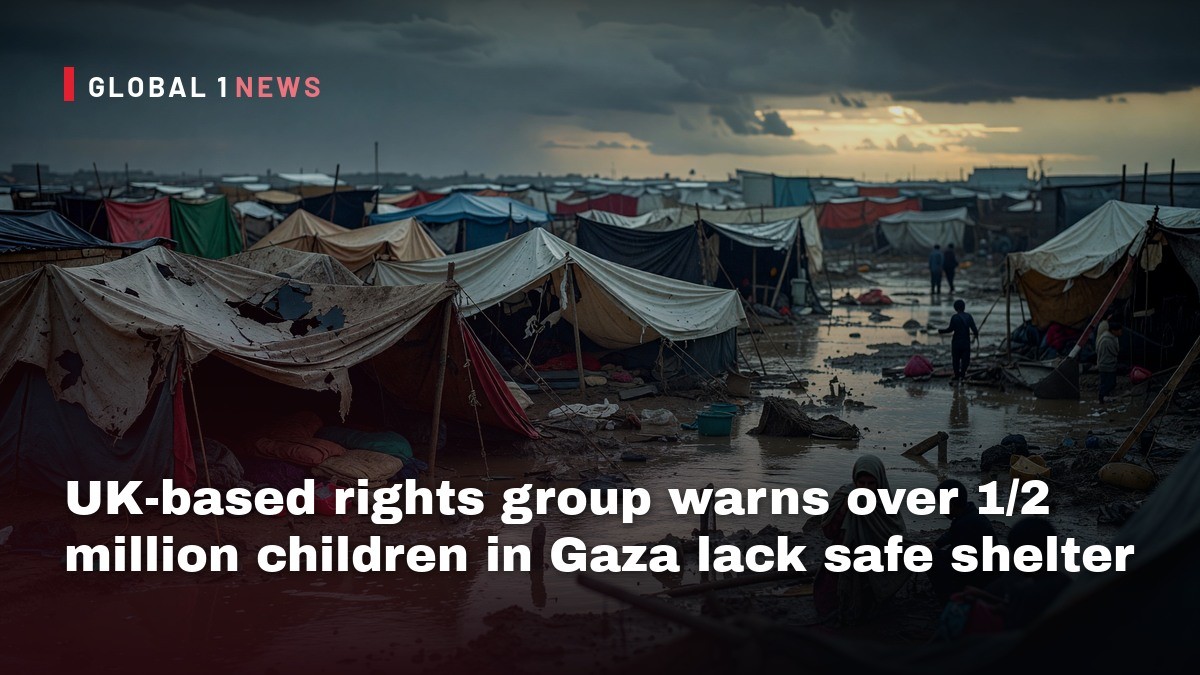
More than half a million children in the Gaza Strip are now living without safe shelter, a stark warning issued by a UK‑based rights group after a single storm flooded tens of thousands of tents in one day. The storm, which struck Gaza on Friday evening, turned makeshift camps into flood‑plagued corridors of misery, underscoring how Israeli restrictions on essential humanitarian supplies have turned a harsh winter into a humanitarian catastrophe for the most vulnerable.
The storm’s immediate impact
The heavy rainfall that arrived on Friday evening overwhelmed the fragile tent settlements that house displaced Palestinians across Gaza. According to the Government Media Office, the deluge flooded more than 70,000 tents and knocked down dozens of war‑damaged walls, leaving families scrambling for dry space and exposing children to cold, water‑logged conditions. Photographs captured by local media showed children huddled in makeshift shelters, their faces marked by the shock of sudden flooding.
In the aftermath, the Civil Defense of Deir al‑Balah reported a tragic collapse of a sand embankment that crushed tents, killing two women and three children late on Sunday. The incident highlighted how the combination of inadequate shelter structures and the lack of protective barriers amplifies the risk of loss of life when extreme weather strikes.
Scale of the shelter crisis
Save the Children, citing a recent assessment by the Palestine Shelter Cluster, warned that about 58 % of Gaza’s population—roughly 1.2 million people—are living in “critical or catastrophic” shelter conditions. Within that figure, over 560,000 children are counted among those whose homes have been reduced to torn canvas or makeshift walls. The organization stressed that these numbers reflect a deepening emergency that has persisted through four consecutive winters of inadequate shelter.
The assessment also revealed that nearly half of the families surveyed are forced to burn plastic, tires, garbage or cardboard for cooking and heating. An overwhelming 84 % said they have no effective way to heat their shelters, forcing them to resort to dangerous improvisations that endanger health as much as they provide warmth.
Health hazards of makeshift heating
Burning plastic, tires and other waste releases toxic fumes that can cause serious respiratory illnesses, smoke inhalation and carbon monoxide poisoning. Save the Children warned that these hazards also increase the risk of fires and burns, compounding the already precarious living conditions. For children already weakened by malnutrition and the trauma of conflict, exposure to such pollutants can have lasting, life‑altering consequences.
The organization highlighted that eleven children died from hypothermia in the previous year, a figure that underscores how exposure to cold can be as lethal as any direct conflict. Ahmad Alhendawi, regional director at Save the Children International, emphasized that these deaths were “entirely foreseeable” given the lack of winter clothing, heating equipment and adequate shelter.
Restrictions that block lifesaving aid
Save the Children pointed to Israeli restrictions that have systematically blocked the entry of essential winter aid. While the ceasefire announced over a year ago promised the delivery of more durable shelter solutions such as caravans, Israeli authorities have repeatedly prevented these from reaching Gaza. The group listed tents, tarpaulins, plastic sheeting, insulation materials, blankets, fuel, cooking gas, heating equipment and construction materials as items still waiting at the border.
Alhendawi described the situation as a “choice” made by the Israeli government, noting that the materials needed to keep children safe are sitting at the border while families endure floodwater and bitter cold. He argued that the failure to allow these supplies is not merely a logistical shortfall but a deliberate policy decision that leaves children to pay the price.
Human stories behind the numbers
Images from Gaza City on November 7 showed children perched in makeshift tents, their faces illuminated by the dim light of burning garbage. The sight of families huddling together, wrapped in thin blankets, conveys the daily reality of living in shelters that can be swept away by a sudden downpour. For many, the tents are the only barrier between them and the open sky, yet they offer little protection against wind, rain or the cold.
Parents speak of the agonizing dilemma of heating their homes with hazardous materials. “We have no fuel, no blankets, and the only thing we can burn is plastic,” one mother told reporters, her voice shaking. “My children cough all the time, but they are cold, and I cannot do anything else.” Such testimonies illustrate how the lack of basic humanitarian assistance translates into chronic health risks and psychological trauma for Gaza’s youngest residents.
International law and the right to shelter
International humanitarian law obliges occupying powers to ensure the welfare of civilian populations, including the provision of adequate shelter, food, water and medical care. The persistent blockade of essential winter supplies raises serious questions about compliance with these legal obligations. The United Nations rapporteur on the rights of the child has previously described the plight of Gaza’s children in flooded tents as a “disgrace of our era,” underscoring the moral and legal imperative to protect vulnerable civilians.
Save the Children’s statement framed the ongoing restrictions as a violation of children’s rights to health, safety and a standard of living adequate for their development. By preventing the entry of shelter kits and heating equipment, the restrictions exacerbate the impact of the conflict on children, contravening the principle of proportionality that requires parties to a conflict to avoid measures that cause excessive civilian suffering.
Looking ahead: urgent calls for action
The rights group’s warning arrives at a critical moment as Gaza prepares for another winter season. With more than half a million children still without safe shelter, the risk of further flooding, hypothermia and health crises remains high. Save the Children urged the international community to pressure Israeli authorities to lift the blockade on essential winter aid and to ensure that humanitarian corridors remain open for the delivery of shelter kits, fuel and medical supplies.
In the words of Ahmad Alhendawi, the situation is “entirely foreseeable” and therefore entirely preventable. He called on donors, governments and multilateral agencies to act swiftly, emphasizing that the lives of Gaza’s children hang in the balance. As the region braces for colder months, the world faces a stark choice: to continue a policy that leaves children exposed to the elements, or to uphold the humanitarian principles that demand protection for the most vulnerable.
This article was produced with AI-assisted research and editorial support. Reporting is based on the source material cited below. Sources: Middle East Monitor; middleeastmonitor.com; Global1.News (11 November 2026).
By Fatima Al-Rashid, Staff Writer
What's Your Reaction?
 Like
0
 Dislike
0
 Love
0
 Funny
0
 Wow
0
 Sad
0
 Angry
0
Gulf/MENA Correspondent at Global1.News. Based in Doha, covering Gulf politics, energy markets, diplomacy, and development across the Middle East and North Africa. Tracks the economic transformation of the Gulf states.











Comments (0)