
'R1' Ordered Manzo's Murder for Defying Cartel, Says Security Minister
On Friday, July 31, 2026, Security Secretary Omar Garcia Harfuch revealed at the mañanera that the CJNG ordered Uruapan Mayor Carlos Manzo's murder over a perceived "provocation." With 31 arrests and the capture of alleged mastermind "El R1," Uruapan's search for justice takes a major step forward.
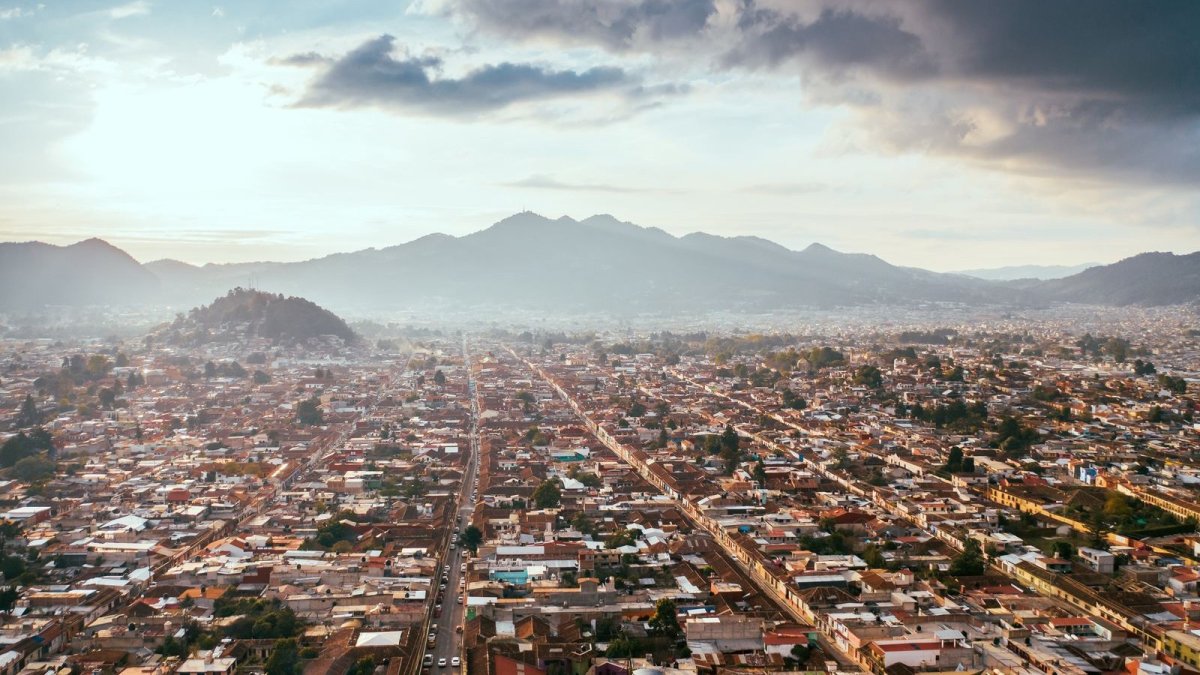
'R1' Ordered Manzo's Murder for Defying Cartel, Says Security Minister
On Friday, July 31, 2026, Mexico's Security Secretary Omar García Harfuch stood before the nation at the morning mañanera from Palacio Nacional and delivered the answer Uruapan had been waiting eight months to hear: the man accused of ordering the murder of beloved Mayor Carlos Manzo acted because the Jalisco New Generation Cartel, the CJNG, felt provoked by the mayor's defiance. The revelation came just one day after federal forces captured Ramón Ángel "N," alias "El R1," the alleged intellectual author of one of the most shocking political assassinations in recent Mexican history. For the families of Uruapan, for the avocado farmers and merchants of Michoacán's agricultural heartland, and for a community that watched its leader fall during the Festival de las Velas, the announcement was more than a headline — it was the first full chapter of a truth they have demanded since November.
Tags: Carlos Manzo, Uruapan, El R1, CJNG, García Harfuch, Michoacán, cartel violence, mañanera, Grecia Quiroz, organized crime
The Mañanera Revelation: A Motive Called 'Provocation'
From the podium of Palacio Nacional, García Harfuch explained that statements gathered from detained suspects point to what they themselves described as "una provocación" — a provocation — as the motive behind the murder of Carlos Manzo. According to the security minister, when the Secretariat of National Defense or the National Guard carried out detentions in the region, the Uruapan mayor was often present, making direct allusions to the criminal group. Those actions, investigators believe, were perceived by the CJNG as an affront that warranted a lethal response.
"It is the term they use, the detainees," Harfuch said, carefully noting that the motive will continue to be refined as the investigation advances and, above all, as El R1 gives his statement to authorities. What is already clear, the secretary emphasized, is that El R1 not only ordered the attack on Manzo during the Festival de las Velas on the night of November 1, 2025 — he financed it. The admission reframes the assassination not as random cartel violence but as a calculated, ordered act of retaliation against a mayor who refused to look away.
Who Was Carlos Manzo? The 'Robin Hood' Mayor of Uruapan
Carlos Manzo Rodríguez was not an ordinary municipal president. The cowboy hat-wearing mayor of Uruapan, a prosperous agricultural city in the heart of Michoacán, had become a folk hero to many Mexicans — a modern-day Robin Hood who appeared in social media videos accompanying police on crime-fighting operations, confronting the criminal groups that had long shadowed the region's avocado and citrus wealth. His murder on the night of November 1, 2025, at Plaza Morelos during the Festival de las Velas, while he was on the street with his family for the Day of the Dead celebrations, shocked the nation and ignited international outrage.
In the months before his death, Manzo had become increasingly vocal. He gave speeches denouncing President Claudia Sheinbaum and the Michoacán state government, whom he held responsible for failing to contain violence. He exhibited criminal camps operating in his municipality, reinforced the local police force, and warned publicly that Uruapan had been left vulnerable after some 200 officers were withdrawn from the area. He pleaded with Sheinbaum and García Harfuch directly: do not leave Uruapan alone. The plea, which now reads like a premonition, was made just months before the shots rang out in Plaza Morelos.
The Capture of 'El R1' in Jalisco
On Thursday, July 30, 2026, a joint operation by the Secretariat of Security and Citizen Protection and Special Forces of the Mexican Army descended on the town of Atotonilco el Alto in Jalisco state, where an AFP journalist witnessed the deployment of soldiers and armed vehicles. The target was Ramón Ángel "N," known as El R1, whose full name Mexican media have reported as Ramón Ángel Álvarez Ayala. The arrest came after months of intelligence and investigation work, with information coordinated through the National Intelligence Center.
The operation was not without danger. When officers moved in, El R1's security circle opened fire, and in repelling the aggression, federal forces killed one of the attackers. Another suspect, Jesús Salvador "N," alias "El Chuy," was also captured. García Harfuch confirmed that El R1 was the 31st person detained in connection with the murder of Carlos Manzo — a number that speaks to the depth of the conspiracy and the scale of the federal response. The suspect, the secretary said, has federal antecedents for organized crime and leads "Los Rs," one of the most violent cells tied to the CJNG, operating in Apatzingán, Uruapan, and Morelia in Michoacán, with a presence in neighboring Jalisco.
Los Rs and the CJNG's Grip on Michoacán's Economy
The criminal organization led by El R1 is not a minor operation. According to García Harfuch, Los Rs is tied to extortion, homicides, and drug trafficking, "directly affecting producers, businessmen, and families in the region." The cell finances itself through drug trafficking, extortion, and the infamous cobro de piso — protection rackets levied on lemon and avocado producers, ranchers, merchants, transporters, and even service companies and gambling establishments. For the campesinos of Michoacán, whose avocados and citrus feed national and international markets, this is not abstract: it is the tax of fear paid in every harvest.
Investigators also uncovered a darker element of the plot: a possible data leak from the victim's close circle. Someone close to Manzo allegedly passed information to the cartel, helping facilitate the attack and its subsequent cover-up. Mexican media have further reported that El Mencho — Nemesio Oseguera Cervantes, the CJNG's top leader — reportedly knew of El R1's plans to kill the Uruapan mayor. If confirmed, the case would illustrate how deeply organized crime had penetrated the everyday life of a municipality that dared to resist.
Justice for Uruapan: 31 Arrests and the Widow's Words
The arrest of El R1 was welcomed by Grecia Quiroz, Manzo's widow and the current mayor of Uruapan, who has carried both grief and duty since her husband's assassination. "This progress is only the beginning of everything behind the murder of Carlos Manzo; I am convinced there is still much more to be clarified," she wrote on her Facebook page. Her words reflect a community that has learned to be cautiously hopeful — grateful for the arrests, yet aware that the full truth may still be buried.
The murder of Carlos Manzo provoked one of the most significant governability crises for President Sheinbaum in 2025, and it pushed her administration to create the Michoacán Plan for Peace and Justice — Plan Michoacán — a package of social supports and security measures designed to stabilize the state. At Friday's mañanera, Sheinbaum said she had instructed the security secretary to remain in close contact with Mayor Quiroz and to provide all the support she needs. The United States Drug Enforcement Administration also congratulated Mexico on the capture, a sign of the case's international significance.

What This Means for Mexican Communities
For Mexicans who have lived through two decades of the drug war, the Manzo case carries a painful resonance. More than 130,000 people have been disappeared at the hands of criminals or authorities since 2006, according to official numbers — and for every Carlos Manzo whose assassination makes national headlines, there are countless families in colonias and rural communities still waiting for justice that never comes. The capture of El R1 matters not only because a mayor was killed, but because it demonstrates that federal intelligence work, when sustained, can reach even the most protected criminal leaders.
In Uruapan, the impact is deeply personal. Street vendors who set up near Plaza Morelos, taquerías along the routes Manzo once walked, families in the surrounding avocado-growing ejidos — all of them lived under the shadow of the cobro de piso and the fear of speaking out. Manzo's defiance gave them a leader who embodied their frustration; his murder reminded them of the cost. The arrests offer a measure of vindication, and the mañanera's transparency offers something equally valuable: the state's acknowledgment, in public, of what these communities have endured.
What to Watch For
The road to full justice is only beginning. El R1's formal statement to prosecutors could refine or expand the motive, and it may reveal more names — including, potentially, those behind the alleged data leak from Manzo's inner circle. Watch for whether federal prosecutors request pretrial detention and for the pace of the remaining investigations under the Michoacán Plan, which Sheinbaum's administration has pledged to sustain. The DEA's involvement suggests that U.S. authorities are watching the case closely, particularly for any cross-border dimension to Los Rs' trafficking operations.
For the people of Uruapan, the coming weeks will test whether the promise of Plan Michoacán translates into safety on the ground — whether the avocado trucks roll without fear, whether the merchants can refuse the cobro de piso, and whether a community that lost its Robin Hood can rebuild its peace. The capture of El R1 is not the end of the story. It is the beginning of the accountability that Carlos Manzo demanded, and that his widow, his neighbors, and his city still await. In Mexico, justice is measured not in arrests alone, but in the safety of the next generation — and in that measure, Uruapan is watching.
By Rosa Martinez, Staff Writer
This article was produced with AI-assisted research and editorial support. Reporting is based on sources cited in the article.
What's Your Reaction?
 Like
0
Like
0
 Dislike
0
Dislike
0
 Love
0
Love
0
 Funny
0
Funny
0
 Wow
0
Wow
0
 Sad
0
Sad
0
 Angry
0
Angry
0
Latin America/Andes Correspondent at Global1.News. Based in Bogota, covering politics, environment, energy, and social movements across the Andean region. Passionate about environmental journalism and communities protecting their land.









Comments (0)