
One Sentence Could Change Every H-1B Extension. Comments Close Tomorrow Night.
A single deleted sentence in the immigration regulations would change how every H-1B extension is decided, and DHS's public comment window on the proposal closes at midnight Eastern on 13 November. The docket carried 769 comments on Thursday.
Washington has proposed changing how every H-1B extension in the country gets decided, and the public record closes at midnight Friday. The Department of Homeland Security wants to strike one sentence from the immigration regulations — the one that tells its own officers to respect a prior approval when nothing material has changed. As of Thursday morning, 769 comments sat on the docket. By the department's own count, more than 200,000 petitions a year would fall under the rewrite.
One Sentence Could Change Every H-1B Extension. Comments Close Tomorrow Night.
WASHINGTON — The proposal runs fifteen pages in the Federal Register, and the change inside it is a deletion that lands on the working lives of software engineers, nurses, university researchers and the employers who sponsor them. The comment window shuts at midnight Eastern on Friday 13 November. After that, the record DHS will answer to is closed.
Tomorrow Night, the Window Closes
The notice of proposed rulemaking, "Removing Deference to Prior USCIS Determinations of Eligibility," was published in the Federal Register on 14 October 2026 at 91 FR 65119, under Docket No. USCIS-2026-0529 and regulatory identifier RIN 1615-AD26. It runs from page 65119 to 65133. DHS accepts comments only through regulations.gov; the notice states plainly that comments sent by email, letter, hand delivery or courier will not be considered part of the rulemaking record. The operative change is a single sentence: DHS proposes to delete 8 CFR 214.1(c)(5) and leave the paragraph marked reserved. That one line governs every Form I-129 extension across the H-1B, L-1, O-1, TN, E and P classifications. The department allowed 30 days for public comment on a change it estimates would strip deference from about 208,429 petitions a year.
What Deference Does, and What It Does Not
Under the current regulation, USCIS gives deference to a prior approval when a petition involves the same parties and the same underlying facts, unless there was a material error in the earlier approval, a material change in circumstances or eligibility requirements, or new material information that adversely affects eligibility. Deference is not automatic renewal. The petitioner still carries the burden and must file evidence of eligibility and maintenance of status. Current Policy Manual guidance adds procedural safeguards: an officer who does not defer must acknowledge the earlier approval, explain the departure in a request for evidence, notice of intent to deny, or denial, obtain supervisory approval before a final decision departs from the prior approval, and give the petitioner a chance to respond. The firm Reddy Neumann Brown notes that those safeguards would disappear along with the regulation. DHS answers that the proposal would not bar officers from considering a prior approval where relevant — it would remove the requirement that they begin from a position of deference.
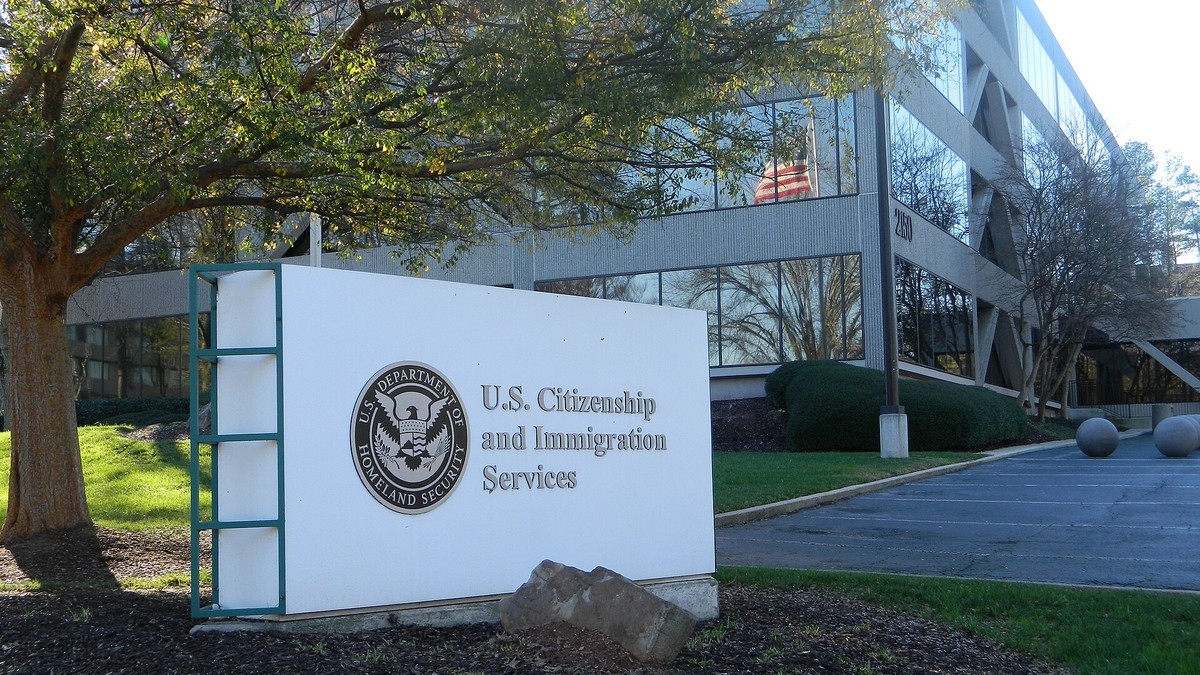
The One-Sentence Rule
The text is unusually short for a rule with this reach. DHS would delete 8 CFR 214.1(c)(5) outright and leave the paragraph reserved, a drafting change Reddy Neumann Brown describes as one sentence long. The history runs in both directions. USCIS first directed deference in a memorandum dated 23 April 2004, rescinded it on 23 October 2017, reinstated it in the Policy Manual in April 2021, and codified it in December 2024 through the H-1B Modernization final rule, effective 17 January 2025 at 89 FR 103054. DHS now argues the regulation sits in tension with the statute, which places the burden of proving eligibility on the petitioner, and that it may unduly limit adjudicating officers' inherent fact-finding authority in certain cases. The department's own summary says deference effectively shifts the burden from the petitioner to the officer to justify departing from a prior approval.
DHS's Case, in Its Own Numbers
The department's estimate puts about 208,429 petitions a year on the losing side. DHS projects roughly 6,044 additional Requests for Evidence annually, with the RFE rate rising about three percentage points. Petitions that receive one took a median of 64 more days to decide, according to Duane Morris, which reports the figure from the notice; IANS described it as an average of 64 days over the last four fiscal years. DHS estimates the added direct financial burden on petitioners at about $133,987 a year. On site visits, the department's data show combined non-compliance and fraud at about 22 per cent of H-1B extension sites inspected in fiscal 2022 to 2025, when deference was in place, against about 17 per cent in fiscal 2018 to 2020, when it was not. H-1B petitions are more than 75 per cent of all Form I-129 filings. DHS also concedes that employers and workers may have made career and personal plans on the assumption they could keep working and stay legally present.
Who Feels It First
USCIS approved about 399,000 H-1B petitions in fiscal 2024, and 71 per cent of those beneficiaries were born in India, according to the agency's annual report to Congress. The concentration is steeper in the category the rule touches most: of about 258,000 approvals for continuing employment, roughly 203,000, or 79 per cent, involved Indian-born workers. The affected workforce sits in technology and healthcare, two sectors where a delayed extension can hold up a product launch or leave a clinical team short of a credentialed specialist for months. The exposure runs through the renewal pipeline, because a pending petition is the ordinary condition of continued work for someone already in the country on that status. DHS's figure of 208,429 affected petitions a year is its own measure of how large that pipeline is.
The Quietest Docket of the Week
Three work-visa dockets closed this week, and the deference rule drew the smallest response by a wide margin. A Federal Register API check on 12 November 2026 showed 34,302 comments on the rule eliminating the 60-day grace period, which closed 10 November, and 8,768 on the Optional Practical Training fee rule, which closed 9 November. Put the deference docket alongside those two and the three come to 43,839 comments, with deference accounting for about 1.8 per cent of the total. Ten days earlier the gap looked wider still: Immigration Analytics, using regulations.gov figures reported on Federal Register records on 2 November, counted 416 comments on deference against 27,123 on the grace period and 4,844 on the OPT fee — about 84 per cent to the grace period, 15 per cent to the fee rule and 1 per cent to deference. The deference docket is the only one of the three still open.
The 240-Day Cliff
When a same-employer extension is timely filed, the worker may generally keep working for up to 240 days past the authorized stay while the petition is pending. Duane Morris notes that longer processing makes it likelier a regular-processing petition stays pending beyond 240 days, at which point the worker must stop working until USCIS approves it. That is the mechanism by which added adjudication time becomes lost wages rather than administrative inconvenience. For families, delays compound. Automatic extensions of employment authorization documents for dependents, including many H-4 spouses, have ended. Duane Morris notes that DHS released the deference proposal the same day as a final rule confirming the end of automatic extensions for most EADs, on 14 October 2026. They are separate instruments with separate legal footing, but they land on the same households in the same week, and only one of them is still open for comment.
Seven Changes, Two in Force
A Congressional Research Service assessment dated 14 October 2026 catalogues a year of executive action on the H-1B program and concludes the changes have sharply increased costs and scrutiny for employers, as IANS first reported; the full text was not publicly accessible when Immigration Analytics wrote it up, so its findings stand as IANS described them. That account attributes to CRS a 91 per cent drop in initial petitions for workers abroad from cap-exempt employers such as universities and nonprofit research institutes during the first eight months of the $100,000 entry payment. Of seven major changes, only two bind employers today: the wage-weighted H-1B lottery, a final rule published 29 December 2025 and used for fiscal 2027 registration in March 2026, and the end of automatic EAD extensions, an interim rule effective 30 October 2025 and finalized 14 October 2026. The $100,000 payment, a September 2025 proclamation renewed 18 September 2026 through September 2027, is blocked by federal courts in Massachusetts and California, with appeals pending. The other four, including deference, remain proposals.
The Wage Rule Waiting at the White House
The Labor Department's proposed rule "Improving Wage Protections for the Temporary and Permanent Employment of Certain Foreign Nationals in the United States," 91 FR 15454, published 27 March 2026 under docket ETA-2026-0001, closed its comment period on 26 May. OIRA logged the final rule, RIN 1205-AC30, on 6 November 2026 and lists it as economically significant and pending review; the text has not been released. Prevailing wages are set by occupation and area at four levels drawn from the Bureau of Labor Statistics survey. Since 2005 guidance, Level I has sat near the 17th percentile and Level IV near the 67th. The plan moves Level I to the 34th percentile, Level II from the 34th to the 52nd, Level III from the 50th to the 70th, and Level IV to the 88th. Among fiscal 2024 certified labor condition applications, 19 per cent of H-1B filings sat at Level I and 44 per cent at Level II, so 63 per cent sit in the two tiers facing the steepest relative increases.
What Happens at Midnight
At midnight Eastern on 13 November, the deference docket closes and the record stops growing. The proposal remains a proposal. 8 CFR 214.1(c)(5) stays in force, the comment deadline is not an effective date, and the notice sets no date for a final rule. Comments must be filed through regulations.gov under Docket No. USCIS-2026-0529, in English or with an English translation, and they become public, including any personal information in them. The guidance circulating to employers is consistent on one point: specific, anonymised data on RFE costs and delays carries more weight with the agency than a general objection, and so does an account of how a prior approval affected staffing, budgets and projects. After that, DHS can adopt the rule as drafted, revise it, or withdraw it. The wage rule now sitting at the White House budget office could move before any of that is settled.
By Jessica Ali, Staff Writer
This article was produced with AI-assisted research and editorial support. Sources: Federal Register (91 FR 65119, 91 FR 57807, 91 FR 15454, and docket records for USCIS-2026-0529, USCIS-2026-0364 and ICEB-2026-0100), Duane Morris LLP, Reddy Neumann Brown PC, Herman Legal Group, Immigration Analytics, the Congressional Research Service as reported by IANS, and the Computer & Communications Industry Association. Photographs: Gulbenk/Wikimedia Commons (CC BY-SA 3.0); Architect of the Capitol. Cover: Global 1 News editorial image.
What's Your Reaction?
 Like
0
 Dislike
0
 Love
0
 Funny
0
 Wow
0
 Sad
0
 Angry
0

Editor-in-Chief at Global1.News. Atlanta-based journalist who cuts through the BS and tells it like it is. Lead anchor, host, and the voice you hear when the spin stops and the truth starts.













Comments (0)