
Beyond a Taiwan Blockade: The Strategic Implications Behind the PLA’s ‘Silent Military Exercise’
Recent movements of China’s People’s Liberation Army (PLA) around Taiwan and across the Western Pacific have drawn intense scrutiny from regional governments and security analysts.
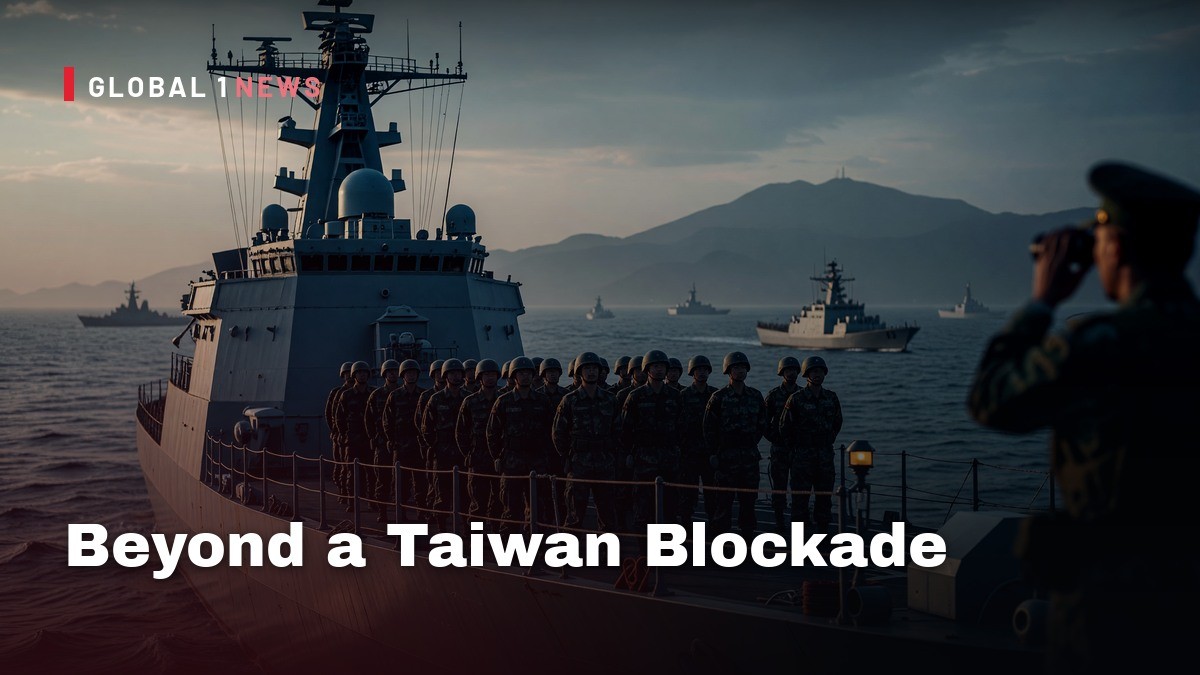
Recent movements of China’s People’s Liberation Army (PLA) around Taiwan and across the Western Pacific have drawn intense scrutiny from regional governments and security analysts. While Beijing has not formally announced a drill, the scale and coordination of the deployments suggest a deliberate test of long‑range naval dispersal, surveillance evasion and the ability to breach the First Island Chain. The “silent military exercise,” as Taiwanese media have labeled it, offers a window into evolving PLA doctrine and the strategic calculations of the United States and its allies.
Scope and Scale of the Current Deployments
The PLA’s activity this week involved more than one hundred vessels from the navy and the China Coast Guard, according to Taiwan’s National Security Council Secretary‑General Joseph Wu. These forces were drawn from all three of China’s coastal theater commands—Northern, Eastern and Southern—and organized into at least four major surface task groups, including the Liaoning aircraft‑carrier strike group. The carrier Fujian was also observed departing its home base in Sanya, Hainan, and operating in the vicinity of the Bashi Channel.
In addition to the surface fleet, Taiwan’s Ministry of National Defense recorded 49 PLA aircraft sorties on 2 November, with 36 flights operating south of the island. The timing of the air sorties aligns with the naval deployments, indicating a coordinated joint‑command exercise rather than isolated training events.
Comparative Assessment with Prior Exercises
Analysts from the Institute for the Study of War (ISW) and the American Enterprise Institute (AEI) noted that the current maneuvers surpass the scale of the “Justice Mission 2025” exercise that circled Taiwan earlier in the year. The presence of both Liaoning and Fujian, coupled with multiple theater‑command task groups, creates a broader operational footprint that extends well beyond the immediate waters around Taiwan.
The ISW‑AEI assessment frames the activity as a “major, unannounced military exercise simulating surrounding and isolating Taiwan.” However, the source material emphasizes that the primary purpose appears to be long‑distance naval deployment and joint command‑and‑control training, rather than a direct blockade or quarantine scenario.
Operational Intent: Dispersal and Surveillance Evasion
The PLA’s current focus, as outlined in the source, is to practice dispersing its naval forces into smaller formations that can operate independently while remaining under a unified command structure. This dispersal is intended to complicate detection and tracking by U.S., Japanese and Philippine surveillance assets that monitor the First Island Chain.
Crucially, the article notes that fleet commanders may not receive full mission objectives before setting sail. Instead, they are likely to receive updated orders from joint operations centers of their respective theater commands or directly from the Central Military Commission once they reach designated tactical positions. This layered command approach underscores a strategic emphasis on flexibility and real‑time decision‑making.
Training Imperatives Behind the Maneuvers
One factor influencing the intensity of the joint combat‑readiness patrols in October and November is the unusually high frequency of typhoons this year. The PLA Air Force’s ability to meet required flight‑training hours may have been constrained, prompting increased sortie rates to satisfy annual training quotas.
Consequently, while the deployments are significant, the source material stresses that they should be distinguished from a direct operational response to Taiwan. The activities fulfill routine training requirements and test cross‑theater coordination, rather than constituting an immediate threat of blockade.
Integration of Multiple Maritime Forces
The most notable development is the coordinated involvement of three maritime entities: the PLA Navy, the China Coast Guard, and the maritime militia. Their joint operations across the Northern, Eastern and Southern theater commands suggest an emerging integrated framework capable of covering the entire First Island Chain.
This cross‑theater integration amplifies the strategic impact of the exercise beyond the sheer number of vessels. By synchronizing assets from distinct services and command structures, the PLA demonstrates a capacity to project power across a wide maritime domain while maintaining operational secrecy through the lack of a formal announcement.
Vulnerability and Counter‑Measures by Regional Allies
Despite the PLA’s efforts to disperse and conceal its formations, the source material highlights that Chinese vessels remain within the engagement ranges of anti‑ship missile systems operated by the United States, Japan and the Philippines. Moreover, the geographical positions of Japan’s Yonaguni Island, Taiwan itself and the Philippines’ Batanes Islands create a triangulated defensive posture that can pressure PLA formations from multiple directions.
From Taiwan’s perspective, deeper defense coordination with these allies could exploit the PLA’s dispersed posture, forcing Chinese ships to contend with surveillance and potential strike capabilities on both sides of the First Island Chain. This dual‑front pressure could offset the PLA’s dispersal advantage and raise the operational risk of any attempt to breach the chain.
Future Indicators and Strategic Outlook
Key developments to monitor include whether the carrier Fujian will rendezvous with Liaoning for a dual‑carrier operation in the Western Pacific. Such a joint carrier exercise would signal a significant step in PLA blue‑water capability and a possible shift toward more complex, multi‑carrier tactics.
Another indicator will be the Fujian’s transit routes. If the carrier repeats a pattern of sailing through straits surrounding the Philippines, it may suggest an intent to replicate prior operational loops around Japan, thereby testing navigation and logistics in contested waters. Observing these movements will help analysts gauge the PLA’s evolving doctrine and the likelihood of future large‑scale maritime exercises that could further challenge regional security dynamics.
This article was produced with AI-assisted research and editorial support. Reporting is based on the source material cited below. Sources: The Diplomat; thediplomat.com; Global1.News (12 November 2026).
By Kenji Tanaka, Staff Writer
What's Your Reaction?
 Like
0
 Dislike
0
 Love
0
 Funny
0
 Wow
0
 Sad
0
 Angry
0

Japan Correspondent at Global1.News. Tokyo-based voice covering Japanese politics, technology, economy, and culture. Tracks the intersection of tradition and innovation in one of the world's most dynamic societies.














Comments (0)