
Boos, Absences, and a Diplomatic Misstep: The Politics of T&T's Most Controversial Emancipation Day
Port of Spain was supposed to be the stage for national unity on August 1, 2026, as Trinidad and Tobago gathered to mark the 188th anniversary of the abolition of slavery in the British colonies. Instead, the Queen's Park Savannah and Independence Square became the backdrop for a day of tension, jeers, and a diplomatic row that has left many questioning the state of race relations in this twin-island republic.
Port of Spain was supposed to be the stage for national unity on August 1, 2026, as Trinidad and Tobago gathered to mark the 188th anniversary of the abolition of slavery in the British colonies. Instead, the Queen's Park Savannah and Independence Square became the backdrop for a day of tension, jeers, and a diplomatic row that has left many questioning the state of race relations in this twin-island republic. From the Prime Minister's conspicuous absence at the main event to a Culture Minister being booed by her own community, and an Indian High Commission event that sparked public fury, Emancipation Day 2026 will be remembered for all the wrong reasons.
The day, which commemorates the end of African enslavement in 1834 and the full emancipation in 1838, was meant to be a solemn and celebratory occasion. Instead, it has ignited a firestorm of political point-scoring, accusations of disrespect, and a national conversation about whether we are truly "all of us" as our national anthem proudly proclaims. The fallout has been swift, with the Emancipation Support Committee of Trinidad and Tobago (ESCTT) forced to defend its apolitical stance, and the Indian High Commission scrambling to contain the damage from a poorly timed announcement.
The Prime Minister's No-Show and a Stinging Rebuke
The most significant flashpoint of the day was the absence of Prime Minister Kamla Persad-Bissessar from the Lidj Yasu Omowale Emancipation Village at the Queen's Park Savannah. According to the ESCTT, the Prime Minister was scheduled to address the gathering at 3 p.m., a slot that would have placed her at the heart of the day's commemorations. However, it was later announced that she would not attend, with no official reason provided. Sections of the crowd, many of whom had waited in the sweltering heat, responded with audible jeers and disappointment. Persad-Bissessar, however, was unapologetic. In a subsequent statement, reported by the Trinidad Guardian, she insisted she had never committed to the event, noting that she had attended two African Emancipation events on the preceding Thursday and had chosen to spend the Saturday with her family. Her response to the criticism was characteristically combative: "I'm sorry that those persons who were eagerly waiting to insult and curse me were disappointed. They should not worry, there will always be another event where they may have the opportunity to hurl curses and insults at me." The Prime Minister went further, accusing Opposition PNM MPs and their supporters of being "consumed with irrational hatred." She claimed she was criticised whether she wore African clothing, participated in African cultural activities, or praised the contributions of Afro-Trinidadians. This framing, which pits the political against the personal, has done little to soothe the raw nerves exposed by the day's events. For many observers, the absence of the nation's leader at such a significant cultural milestone—regardless of the justification—sent a troubling signal about the importance her administration places on Afro-Trinidadian heritage.Culture Minister Booed: A Symbolic Moment of Discontent
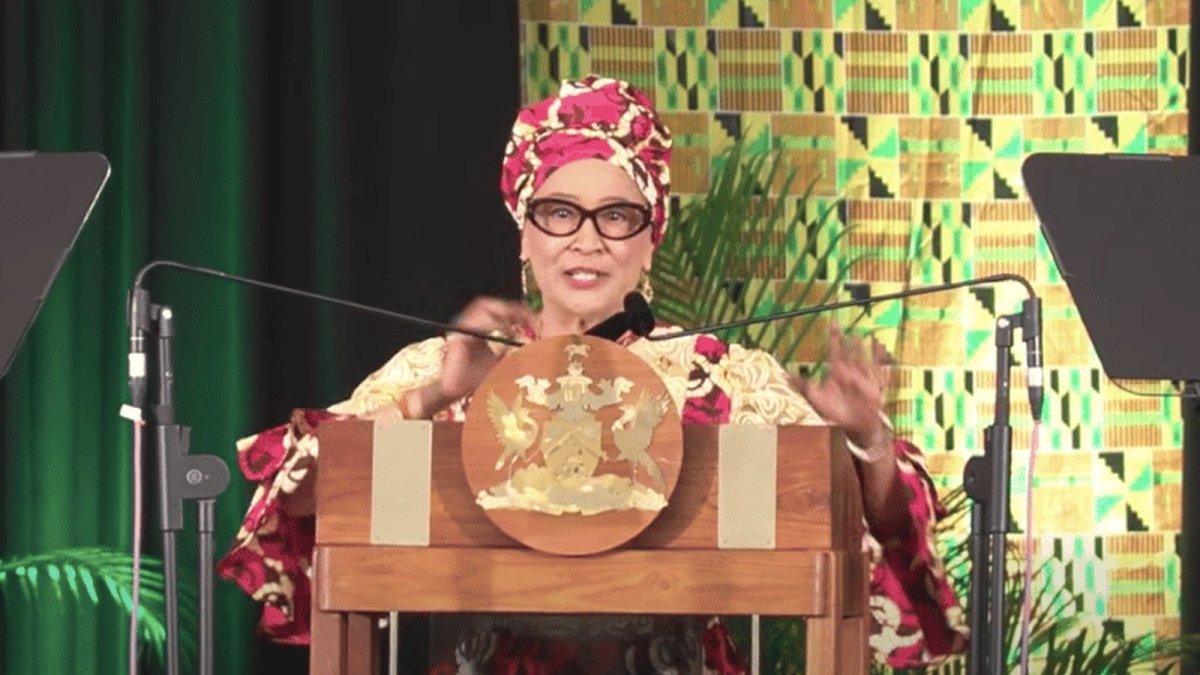
The tension was not confined to the Savannah. At Independence Square, where the official ceremony was being held, Culture Minister Michelle Benjamin found herself on the receiving end of the crowd's displeasure. The minister, herself a black woman, was booed by sections of the audience after she mentioned the Prime Minister's name during her address. A letter writer to the Trinidad Express captured the poignancy of the moment: "On Saturday morning at Independence Square, a black woman stood before a crowd assembled to mark the end of African slavery, and the crowd booed her." The image is a stark one, symbolising a disconnect between the Government and the very communities it seeks to represent on days of cultural significance. The booing was not a personal attack on Minister Benjamin, but rather a proxy for the frustration many feel towards an administration perceived as out of touch with the concerns of Afro-Trinidadians. It raises uncomfortable questions about the state of representation and the depth of the political divide that now colours even our most sacred national observances.The Sabga and Hadeed Remark: A Bridge Too Far
Perhaps the most damaging moment of the entire saga came not from the crowd, but from the Prime Minister herself. Responding to reporters about the criticism she faced, Persad-Bissessar made a remark that has been widely condemned as beneath the dignity of her office. She said: "If the PNM MPs and their supporters don't want East Indians to participate in Emancipation events that's their democratic choice. Maybe next year the PNM could lobby UTT to invite Star Sabga and Jenna Hadeed for a spoken word performance instead." The comment was a direct reference to a tassa performance and classical Indian dance that had been part of an African Emancipation Day celebration hosted by the University of Trinidad and Tobago (UTT). The inclusion of these Indo-Trinidadian art forms had already sparked debate on social media, with some questioning whether they were appropriate for an event commemorating the emancipation of enslaved Africans. But by invoking the names of two private citizens—Star Sabga and Jenna Hadeed—the Prime Minister crossed a line for many. Former Housing Minister Randall Mitchell was quick to condemn the remark in a Facebook post titled "A Prime Minister Should Never Do This." He wrote: "The office of Prime Minister carries enormous weight. That office should strengthen public confidence in the justice system, not undermine it by publicly singling out a private citizen. No private citizen, whether under investigation, before the courts, or never charged at all, should become the subject of ridicule or political point-scoring by the country's highest elected official." Mitchell's words carry weight, reminding us that the Prime Minister's role extends beyond partisan politics to the stewardship of national institutions and the protection of citizens from state-sanctioned ridicule.The Indian High Commission Row: A Diplomatic Misstep
Adding to the day's controversies was a diplomatic blunder that many found deeply offensive. The Indian High Commission in Port of Spain had announced an "Open House for the Indian Community and Diaspora Members" scheduled for August 1—the very day Trinidad and Tobago commemorates the emancipation of enslaved Africans. The announcement was met with immediate public outrage, with many questioning the timing and the optics of such an event on a day of such significance to the Afro-Trinidadian community. The High Commission later rescheduled the event to August 8, stating that August 1 was already a public holiday. However, the damage had been done. Randall Mitchell went so far as to write a letter to Indian Prime Minister Narendra Modi, calling for "an immediate review of the conduct" of the High Commissioner of India to Trinidad and Tobago, Dr. Pradeep Singh Rajpurohit. Mitchell thanked the diplomat "for rescheduling and deleting your offensive post," but the underlying tension remains. Public reactions on social media were swift and unforgiving. One commenter wrote: "That invitation is disrespectful to the African community and that date is totally inappropriate… also the open house is closed to other races." Another questioned the logic: "We are now in the 21st century and the Indian High Commission has existed in T&T since the 20th century; why is it only now that they choose to celebrate that so-called important event on the 1st August of all days. Why not the 15th August, which is India's Independence Day?" Others reminded the diplomat that "May 30 is Indian Arrival Day" in Trinidad and Tobago. Mitchell himself noted that the High Commissioner has been in T&T "long enough" to know that August 1 is African Emancipation Day. The incident has strained diplomatic relations and raised questions about cultural sensitivity within the foreign diplomatic corps.ESCTT's Measured Response: Staying Above the Fray
Amidst the political firestorm, the Emancipation Support Committee of Trinidad and Tobago has sought to maintain a position of neutrality. Speaking during a virtual news conference in the week after the event, ESCTT executive chair Zakiya Uzoma-Wadada insisted that the committee remains an apolitical organisation focused on national unity. She stated that the ESCTT has never engaged in back-and-forth around issues "that we think are not really in the best interest of the development of" the country. The ESCTT has taken note of a number of issues which arose during the celebrations for Emancipation Day 2026, but has chosen not to wade into the political fray. This measured approach is consistent with the committee's historical role as a unifying force, but it also leaves a vacuum in which the narrative is being shaped by politicians and social media commentators. For a day that is meant to honour the resilience and triumph of the African ancestors, the focus has shifted to political point-scoring and diplomatic gaffes. The ESCTT's silence, while principled, may also be a reflection of the deep divisions that make any strong statement a potential flashpoint.A Nation at a Crossroads: What This Moment Says About Us
Emancipation Day 2026 has laid bare the fragile threads that hold our multicultural society together. The booing of a black Culture Minister by a black crowd, the Prime Minister's dismissive remarks about East Indian participation in Emancipation events, and the Indian High Commission's tone-deaf scheduling all point to a deeper malaise. We are a nation still grappling with the legacies of our colonial past, where the descendants of the enslaved and the indentured continue to navigate a complex landscape of race, politics, and identity. The timing of these controversies is particularly troubling. As we face rising costs of living, concerns about crime, and the ongoing challenges of post-pandemic recovery, the last thing we need is a further entrenchment of racial divisions. The Prime Minister's comments, in particular, risk alienating a significant portion of the population and undermining the very unity that days like Emancipation Day are meant to foster. When our leaders use the language of division rather than healing, they set a dangerous precedent for the rest of society. Yet, there is also an opportunity here. The public outrage at the Indian High Commission's misstep, and the widespread condemnation of the Prime Minister's Sabga/Hadeed remark, suggest that many Trinidadians and Tobagonians are uncomfortable with the direction of this discourse. There is a hunger for leadership that transcends race and party politics, that can speak to our common humanity rather than our differences. The question is whether our political class is willing to rise to that challenge, or whether we are doomed to repeat these cycles of division with each passing Emancipation Day. As the dust settles on this most controversial of holidays, one thing is clear: the conversation about race, identity, and belonging in Trinidad and Tobago is far from over. The ancestors who fought for freedom deserve better than to have their legacy reduced to political football. We owe it to them—and to ourselves—to find a way forward that honours our shared history while embracing our diverse present. The road ahead is uncertain, but the first step is acknowledging that we have a problem. Emancipation Day 2026 has forced that conversation into the open. Whether we are brave enough to have it honestly remains to be seen. By Sharon Sahatoo, Staff Writer This article was produced with AI-assisted research and editorial support. Sources: Caribbean360, Trinidad Guardian, Trinidad Express, CNC3, Caribbean Media Corporation (CMC).What's Your Reaction?
 Like
0
Like
0
 Dislike
0
Dislike
0
 Love
0
Love
0
 Funny
0
Funny
0
 Wow
0
Wow
0
 Sad
0
Sad
0
 Angry
0
Angry
0
Sharon Sahatoo
Caribbean Correspondent at Global1.News. Based in Port of Spain, Trinidad, covering Caribbean politics, economy, energy, climate, and culture. Amplifying the voices and stories of the Caribbean region.












Comments (0)