
Jaipur Student Dies After Canteen Patty; Family Alleges School Delayed Medical Aid
The death of a 17-year-old Class 12 student at a private school in Jaipur’s Jhotwara area has triggered protests and raised urgent questions about emergency preparedness in Indian schools. Prince Soni collapsed after eating a patty from the school canteen on Wednesday, 12 August 2026, and was declared dead at a hospital shortly after.
The death of a 17-year-old Class 12 student at a private school in Jaipur’s Jhotwara area has triggered protests and raised urgent questions about emergency preparedness in Indian schools. Prince Soni collapsed after eating a patty from the school canteen on Wednesday, 12 August 2026, and was declared dead at a hospital shortly after. A First Information Report (FIR) has been registered under Section 106 of the Bharatiya Nyaya Sanhita (BNS) — causing death by negligence — against the school administration, even as the family alleges a critical delay of nearly 38 minutes in providing medical assistance.
Jaipur School Tragedy: 38-Minute Delay, Missing Medical Room, and the Legal Reckoning Under BNS Section 106
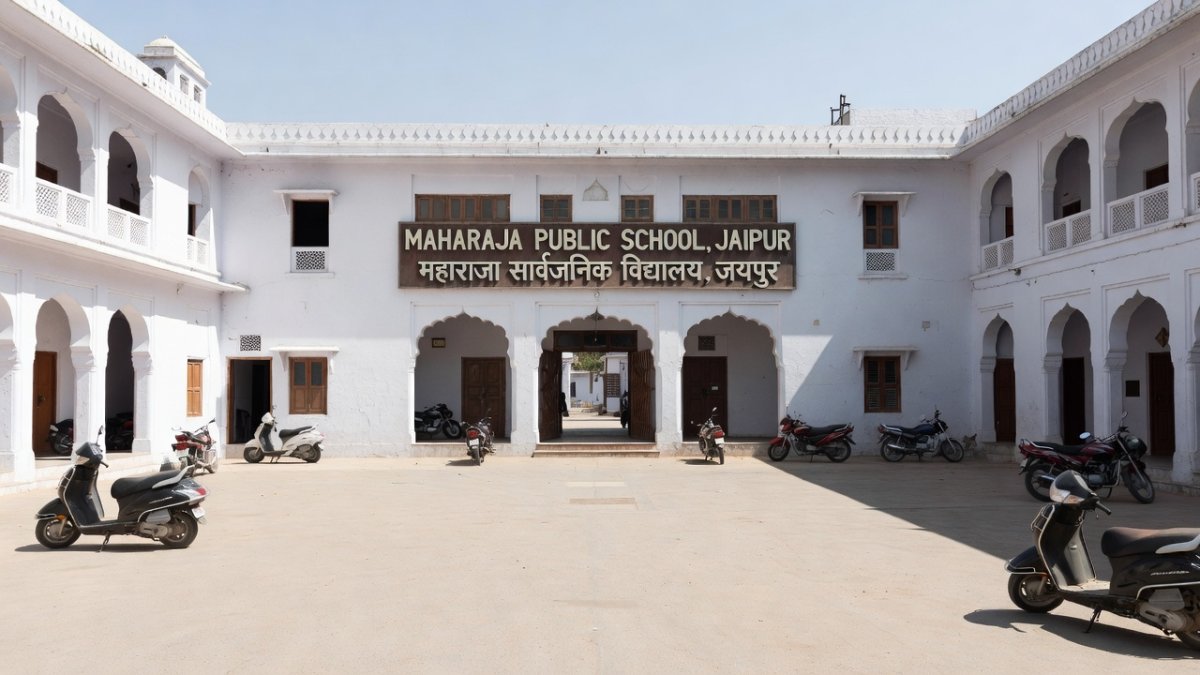
Jaipur, Rajasthan – 14 August 2026 — The sequence of events on the morning of 12 August has become the focal point of a police investigation and public outrage. Prince Soni, a resident of Brijmandal Colony in Jhotwara, arrived at Maharana Pratap School at approximately 7:30 am. His mother, Nirmala Soni, stated that he was in good health and had eaten daliya (porridge) for breakfast. Around 10:58 am, during the lunch break, Prince — who had not brought a lunchbox that day — went to the school canteen with friends and consumed a patty. Within minutes, he reportedly vomited and his condition deteriorated rapidly.
The Critical Window: What Happened Between 11:04 am and 11:42 am
The family’s complaint, filed by Prince’s father Amit Soni at the Jhotwara police station, alleges that after Prince returned to his classroom and informed a teacher he was unwell, he collapsed unconscious. CCTV footage, which the family claims to have reviewed, reportedly shows Prince vomiting before losing consciousness. The family alleges that the school staff moved him to a separate rest room at approximately 11:04 am but did not call an ambulance or transport him to a hospital. A relative, Ravi Kumar, stated that school staff repeatedly asked the family to arrange a four-wheeler, a request that continued until around 11:45 am.
The delay is particularly galling to the family because a hospital is located directly opposite the school premises. A relative, Ravi Kumar, told reporters that school staff repeatedly asked the family to bring a four-wheeler instead of arranging immediate medical help. The family eventually took Prince to the hospital themselves, where doctors declared him dead. The post-mortem examination has been conducted, but the exact cause of death is pending the final report.
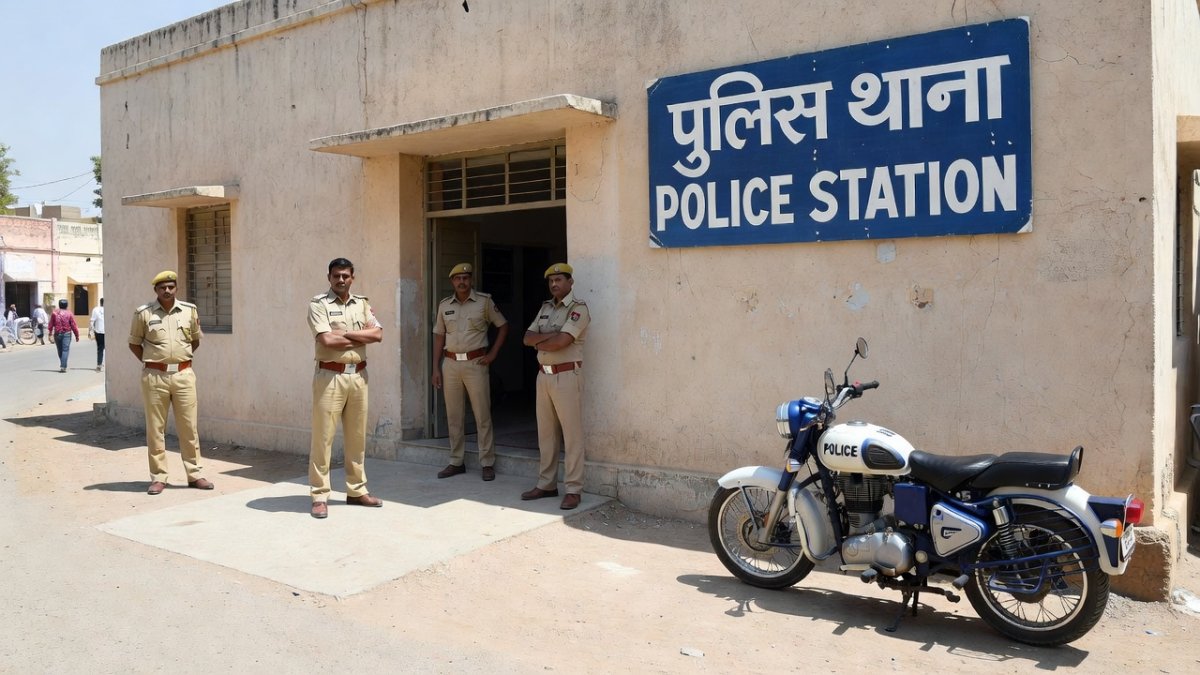
Sub-inspector Kamlesh Kumar Saini, the investigating officer at Jhotwara police station, confirmed that statements from students and teachers have been recorded. Assistant Sub-Inspector Narendra Kumar, also of Jhotwara police station, stated that no arrests have been made so far, but the investigation is ongoing. The FIR has been registered under Section 106 of the BNS, which replaced the old Section 304A of the Indian Penal Code (IPC) — a change that came into effect with India’s new criminal codes in July 2024. Section 106 specifically addresses “causing death by negligence,” carrying a penalty of up to five years imprisonment and a fine.
School Infrastructure Gaps: No Medical Room, No First-Aid, No Protocol
The family has alleged that the school principal was present in his office but did not attend to the student. More critically, the family claims that Maharana Pratap School had neither a medical room nor adequate first-aid facilities. This allegation, if proven, would place the school in direct violation of multiple guidelines. The National Commission for Protection of Child Rights (NCPCR) has long mandated that all schools maintain a functional medical room with basic first-aid equipment and trained staff. Similarly, the Right to Education (RTE) Act, 2009, through its schedule of norms, requires schools to have facilities for medical check-ups and emergency care.
In Rajasthan, the state education department has issued circulars requiring private schools to comply with safety audits. However, enforcement remains inconsistent. Successive audits by child rights bodies have repeatedly flagged gaps in school medical infrastructure across Rajasthan, and this incident has brought the gap between policy and practice into sharp focus.
Canteen Food Safety: The FSSAI Framework and the Missing Sample Test
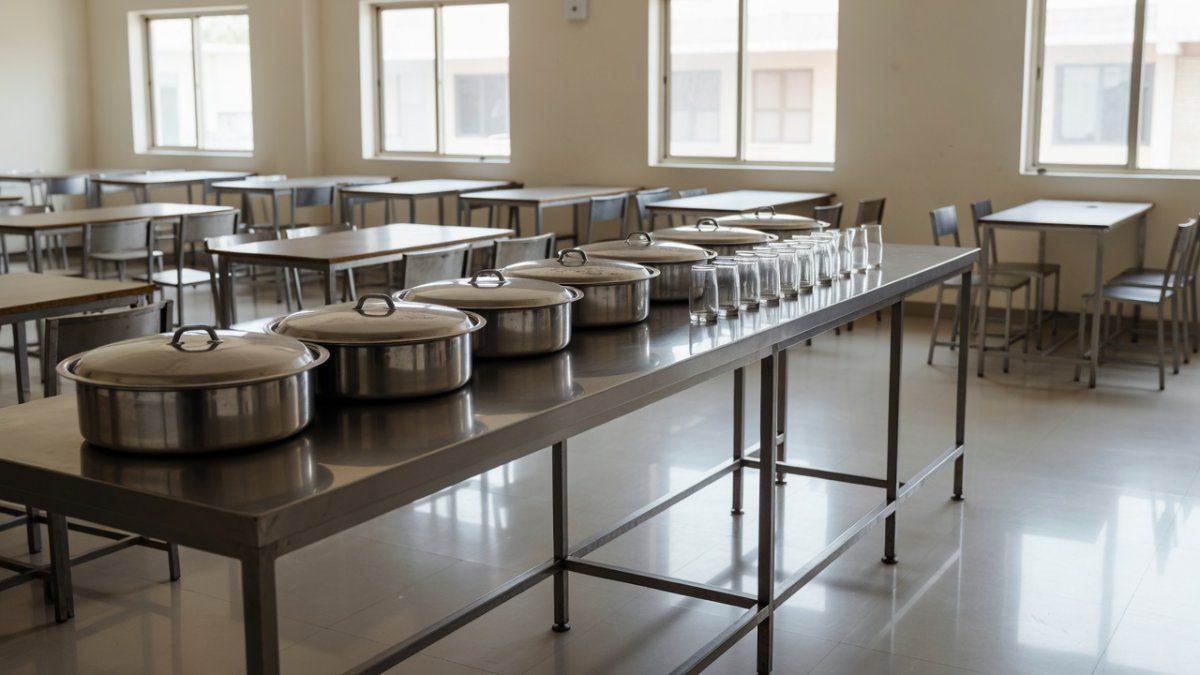
The family has demanded that CCTV footage be preserved and that food samples from the school canteen be collected and tested. As of now, no samples have been officially seized, though the police have not ruled out doing so. The Food Safety and Standards Authority of India (FSSAI) operates the “Eat Right School” initiative, which encourages schools to adopt hygienic canteen practices, including proper storage, preparation, and vendor licensing. Under FSSAI regulations, any institution serving food to the public — including school canteens — must hold a basic FSSAI registration or license, depending on the scale of operations.
The specific cause of Prince’s collapse remains unknown pending the post-mortem report. Public health experts caution against jumping to conclusions about food poisoning, as symptoms can also arise from cardiac events, allergic reactions, or choking-related airway obstruction. However, the timeline is critical. In medical emergencies such as cardiac arrest or anaphylaxis, the “golden hour” — the first 60 minutes — is decisive. For cardiac arrest, survival rates drop by 7-10% for every minute defibrillation is delayed. For airway obstruction, brain damage can begin within 3-4 minutes without oxygen. If the family’s timeline is accurate, the 38-minute delay on school premises could have been the difference between life and death.
Protests and Community Outrage: The Swarnkar Community Shuts Down Jhotwara
On Thursday, 13 August, the family staged a protest at the school, bringing Prince’s body to the premises. The demonstration drew hundreds of people, including shopkeepers from the Swarnkar community near Brijbal Chauraha, who shut their establishments in solidarity. Police reached the spot and recorded statements as the demonstration swelled outside the school. The family’s demands are clear: action against the school administration, preservation of CCTV footage, and a thorough investigation into the canteen’s food handling practices.
The protest highlights a broader pattern of distrust between parents and private school administrations in Rajasthan. With tens of thousands of private schools in the state, regulation is often reactive rather than proactive. The Rajasthan government’s education department has yet to issue a formal statement on the incident, but the Jhotwara police have confirmed that the investigation is being treated as a priority.
Legal Implications: BNS Section 106 and the New Criminal Code
The registration of the FIR under Section 106 of the BNS is significant. Prior to July 2024, such cases were filed under Section 304A of the IPC, which dealt with “causing death by negligence.” The BNS has retained the essence of the provision but has streamlined the language and penalties. Under Section 106, the punishment is imprisonment of up to five years, or a fine, or both. The shift to the BNS also means that procedural timelines for investigation and trial are now governed by the Bharatiya Nagarik Suraksha Sanhita (BNSS), which mandates faster case resolution.
Legal experts note that for a conviction under Section 106, the prosecution must prove “gross negligence” — a higher threshold than simple carelessness. The absence of a medical room, the alleged delay in calling an ambulance, and the failure to provide first-aid could collectively constitute gross negligence. However, the school administration may argue that they were awaiting parental consent or that the student’s condition was not visibly critical. The post-mortem report will be crucial in establishing causation.
The Bottom Line: A Preventable Tragedy and a Systemic Failure
The death of Prince Soni is not an isolated incident but a symptom of systemic failures in India’s school safety framework. The NCPCR’s guidelines on school safety, the FSSAI’s Eat Right School initiative, and the RTE Act’s infrastructure norms all exist on paper. Yet, as this case demonstrates, compliance is often superficial. The absence of a medical room, the lack of trained first-aid responders, and the hesitation to call an ambulance are recurring themes in school-related emergencies across India.
For Indian parents, this tragedy is a stark reminder that school infrastructure cannot be taken for granted. For policymakers, it is a call to enforce existing regulations with penalties that bite. The Jhotwara police investigation, the post-mortem report, and the FSSAI’s potential food sample analysis will determine the legal outcome. But the broader question remains: how many more students must collapse before every school in India is required to have a functional medical room, a trained nurse, and a clear emergency protocol? The answer, as Prince Soni’s family knows all too well, is measured in minutes — and in lives.
— By Dr. Raj Patel, Staff Writer
This article was produced with AI-assisted research and editorial support. Reporting is based on sources cited in the article.
What's Your Reaction?
 Like
0
Like
0
 Dislike
0
Dislike
0
 Love
0
Love
0
 Funny
0
Funny
0
 Wow
0
Wow
0
 Sad
0
Sad
0
 Angry
0
Angry
0

India/South Asia Correspondent at Global1.News. Analytical voice with a background in science and health journalism. Based in New Delhi, covering Indian politics, education, healthcare, technology, and policy. Breaks down complex data into clear, actionable reporting.













Comments (0)