
Poilievre Urges Carney to Resist Concessions Ahead of Trump Tariffs
Poilievre Urges Carney to Resist Concessions Ahead of Trump Tariffs Conservative Leader Pierre Poilievre and Conservative critic for Canada-U.S. relations Shuvaloy Majumdar have written to Prime Minister Mark Carney warning against further concessions in trade talks with the United States.
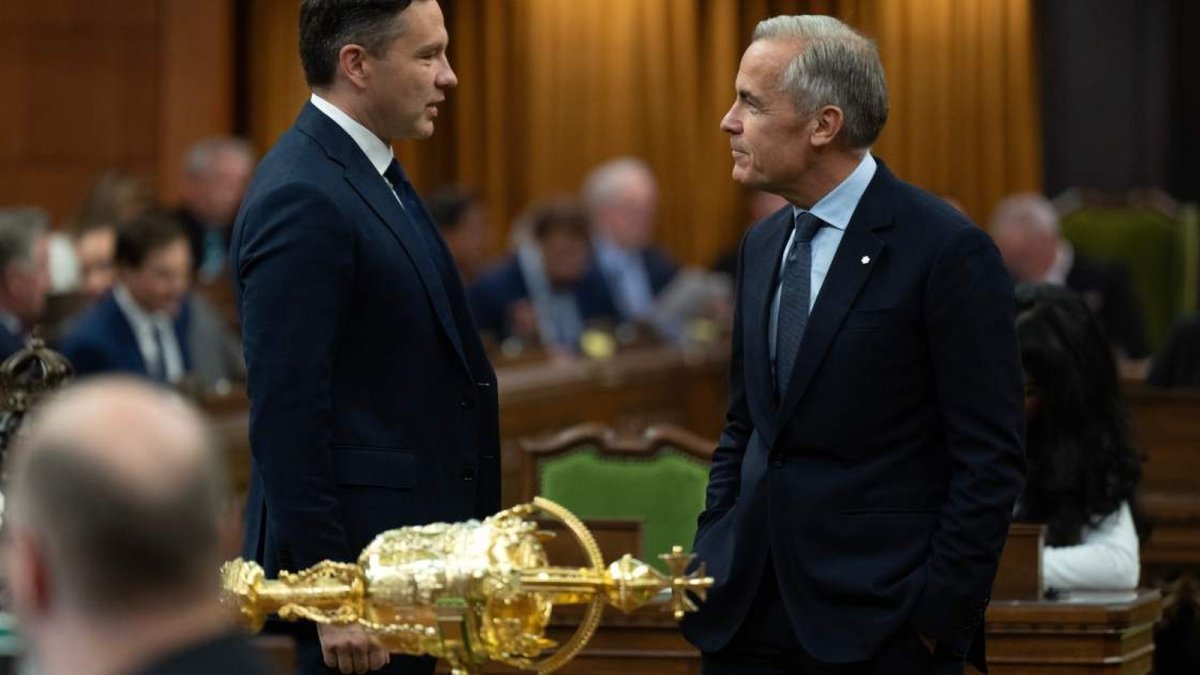
Conservative Leader Pierre Poilievre and Conservative critic for Canada-U.S. relations Shuvaloy Majumdar have written to Prime Minister Mark Carney warning against further concessions in trade talks with the United States. The letter arrives ten days before President Donald Trump’s 50 per cent tariffs are scheduled to take effect on a wide range of Canadian exports.
The Conservatives’ Letter to the Prime Minister
Ottawa — Poilievre and Majumdar addressed their letter directly to Carney, stating that the government has made repeated concessions without securing reciprocal gains. They listed the removal of the digital services tax, the dropping of retaliatory tariffs on most U.S. products under CUSMA, and the revenue-sharing agreement on the Gordie Howe bridge as examples of prior steps taken by Ottawa.
The letter argues that Canadians want a strong negotiating position now rather than additional giveaways. It calls for zero tariffs on softwood lumber, an end to duties on steel and aluminum exports, a tariff-free auto pact, and a full exemption from “Buy America” rules on infrastructure projects at all levels of government.
Poilievre told reporters in St. John's, N.L. on August 6 that he does not understand the strategy of making concession after concession before even reaching the negotiating table. The letter itself states that Canadians deserve a government that has the backbone to fight for workers, families, and every inch of sovereignty, with no more caving. It adds that before conceding anything else, Canadians deserve a good deal.
These points reflect broader Conservative criticism of the federal approach over the past year and a half, during which Ottawa has responded to multiple American demands without clear returns. The emphasis on sovereignty ties directly into Canadian values of fairness in international dealings, particularly as three-quarters of Canadian exports head to the United States and any imbalance risks straining the integrated economy.
The Tariff Deadline Approaching
Trump signed three executive orders last month that provide the legal basis for the 50 per cent tariffs. Each order cites a separate Canadian measure: provincial and territorial boycotts on American alcohol products, Canada’s retaliatory tariffs on U.S.-made vehicles and auto parts, and quotas on American dairy imports under the supply management system.
The tariffs are set to apply to a wide variety of Canadian products beginning August 19, 2026. Carney has described Ottawa’s goal as a “win-win deal” covering steel, aluminum, forestry and the automobile sector, while noting that it remains unclear whether all objectives can be reached by the deadline.
The measures would cover Canadian products worth about $20 billion, according to reporting from The New York Times. This scale underscores the stakes for an economy deeply tied to cross-border flows, where energy, resources, and manufactured goods move daily under frameworks like CUSMA.
Trump called Canadians “nasty” at a Las Vegas event on August 5, 2026, adding rhetorical pressure ahead of the deadline. Federal officials continue to monitor developments in Washington while preparing for the possibility that not every sector goal will be met by August 19, 2026.
Negotiations and Concessions Under Discussion
Canada and Mexico had sought a 16-year extension of CUSMA, the trilateral North American trade agreement. The United States instead chose to move the pact to rolling annual reviews. Concerns have surfaced in several sectors and provinces about potential trade-offs, particularly around supply management and the continued ban on U.S. alcohol from provincial shelves.
Carney has repeated that his government remains loyal to the supply management system. Dairy farmers have urged federal officials to avoid any concessions that would weaken protections for the sector.
Dairy Farmers of Canada has specifically warned against any moves that could erode the system protecting domestic producers from import surges. This stance aligns with long-standing federal commitments to rural economies in provinces such as Quebec and Ontario, where supply management supports thousands of family operations.
The shift to rolling annual reviews introduces ongoing uncertainty for businesses planning investments, as annual scrutiny could affect predictability in sectors from autos to forestry. Provincial concerns about alcohol bans highlight how trade irritants intersect with local regulatory powers, complicating unified federal responses.
Canadian Context and Provincial Positions
Some provincial premiers have stated they will not lift bans on U.S. alcohol and have called for dollar-for-dollar retaliatory tariffs. Others have raised the possibility of withholding energy and critical mineral exports as leverage. Last month Carney told premiers that retaliation remains among the options under consideration, though he did not detail the full range of measures.
The Conservatives have renewed their proposal for a strategic reserve of critical minerals that would be accessible only to countries offering tariff-free market access in return. This measure is presented as a way to strengthen Canada’s overall bargaining position in future trade discussions.
Premiers in resource-rich provinces have linked potential export restrictions to broader federal-provincial tensions over resource development and revenue sharing. Such leverage reflects Canada’s position as a major supplier of energy and minerals to the United States, where withholding access could influence negotiations but also risks domestic economic disruption.
The strategic reserve idea builds on existing discussions about critical minerals policy, aiming to tie access to reciprocal market openness. This approach connects to national priorities around economic security and diversification away from over-reliance on a single trading partner.
Impact on Canadian Workers and Industries
The letter from Poilievre and Majumdar emphasizes the need to protect workers, families and national sovereignty in the negotiations. It states that Canadians deserve a government prepared to fight for every inch of sovereignty rather than concede further ground.
Industries such as softwood lumber, steel, aluminum and automobiles stand to face significant pressure if the 50 per cent tariffs proceed without exemptions. The outcome of the talks will also affect how CUSMA operates in the coming years under the rolling review framework chosen by the United States.
Workers in these sectors, concentrated in provinces from British Columbia to Ontario, face direct exposure through job losses and reduced hours if tariffs raise costs and shrink demand. The auto sector in particular relies on integrated supply chains that cross the border multiple times, making exemptions essential for maintaining competitiveness.
Forestry and metals industries have already navigated previous tariff episodes, yet the proposed 50 per cent rate would mark a sharp escalation. The rolling CUSMA reviews add a layer of annual risk that could deter long-term investment in Canadian facilities and training programs.

Reactions and Next Steps in Ottawa
The letter concludes with a direct appeal to Carney to secure a good deal before making any additional concessions. It frames the current moment as one that requires resolve rather than further accommodation of American demands.
With the August 19 deadline now ten days away, federal officials continue to pursue a comprehensive agreement while monitoring developments in Washington. Provincial governments remain engaged on issues tied to alcohol access and supply management, reflecting the federal-provincial dimensions of the dispute.
Carney’s recent statements indicate ongoing efforts to balance multiple objectives, though he has cautioned that full success by the deadline is not guaranteed. This measured tone acknowledges the complexity of coordinating across jurisdictions while upholding Canadian interests in fair trade terms.
Provincial engagement on retaliation options and sector protections continues to shape the federal strategy, as premiers weigh local economic impacts against national unity. The coming days will test whether Ottawa can achieve meaningful exemptions without further unilateral steps that might weaken future leverage.
Tags: Pierre Poilievre, Mark Carney, Donald Trump, tariffs, CUSMA, supply management, Canada-U.S. trade, softwood lumber, steel and aluminum, Gordie Howe bridge
By Alex Thompson, Staff Writer
This article was produced with AI-assisted research and editorial support. Reporting is based on sources cited in the article.
What's Your Reaction?
 Like
1
Like
1
 Dislike
0
Dislike
0
 Love
0
Love
0
 Funny
0
Funny
0
 Wow
0
Wow
0
 Sad
0
Sad
0
 Angry
0
Angry
0

Canada Correspondent at Global1.News. Based in Toronto, covering Canadian politics, energy, trade, and US-Canada relations. Provides the Canadian perspective on North American and global affairs.















Comments (0)