
Alleged mob boss Daniel Kinahan returns to Ireland to face charges
Daniel Kinahan, 49, was extradited from Dubai on an Irish government jet and charged with directing a criminal organisation at Dublin's Special Criminal Court. Remanded to Portlaoise Prison, the alleged KOCG leader faces trial expected next year.
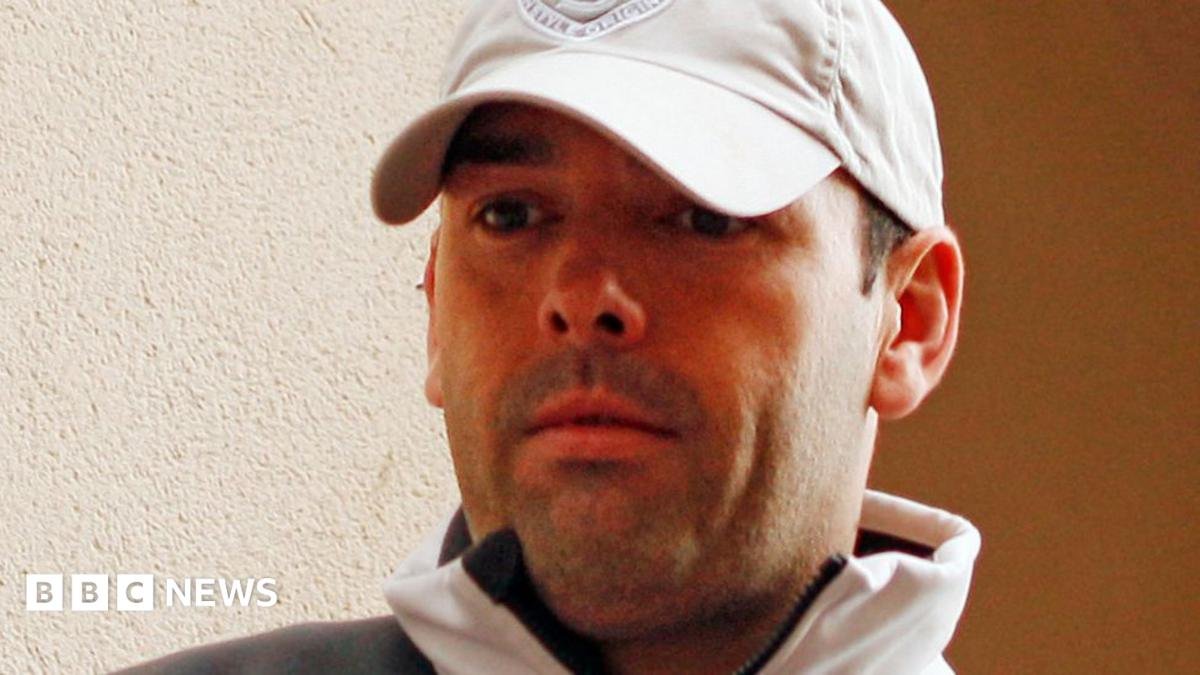
The man the US Treasury once ranked alongside the heads of the Camorra and the Yakuza is now in a Dublin prison cell. Daniel Kinahan, the 49-year-old alleged leader of the Kinahan organised crime group (KOCG), was flown back to Ireland on an Irish government jet on Sunday evening, ending a decade of lavish exile in the Gulf. For British law enforcement, this is not a distant Irish drama — it is the culmination of a multinational pursuit that the National Crime Agency (NCA) has been central to for years.
Kinahan Extradited from Dubai: Alleged Cartel Chief Faces Irish Court After Years on the Run
Dublin, Ireland – 9 August 2026 — The aircraft touched down at Casement Aerodrome, Baldonnel, shortly after 18:00 local time, and within minutes Detective Sergeant Colm Davison had placed Daniel Kinahan under arrest. The charge: directing the activities of a criminal organisation between 18 October 2015 and 6 April 2017. Within hours, the man who once advised Tyson Fury was sitting on a wooden bench in the Special Criminal Court, wearing a black hooded top, with no legal representation and little apparent expectation of walking free.

A 13-Minute Hearing, a Maximum-Security Future
The non-jury hearing before judges Patrick McGrath, Sarah Berkeley and Fiona Lydon lasted just 13 minutes. When Judge McGrath suggested Kinahan could be charged immediately with representation arranged later, the accused replied: "If I have time, yes." On the question of bail, he was characteristically blunt: "I think we all know I won't be getting bail, but thank you for your time." He was remanded in custody until 5 October and will be held at Portlaoise Prison, in the A5 unit of A block — the maximum-security wing roughly 50 miles outside Dublin that houses Ireland's most dangerous offenders. The Irish Prison Service has already purchased a bulletproof and bombproof van for high-risk prisoner transfers, a sign of the threat level authorities believe he still commands.
The Long Road from Dubai to Baldonnel
Kinahan's extradition follows a final ruling by the Dubai Court of Cassation under the UAE-Ireland extradition treaty, in force since May 2025. He was arrested in Dubai in April 2026 on an Irish warrant, and the UAE rejected his appeal last month. The operation involved an Irish government jet dispatched to Dubai on Saturday, with armed gardaí and military personnel reinforcing police during the transfer. Garda Commissioner Justin Kelly framed the arrest as a decisive blow against "transnational organised crime groups," praising the "police-to-police basis" of the relationship with Dubai authorities and the UAE ministry of justice.
The UAE's Changing Role
The United Arab Emirates' decision to extradite Daniel Kinahan represents a tectonic shift in the Gulf state's approach to organised crime. For nearly a decade, Kinahan lived openly in Dubai, operating his boxing empire and conducting business with apparent impunity, shielded by the absence of any extradition arrangement with Ireland. That calculus changed with the UAE-Ireland treaty, which came into force in May 2025. The first test came swiftly: Sean McGovern, described as Kinahan's senior lieutenant, was extradited that same month and sentenced to 24 years in June 2026 for directing organised crime and attempted murder. The message was unambiguous, and the Dubai Court of Cassation's final ruling on Kinahan's own case, following his arrest in April 2026 and the rejection of his appeal last month, confirmed that the UAE's commitment was not a one-off gesture.
The diplomatic choreography surrounding the extradition underscores its significance. Justice Minister Jim O'Callaghan's characterisation of the operation as a "landmark of judicial cooperation" was matched by his UAE counterpart Abdullah bin Sultan bin Awad Al Nuaimi's declaration that there is "no safe haven from justice". Hamid Al Zaabi, chair of the UAE's Anti-Money Laundering committee, added his endorsement, signalling that this is a matter of state policy rather than a single judicial decision. For the Gulf states, long criticised as permissive environments for international criminals, this represents a deliberate rebranding. The question now is whether this cooperation extends beyond the Kinahan case to other fugitives sheltering in the Emirates, and whether the "no safe haven" rhetoric translates into sustained, systemic change in how the UAE handles requests from European jurisdictions.
The Boxing Empire and the Fall
The Regency Hotel shooting on 5 February 2016 was the moment the Kinahan organisation's carefully constructed facade began to crack. The weigh-in for a boxing match at the Dublin hotel descended into chaos when a masked gunman opened fire, killing David Byrne in what was widely understood as an attempt on Daniel Kinahan's life. The attack, part of the bloody Hutch feud that would claim 18 lives, forced Kinahan to flee Ireland for Spain and subsequently Dubai, where he reinvented himself as a legitimate sports impresario. His management company, MTK Global, became a powerhouse in British and Irish boxing, with Kinahan advising heavyweight champion Tyson Fury, who memorably dismissed questions about his association with the alleged crime boss as "none of my concern". The boxing world, it seemed, was willing to look the other way.
The reckoning arrived in April 2022, when the US Treasury imposed sanctions on Kinahan and his father Christy Snr and brother Christopher Jnr, comparing the organisation to the Camorra, Los Zetas and Yakuza, and offering a $5 million reward for information leading to their disruption. The sanctions, which labelled the cartel "one of the most dangerous in the world", triggered an immediate exodus from the sport. MTK Global collapsed, fighters and promoters scrambled to distance themselves, and Kinahan's carefully cultivated image as a legitimate businessman evaporated overnight. His subsequent podcast appearance, in which he claimed to be a "scapegoat" and predicted a "circus" and "character assassination", revealed a man struggling to reconcile his public persona with the reality of his situation. The boxing empire, built on the proceeds of alleged drug trafficking, proved as fragile as the reputation that sustained it.
What This Means for the UK
The significance of Daniel Kinahan's extradition for British law enforcement cannot be overstated. The National Crime Agency has long identified the Kinahan Organised Crime Group as a primary threat, and their 2022 prosecutions laid the groundwork for today's developments. The jailing of Thomas Kavanagh for 21 years, alongside Gary Vickery and Daniel Canning, exposed the cartel's UK operational reach: cocaine imports valued at up to £23.4 million and cannabis consignments approaching £6.4 million were intercepted, with the NCA explicitly stating Kavanagh ran the UK arm of the organisation. That conviction was not an isolated victory but a strategic dismantling of the cartel's British distribution network, severing the arteries through which the group's alleged control of roughly a third of Europe's cocaine supply reached British cities.
For UK policing, the Dubai extradition represents a profound shift in international cooperation. The NCA's evidence, which linked the cartel to more than a dozen gangland murders and the importation of tonnes of drugs and firearms, was instrumental in building the transnational case now being tested in Dublin. The extradition itself, conducted on a police-to-police basis with the UAE, signals a new era of Gulf cooperation that British agencies will be watching closely. If Ireland can secure the return of the cartel's alleged leader, the template exists for similar operations against other high-value targets. The question now is whether the UK can leverage these same relationships to pursue the residual networks that once answered to Kinahan, and whether the vacuum created by his incarceration will spark further violence on British streets or, as the Garda Commissioner suggests, mark the beginning of the end for one of the world's most dangerous criminal enterprises.
"I've Already Got Life in Prison" — Kinahan's Own Words
Kinahan has never been convicted of a crime, and his lawyers have consistently dismissed the allegations as false and without evidential basis. In a podcast interview from Dubai, he acknowledged the inevitable: "I think I've already got life in prison. And we have to go through the dance now." He admitted he had "not been an angel" but insisted the accusations were overblown — "I believe in a way I'm a scapegoat" — and denied laundering money through boxing, predicting a "circus" and "character assassination." The presumption of innocence remains, but the weight of international cooperation against him is unprecedented. Greg Gatjanis, the former US National Security Council official who ran strategy for transnational organised crime, told the MacGill summer school last month that Ireland and the gardaí remain "the model for international manhunts." His assessment of the cartel's trajectory is stark: "It's born, it crawls, walks, runs, starts to decline, ultimately dies."
Sean McGovern's Shadow: A Precedent Set
Kinahan is not the first senior figure to face Irish justice over the cartel's operations. The conviction of Sean McGovern in June 2026 — 24 years for directing a criminal organisation and attempted murder after his own extradition from the Gulf the previous year — has already established the legal template for the charges Kinahan now faces. The Special Criminal Court, sitting without a jury, was designed for exactly this kind of case, one where the state fears jury intimidation. Kinahan's next appearance on 5 October will be watched closely not just in Dublin, but in London, where the NCA will be assessing what his downfall means for the drug supply chain that reaches British cities.
The Bottom Line — What Comes Next
Daniel Kinahan's extradition is a watershed moment in international policing, but it is not the end of the story. The trial, expected to begin next year, will test whether the state can prove he directed a criminal organisation from afar. The defence will likely argue that the evidence is circumstantial, that Kinahan was a legitimate businessman unfairly targeted. The prosecution will point to the sanctions, the intelligence, and the testimony of cooperating witnesses. For the UK, the lesson is clear: the "no safe haven" doctrine, built on police-to-police cooperation and extradition treaties, works. The question now is whether the man who once boasted of his invincibility can mount a defence — or whether, as he himself predicted, the dance is already over.
By Erica Thornton, Staff Writer
This article was produced with AI-assisted research and editorial support. Sources: BBC News, The Guardian, Al Jazeera, The National, Channel 4 News.
By Erica Thornton, Staff Writer
This article was produced with AI-assisted research and editorial support. Sources: BBC News, The Guardian, Al Jazeera, The National, Channel 4 News.
What's Your Reaction?
 Like
1
Like
1
 Dislike
0
Dislike
0
 Love
0
Love
0
 Funny
0
Funny
0
 Wow
0
Wow
0
 Sad
0
Sad
0
 Angry
0
Angry
0

US Politics and Policy Correspondent at Global1.News. Based in Washington DC, covering American politics, policy, elections, and the courts. Knows how the system works and tells you what it actually means.











Comments (0)