
PM Modi Urges Teachers to Curb Kids' Screen Time as Half of Rural Toddlers Exceed Limits
PM Modi to Teachers: Help Children Swap Late-Night Screens for Sports and Play New Delhi, September 5: On the eve of Teachers' Day, Prime Minister Narendra Modi met 82 winners of the National Teachers' Awards 2026 at his official residence, 7 Lok Kalyan Marg, and delivered a
PM Modi to Teachers: Help Children Swap Late-Night Screens for Sports and Play
New Delhi, September 5: On the eve of Teachers' Day, Prime Minister Narendra Modi met 82 winners of the National Teachers' Awards 2026 at his official residence, 7 Lok Kalyan Marg, and delivered a pointed message that will resonate in every Indian household: excessive screen time among students is a 'major concern,' and teachers must step in. The numbers back him up starkly. A 2026 AIIMS-led community study in rural Haryana found that 50.5% of children aged 2-4 already had excessive screen time, with a median daily usage of 64.6 minutes. This is not a metropolitan, affluent-school problem alone; it is a national child-health emergency unfolding from Haryana villages to Telangana towns, and the Prime Minister has now placed teachers at the centre of the solution.
What Modi Told the 82 Award-Winning Teachers
The Prime Minister's interaction on September 4 was not a ceremonial photo-op. Addressing the 48 teachers from the Department of School Education and Literacy, 21 faculty members from higher education institutions and polytechnics, and 13 skill trainers from the Ministry of Skill Development and Entrepreneurship, Modi urged educators to speak directly with parents about how much time children spend on screens and whether they continue using mobile phones late at night. He suggested that children can gradually come out of excessive screen use by developing an interest in sports, physical games and creative activities.
His advice went beyond the digital realm. Modi also urged teachers to look beyond textbooks and prescribed syllabi, to understand children's lives, identify each child's strengths, preserve the innocence of childhood, nurture natural curiosity, and support wider social awareness. Critically, he asked teachers to stay alert to early signs of drug addiction among students. The framing was holistic: a child glued to a screen at midnight is not just a discipline problem but a health, developmental and societal concern that teachers are uniquely positioned to observe and address.
Teachers' Day in India is observed on September 5, the birth anniversary of former President and educationist Dr Sarvepalli Radhakrishnan. That the Prime Minister chose this moment to foreground screen-time addiction signals a policy-level shift: the classroom is no longer just for literacy and numeracy but for digital-age parenting support.
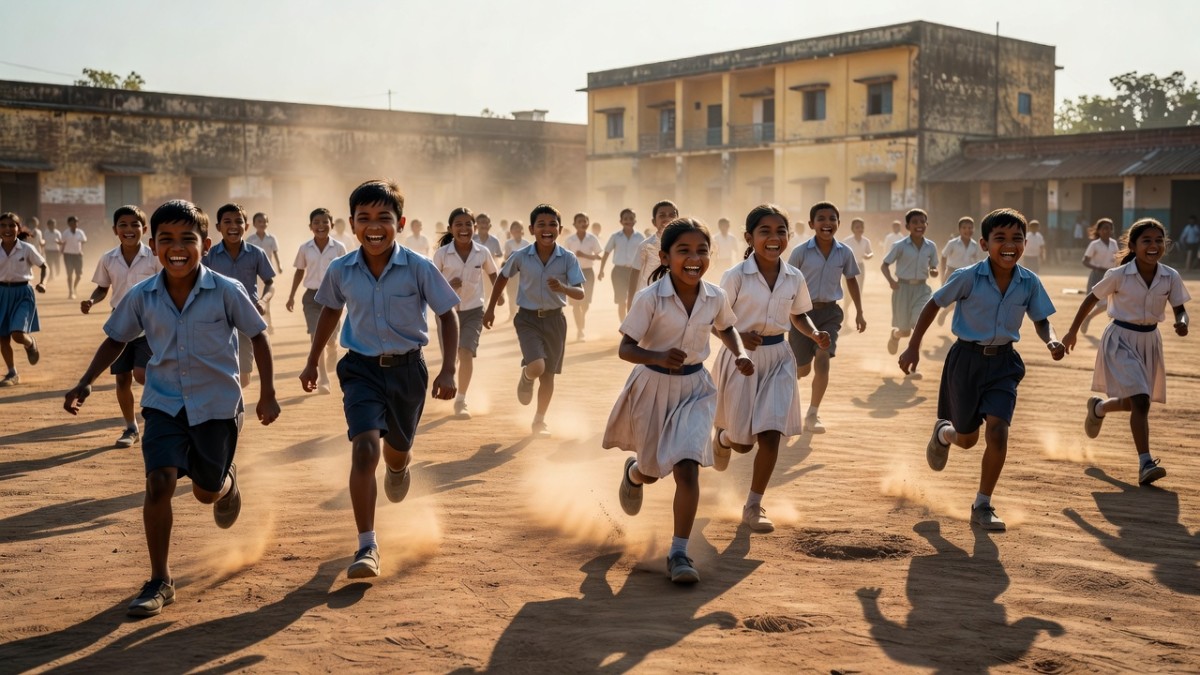
The Scale of India's Childhood Screen-Time Problem
The medical consensus is unambiguous. The Indian Academy of Pediatrics (IAP) screen-time and digital wellness guidelines, published in Indian Pediatrics in March 2022 after an expert task force was constituted in August 2020, are categorical: children below 2 years should not be exposed to any type of screen. The IAP advises against screens during meals, in the hour before sleep, or as a tool to distract or calm children. The World Health Organization's 2019 guidelines similarly recommend no sedentary screen time for 1-year-olds and less than 1 hour per day for children aged 2-4.
Indian reality is far from these benchmarks. An IAP review of Indian studies found that daily screen time ranged from about 0.9 to 3.5 hours among children under 5, about 1.0 to 3.1 hours among school-age children, and a staggering 1.3 to 7.1 hours among adolescents. Excessive screen time, defined as more than 1-2 hours a day, is widely prevalent in Indian children across socio-economic strata.
The rural Haryana study, led by AIIMS New Delhi and published in the Indian Journal of Medical Research in 2026, offers granular detail. Conducted across four villages with 282 children aged 2-4, it found that 50.5% had excessive screen time (95% CI 44.5-56.5%). About 27% of these toddlers began using screens before age 2. Using devices during meals and before sleep was significantly associated with higher excessive screen time. Perhaps most tellingly, 99.3% of households owned at least one screen-based device, and 92% of parents perceived screen time as harmful. The awareness is there; the behaviour change is not.
What Excessive Screen Time Does to Sleep, Eyes and Young Minds
The clinical consequences are mounting, and Indian research is now documenting them with precision. The NIMHANS SHUT Clinic study, published in the Industrial Psychiatry Journal, surveyed 424 Indian parents of children up to 18 years and found that higher screen time was strongly associated with children's inability to regulate usage. 'Loss of control' was the most prominent parental concern, accounting for nearly half of all responses. Parents described irritability when devices were removed, difficulty disengaging from screens, and effects on physical, psychological and social functioning, including excessive gaming, social media use and reduced attention span. Rajesh Kumar, Assistant Professor of Clinical Psychology at NIMHANS and corresponding author, has effectively documented what millions of Indian parents experience nightly but cannot articulate: their children are not merely 'fond of phones' but are showing signs of behavioural addiction.
Sleep is the first casualty. A South India cross-sectional study of 672 children aged 8-14 in government and private schools, conducted from June to September 2024, found that 31.5% reported high screen time of more than 4 hours a day. Sleep duration declined from about 9.4 hours to about 7.3 hours a night across heavier-use groups. The study correlated screen time with poorer psychological well-being and disturbed sleep. For a country already grappling with adolescent mental health challenges, this is a red flag.
The AIIMS Bibinagar study in rural Telangana, published in Cureus, examined 423 students aged 10-19 in three government schools. About one in three smartphone-using students met criteria for smartphone addiction. Among those identified as addicted, 74.1% had poor sleep quality versus 29.2% among those not classified as addicted. Boys had nearly twice the odds of smartphone addiction compared with girls, and owning a personal smartphone raised the odds further. This is not an urban elite phenomenon; it is playing out in government schools in rural Telangana.
Eye health is another front. About 23% of Indian schoolchildren are currently myopic. A Maharashtra cross-sectional study of school-age children from October 2025 found overall myopia prevalence of 23.6%, rising to 33.5% in private schools. Myopic children averaged about 3.3 hours of screen time a day. Eye specialists project that by 2030, nearly one-third of children aged 5-15 in urban India could be myopic. The link between near-work, screen exposure and myopia progression is well established, and India is sleepwalking into a vision crisis.
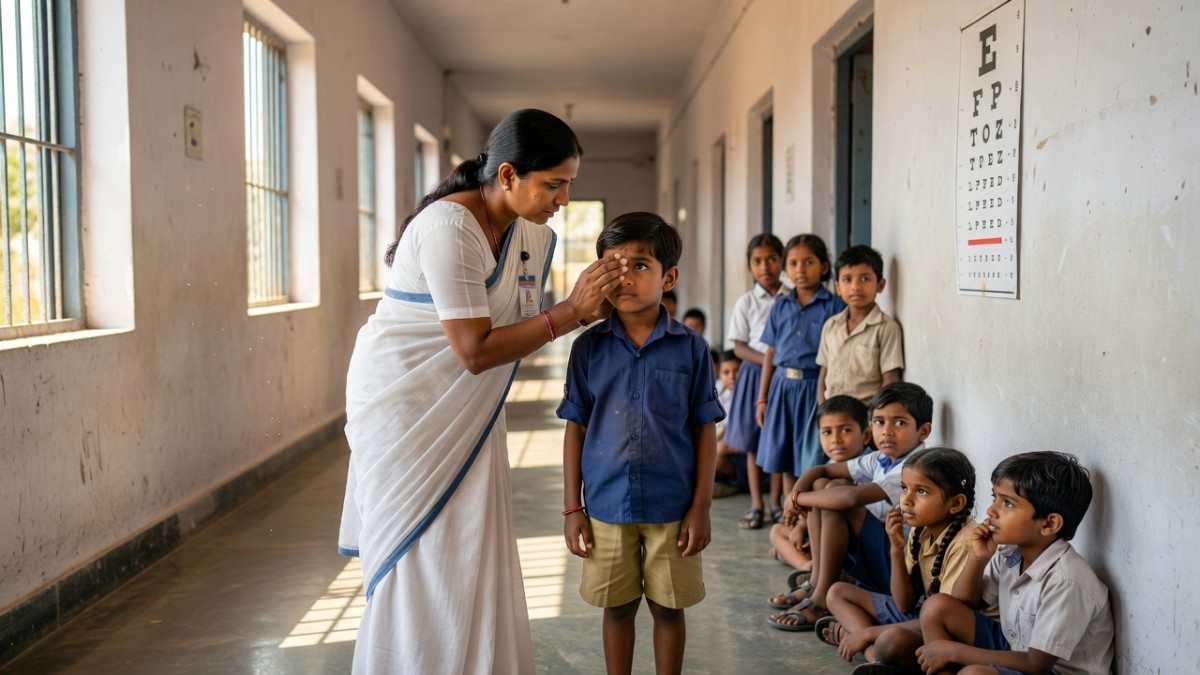
Why Teachers Are the Right Frontline for Digital Wellness
The Prime Minister's choice of audience was deliberate. Teachers see children for six to eight hours a day, five to six days a week. They notice the child who yawns through the first period, the one who cannot focus on a blackboard, the one who is irritable and withdrawn. Parents often miss these signs because they see their children in the evening, when fatigue and screen-time battles dominate. Teachers, by contrast, observe the baseline.
India's National Education Policy (NEP) 2020 already emphasises holistic development, activity-based learning and the integration of sports and physical education into schooling. Modi's call to channel children toward sports, physical games and creative activities aligns perfectly with NEP 2020's vision. The policy is not just about academic outcomes; it is about developing well-rounded human beings. A child who plays kho-kho in the school ground or learns to paint is a child who is not staring at a glowing rectangle at 11 PM.
Teachers also have the trust of parents in a way that public health campaigns often do not. When a teacher tells a parent, 'Your child seems tired; is he using his phone at night?' it carries a weight that a television advertisement cannot match. Modi's instruction to teachers to speak with parents about screen time is a recognition that behaviour change in Indian families will happen through interpersonal communication, not just policy mandates. The 92% of parents in the Haryana study who perceived screen time as harmful clearly want guidance; teachers can provide it in a culturally appropriate, individualised manner.
There is also the issue of early intervention for drug addiction, which Modi raised. The paediatric and adolescent psychiatry literature shows that excessive screen use and substance use disorders often share underlying vulnerabilities: poor impulse control, emotional dysregulation, and a search for immediate reward. A teacher who is alert to the signs of screen addiction is also more likely to notice the early behavioural changes associated with substance experimentation. The two issues are not unrelated, and the Prime Minister's framing suggests a comprehensive approach to child well-being.
India's Policy Framework: What Already Exists and What Is Missing
India is not starting from zero on digital child protection. The Digital Personal Data Protection (DPDP) Act, 2023 requires verifiable parental consent before companies can process the personal data of children under 18, and it bars tracking and behavioural advertising aimed at children. This is a significant legislative step that removes some of the commercial incentives for platforms to keep children engaged for longer periods. When a platform cannot profile a child for targeted advertising, the financial logic of maximising screen time weakens.
The IAP's digital wellness guidelines provide the medical framework, and the NEP 2020 provides the educational framework. What is missing is a coordinated implementation mechanism that connects schools, parents and paediatricians. The Prime Minister's intervention on September 4, 2026, effectively asks teachers to be the connective tissue. But teachers cannot do this alone. They need training on digital wellness, they need time in the school day for sports and creative activities, and they need the support of school managements that often push for more screen-based 'smart classrooms' without considering the health trade-offs.
The American Academy of Pediatrics (AAP) guidance offers a useful nuance that India should consider. The AAP emphasises quality of media use over a single time limit and recommends that families create media plans. For young children, the AAP advises avoiding screens under 18 months except video chatting, and about one hour a day of high-quality, co-viewed content for ages 2-5. The IAP guidelines are stricter for under-2s, which is appropriate given the Indian context of joint families and varied caregiving arrangements. But the AAP's media-plan approach could be adapted for Indian schools: a family media plan that is co-signed by parents and teachers, reviewed at parent-teacher meetings, and adjusted as the child grows.
Practical Guardrails for Schools and Families
What should a school do on Monday morning after the Prime Minister's message? First, conduct a simple, anonymous survey of screen-time patterns across classes, using the IAP thresholds as reference points. The data will likely shock teachers and administrators, but it will provide a baseline. Second, schools should institute a 'no-phone-before-bed' conversation with parents, explaining the sleep science in simple terms. The South India study's finding that sleep drops from 9.4 to 7.3 hours across heavier-use groups is a statistic that parents need to hear.
Third, schools should expand the sports and creative activities that NEP 2020 already mandates. This does not require expensive infrastructure. A daily hour of organised outdoor play, traditional Indian games, or even guided creative activities like drawing, music or storytelling can compete with screen time. The key is that these activities must be engaging enough to displace the dopamine hit of a video or a game. Fourth, schools should identify children showing signs of 'loss of control' as described in the NIMHANS study, and refer them to counsellors or paediatricians early. The AIIMS Bibinagar finding that 74.1% of smartphone-addicted students have poor sleep quality suggests that sleep complaints may be a useful screening question.
For parents, the guardrails are simpler but harder to enforce. No screens during meals. No screens in the hour before sleep. No personal smartphones for children until they demonstrate the ability to self-regulate. The Haryana study's finding that using devices during meals and before sleep is associated with higher excessive screen time gives parents a clear, actionable target. The Maharashtra myopia data, showing that myopic children average 3.3 hours of screen time a day, provides another motivator. And the DPDP Act's parental consent requirement means that parents have more legal power over their children's digital lives than they may realise.
The Bottom Line
Prime Minister Modi's message to the 82 National Teachers' Award winners on September 4, 2026, is a watershed moment in India's approach to child digital health. By framing excessive screen time as a 'major concern' and asking teachers to lead the response, he has elevated a paediatric issue to a national priority. The data is clear: half of rural Haryana toddlers have excessive screen time, one in three South Indian schoolchildren uses screens for over 4 hours a day, and one in three smartphone-using students in rural Telangana shows signs of addiction. The consequences are measurable in disrupted sleep, rising myopia, and impaired psychological well-being.
Teachers cannot solve this alone, and parents cannot either. What is needed is a triangular alliance of teachers, parents and paediatricians, supported by the policy framework of NEP 2020 and the DPDP Act 2023. The IAP has given India the medical guidelines. The Prime Minister has now given the mandate. The question is whether Indian schools will convert this mandate into daily practice, one sports period, one parent-teacher conversation and one phone-free dinner at a time. The innocence of childhood that Modi asked teachers to preserve is worth the effort.
— By Dr. Raj Patel, Staff Writer
This article was produced with AI-assisted research and editorial support. Sources: India Today, The Hindu, PTI, Indian Pediatrics (IAP), Indian Journal of Medical Research, Industrial Psychiatry Journal (NIMHANS), Cureus.
What's Your Reaction?
 Like
0
Like
0
 Dislike
0
Dislike
0
 Love
0
Love
0
 Funny
0
Funny
0
 Wow
0
Wow
0
 Sad
0
Sad
0
 Angry
0
Angry
0

India/South Asia Correspondent at Global1.News. Analytical voice with a background in science and health journalism. Based in New Delhi, covering Indian politics, education, healthcare, technology, and policy. Breaks down complex data into clear, actionable reporting.















Comments (0)