
Paul Biya Is 93, Has Ruled Cameroon Since 1982 — and Hasn't Been Home in 71 Days
Cameroon's 93-year-old President Paul Biya has been abroad for 71 days on a "brief stay" in Geneva, raising urgent questions about his health, who is running the country, and a succession crisis looming over Africa's youngest population.
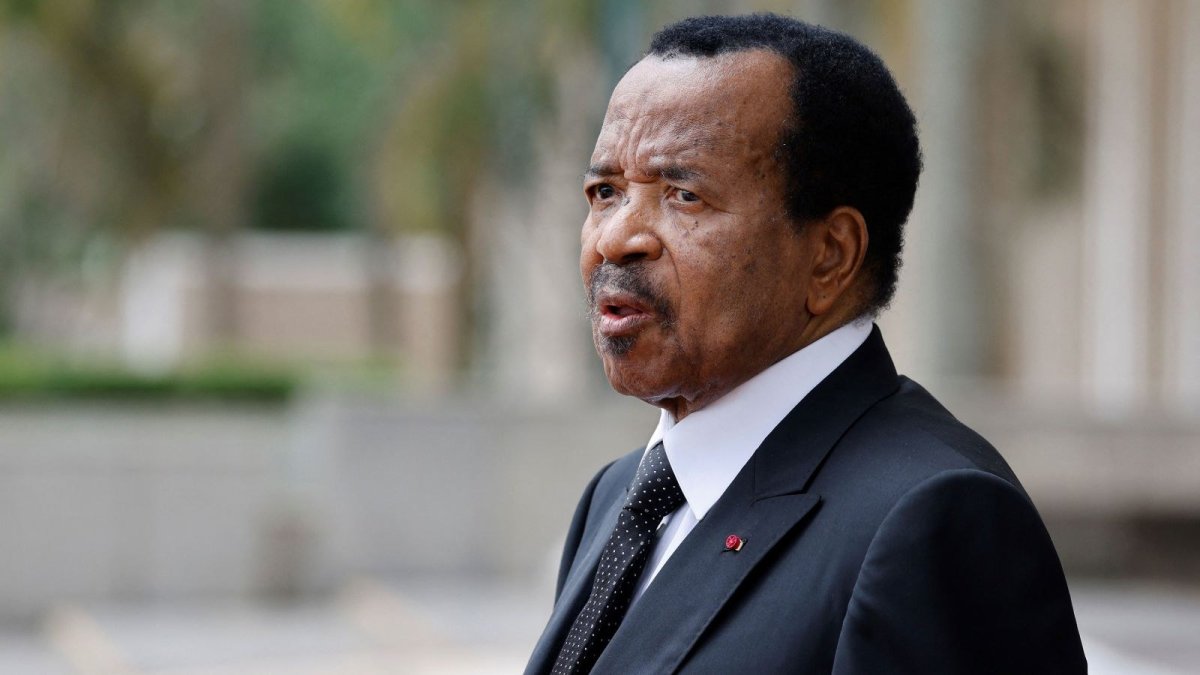
The World's Oldest President Has Vanished From Public View — Again
Let me be blunt: the man who has run Cameroon with an iron grip for 44 years is in Geneva, Switzerland — and has been for 71 days. Paul Biya, the 93-year-old president who took power in 1982, left on June 7, 2026, for what his office called a "brief private stay in Europe." That stay has stretched past two months — his longest uninterrupted absence from the Central African nation in years. And the silence from Yaoundé is telling.
Government spokesman Rene Emmanuel Sadi told French radio RFI last week that Biya is in Geneva, is not hospitalized, and is alive. That's it. No details on his condition, no timeline for return. Sadi dismissed concerns about a power vacuum, insisting "President Paul Biya is alive" and "will soon return." But "soon" has stretched for over two months now, and Cameroonians are asking the question that has hung over this presidency for decades: who is actually running the country?
This isn't new. Biya has spent extended periods abroad throughout his rule, and rumors about his health have long been part of public life. In 2024, the government banned media discussions about his health, calling them a national security matter. But this absence feels different — the longest he's been away in years, coming after a disputed election, deadly protests, and a country increasingly asking whether its nonagenarian leader is physically capable of governing.
A President Who Rules From a Hotel Suite in Geneva
Biya has been signing decrees from Switzerland. Earlier this month, he reshuffled the top military leadership, replacing commanders of four of the country's five joint military regions and promoting several senior officers. The BBC reports he promoted five colonels to brigadier general, including Raymond Jean Charles Beko'o Abondo, reappointed commander of the elite presidential guard — the unit protecting Biya himself. Abondo has held that position since 2013.
He's also signed decrees authorizing government loan agreements with international financial institutions. So the man is working, technically. But opposition leaders are having none of it. Mamadou Mota, vice-president of the opposition CRM party, put it starkly: "Executive power is exercised at the heart of the nation, not through smoke signals or telepathy from hotel suites on the other side of the world."
The constitutional reality is murky. Cameroon's constitution does not prohibit a president from leaving the country for months. But there is no vice president — the post was created in April 2026 and remains unfilled, an appointment Biya controls. The opposition describes the country as running on "autopilot." And after last year's election, Biya promised a new cabinet. He still hasn't delivered.
The Election That Started This Mess Was Already a Sham
Let's rewind. Biya won his first presidential election in 1984 under a one-party system, and has now won seven more since multiparty politics were introduced. Last year, he won a disputed eighth term that could keep him in office until he is nearly 100. His opponents called the election fraudulent, and it was marred by deadly clashes between protesters and police. At least four people died in the protests that followed.
Issa Tchiroma Bakary, the runner-up who won just over 35% of the vote, claimed victory and alleged fraud. He's now in exile in The Gambia, and he's not mincing words: "Biya's very long stay in Switzerland only aggravates that lack of legitimacy and his desperate attempts to hold on to power by force."
Several candidates, including one of Biya's main challengers, were barred from contesting the election. Samuel Hiram Iyodi, the 38-year-old opposition candidate who finished eighth, has called on parliament to ask Cameroon's Constitutional Council whether Biya's absence amounts to a vacancy in the presidency. Here's the reality check: such a move is unlikely to succeed, given the dominance of Biya's ruling Cameroon People's Democratic Movement, which has controlled the levers of power for over four decades.
For Young Cameroonians, Biya Is the Only President They've Ever Known
Here's a staggering statistic: more than 70% of Cameroon's population of nearly 30 million people is below the age of 35. For most of them, Biya is the only president they have ever had. Abit Riassai Acha, a 26-year-old doctoral student at the University of Yaounde II, voted for the first time last year, backing Iyodi. "Growing up, President Biya was the only president I knew, so his presidency has been part of my entire experience of Cameroon," Acha told CNN.
Acha acknowledges Cameroonians have become accustomed to Biya's long absences. "But becoming accustomed to something does not necessarily mean that people should stop asking questions about how the country is being governed," he said. That's the crux: the absence isn't a curiosity — it's a governance crisis in slow motion.
Nformi Bime remembers when Biya was the change. Bime was 23 when Biya won his first election in 1984; he's now 65 and retired from teaching. He first heard Biya's name in the 1970s, when Biya served as secretary-general of the presidency under Cameroon's first post-independence president, Ahmadou Ahidjo. When Biya first appeared on the ballot, Bime saw him as a "representation of hope." "We believed he was young and dynamic — handsome too. He meant so much to Cameroonians," Bime said. Few imagined the man they saw as a new beginning would still be in power four decades later.
The Country Is Falling Apart While the President Is Away
Political analyst Collins Molua Ikome, a Cameroonian based in Germany, visited Cameroon in April and saw the problems firsthand. "Roads in Cameroon are extremely bad. I even witnessed a fatal accident," he told CNN. He also pointed to frequent power cuts, corruption, and a lack of jobs for young people. These problems have festered for years — and they're not being addressed while the president signs decrees from a Swiss hotel.
Wilson Tamfuh, a public and international law professor at the University of Dschang, said the country has institutions that can keep the government running when the president delegates responsibilities — the prime minister, the secretary-general at the presidency, and ministers can handle key duties. But Tamfuh compared Cameroon to a human body that is "seriously sick." "Even if Biya still proves to be strong at this age, it is clear that his health challenges are taking a toll on his leadership," he told the AP. "Cabinet reshuffles over the past 15 years have amounted to little more than recycling the same people from one ministry to another."
The list of crises is long: the Anglophone separatist conflict has raged for years, Boko Haram militants are active in the north, the economy is stagnant, and young people with degrees are on the streets without jobs. "People want the Anglophone crisis resolved, standards of living ameliorated, more good roads, fewer people on the streets with degrees, and more," Tamfuh said.
The Cruel Irony of a Leader Who Outlives His Own People
Here's the part that should make you angry. Life expectancy in Cameroon is below 70 years. Biya is 93. He has far outlived the average Cameroonian, and Ikome explains why: "Biya has far outlived that due to access to medical healthcare abroad, which the ordinary Cameroonian cannot access due to poverty." The president gets world-class care in Geneva while his citizens die for lack of basic treatment at home.
Bime put it even more personally: "Anytime they have a cold, they run overseas and are taken care of, but the other Cameroonians are dying because of lack of care." The divide isn't unique to Cameroon — across Africa, political elites have long sought healthcare or maintained homes abroad even as public services struggle. But it's starkest when the president himself can't seem to come home.
Bime's question is deeply personal: Will he live to see another president? After decades of waiting for change, he worries he may not — and that Biya could outlive him and many others who are not part of the country's elite.
Africa's Youngest Population, Africa's Oldest Leaders
This isn't just a Cameroon story. It's an African story. The continent has the world's youngest population, but several countries are still led by aging leaders whose political careers began decades ago. A continent of young people, governed by men who came of age in a different era entirely.
Biya's 2008 constitutional amendment abolished term limits, and he's now led Cameroon longer than most of its citizens have been alive. If he serves his entire term, he will leave office at nearly 100 years old. That's not governance — that's a gerontocracy that refuses to let go.
The military reshuffle from Geneva is telling. Such shake-ups are not unusual under Biya, particularly at times of intense public scrutiny or perceived weakness. After an unexpected coup three years ago in neighboring Gabon, which toppled the Bongo dynasty, Cameroon immediately reshuffled its military leadership. The message is clear: the regime is circling the wagons, even as the man at the center is thousands of miles away.
The Succession Question Nobody Wants to Answer
Here's the uncomfortable truth: nobody knows what happens after Biya. There's no vice president. The succession mechanism is unclear. The ruling party is dominated by loyalists who built their careers on Biya's patronage, and the opposition is fragmented and largely powerless.
Iyodi's call for the Constitutional Council to weigh whether Biya's absence amounts to a vacancy is a long shot, but it's a necessary question. The government's response — that Biya is alive and working from Geneva — doesn't address the fundamental issue: a country of nearly 30 million people cannot be run indefinitely by a 93-year-old man signing decrees from a hotel suite on the other side of the world.
For now, Cameroon waits. The president will "soon return," according to his spokesman. But "soon" has a way of stretching into months in this administration. And every day Biya stays away, the questions grow louder: Is he capable of governing? Who is really in charge? And what happens when the world's oldest president finally leaves office — by choice, by health, or by death? Cameroonians have asked these questions for years. They deserve answers, not smoke signals from Geneva.
This article was produced with AI-assisted research and editorial support. Sources: CNN, Associated Press, BBC News.
By Jessica Ali, Staff Writer
What's Your Reaction?
 Like
0
Like
0
 Dislike
0
Dislike
0
 Love
0
Love
0
 Funny
0
Funny
0
 Wow
0
Wow
0
 Sad
0
Sad
0
 Angry
0
Angry
0

Editor-in-Chief at Global1.News. Atlanta-based journalist who cuts through the BS and tells it like it is. Lead anchor, host, and the voice you hear when the spin stops and the truth starts.









Comments (0)