
NEET Overhaul: Can Supreme Court Reforms End Leaks?
The Centre has filed a detailed compliance affidavit before the Supreme Court, committing to a sweeping overhaul of the NEET-UG examination process under the National Testing Agency. This move follows repeated paper leaks and aims to restore integrity to the gateway exam that determines entry into medical colleges across India.
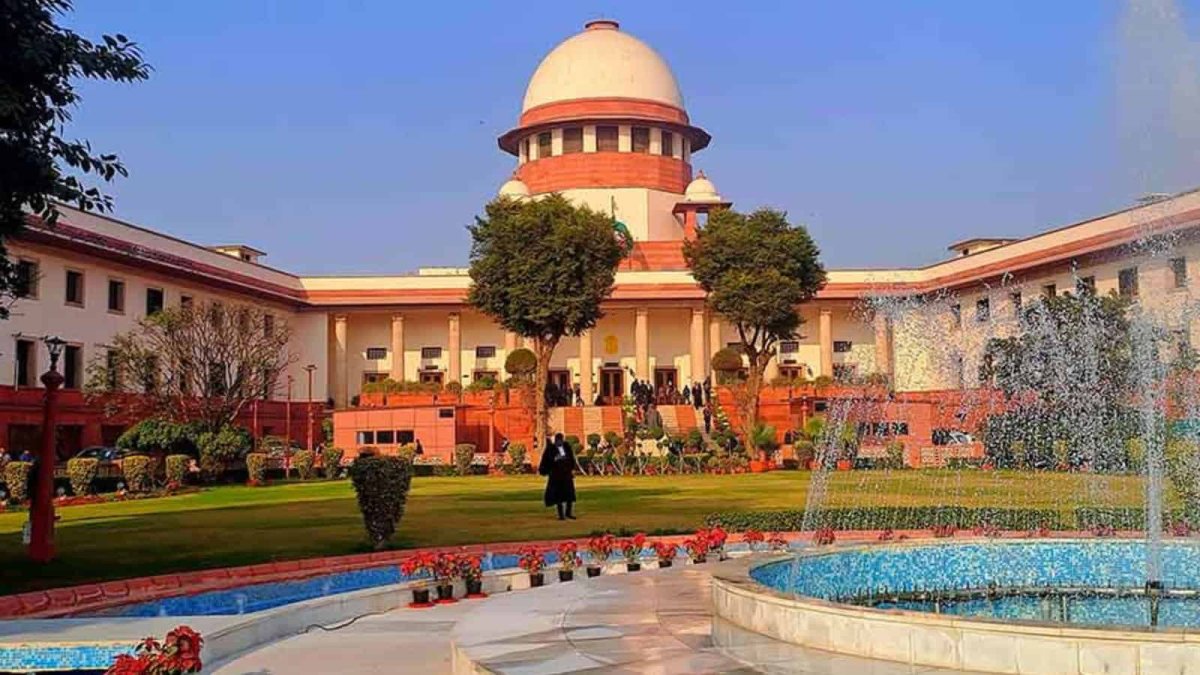
The Centre has filed a detailed compliance affidavit before the Supreme Court, committing to a sweeping overhaul of the NEET-UG examination process under the National Testing Agency. This move follows repeated paper leaks and aims to restore integrity to the gateway exam that determines entry into medical colleges across India. The reforms promise institutional changes that could reshape opportunities for millions of aspirants from states like Uttar Pradesh, Bihar, and Tamil Nadu.
NEET Overhaul: Can Supreme Court Reforms End Leaks?
New Delhi, August 5, 2026 — The Centre’s July 24 compliance affidavit to the Supreme Court bench led by Justice P S Narasimha outlines a full-scale restructuring of the National Eligibility-cum-Entrance Test to eliminate leaks and rebuild institutional credibility after the May 3, 2026 breach.

Supreme Court to Closely Monitor NTA Institutional Reforms
The Ministry of Education detailed measures to build institutional memory and eliminate paper leaks after the court’s May 29 directive. Justices P.S. Narasimha and Alok Aradhe stated they would monitor the roadmap throughout the year to ensure complete institutionalisation, rejecting ad-hoc solutions that have undermined credibility for years. During courtroom exchanges, the bench observed that deploying the Air Force represented a temporary measure, noting that “ad hocism has troubled us for years,” and warned that reliance on such arrangements cannot become permanent. Solicitor General Tushar Mehta assured the court that the Centre would place the entire examination process on record, “right from the printing press till the time the student gets the paper.” The bench has specifically demanded clarity on the NTA governing board structure, meaningful stakeholder participation, and involvement of domain experts from IITs so that reforms are embedded rather than reactive.
The Federation of All India Medical Association, represented by lawyer Tanvi Dubey, is among petitioners seeking replacement of the NTA with a robust, autonomous body, arguing that repeated controversies underline the need for individual accountability within the testing agency.
Legal Framework Strengthened Through 2026 Amendment Act
Parliament enacted the Public Examinations Amendment Act, 2026, which imposes up to 10 years imprisonment and fines up to Rs 1 crore for leaks, impersonation and tampering. This builds directly on the 2024 Public Examinations (Prevention of Unfair Means) Act. The government has begun setting up fast-track courts for time-bound trials, a step announced by Prime Minister Narendra Modi on July 23 alongside a draft Bill with harsher penalties and special courts. These measures draw from precedents across UPSC, JEE, and state-level tests that have faced similar scandals.
High-Powered Task Force Led by Nandan Nilekani to Drive Tech Reforms
On July 27 the government constituted the High-Powered Task Force on Examination Reforms headed by Infosys co-founder and Aadhaar architect Nandan Nilekani. The panel must submit recommendations within three months on end-to-end changes, with emphasis on AI and Blockchain for secure conduction. Solicitor General Tushar Mehta told the court the Radhakrishnan Committee recommendations have been fully accepted and the government is going “ten extra miles” to embed domain experts including from IITs in the NTA governing board.
Ten-Stage Fortress Security Protocol Now Operational
The NTA has rolled out a 10-stage security protocol described by officials as a “fortress” model, covering every stage from printing press to candidate. Question papers and OMR sheets now carry unique serial numbers tied to individual candidates, and papers move in six layers of tamper-evident packaging inside steel trunks fitted with one-time-use locks that can only be cut open. Air-gapped AI systems, physically disconnected from external networks, handle initial translation drafting for multilingual papers to eliminate the historical leak point where human translators or intermediaries accessed content before distribution, followed by limited human verification. The approach builds on India’s digital public infrastructure with Aadhaar-linked candidate verification at multiple checkpoints, ensuring the movement of lakhs of OMR sheets scales securely across thousands of centres nationwide.
These steps respond directly to the May 3, 2026 paper leak that forced the NTA to cancel the exam on May 12 and conduct a re-examination on June 21, and to the 2024 NEET-UG leak that the Supreme Court had earlier refused to cancel but answered with directions and a criterion for cancelling public examinations.
Transition to Computer-Based Testing Under Active Consideration
The Supreme Court asked whether NEET can shift to a fully computer-based testing model and what cybersecurity architecture would be required. The Ministry of Education, which oversees the NTA, and the Ministry of Health and Family Welfare, the test-indenting agency, must now demonstrate how domain expertise from IITs and other institutions will strengthen the NTA board and transparency mechanisms. The Supreme Court's inquiry into a full computer-based testing shift for NEET highlights potential benefits including the elimination of physical paper leaks, instant result processing, and integrated biometric verification tied to Aadhaar for candidate authentication. However, challenges persist around rural connectivity gaps, uneven digital infrastructure at exam centers across states, and the digital divide that could disadvantage aspirants from underserved regions, issues the Radhakrishnan Committee previously flagged in its review of examination reforms.
Implications for 2.4 Million Aspirants and Medical Education Pipeline
India’s 2.4 million-plus NEET-UG aspirants face repeated uncertainty that disrupts preparation cycles, strains family resources invested in coaching, and delays admissions into MBBS seats across states. Persistent leaks erode trust in the single national entrance test that feeds the medical education pipeline, affecting patients in underserved districts who rely on qualified doctors. Exam integrity functions as a public health imperative because compromised selection processes risk placing inadequately vetted candidates into critical medical training roles — a concern amplified by the 2024 leak scandals that prompted nationwide scrutiny of the NTA.
Petitions and CBI Probe Shape Ongoing Judicial Oversight
The affidavit leaves untouched the merits of the ongoing CBI investigation into the NEET-UG 2026 leak. Building on the 2024 episode, where the top court declined to cancel the test but issued directions and established criteria for cancelling public examinations, the bench on May 25, 2026, remarked that the NTA had not learnt lessons from prior failures. In practice, institutional memory requires documented protocols, independent oversight and retention of experienced personnel so that the same vulnerabilities do not recur. Fast-track courts established under the Public Examinations (Prevention of Unfair Means) Act, 2024, are expected to accelerate prosecutions and strengthen deterrence, shifting the system from repeated crisis response toward sustained accountability.
The court’s July 27 listing and continued monitoring signal that structural safeguards, rather than temporary measures, will determine future exam integrity. By embedding legal penalties, technology-driven protocols and expert oversight, the Centre is attempting to move public examinations from reactive firefighting to a stable, accountable system — one that decides whether NEET regains its role as a fair gateway to medical education or continues to fuel litigation and lost opportunities for Indian students.
— By Dr. Raj Patel, Staff WriterThis article was produced with AI-assisted research and editorial support. Reporting is based on sources cited in the article.
What's Your Reaction?
 Like
0
Like
0
 Dislike
0
Dislike
0
 Love
0
Love
0
 Funny
0
Funny
0
 Wow
0
Wow
0
 Sad
0
Sad
0
 Angry
0
Angry
0

India/South Asia Correspondent at Global1.News. Analytical voice with a background in science and health journalism. Based in New Delhi, covering Indian politics, education, healthcare, technology, and policy. Breaks down complex data into clear, actionable reporting.














Comments (0)