
Tensions Flare at Trinidad and Tobago Emancipation Day Observance
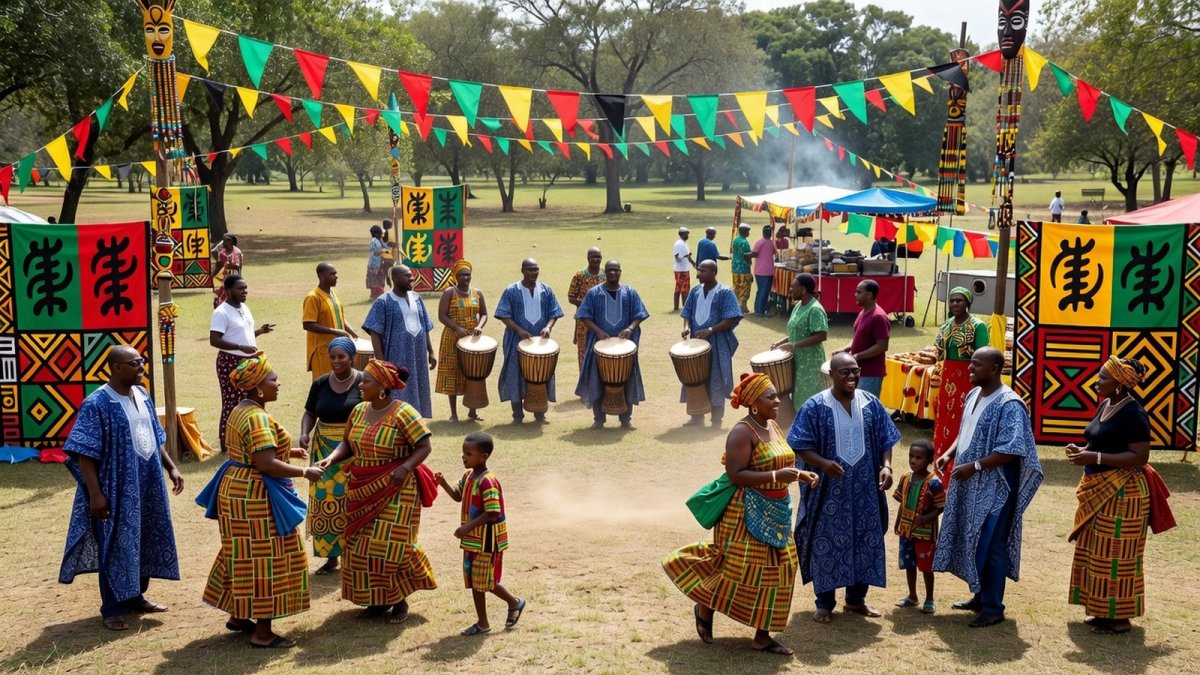
Prime Minister's Absence Draws Sharp Criticism Prime Minister Kamla Persad-Bissessar chose not to attend the Emancipation Support Committee of Trinidad and Tobago's flagship Lidj Yasu Omowale Emancipation Village event on August 1 2026 despite being listed as the feature speaker. She explained that she had already joined two earlier Emancipation programmes in Port-of-Spain and San Fernando and preferred to spend the day with family.
Prime Minister's Absence Draws Sharp Criticism
Prime Minister Kamla Persad-Bissessar chose not to attend the Emancipation Support Committee of Trinidad and Tobago's flagship Lidj Yasu Omowale Emancipation Village event on August 1 2026 despite being listed as the feature speaker. She explained that she had already joined two earlier Emancipation programmes in Port-of-Spain and San Fernando and preferred to spend the day with family. Opposition Leader Penelope Beckles described the decision as disrespectful to the national holiday that belongs to every citizen. The Prime Minister countered that the People's National Movement was attempting to weaponise the celebrations and target Afro-Trinidadians who support her government.
The absence has left many citizens reflecting on whether such choices deepen divides. Across the Caribbean similar tensions surface when political figures weigh attendance at cultural commemorations against other commitments, often sparking debate in CARICOM circles about diaspora expectations and shared regional identity. The episode underscores practical lessons for multicultural governance, reminding officials that every public gesture carries weight in maintaining trust between African, Indian and other communities that together shape daily life.
Minister Faces Boos Amid Political Heat
Culture and Community Development Minister Michelle Benjamin encountered boos while speaking at the African Emancipation Day events in Port-of-Spain. The Prime Minister later addressed the incident on social media and in interviews, accusing the opposition of organising the heckling as part of a broader strategy to sow racial division. She said she looked forward to what she called round two of similar attempts on Independence Day. Supporters in communities across the country expressed disappointment that national commemorations had become sites of partisan confrontation rather than unity.
When a minister encounters boos at such an event the moment reveals how partisan friction can overshadow the collective memory of resilience that binds communities. Comparable cultural clashes appear throughout the region, where diaspora politics and CARICOM diplomacy sometimes intersect with local rivalries, testing the ability of governments to keep national days above party lines. Foreign missions and local leaders alike must navigate these sensitivities carefully to preserve the social cohesion built over generations.
Indian High Commission Event Sparks Outrage
The Indian High Commission in Port-of-Spain announced an Open House for the Indian community and diaspora members on the same date as Emancipation Day. The scheduling drew immediate criticism on radio programmes and social media platforms with many citizens calling the choice disrespectful to the African community. Former tourism minister Randall Mitchell wrote directly to Indian Prime Minister Narendra Modi requesting an immediate review of the conduct of High Commissioner Dr Pradeep Singh Rajpurohit. Mitchell emphasised that diplomatic missions must respect the historical significance of August 1 for a large segment of the population.
Scheduling an Open House for another community on that date therefore touched a nerve, illustrating how easily diplomatic calendars can clash with the deep significance attached to August 1 by the African-descended population. Similar scheduling missteps have occurred elsewhere in the Caribbean, where diaspora sensitivities and CARICOM expectations require foreign missions to exercise particular care around emancipation observances. Practical diplomacy now demands greater awareness of these dates to avoid straining the delicate balance that supports peaceful coexistence in our society.
Rescheduling Follows Public Backlash
Following widespread complaints the Indian High Commission postponed the Open House to August 8 and removed the original announcement. In its revised post the mission described August 1 simply as a public holiday. Dr Asha Kambon of the Emancipation Support Committee noted the lack of any explicit acknowledgement of Emancipation Day in the revised statement. The committee indicated it was considering a formal request for the High Commissioner's withdrawal citing the impact on social cohesion built over generations in Trinidad and Tobago.
The decision to move the Open House after public complaints shows how quickly community voices can influence institutional actions when historical memory is at stake. Across the Caribbean, comparable diplomatic adjustments reflect broader patterns in which foreign missions learn to respect local emancipation narratives amid diaspora politics and CARICOM relations. This episode highlights practical implications for multicultural societies, where foreign diplomacy must align with domestic sensitivities to sustain the mutual respect that underpins community life.
Multicultural Harmony Tested Once More
Trinidad and Tobago has long worked to foster mutual respect among citizens of African, Indian, Indigenous, Chinese, European, Syrian-Lebanese and other backgrounds. Mitchell reminded the diplomat that 364 other days existed for such an event without diminishing the meaning of African Emancipation Day. Community voices on airwaves and online platforms recalled that May 30 marks Indian Arrival Day and August 15 is India's Independence Day, suggesting those dates would have avoided offence. The episode highlighted how easily diplomatic missteps can strain the delicate balance that underpins daily life in our multicultural society.
The recent scheduling controversy tested the long-standing efforts to foster respect among African, Indian, Indigenous and other communities that form the national mosaic. Similar strains appear in other Caribbean territories when cultural dates intersect with external events, often requiring careful CARICOM-level dialogue to maintain harmony. Practical steps in diplomacy and community engagement remain essential to protect the multicultural balance that allows daily life to proceed with care and cooperation.
Emancipation Day Message Emphasises Shared Values
In her official message the Prime Minister described the transatlantic slave trade as one of history's greatest crimes against humanity and praised the unbroken spirit of African people. She noted that Trinidad and Tobago became the first country in the world to declare Emancipation Day a national public holiday in 1985. The statement called on citizens to honour the sacrifices of the enslaved by building a nation rooted in justice, equality and respect for all. As families across the country reflect on these words the recent controversies serve as a reminder that true emancipation requires ongoing commitment to understanding and care within our communities.
Emancipation Day commemorates the 1834 abolition of slavery across the British Empire, a moment when the chains of bondage were finally lifted from African ancestors in these islands. The Prime Minister's official message, which highlighted justice and equality, therefore resonates against a backdrop of recent tensions that have tested those very ideals. Throughout the Caribbean, nations navigate parallel challenges where political and diplomatic incidents intersect with emancipation commemorations, influencing how diaspora communities and CARICOM partners perceive mutual respect. These events carry weight for national unity and race relations, particularly as citizens seek common ground. The practical lesson for multicultural societies lies in ensuring that foreign diplomacy and local leadership together reinforce the shared values needed to sustain harmony across all communities.
What Happens Next as Independence Day Nears
As Independence Day on August 31 draws near, the Prime Minister has made clear she stands ready for what she called round two of attempts to boo her at that event. Opposition Leader Penelope Beckles has maintained that Emancipation Day belongs to all Trinidad and Tobago and should not be viewed through a partisan lens, while the Indian High Commission's rescheduled Open House is now set for August 8.
Dr Asha Kambon and the Emancipation Support Committee are still considering whether to press for the High Commissioner's withdrawal. In this season of national observances, citizens can use the time to reaffirm mutual respect, learn the history of both Emancipation and Indian Arrival Day on May 30, and hold leaders and diplomats to a standard of sensitivity that keeps our communities strong. By Sharon Sahatoo, Staff Writer
This article was produced with AI-assisted research and editorial support. Reporting is based on sources cited in the article.
What's Your Reaction?
 Like
0
Like
0
 Dislike
0
Dislike
0
 Love
0
Love
0
 Funny
0
Funny
0
 Wow
0
Wow
0
 Sad
0
Sad
0
 Angry
0
Angry
0
Caribbean Correspondent at Global1.News. Based in Port of Spain, Trinidad, covering Caribbean politics, economy, energy, climate, and culture. Amplifying the voices and stories of the Caribbean region.











Comments (0)