
Montreal police chief says change will take time amid racism allegations
Montreal’s police chief faced the public for the first time Tuesday night, acknowledging a sentiment of “shame” within the force as it responds to serious allegations of racism, discrimination and harassment that have shaken the city’s multicultural communities.

Montreal police chief says change will take time amid racism allegations
Montreal’s police chief faced the public for the first time Tuesday night, acknowledging a sentiment of “shame” within the force as it responds to serious allegations of racism, discrimination and harassment that have shaken the city’s multicultural communities. Chief Fady Dagher appeared at a special meeting at Montreal City Hall, where residents of Montreal North — a borough that has voiced discontent with police conduct for over a decade — pressed the service on its handling of recent incidents. The meeting came two months after the chief dismantled a 16-member patrol unit in the borough following allegations of racist and abusive behaviour by some officers. The decision to disband the unit was itself a significant admission from the SPVM leadership. In dismantling the patrol, Dagher signalled that the problems were not isolated to one or two bad actors, but rather symptomatic of a deeper cultural issue within that specific command structure. For residents of Montreal North, however, the move was seen as a necessary but insufficient response. Many have argued that the borough has been over-policed and under-protected for years, with officers frequently treating residents as suspects rather than citizens in need of service. The borough, which is home to a large Black and racialized population, has long been a flashpoint for tensions with the SPVM, and Tuesday’s meeting was the first formal opportunity for the public to hold the new chief to account since the allegations emerged. Dagher, who took over the leadership of the Service de police de la Ville de Montréal (SPVM) in 2023, has positioned himself as a reformer. He has spoken openly about the need to modernise the force and rebuild trust with communities that have historically been marginalised. But Tuesday’s meeting revealed the depth of the challenge. The chief acknowledged that the force’s reputation has been badly damaged, and that the path forward will require more than just policy changes. It will require a fundamental shift in how officers view their role in diverse neighbourhoods.A shocking discovery in June
The controversy reached a tipping point in June when allegations surfaced that officers had cut the hair of racialized citizens and kept it as trophies. Two officers were suspended in connection with that incident, while a third was suspended in an unrelated matter. “That, for me, was shocking. Extremely disappointed, humiliating,” Dagher told Global News. “I always say that I recognize that racial profiling and discrimination exist. What surprised me is the gravity of the behaviour of those two police officers in the case. And that, to be honest with you, I didn’t expect to see this in 2026.” The chief’s remarks came during a meeting that many described as difficult but necessary. For residents of Montreal North, the June revelations are seen as the latest chapter in a long history of strained relations between law enforcement and the borough’s diverse population. The specific nature of the allegations — the cutting and retention of hair — carries a particularly painful historical resonance. For many in the Black community, the act evokes the dehumanising treatment of enslaved people, whose bodies were treated as property and whose hair was sometimes collected as curiosities. The fact that such behaviour allegedly occurred in 2026, in a city that prides itself on multiculturalism, has deepened the sense of betrayal. Community advocates have pointed out that the incident is not merely a matter of individual misconduct, but reflects a broader pattern of disrespect that has been documented in the borough for years. Montreal North has been the site of several high-profile incidents involving police and racialized residents. In 2017, the death of Claudine Cheng, a woman who was shot by police during a mental health intervention, raised questions about the SPVM’s use of force and its handling of vulnerable individuals. More recently, the 2019 raids on the homes of journalists covering the Montreal North protests drew widespread condemnation and led to a formal apology from the force. These incidents, combined with the June hair-cutting allegations, have created a cumulative sense of grievance that will not be easily resolved.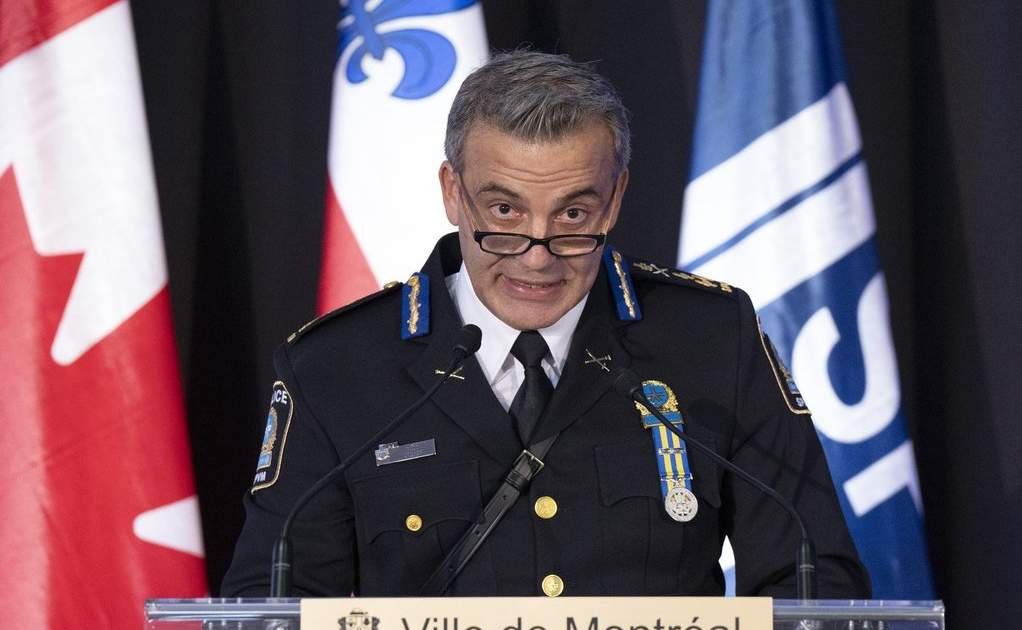
Community voices demand action
Erika Alneus, chief of the official opposition at city hall, captured the mood of many attendees with a blunt assessment. “People are sick and tired of being sick and tired,” Alneus told Global News. The sentiment was echoed by community leaders who attended the meeting, all of whom acknowledged that while the gathering was an important first step, it was also a painful one. “It was a very difficult but necessary conversation,” said Fo Niemi, executive director of the Centre for Research-Action on Race. “It was open, it was honest.” Niemi stressed that the burden of rebuilding trust cannot rest solely on the police service. He called for a broader civic response involving city politicians and borough officials. “The police can’t do it alone,” Niemi said. “The police being one of the services of the city, the city politicians and the boroughs should be involved in these solutions.” Niemi’s organisation has been documenting racial profiling in Montreal for decades. He has long argued that the problem is systemic, not anecdotal, and that meaningful reform requires political will at the highest levels of city government. His call for broader civic involvement reflects a growing recognition that policing is only one part of the equation. Housing, employment, education and social services all play a role in shaping community safety and trust. The meeting also drew attention to how deeply the June allegations have resonated across the borough. Community leaders said the incidents were not an aberration for many residents but a confirmation of concerns they have raised for years, underscoring the scale of the trust deficit the service must address.Chief cites extremism, street checks as concerns
Dagher acknowledged that understanding the root causes of the animosity between police and the community remains a challenge. He said he cannot rule out extremism or white supremacy as contributing factors. “It’s a tough question because we are the mirror of society,” he said. The chief also addressed the persistence of random street checks — a practice that is forbidden within the Montreal police force but which he admitted some officers still perform. Rooting out such habits, he said, will take time. “It’s going to be difficult. It’s going to be long. But we have to stick together,” Dagher said, adding that it could take seven to 10 years before the community regains trust in the service. “This is a very important moment for the police department to rethink where did we miss, what went wrong with those two police officers,” he added. The issue of street checks is particularly sensitive in Quebec. In 2018, the provincial government introduced regulations requiring police officers to obtain written consent before conducting a street check, and to provide a receipt to the individual. The regulations were introduced after years of advocacy by community groups who argued that the practice was disproportionately targeting racialized individuals. Despite these rules, studies have shown that street checks continue to occur, often without proper documentation. Dagher’s admission that some officers still perform the practice is a tacit acknowledgment that policy changes alone are insufficient. The chief’s reference to extremism and white supremacy is also significant. While he was careful not to make specific accusations, his willingness to raise the possibility reflects a broader conversation within Canadian policing about the presence of far-right elements in law enforcement. In recent years, several police services across the country have launched internal investigations into officers’ alleged ties to extremist groups. The SPVM has not been immune to these concerns, and Dagher’s comments suggest that he is taking the issue seriously.Oversight and next steps
The meeting also highlighted the role of external oversight in addressing police misconduct. Fernanda Belton, executive director of the Legal Clinical Centre, pointed to the existence of the Bureau des enquêtes indépendantes (BEI) as a direct response to past failures. “We know already that one of the reasons why we have an independent arc, which is the BEI, is because of this kind of issue,” Belton told Global News. The BEI was created in 2016 following a series of controversial police shootings that eroded public confidence in the ability of police services to investigate themselves. The agency is responsible for investigating all cases involving serious injury or death caused by police officers in Quebec. While the BEI has been praised for providing a degree of independence, it has also faced criticism for the length of its investigations and for the perceived lack of transparency in its processes. Belton’s comments suggest that while the BEI is an important mechanism, it is not a panacea. An internal investigation into the June incidents remains underway. Dagher confirmed that two files involving three officers have been sent to Quebec’s prosecution service for review. The outcome of these files will be closely watched, as it will signal whether the SPVM is willing to hold its own members accountable for serious misconduct. In the past, police officers in Quebec have rarely faced criminal charges for on-duty conduct, and convictions are even rarer. Community leaders have expressed hope that the current cases will be handled differently. Notably absent from Tuesday’s meeting was Montreal Mayor Soraya Martinez Ferrada. Her absence did not go unnoticed by attendees, some of whom expressed a desire for stronger political leadership on the file. The absence of the city’s top elected official at such a critical meeting was seen by some as a missed opportunity to demonstrate political commitment to reform.A history of strained relations
The tensions between Montreal North and the SPVM did not emerge overnight. The borough has been the site of repeated confrontations between police and residents, dating back to the 2008 shooting death of Fredy Villanueva, a 19-year-old who was killed by police in a park. The shooting sparked days of rioting and led to a series of community consultations that ultimately produced a list of recommendations for improving police-community relations. Many of those recommendations, however, were never fully implemented. In 2017, the SPVM came under fire again following the death of Claudine Cheng, who was shot by officers during a mental health intervention. The incident raised questions about the force’s training in dealing with individuals in crisis and led to calls for greater investment in mental health services. The following year, the province introduced its street-check regulations, but community advocates argued that the rules were not being enforced. The 2019 raids on the homes of journalists who had covered the Montreal North protests marked another low point. The raids, which were conducted as part of an investigation into alleged threats against police officers, were widely condemned as an attack on press freedom. The SPVM later apologised, but the damage to its reputation was already done.What comes next
As the city grapples with the fallout, community leaders and police officials alike acknowledge that meaningful change will require sustained effort, transparency and a willingness to confront uncomfortable truths about policing in Montreal. For now, residents of Montreal North are watching closely to see whether Tuesday’s conversation translates into concrete action — or becomes just another chapter in a story of promises unmet. The coming months will be critical. The internal investigation into the June incidents remains underway, and the decisions of Quebec’s prosecution service will be closely scrutinised. Whether the measures announced so far will be enough to rebuild trust remains an open question. What is clear is that the status quo is no longer acceptable. The residents of Montreal North have made their voices heard, and the city’s political and police leadership have been put on notice. The challenge now is to translate words into action, and to ensure that the lessons of the past are not forgotten.Tags: Montreal police, Fady Dagher, racism allegations, Montreal North, SPVM, police accountability, racial profiling, BEI, community trust, police reform, Quebec prosecution service
By Alex Thompson, Staff Writer
This article was produced with AI-assisted research and editorial support. Reporting is based on sources cited in the article.
What's Your Reaction?
 Like
0
Like
0
 Dislike
0
Dislike
0
 Love
0
Love
0
 Funny
0
Funny
0
 Wow
0
Wow
0
 Sad
0
Sad
0
 Angry
0
Angry
0
Alex Thompson
Canada Correspondent at Global1.News. Based in Toronto, covering Canadian politics, energy, trade, and US-Canada relations. Provides the Canadian perspective on North American and global affairs.













Comments (0)