
Miliband Meets Rubio as Past Trump Remarks Resurface
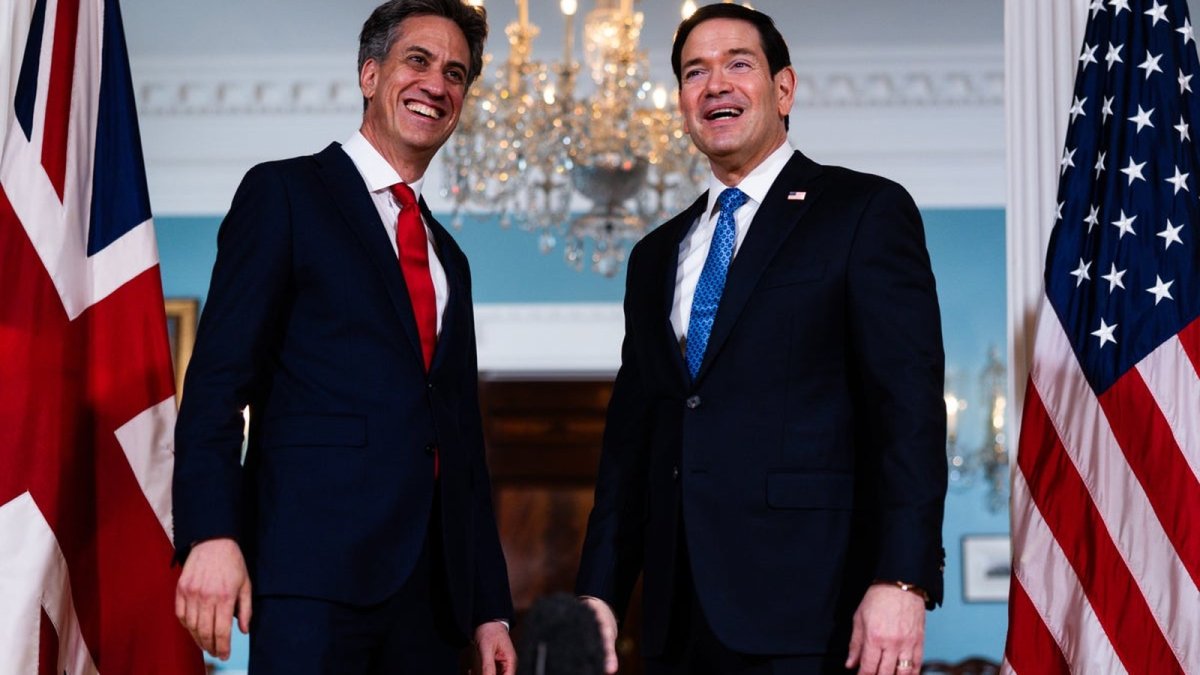
Miliband Meets Rubio as Past Trump Remarks Resurface Washington, DC — Today UK Foreign Secretary Ed Miliband met US Secretary of State Marco Rubio at the State Department this week, describing the United Kingdom and United States as the closest of allies while facing questions over his earlier criticisms of Donald Trump. The encounter followed an invitation from Rubio after their initial discussion last month in the Philippines.
Miliband Meets Rubio as Past Trump Remarks Resurface
Washington, DC — Today
UK Foreign Secretary Ed Miliband met US Secretary of State Marco Rubio at the State Department this week, describing the United Kingdom and United States as the closest of allies while facing questions over his earlier criticisms of Donald Trump. The encounter followed an invitation from Rubio after their initial discussion last month in the Philippines. Observers noted the contrast in tone between the two officials' accounts of the talks.
Meeting Details and Official Accounts
Miliband thanked Rubio for a warm, productive meeting and stressed shared culture, history and interests as Nato allies. He highlighted the need to reopen the Strait of Hormuz to protect British families and businesses from rising living costs. Rubio posted images of the encounter on X and noted discussions on Europe taking a greater role in its own security, open transit through the Strait of Hormuz and preventing Iran from obtaining a nuclear weapon.
Rubio's statement avoided any reference to the special relationship and simply listed the topics covered. The meeting occurred after Miliband's appointment to the Foreign Office in July 2026 under Prime Minister Andy Burnham.
The contrast between the two accounts of the meeting was striking. While Miliband spoke of the United Kingdom and United States as the closest of allies bound by culture, history and interests, Rubio made no reference to the special relationship and confined his remarks to a list of topics discussed. Such differences in tone are rarely accidental in diplomacy and often reflect underlying calculations about how much warmth to display at a given moment.
The encounter in Washington followed an initial meeting between the two men last month on the sidelines of a foreign ministers' summit in the Philippines. That earlier contact had been described as the first between them since Miliband took up the Foreign Office brief, and Rubio's subsequent invitation to the State Department was seen as an opportunity to test whether personal rapport could be established despite past tensions.
Observers noted that the cooler framing from the American side may signal the new Labour government's need to navigate relations with an administration that remains wary of earlier criticisms voiced by senior British figures. The absence of familiar phrases such as the special relationship suggested that any restoration of warmer language would have to be earned through concrete policy alignment rather than assumed as a given.
Questions on Past Remarks Avoided
Miliband declined to answer shouted questions from reporters about whether he still viewed Trump as an idiot, a racist and a misogynist. He smiled while shaking hands with Rubio and stated only that the pair were looking forward to their meeting. The exchange drew attention because Miliband had made those remarks in 2016.
US ambassador to the UK Warren Stephens had said recently that Miliband had been wrong in 2016 to call Trump a racist, misogynistic, self-confessed groper and expressed hope that his views had changed. Stephens pledged to work with Miliband despite differences on green issues.

Agenda Items on Global Flashpoints
The two officials discussed efforts to reopen the Strait of Hormuz, which had been open before the US and Israel launched the war in February. Disruption to trade through the route has driven up fuel and food prices globally. Miliband described the route as essential to the government's number one priority on the cost of living.
They also addressed standing together with Ukraine in the face of Putin's war and the intolerable situation in Gaza, including the urgent need to address the humanitarian crisis while working towards lasting peace for Palestinians and Israelis. Rubio separately reaffirmed the shared commitment to open transit in the Strait of Hormuz.
The Strait of Hormuz featured prominently because of its direct impact on British households. As a critical shipping lane for oil and gas, any prolonged disruption raises fuel prices and, in turn, the cost of food and other goods transported by road. Miliband explicitly linked the route's reopening to the government's central priority of protecting families from rising living costs.
The waterway had remained open until the United States and Israel launched military action in the region in February. Since then, the conflict has created sustained uncertainty for global energy markets, with traders and governments alike watching for signs that normal transit might resume without further escalation.
Discussions on Ukraine and Gaza were framed around the need for continued coordination. Miliband spoke of standing with Ukraine against Putin's war and of addressing the humanitarian situation in Gaza while pursuing lasting peace for both Palestinians and Israelis. These topics underscored the range of flashpoints on which the two governments are expected to maintain at least a working level of cooperation.
White House Concerns Over Appointment
The White House was reported to be concerned about Burnham's decision to appoint Miliband to the Foreign Office brief. The appointment came after Miliband's previous role as energy secretary, where he championed net zero and renewables. Trump has voiced strong support for fossil fuels, including opening up North Sea oil, and has opposed windmills.
Since Burnham took office, the government has signalled a shift in energy policy that has earned praise from the Oval Office. The dynamic between Miliband and Rubio was watched closely against this backdrop.
The decision by Prime Minister Andy Burnham to appoint Miliband as Foreign Secretary was reported to have caused unease in Washington, largely because of the contrast between Miliband's previous record and the priorities of the current US administration. As energy secretary, Miliband had championed net zero targets and the expansion of renewables, positions that sit uneasily with a White House that favours increased fossil fuel production.
Trump has repeatedly expressed support for opening up the North Sea to further oil extraction and has made clear his opposition to what he terms windmills. These differences created an obvious point of friction once Miliband moved into the Foreign Office, where energy security and transatlantic coordination intersect directly with foreign policy.
Burnham has sought to address these concerns by signalling a shift in energy policy since taking office, moves that have drawn positive comment from the Oval Office. The recalibration appears designed to demonstrate that the new government is prepared to adjust its approach on issues of direct interest to Washington while still maintaining domestic commitments on the cost of living.
Energy Policy Contrasts Highlighted
Miliband's record as energy secretary placed him at odds with Trump's position on fossil fuels and renewables. The ambassador's comments underscored ongoing disagreement on green issues even as he offered to collaborate in Miliband's new role. These differences formed part of the context for the Washington visit.
Burnham's broader policy adjustments have aimed to ease tensions with Washington while maintaining domestic priorities on living costs.
Additional Engagements Planned
Miliband will take the UK's seat on the World Bank board and is due to meet its president Ajay Banga during the visit. The discussions will cover development, climate change and strengthening global resilience. This follows the State Department talks and reflects the range of issues on the Foreign Secretary's agenda in the capital.
The visit builds on the earlier encounter in the Philippines and comes amid continued focus on transatlantic coordination on security and trade routes.
Nato Commitments and Security Role
Both sides referenced their shared commitment as Nato allies during the meeting. Rubio emphasised the need for Europe to assume a greater role in its own security. Miliband linked the alliance ties directly to the protection of British interests through stable energy supplies.
The talks occurred against the background of the ongoing war in Ukraine and tensions in the Middle East, with both officials underlining the importance of coordinated responses.
By Erica Thornton, Staff Writer
Rubio's emphasis on Europe taking a greater role in its own security reflects a long-standing American expectation that European allies should increase their contributions to collective defence. The phrase is generally understood to mean higher national spending, improved military readiness and a reduced reliance on US forces for regional contingencies.
The United Kingdom's position as a leading Nato member gives it particular weight in these conversations, yet the broader message from Washington has been that even close partners must demonstrate tangible commitment rather than assume automatic support. The meeting therefore served as an early test of how the new British government intends to respond to that pressure.
The visit fits into a wider pattern of engagement under the current US administration, where personal relationships and policy alignment are being reassessed. Both sides referenced their shared Nato obligations, but the tone suggested that future cooperation will be judged on specific outcomes rather than historical sentiment alone.
This article was produced with AI-assisted research and editorial support. Reporting is based on sources cited in the article.
What's Your Reaction?
 Like
0
Like
0
 Dislike
0
Dislike
0
 Love
0
Love
0
 Funny
0
Funny
0
 Wow
0
Wow
0
 Sad
0
Sad
0
 Angry
0
Angry
0

US Politics and Policy Correspondent at Global1.News. Based in Washington DC, covering American politics, policy, elections, and the courts. Knows how the system works and tells you what it actually means.












Comments (0)