
Mexico in 10 objects: Stone heads, silver dollars and tacos
In the spirit of a museum tour that stretches across centuries, Mexico’s story can be felt through a handful of objects that have survived wars, revolutions and the daily rhythm of life in the tianguis.
In the spirit of a museum tour that stretches across centuries, Mexico’s story can be felt through a handful of objects that have survived wars, revolutions and the daily rhythm of life in the tianguis. From the solemn stone faces of the Olmecs to the bright brass of a mariachi costume, each piece is a window onto the people who have built, defended and celebrated the nation. As we mark the year 2026, looking at these ten items helps us understand how the past still shapes the families, workers and migrants who walk the streets of every colonia today.
The Olmec Colossal Head: A Silent Guardian of the Lowlands
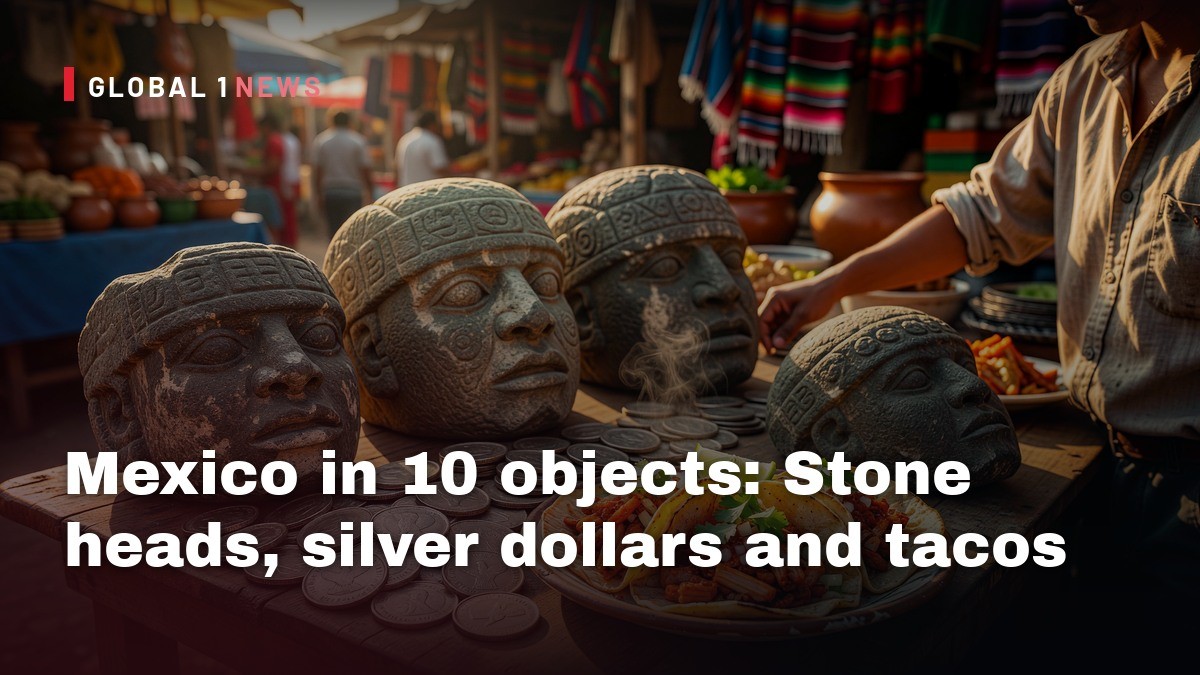
The Olmec civilization, often called Mexico’s mother culture, flourished in the lowlands of southeastern Mexico between roughly 1500 and 400 B.C. Their most striking legacy is the series of massive stone heads carved from boulders hauled from the distant Sierra de los Tuxtlas mountains. Seventeen of these heads have been discovered, each bearing a distinct, direct stare that seems to watch over the modern world.
Colossal Head 1, the largest of the group, stands 2.84 meters tall and weighs an estimated 25.3 metric tons. Its elaborate headdress and solemn expression make it one of the most haunting of the set. Today it rests in the Xalapa Museum of Anthropology in Veracruz, where visitors from the surrounding ejidos and beyond can glimpse the power of a culture that predates the Mexica by more than a millennium. The head’s sheer size reminds us that the ancient peoples of the region could mobilize labor and resources on a scale that still impresses scholars and artisans alike.
Coatlicue: The Earth Mother Who Demands Respect
When the Mexica (Aztecs) rose to dominate the Valley of Mexico, they created a visual language that blended awe and terror. The massive stone statue of the earth and mother goddess Coatlicue, carved around A.D. 1500 at the height of Mexica power, embodies that duality. Standing 2.5 meters tall and weighing between two and three metric tons, the sculpture is a tangled collage of snakes, claws, skulls and human hearts.
Displayed in the National Museum of Anthropology in Mexico City, Coatlicue’s fierce visage serves as a reminder of the religious and political forces that once guided the daily lives of farmers in the surrounding pueblos. For contemporary families, the statue is more than a museum piece; it is a symbol of a worldview that saw the earth as a living, demanding entity—a perspective that still informs agricultural practices in many rural communities.
The Florentine Codex: A Testament to Resilience
Although the Mexica did not possess an alphabetic writing system, they recorded myths, laws and histories in pictograms on bark, skin and cloth. When the Spanish arrived, they sought to destroy these records, yet a few survived thanks to the efforts of Franciscan friar Bernardino de Sahagún. Working with Nahua elders and artists, Sahagún compiled a massive twelve‑book work known as the Florentine Codex, totaling about 2,500 pages of illustrated testimony.
Now housed in the Laurentian Library of Florence, the Codex offers scholars a rare glimpse into a civilization on the brink of collapse. Its preservation underscores a broader theme in Mexican history: the constant tension between erasure and survival. For modern Mexicans, especially those in diaspora communities, the Codex stands as a reminder that cultural memory can endure even when physical structures fall.
The Spanish Dollar: Mexico’s Early Global Currency
Silver mining turned the Spanish colonies into a wealth engine, and Mexico led the way for more than three centuries. The raw metal was minted into coins known as the Spanish dollar or peso, each containing eight reales. Because the coin could be cut into bits for smaller purchases, it became known as a “piece of eight,” a term that still echoes in pirate folklore.
These silver dollars were the world’s first international currency, linking markets from China to the Ottoman Empire. While the source notes that a 1538 coin fetched a high auction price, the broader significance lies in how this monetary system facilitated trade that reached even the remote villages of the Mexican highlands. The legacy of the peso persists today, as the modern Mexican peso continues to be a cornerstone of daily transactions in markets, tianguis and the cash‑based economies of many families.
The Bell of Dolores: The Sound of Independence
On September 16, 1810, priest Miguel Hidalgo y Costilla rang a bronze bell in the small town of Dolores, calling villagers to rise against Spanish rule. The bell, cast in 1768 and standing 1.77 meters tall, weighs roughly 750 kilograms. Its resonant tone marked the beginning of an eleven‑year war that would eventually secure Mexico’s independence.
Since 1896 the bell has hung above the central balcony of the Palacio Nacional in Mexico City, ringing each year on the night of September 15 as the president begins the Independence Day celebrations. For ordinary families, the bell’s sound is a familiar backdrop to the fireworks and feasting that accompany the holiday, linking present‑day celebrations to the historic call for liberty that still reverberates in the hearts of many Mexicans.
Tequila: From Pulque to Global Icon
The spirit known worldwide as tequila traces its roots to the pre‑colonial drink pulque, a fermented sap of the maguey plant. Spanish colonists introduced distillation techniques, creating a clearer, stronger beverage that evolved into mezcal and later, tequila. The drink was showcased at the 1893 World’s Fair in Chicago under the label “mezcal from the village of Tequila,” a moment that cemented its identity.
Today, the tequila industry is a major economic force, and the oldest surviving bottle—a José Cuervo from 1905—can be seen at The Tequila House in Parral, Chihuahua. While the source mentions a $12 billion industry value, the cultural impact is even more profound: tequila is a staple at family gatherings, a symbol of hospitality, and a source of pride for many workers in the agave fields of Jalisco, who see their labor reflected in each sip.
Mariachi and the Charro Suit: Music, Identity and the Mexican Soul
Mariachi music, with its blend of Spanish strings, Mexican folk melodies and a hint of African rhythm, emerged from the farms of Jalisco. Early musicians wore simple white shirts, trousers and leather sandals, but by the early 1900s they began adopting the charro style—black suits, wide‑brimmed tejana hats and ornate embroidery—mirroring the Mexican cowboy’s dandy dress.
The iconic costume worn by Pedro Infante in the 1955 film “Los Gavilanes” is displayed in the Museo El Rincón de Pedro Infante in Mazatlán. This outfit, now synonymous with mariachi, represents more than a stage uniform; it is a visual expression of national pride that travels from rural fiestas to urban plazas, uniting people across social strata through song. For many families, the sound of trumpets and guitars signals celebrations, from quinceañeras to community festivals, reinforcing a shared cultural rhythm that endures in the heart of Mexico.
This article was produced with AI-assisted research and editorial support. Reporting is based on the source material cited below. Sources: Mexico News Daily; mexiconewsdaily.com; Global1.News (26 October 2026).
By Rosa Martinez, Staff Writer
What's Your Reaction?
 Like
0
 Dislike
0
 Love
0
 Funny
0
 Wow
0
 Sad
0
 Angry
0

Latin America/Andes Correspondent at Global1.News. Based in Bogota, covering politics, environment, energy, and social movements across the Andean region. Passionate about environmental journalism and communities protecting their land.













Comments (0)