
Messi Retires from Argentina National Team: The End of an Era That Touched South African Shores
The news hit South African football fans like a thunderclap on a Highveld afternoon — Lionel Messi, the little magician who once danced on our very own Soccer City pitch, has called time on his Argentina career. At 39, after 207 matches and 125 goals in the famous blue and white stripes, the greatest footballer of his generation has decided there is nothing left to give.
The news hit South African football fans like a thunderclap on a Highveld afternoon — Lionel Messi, the little magician who once danced on our very own Soccer City pitch, has called time on his Argentina career. At 39, after 207 matches and 125 goals in the famous blue and white stripes, the greatest footballer of his generation has decided there is nothing left to give. For a nation that watched him weave his magic at the 2010 World Cup on home soil, this is not just a South American story — it is a moment that closes a chapter in our own footballing memory.
Messi Retires from Argentina National Team: The End of an Era That Touched South African Shores
JOHANNESBURG — Lionel Messi announced his retirement from the Argentina national team on Monday via Instagram, sharing a handwritten letter across three pieces of notebook paper. The words were penned on July 21, two days after Argentina's heartbreaking 1-0 loss to Spain in extra time in the 2026 World Cup final at MetLife Stadium in East Rutherford, New Jersey. That final, played in front of a global audience of millions, was his final game for his country.
A Career Written in Record Books and Heartbreak
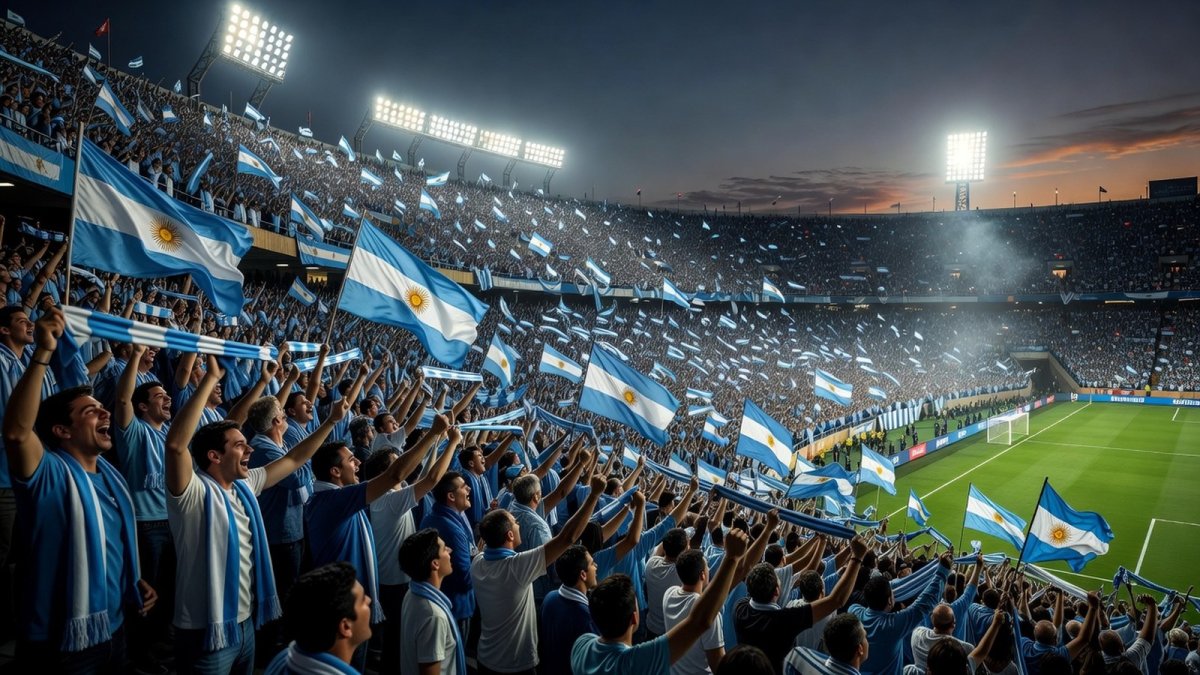
Let us put this into perspective for the PSL faithful and the Bafana Bafana supporters who have followed this journey. Messi's international career spanned an astonishing 21 years, from his debut in 2005 to that final whistle in New Jersey. He retires with 125 goals in 207 matches for Argentina — both national records that may stand for generations. Of those, 71 goals came in 147 official matches across the World Cup, Copa America, and qualifiers. These are not just numbers; they are the currency of a legacy that transformed Argentine football.
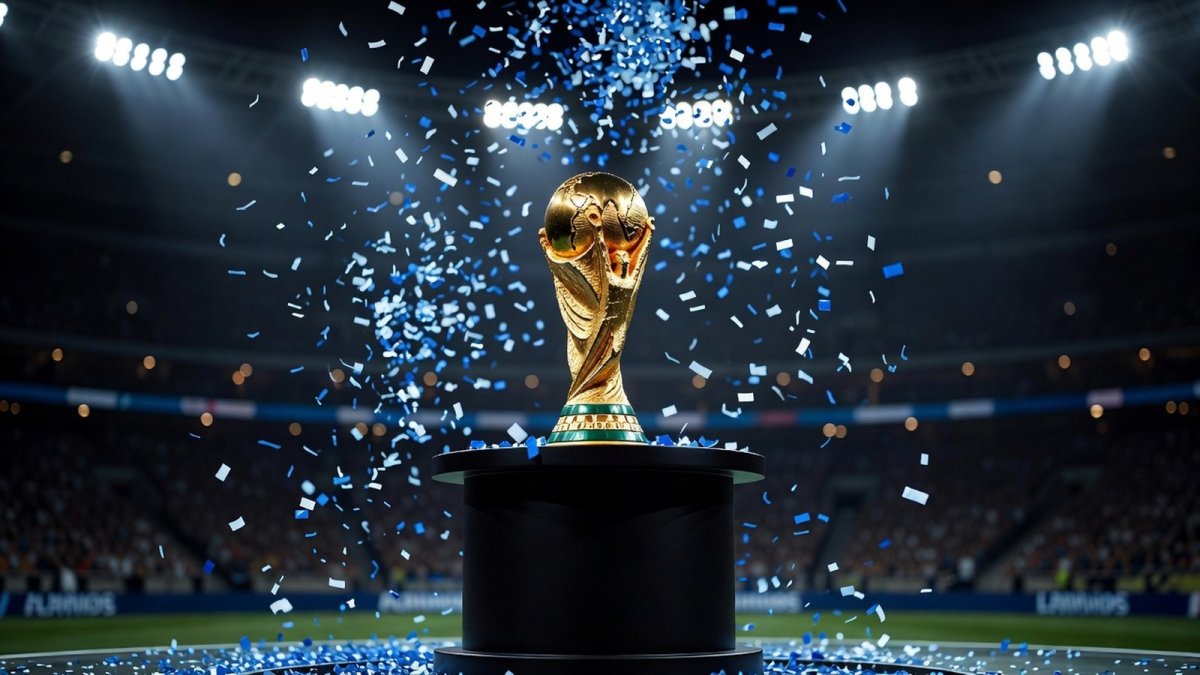
The crowning glory came in Qatar in 2022, when he led Argentina to the World Cup title, beating France on penalties in one of the most dramatic finals ever played. That triumph was followed by back-to-back Copa America titles in 2021 and 2024. The 2021 victory was particularly significant — it ended a 28-year drought, as Argentina had not won the Copa America since 1993. For a nation that measures its footballing worth in silverware, those three trophies were the validation of a career that had too often been defined by near-misses.
But the road was never smooth. In 2016, after losing the Copa America Centenario final to Chile, Messi first announced his retirement from the national team. The football world held its breath, and Argentina's fans begged him to reconsider. He was persuaded to return, and the rest, as they say, is history. This time, however, there is no coming back. The decision feels final, weighted with the gravity of a man who knows his time has come.
The 2026 Final and the Decision That Followed
The 2026 World Cup final was supposed to be the fairy-tale ending. Argentina, led by their ageless captain, stood 120 minutes away from back-to-back World Cup titles. But Spain, with their relentless possession and tactical discipline, had other ideas. A single goal in extra time separated the two sides, and when the final whistle blew at MetLife Stadium, Messi's face told the story of a man who knew this was the end.
In his handwritten letter, Messi wrote: "After the time that passed since the final, thinking about it a lot, I want to communicate to everyone that I am retiring from the national team. It was a decision that hurt and hurts in a soul, but I understand that this is the moment." Those words, scrawled across three pieces of notebook paper, carry the weight of a career that gave everything to the jersey. He added: "I've given everything; I have nothing more to give, and besides, there are some great young players coming up behind me who deserve to be there."
At the 2026 World Cup, Messi scored eight goals, finishing second only to top scorer Kylian Mbappe. Even at 39, he was still producing moments of brilliance that left defenders grasping at air. But football is a young man's game, and the physical demands of a month-long tournament take their toll. The decision, while painful, is one that many had anticipated. The question was never whether he would retire, but when.
The Father Factor: A Personal Loss That Changed Everything
Perhaps the most poignant detail in Messi's announcement is the reference to his father, Jorge, who died at age 68 after an illness. Messi wrote: "Today, after what happened with my dad, I am more convinced than ever." The loss of a parent is a profound moment in anyone's life, but for Messi, whose father was his first coach, his biggest supporter, and his most trusted advisor, it carries an extra layer of significance.
Jorge Messi was the man who took his 13-year-old son to Barcelona for trials, who managed his career through the early years, and who stood by him through the disappointments of 2014, 2015, and 2016. To lose that anchor, and then to lose the World Cup final days later, was clearly a double blow that reshaped Messi's priorities. The letter suggests a man who has found clarity in grief — a realisation that the time has come to step away and let the next generation carry the torch.
For South African fans, this resonates deeply. We understand the role of family in sport, the way a father's presence can shape a career. Think of the young players coming through at Kaizer Chiefs, Orlando Pirates, and Mamelodi Sundowns — how many of them owe their start to a parent who drove them to training, who believed before anyone else did? Messi's words remind us that behind every great athlete is a support system that often goes unseen.
The South African Perspective: A Connection That Runs Deep
For South Africans, Messi's retirement is not just a distant international story. It is personal. The 2010 World Cup was a watershed moment for our nation — the first African country to host the global showpiece. And there, on the hallowed turf of Soccer City in Johannesburg, Messi played his part in a tournament that showcased the beauty of our country to the world. Argentina's group-stage matches drew massive crowds, and the sight of Messi gliding past defenders in the Highveld altitude was a memory that still brings a smile to SA football fans.
His career also spanned the era when Bafana Bafana last qualified for the World Cup — in 2002, and then as hosts in 2010. Since then, our national team has struggled to reach the global stage, watching from the sidelines as Messi and his contemporaries dominated the sport. His exit resonates with SA fans who remember his magic at Soccer City and around the continent, a reminder of a time when the world's best came to our shores and delivered moments of pure footballing joy.
There is also a lesson here for SAFA and the PSL. Messi's longevity — playing at the highest level into his late 30s — is a testament to professionalism, discipline, and a love for the game. As South African football grapples with questions of transformation, grassroots development, and producing world-class talent, Messi's career offers a blueprint. It shows what is possible when talent is nurtured, when players are given the right support structures, and when the national team becomes a source of pride rather than pressure.
What It Means for Argentina's Future
Argentina now faces the daunting task of replacing the irreplaceable. But Messi himself has pointed the way forward. In his letter, he spoke of "great young players coming up behind me who deserve to be there." The next generation — players like Julián Álvarez, Enzo Fernández, and Alejandro Garnacho — have already shown they can perform on the biggest stage. The 2026 World Cup proved that Argentina is not a one-man team, even if Messi was still their talisman.
The 2030 World Cup is planned to start in South America, with Uruguay, Argentina, and Paraguay each hosting a match. It was supposed to be Messi's final farewell, a chance to play on home soil in a World Cup for the first time in his career. That dream is now gone. But the tournament will still be a celebration of South American football, and Argentina will enter it as defending champions, even without their captain.
The challenge for Lionel Scaloni and the Argentine Football Association is to manage this transition with the same grace that Messi has shown throughout his career. The foundations are there — a World Cup win, two Copa America titles, and a squad full of young talent. The question is whether they can maintain the winning mentality that Messi instilled, or whether his departure will leave a void that takes years to fill.
What to Watch For: Life After Messi
For now, Messi will continue playing for Inter Miami in Major League Soccer, where he has become the face of football's growth in the United States. His club career is far from over, and fans in Miami will still get to see the magic on a regular basis. But the international chapter is closed, and the football world will have to adjust to a reality where Argentina takes the field without their number 10.
For South African fans, the immediate focus shifts to our own national team and the upcoming qualifiers for the 2030 World Cup. Bafana Bafana have shown signs of improvement under recent coaching regimes, and the dream of returning to the global stage remains alive. Messi's retirement is a reminder that careers are finite, that every era comes to an end, and that the next generation must step up. It is a lesson that applies as much to South African football as it does to Argentina.
As we say goodbye to the greatest of his generation, we also say thank you. Thank you for the memories at Soccer City, for the goals, the assists, the dribbles that defied physics, and the humility that defined his greatness. Lionel Messi gave everything to the Argentina national team, and in doing so, he gave football fans around the world — including those in Mzansi — a lifetime of moments to cherish.
The letter is written, the decision is made, and the era is over. But the legacy? That will live forever.
By Dante Williams, Staff Writer
This article was produced with AI-assisted research and editorial support. Reporting is based on sources cited in the article.
What's Your Reaction?
 Like
0
Like
0
 Dislike
0
Dislike
0
 Love
0
Love
0
 Funny
0
Funny
0
 Wow
0
Wow
0
 Sad
0
Sad
0
 Angry
0
Angry
0

Breaking News and Investigations Correspondent at Global1.News. Based in London, covering global breaking news, security, and investigative stories. Known for digging deeper and connecting the dots across continents.










Comments (0)