
The Diplomat’s Last Stand: Kyaw Zwar Minn’s Trial and the Legal Limits of Moral Legitimacy
The trial of Kyaw Zwar Minn, Myanmar’s former ambassador to the United Kingdom, which opened on Wednesday, August 12, 2026, at Westminster Magistrates’ Court in London, is far more than a mundane trespassing case.
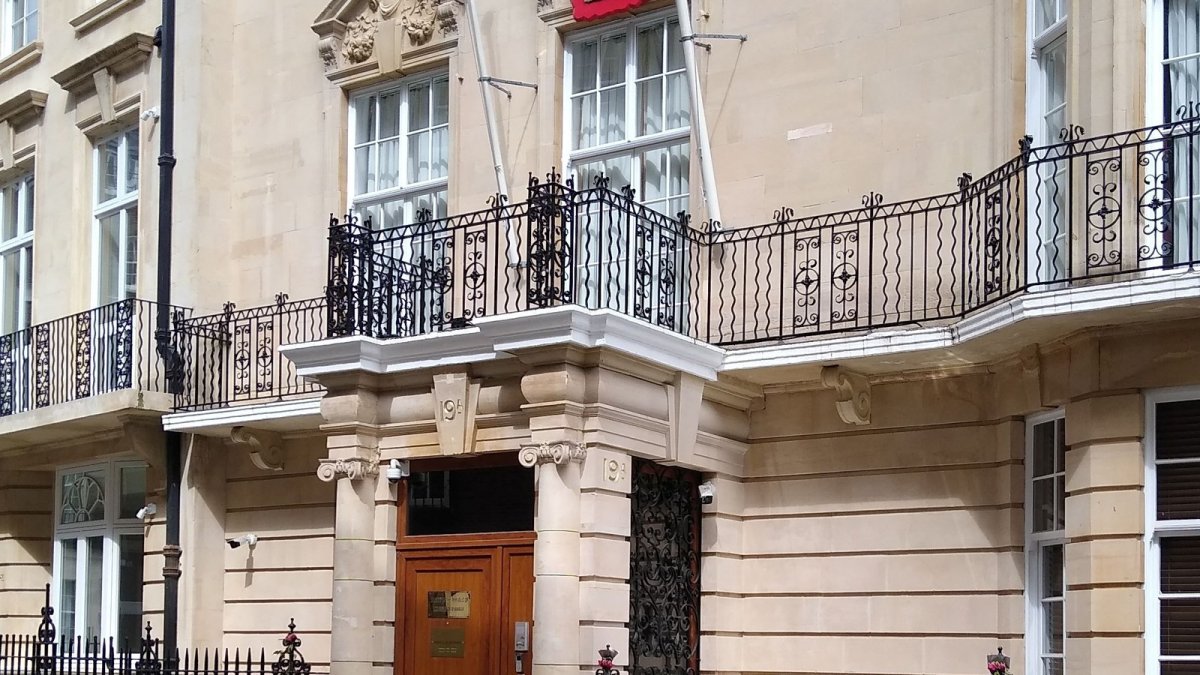
The trial of Kyaw Zwar Minn, Myanmar’s former ambassador to the United Kingdom, which opened on Wednesday, August 12, 2026, at Westminster Magistrates’ Court in London, is far more than a mundane trespassing case. It is a profound legal and philosophical collision between two irreconcilable doctrines: the positivist reality of state control and the moral claim of democratic legitimacy. Charged with trespassing at Myanmar House, the diplomatic residence he has refused to vacate since being locked out of the embassy in April 2021, the 68-year-old former envoy is forcing the British legal system to adjudicate a question that chanceries and international law faculties have debated for centuries: When a government is overthrown by force, who holds the legitimate authority to recall an ambassador? The case pits the letter of the Vienna Convention on Diplomatic Relations against the political reality of a brutal civil war, and the outcome will resonate far beyond the courtroom, offering a cautionary precedent for how states navigate the murky waters of recognition in an era of contested sovereignty.
The Courtroom Clash: Trespass, Recognition, and the Prosecutor’s Core Argument
The proceedings at Westminster Magistrates’ Court on Wednesday laid bare the stark legal framing of the case. Prosecutor Louise Oakley presented a straightforward, if politically charged, argument: Kyaw Zwar Minn’s tenure as ambassador ended shortly after the February 2021 coup when the military administration instructed him to hand over state-owned properties by mid-April of that year. She noted that Britain’s Foreign, Commonwealth & Development Office (FCDO) had also formally told him to leave the residence. "Having been granted permission to reside at Myanmar House as the ambassador, his refusal to vacate the diplomatic premises after he was removed from that position means that he is guilty of the offence of diplomatic trespass," Oakley told the court. The prosecutor preemptively dismantled the defense’s likely political framing, arguing that the defendant’s personal objections to the coup were legally irrelevant. "This defendant may not recognise the outcome of the coup and the construction of the government in Myanmar – that, we submit, is irrelevant," she said. Oakley underscored a critical diplomatic fact: the National Unity Government (NUG), the opposition umbrella group to which Kyaw Zwar Minn pledged his allegiance, has not been formally recognized by London, even though many democratic nations have sanctioned the post-coup military regime. This distinction between sanctioning a regime and recognizing a government is the crux of the prosecution’s case, and it highlights the uncomfortable legal position in which the UK finds itself.The Ambassador’s Stand: A Career Soldier’s Moral Defiance
Kyaw Zwar Minn’s personal history adds a layer of tragic complexity to the legal proceedings. A former army officer who later served as a diplomat under the civilian government of Aung San Suu Kyi, he represents a bridge between Myanmar’s militarized past and its brief, brutalized democratic interlude. When the military seized power in February 2021, he denounced the takeover and pledged loyalty to the deposed civilian leadership. The junta’s response was swift and punitive: he was dismissed, and in April 2021, his deputy Chit Win and military attaché Soe Aung locked him out of the embassy building on the regime’s orders, forcing him to spend a night in his car outside the premises. Rather than capitulate, he retreated to Myanmar House, the ambassador’s official residence in northwest London, where he has remained ever since. His defiance has come at a personal cost. He previously told The Guardian that he no longer felt safe at the residence, as friends and relatives in Myanmar had been forced into hiding for fear of reprisals. His prescient warning from 2021—that the military government would not step back, that more people would die, and that the economy would collapse—has been tragically vindicated by the ensuing six-year civil war. His defense lawyer, David Perry, articulated the moral core of his client’s position: the military authorities "could not lawfully terminate his licence at the address. Nor could they legitimately use the property." For Minn, the junta is not a government; it is a criminal enterprise occupying the state, and he refuses to treat its orders as lawful.The Legal Labyrinth: Vienna Convention and the Doctrine of Recognition
The legal arguments in this case hinge on the interpretation of the Vienna Convention on Diplomatic Relations, the 1961 treaty that governs diplomatic immunity and the functioning of embassies. As BBC diplomatic correspondent James Landale noted in April 2021, an ambassador’s official role technically ends once the host country has been informed of the change. Under this strict reading, the UK’s acknowledgment of Kyaw Zwar Minn’s dismissal—even if tacit—would legally terminate his right to occupy the residence. However, the case is complicated by the doctrine of recognition, a notoriously murky area of international law. The prosecution’s argument rests on the "effective control" doctrine, which holds that a government is legitimate if it exercises effective control over a state’s territory and population, regardless of how it came to power. This positivist approach, championed by scholars like H.L.A. Hart, prioritizes factual reality over moral judgment. The defense, conversely, invokes the "legitimacy" doctrine, which argues that governments born of unconstitutional means lack the legal authority to act on behalf of the state. This is not merely an academic debate; it has profound practical implications. If the UK accepts the junta’s right to recall Minn, it implicitly acknowledges the junta’s authority to represent the Myanmar state, a position that would undermine London’s stated opposition to the coup. Yet, by refusing to evict him, the UK risks being seen as harboring a diplomat who no longer holds official status, creating a diplomatic anomaly that has now festered for over five years.Whitehall’s Diplomatic Dilemma: The Middle Road That Led to Court
The UK government’s handling of this affair reveals a deep-seated diplomatic discomfort. When the junta requested that British authorities forcibly evict Kyaw Zwar Minn, London declined, instead urging the former ambassador to find alternative accommodation. This middle-road approach—refusing to legitimize the junta’s demands while also refusing to fully endorse Minn’s defiance—was a classic exercise in diplomatic hedging. It allowed the UK to maintain its public condemnation of the coup while avoiding a direct confrontation over the recognition question. However, Minn’s refusal to leave forced the government’s hand. By pressing charges for trespassing on diplomatic premises between May 2021 and November 2024, the Crown Prosecution Service has effectively outsourced a political decision to the judiciary. The trial’s witnesses are telling: Win Zeyar Tun, the chargé d’affaires at the Myanmar Embassy in London, represents the junta’s interests, while Eleanor Mackewn, deputy director of protocol at the FCDO, will testify to the government’s official position. The court is now the arena where the UK’s contradictory impulses—moral opposition to the coup versus legal adherence to diplomatic norms—will be resolved, with potentially embarrassing consequences for the FCDO regardless of the verdict.The Myanmar Catastrophe: A Six-Year War and a Wanted General
This trial unfolds against the backdrop of a humanitarian catastrophe that has only deepened since Minn’s initial protest. The civil war is now entering its sixth year, with the Council on Foreign Relations estimating more than 100,000 killed and over 5 million displaced. The country is fractured, with the military junta controlling the central plains while a patchwork of ethnic armed organizations and pro-democracy resistance forces contest the periphery. The current president is Min Aung Hlaing, the general who led the coup, whose pro-military party won a landslide in elections earlier in 2026 that were widely condemned as a sham. In a cynical move, the military formally handed power to a "civilian" government in April 2026, a cosmetic change designed to launder the regime’s legitimacy without altering its repressive character. Min Aung Hlaing’s status as a wanted man—he is sought by the International Criminal Court for crimes against humanity against the Rohingya minority—further complicates any legal argument that his government deserves recognition. Meanwhile, Aung San Suu Kyi, now 81, remains detained on a range of charges since the coup, a tragic coda to a life that saw her spend 15 years under house arrest under a previous junta and win the Nobel Peace Prize in 1991. The contrast between the legal fiction of Myanmar’s "civilian" government and the reality of its imprisoned opposition leader underscores the moral bankruptcy of the regime that Kyaw Zwar Minn refuses to acknowledge.Precedent and Parallels: What This Means for International Law and Northeast Asia
The trial, which resumes on September 25, will be watched closely by international legal scholars and foreign ministries alike. A conviction would establish a precedent that host states must enforce the recall orders of any regime exercising effective control, regardless of its legitimacy. An acquittal, conversely, would open the door for ambassadors to defy their home governments based on personal political convictions, a dangerous proposition for diplomatic stability. The case also highlights the inadequacy of the Vienna Convention in addressing the modern reality of contested sovereignty, where coups, civil wars, and unrecognized governments have become tragically common. For observers in Northeast Asia, the case offers a compelling, if uncomfortable, parallel. South Korea maintains diplomatic representation in Myanmar and has faced criticism from civil society for continuing economic engagement with the post-coup regime. The question of recognizing governments after coups is a live issue in the region, given the constitutional histories of military rule in both South Korea and its neighbors. The "effective control" doctrine and the legitimacy-recognition debate are standard subjects in Korean international law curricula at institutions like Seoul National University and Korea University. The London trial serves as a real-world case study of the tensions inherent in these doctrines, reminding scholars and policymakers that the law’s preference for order often clashes with the moral imperative for justice. As the world watches Westminster Magistrates’ Court, the verdict will offer a sobering lesson on the limits of law in the face of political violence—and the enduring power of one man’s refusal to accept the legitimacy of a coup. This article was produced with AI-assisted research and editorial support. Sources: The Diplomat, Reuters, The Guardian, Democratic Voice of Burma. By Prof. David Park, Staff WriterWhat's Your Reaction?
 Like
0
Like
0
 Dislike
0
Dislike
0
 Love
0
Love
0
 Funny
0
Funny
0
 Wow
0
Wow
0
 Sad
0
Sad
0
 Angry
0
Angry
0

Prof. David Park
East Asia/Technology Correspondent at Global1.News. Seoul-based voice covering Korean politics, technology, business, and culture. Analyzes how technology and geopolitics intersect across East Asia.













Comments (0)