
Kilauea Summit Opens Two New Vents as Pressure Builds Toward Episode 55
Kilauea's summit is pressurized above the level required to start a new lava fountaining episode, and two new vents opened overnight on the northwest wall of Halema'uma'u crater, the Hawaiian Volcano Observatory reported on 15 September 2026.
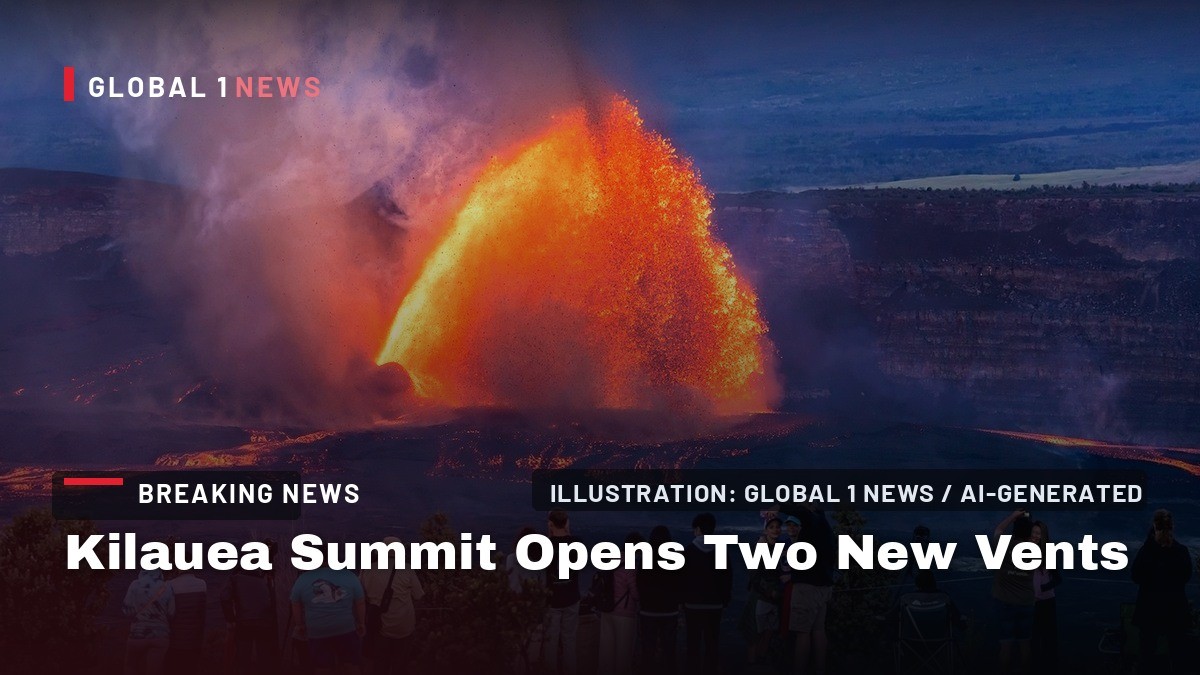
Kilauea's summit region is pressurized above the level required to start a new lava fountaining episode, and two new vents opened overnight on the northwest wall of Halema'uma'u crater, the Hawaiian Volcano Observatory reported Tuesday, 15 September 2026. The observatory holds Kilauea at a Volcano Alert Level of WATCH and an Aviation Color Code of ORANGE. No high fountaining has begun, and the observatory says it is not possible to forecast an exact outcome of this activity.
Folks, here is what matters: this is one ongoing eruption that began on 23 December 2024, and it is now in its longest stretch of precursory activity since high fountains began. The summit is highly pressurized, the ground has been rising, and nearly 100 small earthquakes have been located since 7 September. All activity remains inside Hawaii Volcanoes National Park, and there is no threat to homes or infrastructure.
Kilauea Summit Opens Two New Vents as Pressure Builds Toward Episode 55
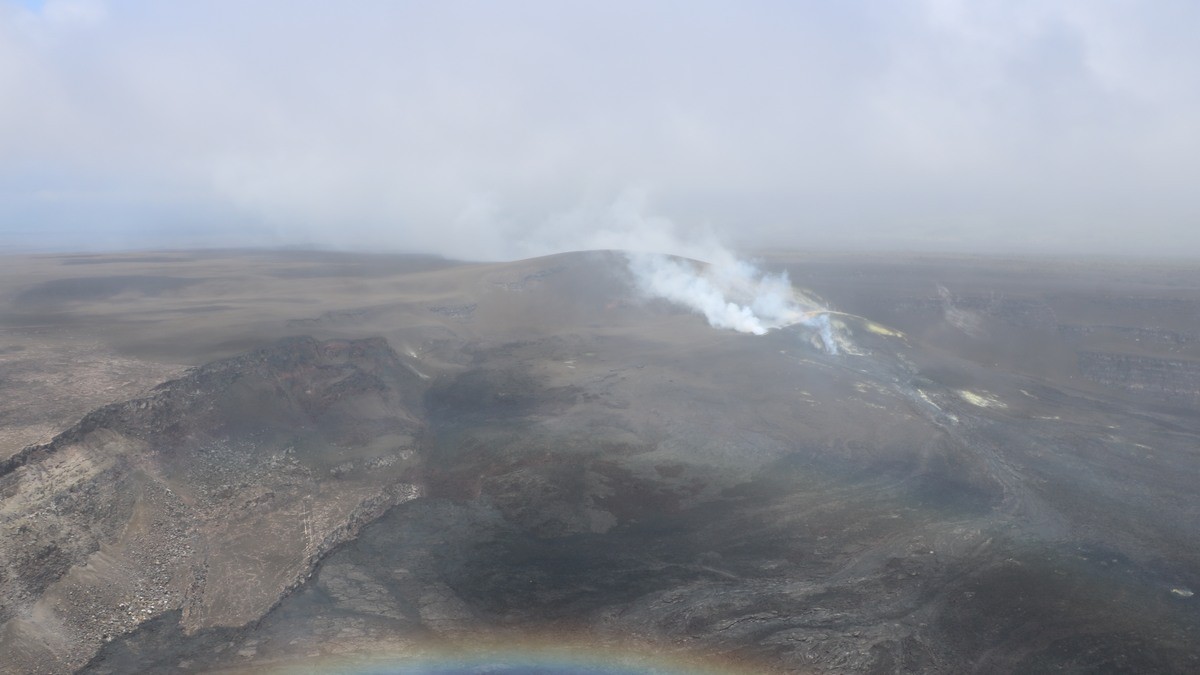
Hawaii Volcanoes National Park, Hawaii — Two new vents opened on and near the base of the northwest wall of Halema'uma'u crater just before 9:00 p.m. HST on Monday, 14 September, north of the established vent complex, according to the Hawaiian Volcano Observatory. The vents opened without significant seismicity, though they sit in the region of a short-lived swarm of shallow earthquakes from about 9:15 to 9:25 p.m. HST on 13 September. No fountaining was associated with the new vents, which continue to feed a small flow in the northwest corner of the crater floor. Precursory lava flows have now been ongoing for eight days, the longest period recorded during this eruption.
Two New Vents, and a Summit Under Pressure
The new vents are about 150 feet (45 meters) below the level of the north vent, the Hawaiian Volcano Observatory reports. That lower elevation matters: the observatory says it could sustain prolonged continuous eruption of lava. Overnight glow and spatter visible in the north, south and west vents indicate the conduits remain intact and connected to the underlying chamber despite the opening of new vents nearby. Volcanic tremor, the major seismic signal during this eruption, has also continued. The rate of earthquakes has decreased slightly in the past day, but the observatory says the summit region remains at a high level of pressurization despite the opening of the new vents. The observatory attributes the pressurization possibly to the increased height, about 500 feet (150 meters), of the north-south-west vent complex since the eruption began on 23 December 2024.
Eight Days of Precursory Flows, a Record for This Eruption
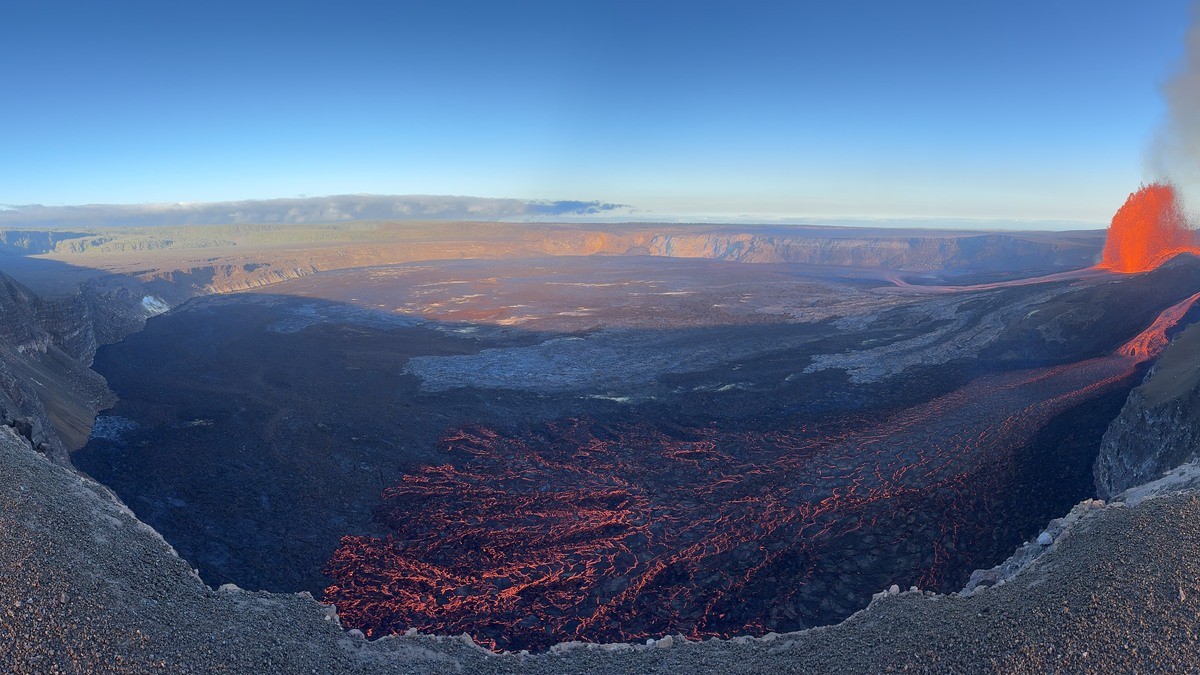
Lava has not yet erupted as high fountains, but smaller, precursory lava flows have erupted from the north vent over 104 times between 7 and 12 September, according to the Hawaiian Volcano Observatory. Since then, intermittent spatter bursts on 13 to 15 September have built a small spatter cone around the north vent that was measured as 36 to 39 feet (11 to 12 meters) tall on the afternoon of 14 September. Big Island Now reports this precursory period for episode 55 has continued for about eight days, the longest since high fountains began after episode 4. The next longest was 6.2 days before episode 44, and the most overflows recorded was 179 from the north and south vents combined before episode 36. No precursory lava flows have erupted from the main vent complex since 12 September.
Why the Ground Beneath the Summit Keeps Rising
Summit tiltmeters and GPS instruments indicate the summit region is highly pressurized. Big Island Video News reports summit inflation reached a total of 15.8 microradians following the loss of 12.7 microradians during the previous episode 54 fountaining in August. The observatory says current reinflation leading up to this change in activity has been very irregular since episode 54 on 25 August and difficult to model due to repeated deflations and periods of no inflation. On 7 September, tiltmeters indicated the Halema'uma'u magma chamber surpassed the amount of pressurization typically observed to start a fountaining episode. Since 7 September, the number of small magnitude earthquakes began to increase, with nearly 100 located in three general areas. Most were smaller than magnitude-2, though the largest was M2.6 on 11 September.
What the Observatory Says Could Happen Next
The Hawaiian Volcano Observatory lists four possible outcomes. First, eruption becomes continuous at the new vents, with lava erupting as flows or spatter bursts for an unforeseeable amount of time. Second, eruption returns to fountaining from an existing vent in Halema'uma'u, which the observatory says could begin at any point during this period of increased pressurization. Third, formation of new vents in the summit region, if magma forms a new shallow pathway toward the surface. Fourth, intrusion into the upper parts of the Southwest Rift Zone or the East Rift Zone in Hawaii Volcanoes National Park. The observatory states plainly: "It is not possible to forecast an exact outcome of this activity." Big Island Now quotes the observatory saying magma remains shallow in all of the vents, indicating current conditions remain favorable for the onset of episode 55 fountaining.
What WATCH and ORANGE Actually Mean
WATCH is the second-highest of the USGS volcano alert levels. The agency defines it as a volcano "exhibiting heightened or escalating unrest with increased potential of eruption, timeframe uncertain, OR eruption is underway but poses limited hazards." That second clause is the one that fits Kilauea today. The scale runs NORMAL, ADVISORY, WATCH and WARNING, and it is issued for ground hazards; a separate, parallel color code warns the aviation sector about airborne ash, and the USGS issues a Volcano Notice for Aviation whenever that code changes. The observatory moved Kilauea from ADVISORY to WATCH and from YELLOW to ORANGE on 7 September, when the first precursory overflow began, and it has held those levels since. The summit is monitored with a dense network of instruments recording seismic activity, ground deformation, visual and thermal imagery, and volcanic gas emissions, and the observatory says it is in frequent communication with Hawaii Volcanoes National Park and Hawaii County Civil Defense.
Vog, Tephra and Pele's Hair: the Hazards That Reach People
The observatory notes that high levels of volcanic gas, primarily water vapor, carbon dioxide and sulfur dioxide, are continually released during an eruption. Emissions can remain locally hazardous in areas immediately downwind of the vents, even when the vents are not actively erupting. Sulfur dioxide reacts in the atmosphere to create vog, which the observatory says may cause respiratory and other problems at high concentrations. Tephra, small glassy fragments including volcanic ash, pumice, scoria and reticulite, is formed by lava fountains; larger particles fall near the vents while light particles may be wafted greater distances downwind. Pele's hair, strands of volcanic glass, is also listed. Close to the vents, tephra on the crater rim is prone to cracking, slumping and small landslides that sometimes expose hot and molten material.
The Park Is Open, and Bracing for Crowds
Hawaii Volcanoes National Park says Kilauea continues to erupt intermittently from Halema'uma'u crater, with more than 50 eruptions since December 2024. All eruptive activity remains within the park and does not threaten homes or park infrastructure. The park warns visitors to expect increased traffic and reduced parking during eruptions and to park only in designated spots. The Welcome Center, Kilauea Overlook and Uekahuna usually have more open parking spots. Guidance includes arriving early, bringing a headlamp, sturdy shoes, warm clothes and a rain jacket, and protecting against airborne tephra with eye protection, long sleeves, long pants and a dust mask. The park asks visitors to check air quality before and during a visit, stay out of closed areas, and watch quietly in respect for the sacredness of the land to Native Hawaiians.
An Eruption the Island Economy Counts On
A National Park Service report released on 25 September 2025 shows that 1,433,593 visitors to Hawaii Volcanoes National Park in 2024 spent $445 million in communities near the park, with a cumulative benefit to the local economy of $571 million. Those expenditures supported 3,605 jobs and $571 million in economic output in local gateway economies. About 80 percent of visitors stayed overnight in local area lodging and spent an average of $763 per group per night, staying 6.4 nights on the Island of Hawaii on average. Approximately 24 percent of all overnight visitors indicated the park was the primary reason for their trip. Superintendent Rhonda Loh said visitors support and spend money in local communities, and thanked the communities and visitor industry who in turn support the park.
The 2018 Precedent, and Why This Is Not That
The 2018 lower Puna eruption began on 3 May 2018 on Kilauea's East Rift Zone. Outbreaks of lava fountains up to 300 feet (90 meters) high, lava flows and volcanic gas in the Leilani Estates subdivision were preceded by earthquakes and ground deformation that created cracks in roads. The official number of houses destroyed reached 700, and roughly 2,000 to 3,000 residents were displaced. About 13.7 square miles (35 square kilometres) of land was covered by lava flows, and about 875 acres of new land was created in the ocean. Recovery efforts were estimated at more than $800 million in 2018 US dollars. The eruption was declared over on 5 December 2018. It followed the 30 April 2018 collapse of the Pu'u O'o crater floor and lava lake, which ended the 35-year-long eruption that had begun on 3 January 1983.
What Happens Next
The Hawaiian Volcano Observatory says it is not possible to forecast an exact outcome of this activity, and Big Island Video News reports scientists recently stated inflation-based forecasting models are no longer valid. The observatory says it is not possible to say how long the precursory activity may last. Summit inflation stalled last night shortly after the new vents opened, and the summit region continues to be highly pressurized. Two possibilities the observatory cites include the new vents erupting continuously or the new vents shutting down and returning all activity to the established vents. No unusual activity has been detected in the Southwest or East Rift Zones. All activity has been confined to the summit region of Kilauea in Hawaii Volcanoes National Park. The caldera rim surrounding Halema'uma'u has been closed to the public since 2008, according to the observatory.
Hawaii County Civil Defense's radio messages to residents during recent episodes have followed the same template: ash and tephra may fall downwind, residents downwind of the summit should be prepared to take precautions such as disconnecting water catchment systems, and the message closes with the same line every time - there are no threats to the community. The observatory says it will keep publishing a daily update each morning and will issue a Volcanic Activity Notice if anything significant changes. Until then, the summit stays pressurized, the ground keeps tilting, and the next chapter of this eruption has not been written.
By Jessica Ali, Staff Writer
This article was produced with AI-assisted research and editorial support. Sources: U.S. Geological Survey Hawaiian Volcano Observatory, National Park Service, Big Island Now, Big Island Video News, Hawaii Tribune-Herald.
What's Your Reaction?
 Like
0
Like
0
 Dislike
0
Dislike
0
 Love
0
Love
0
 Funny
0
Funny
0
 Wow
0
Wow
0
 Sad
0
Sad
0
 Angry
0
Angry
0

Editor-in-Chief at Global1.News. Atlanta-based journalist who cuts through the BS and tells it like it is. Lead anchor, host, and the voice you hear when the spin stops and the truth starts.














Comments (0)