
Israeli Strike on Khan Younis Tent Camp Kills One as Ceasefire Violations Mount
In a recent Middle East Eye report, footage showed the aftermath of an Israeli strike that hit a tent sheltering displaced Palestinians near al-Aqsa University in Khan Younis, the latest in a series of attacks across the besieged Gaza Strip over the weekend.
In a recent Middle East Eye report, footage showed the aftermath of an Israeli strike that hit a tent sheltering displaced Palestinians near al-Aqsa University in Khan Younis, the latest in a series of attacks across the besieged Gaza Strip over the weekend. The strike, which killed one person and wounded six others, came as artillery shelling and targeted shootings continued to claim lives, including that of a 14-year-old boy whose remains were recovered on Sunday. The incident underscores the fragility of a ceasefire that has been marked by more than 300 consecutive days of violations, according to monitoring groups, and the profound insecurity facing Gaza's displaced population.
The attack on the tent camp, located in the al-Mawasi area west of Khan Younis, was carried out by an Israeli drone, a medical source told Anadolu Agency. It is the latest in a pattern of strikes on areas that have been designated as "humanitarian zones" by the Israeli military, yet which rights groups say offer no real safety to the civilians who have sought refuge there. As the international community debates the future of Gaza, the people living in these camps continue to pay the heaviest price.
Israeli Strike on Displacement Camp in Khan Younis Kills One, Wounds Six as Ceasefire Violations Mount
Khan Younis, Gaza Strip - 17 August 2026 -- The tent camp near al-Aqsa University in the al-Mawasi area of Khan Younis was hit by an Israeli drone strike on Sunday, killing a Palestinian man and injuring six others, including women and children, according to medical sources. The strike is part of a weekend of intensified violence across the enclave, which saw artillery shelling in several areas of Khan Younis and the fatal shooting of a 14-year-old boy on Saturday evening. The attacks come despite a ceasefire that has been in force since October 2025, but which Palestinian officials say has been violated on a near-daily basis.
The Strike and Its Victims
The drone strike on the tent camp occurred in the early hours of Sunday morning, catching residents off guard as they slept in makeshift shelters. A medical source told Anadolu Agency that one Palestinian was killed and six others were brought in for treatment with injuries ranging from shrapnel wounds to burns. The identity of the deceased was not immediately released. A medical source told Anadolu Agency that the man had been sheltering in the camp after being displaced from another part of the Strip earlier in the conflict.
The al-Mawasi area, where the strike took place, has been repeatedly targeted despite being designated a "humanitarian zone" by the Israeli military. The designation, which is meant to signal relative safety for civilians, has been rendered meaningless in practice, as strikes have hit the area on multiple occasions over the past year. Rights groups, including Amnesty International and Human Rights Watch, have documented these attacks and called for an independent investigation, noting that no place in Gaza can be considered safe while the occupation continues.
The weekend's violence also included artillery shelling in several neighborhoods of Khan Younis, causing widespread panic among residents who had begun to hope that the ceasefire might hold. Witnesses described scenes of chaos as families fled their tents and makeshift homes, seeking cover from the incoming fire. The shelling damaged several structures, including a water distribution point operated by a local charity, further exacerbating the already severe shortages of clean water in the area.
Suhail Masoud Shalouf: A 14-Year-Old Killed on His Way to Visit His Aunt
Among the victims of the weekend's violence was Suhail Masoud Shalouf, a 14-year-old boy who was shot and killed by Israeli forces on Saturday evening on al-Tina Street, south of Khan Younis. According to the Palestinian Red Crescent, Suhail's remains were recovered on Sunday morning, after his family had spent a sleepless night searching for him. His mother told Middle East Eye that her son had been on his way to visit his aunt when he was killed. The family had spent a sleepless night searching for him before the Red Crescent recovered his remains on Sunday morning.
Suhail's death is part of a broader pattern of violence against children in Gaza, who have borne the brunt of the conflict's devastation. According to the Government Media Office in Gaza, at least 20,000 children - about two percent of the enclave's child population - have been killed since October 2023, and UNICEF has said at least 300 children have been killed since the ceasefire took effect in October 2025. The psychological toll on the surviving children is immeasurable, with aid workers reporting widespread symptoms of trauma, including nightmares, bedwetting, and severe anxiety. Suhail's family, like so many others, is now left to grieve in a tent, surrounded by the rubble of their former lives.
The Palestinian Red Crescent, which has been operating under extremely difficult conditions throughout the conflict, faced significant challenges in recovering Suhail's remains. The area where he was shot remained under Israeli fire for several hours, and rescue teams were forced to wait until the situation calmed before they could approach. This delay, which is a common occurrence in Gaza, adds to the anguish of families who are often unable to reach their loved ones or provide them with a proper burial.
The Ceasefire and Its Violations
The ceasefire, which took effect in October 2025, was hailed as a major diplomatic breakthrough at the time, raising hopes for an end to the violence that had devastated Gaza. However, more than 300 days later, the truce appears increasingly fragile, with Palestinian official sources reporting that Israeli fire has killed more than 1,250 Palestinians in Gaza since the ceasefire took effect. The overall death toll since October 2023 has now surpassed 73,300, according to figures cited by Al Jazeera, a number that continues to rise with each passing week.
The violations have taken many forms, including drone strikes, artillery shelling, sniper fire, and incursions into Palestinian areas. In many cases, the attacks have targeted civilians going about their daily lives, such as Suhail Shalouf, who was simply walking to visit a relative. The Israeli military has offered little explanation for these incidents, and there have been no credible investigations into the deaths. This impunity has fueled anger among Palestinians, who see the ceasefire as a one-sided arrangement that fails to protect them.
Hamas, which has been the de facto authority in Gaza, has called on mediators, including Egypt and Qatar, to compel Israel to end the ceasefire violations and accept the peace roadmap that has been on the table for months. In a statement released on Sunday, a Hamas spokesperson said that the continued attacks "prove that Israel is not committed to any agreement" and that the international community must take concrete action to hold Israel accountable. The group has also warned that the ceasefire could collapse entirely if the violations continue, a prospect that would have catastrophic consequences for the people of Gaza.
The Diplomatic Push: Kushner, Mladenov, and the Roadmap
Amid the ongoing violence, a significant diplomatic effort is underway to reshape the future of Gaza. Trump envoys Jared Kushner and Nickolay Mladenov are currently in the region, pushing what has been described as the "Trump Gaza roadmap," a plan that envisions a reconstruction process tied to broader normalization agreements. The roadmap has been presented as a way to bring long-term stability to the region, but it has been met with skepticism by many Palestinians, who see it as an attempt to bypass their political rights and entrench Israeli control.
Israeli Prime Minister Benjamin Netanyahu, however, has rejected the roadmap, calling it "unacceptable" in a statement on 9 August 2026. Netanyahu's rejection has created a diplomatic rift, with eight countries publicly condemning Israel's refusal to engage with the plan. The countries, which include several European and Arab states, have called on Israel to return to the negotiating table and to respect the terms of the ceasefire. The diplomatic pressure, while significant, has so far failed to produce a change in Israel's position, leaving the roadmap in limbo.
The presence of Kushner and Mladenov in the region is a clear sign that the Trump administration is determined to push its vision forward, even in the face of Israeli opposition. However, the lack of progress on the ground, combined with the continued violence, raises serious questions about the viability of the plan. For Palestinians, the roadmap is seen as a distraction from the immediate issues of survival, including the need for a permanent ceasefire, the lifting of the blockade, and the right of return for refugees. Until these fundamental issues are addressed, any diplomatic initiative is likely to be viewed with deep suspicion.
Life in the Displacement Camps
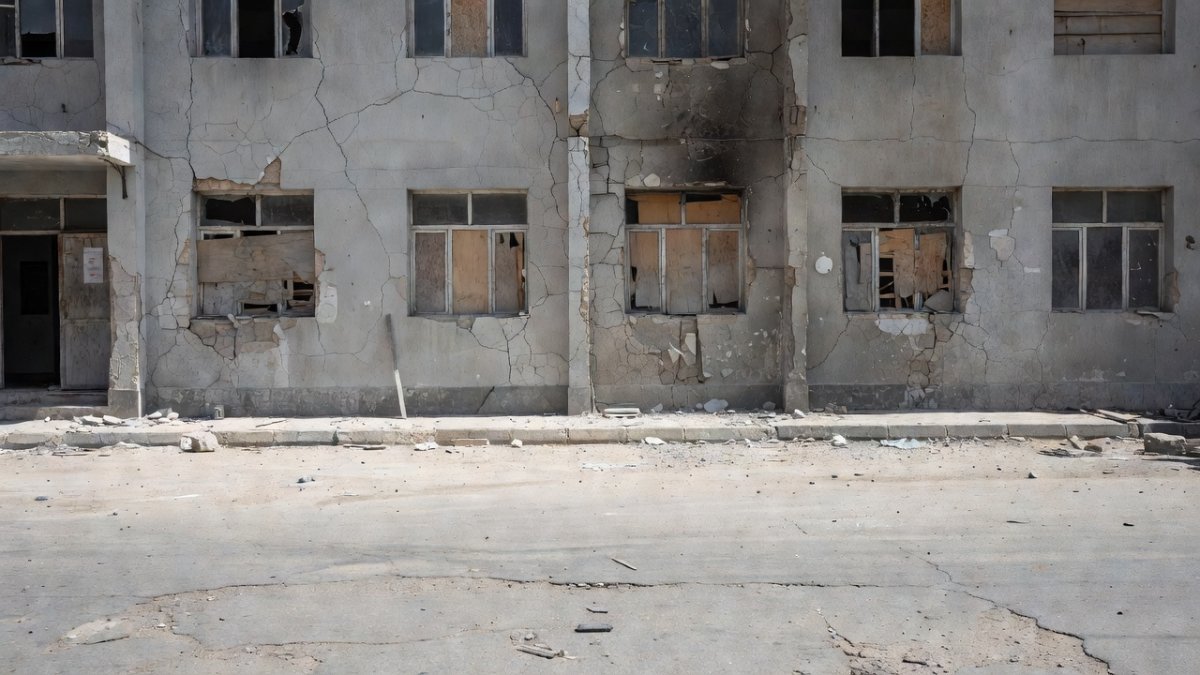
The displacement camps in Gaza, such as the one hit by Sunday's strike, have become the defining feature of Palestinian life in the enclave. With the vast majority of the population forced from their homes, the camps are now home to over a million people, living in tents and makeshift shelters that offer little protection from the elements or from attacks. The conditions are dire, with severe shortages of food, water, and medicine, and aid agencies struggling to meet the basic needs of the population.
In the al-Mawasi camp, residents describe a life of constant fear and uncertainty, having been displaced multiple times over the course of the conflict. Aid workers in the camp say families have been forced to move again and again, fleeing each new wave of strikes in search of safety that never materializes. Many say they feel trapped between the violence of the occupation and the indifference of the international community.
The psychological impact of this prolonged displacement cannot be overstated. Children who have grown up in the camps have known nothing but war and deprivation, and their development has been severely affected by the lack of education, healthcare, and stability. Aid workers report that many children have stopped speaking, while others exhibit aggressive behavior as a result of the trauma they have endured. The long-term consequences of this lost generation are likely to be felt for decades to come, both in Gaza and in the wider region.
Analysis and Implications
The continued strikes on displacement camps, despite the ceasefire, highlight the fundamental failure of the current approach to resolving the conflict. The ceasefire, which was supposed to be a first step toward a lasting peace, has instead become a cover for ongoing violence and a tool for maintaining the status quo. The international community, which has been largely silent in the face of these violations, bears a significant responsibility for the continued suffering of the Palestinian people.
The diplomatic efforts led by Kushner and Mladenov, while well-intentioned, are unlikely to succeed as long as they ignore the root causes of the conflict. The Palestinian demand for self-determination, the right of return, and an end to the occupation cannot be set aside in favor of economic projects and normalization deals. Any lasting solution must address these fundamental issues, and it must include the voices of the Palestinian people themselves, who have been excluded from the negotiations that determine their future.
For now, the people of Gaza continue to endure, their resilience a testament to their strength in the face of unimaginable hardship. But resilience has its limits, and the international community must act before it is too late. The strike on the tent camp in Khan Younis is not an isolated incident; it is a symptom of a broader failure to protect civilians and uphold international law. The world must not look away.
The death of Suhail Masoud Shalouf, a 14-year-old boy on his way to visit his aunt, is a tragedy that should shame us all. His life, like the lives of so many others, was cut short by a conflict that has gone on far too long. As his family mourns, and as the people of Gaza continue to bury their dead, the question remains: how many more children must die before the world demands an end to this violence? The answer, for now, is unclear, but the cost of inaction is measured in the lives of the innocent.
By Fatima Al-Rashid, Staff Writer
This article was produced with AI-assisted research and editorial support. Reporting is based on sources cited in the article.
What's Your Reaction?
 Like
0
Like
0
 Dislike
0
Dislike
0
 Love
0
Love
0
 Funny
0
Funny
0
 Wow
0
Wow
0
 Sad
0
Sad
0
 Angry
0
Angry
0

Gulf/MENA Correspondent at Global1.News. Based in Doha, covering Gulf politics, energy markets, diplomacy, and development across the Middle East and North Africa. Tracks the economic transformation of the Gulf states.










Comments (0)