
IDF: Southern Gaza strike targeted Hamas brigade commander
The operation, described as a joint IDF‑Shin Bet effort, was presented as a decisive blow against Hamas’s command structure in southern Gaza and a warning that the use of civilian infrastructure for military purposes will not be tolerated.
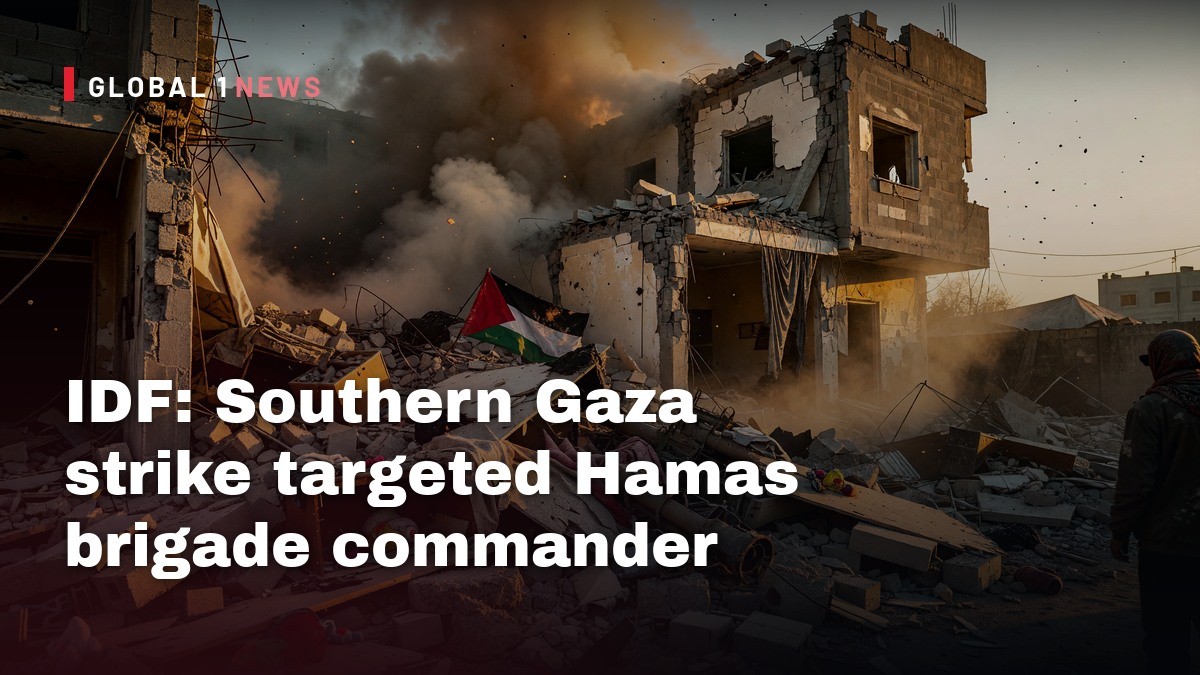
The Israel Defense Forces (IDF) and the Israeli Security Agency (Shin Bet) announced Thursday that an overnight airstrike on Nasser Hospital in Khan Yunis successfully eliminated Muhammad Abu Ismail, the commander of Hamas’s Khan Yunis Brigade, along with several other militants who had taken refuge inside the medical facility. The operation, described as a joint IDF‑Shin Bet effort, was presented as a decisive blow against Hamas’s command structure in southern Gaza and a warning that the use of civilian infrastructure for military purposes will not be tolerated.
Targeting a command centre inside a hospital
According to the joint statement, the IDF identified Nasser Hospital as a de‑facto headquarters for Hamas’s southern brigade. The military said the group had transformed the compound into a command centre, storing weapons, interrogating and torturing Gazans, and coordinating attacks against Israeli forces. The statement added that the brigade had used the hospital to advance “dozens of terrorist plots” and to rebuild its capabilities after suffering “significant damage throughout the war.”
By focusing on a location that the IDF described as a hub for planning and logistics, the strike aimed to disrupt the operational tempo of Hamas’s southern forces. The IDF emphasized that it had issued advance warnings to the local population and employed precision munitions and aerial surveillance to minimise civilian casualties, a procedural approach that reflects lessons learned in previous urban operations.
The role of Muhammad Abu Ismail
Abu Ismail, identified as the commander of the Khan Yunis Brigade, was portrayed by the IDF as a senior operative responsible for directing attacks against Israeli soldiers and civilians. The statement highlighted his involvement in “holding numerous hostages captive throughout the war,” underscoring the strategic importance of his removal. By eliminating the brigade’s leader, the IDF aims to create a leadership vacuum that could hamper Hamas’s ability to coordinate future operations from the southern sector.
The removal of Abu Ismail also carries symbolic weight. As a high‑ranking figure, his presence inside a civilian hospital illustrated the extent to which Hamas has embedded its command structure within civilian infrastructure, a tactic that the IDF argues forces it to take decisive action even in sensitive locations.
Operational details and precautions
The IDF described the strike as being carried out from the air, targeting the militants “from the air to remove the threat.” The military stressed that it used precision munitions and aerial surveillance to lower the risk to non‑combatants. Graphics of the hospital were released to the public, along with a recorded conversation in which an IDF officer warned a senior official in Gaza’s health system that the military would act inside hospitals if the terror group continued to exploit them.
These measures reflect a broader operational doctrine that seeks to balance military necessity with humanitarian considerations. By issuing advance warnings and employing precision weapons, the IDF aims to mitigate international criticism while still achieving its tactical objectives.
Political context: disarmament and reconstruction
In parallel with the military operation, the Israeli Prime Minister’s Office reiterated its demand that Hamas must disarm and Gaza be demilitarised before any reconstruction can begin under U.S. President Donald Trump’s 20‑point plan. The statement noted that “to date, Hamas has not surrendered a single weapon,” positioning the group’s refusal to disarm as the primary obstacle to rebuilding the enclave.
Jerusalem emphasized its coordination with the United States and the Board of Peace, reaffirming its commitment to the success of Trump’s plan. The office also highlighted recent efforts to deliver additional humanitarian supplies to Gazans preparing for winter, signalling an attempt to balance security imperatives with civilian welfare.
Humanitarian implications
The strike on Nasser Hospital raises acute humanitarian concerns, given the facility’s role in providing medical care to a population already strained by years of conflict and blockade. While the IDF claimed to have taken steps to minimise civilian harm, the use of a hospital as a military target inevitably complicates the delivery of health services in southern Gaza.
International observers have repeatedly warned that attacks on medical infrastructure can exacerbate humanitarian crises, leading to reduced access to care, increased mortality, and longer‑term public health challenges. The Israeli statement that advance warnings were issued seeks to address these concerns, but the reality on the ground will be measured by the extent of any collateral damage and the ability of health workers to resume services.
Strategic impact on Hamas’s southern operations
Eliminating the commander of the Khan Yunis Brigade is expected to have a destabilising effect on Hamas’s southern front. The brigade, which had suffered “significant damage throughout the war,” was reportedly in the process of rebuilding its capabilities. Removing its leader at a critical juncture could delay the re‑organisation of its forces and limit the execution of planned attacks.
However, Hamas’s decentralized structure means that other commanders may step in to fill the void. The IDF’s broader strategy of targeting command centres and leadership nodes aims to create a cumulative attrition effect, gradually eroding the organisation’s operational capacity across Gaza.
Looking ahead: the ceasefire and future operations
The U.S.-brokered ceasefire that took effect on 10 October 2025 ended a two‑year war that began with the large‑scale invasion of the western Negev on 7 October 2023. While the ceasefire has held, sporadic violence continues, and the IDF’s recent strike demonstrates that Israel remains prepared to conduct targeted operations when it perceives a direct threat to its security.
As the Israeli government pushes for Hamas’s disarmament and the implementation of the Trump‑led reconstruction plan, future military actions are likely to focus on dismantling remaining Hamas command structures, especially those embedded in civilian sites. The balance between security imperatives and humanitarian considerations will remain a central tension in Israel’s ongoing strategy in Gaza.
This article was produced with AI-assisted research and editorial support. Reporting is based on the source material cited below. Sources: JNS (Jewish News Syndicate); jns.org; Global1.News (12 November 2026).
By Hannah Berg, Staff Writer
What's Your Reaction?
 Like
0
 Dislike
0
 Love
0
 Funny
0
 Wow
0
 Sad
0
 Angry
0

Israel Correspondent at Global1.News. Based in Tel Aviv, covering Israeli politics, security, technology, and society. Provides balanced, deeply-sourced reporting on one of the most closely-watched regions in the world.















Comments (0)