
Iranian Opposition Brings 'Zionist Blueprint' to Tel Aviv
In a recent i24NEWS English report, a delegation of Iranian opposition figures from the United States and Europe visited Israel this week to promote a novel concept they call "Iranian Zionism" — the idea that Iran's anti-regime movement can adopt the organizational blueprint that built the Jewish state.
In a recent i24NEWS English report, a delegation of Iranian opposition figures from the United States and Europe visited Israel this week to promote a novel concept they call "Iranian Zionism" — the idea that Iran's anti-regime movement can adopt the organizational blueprint that built the Jewish state. The visit comes at a moment of unprecedented regional upheaval, with Israel and the United States formally at war with Iran since late February, following airstrikes that killed Supreme Leader Ali Khamenei and triggered waves of retaliatory missile and drone attacks across the Middle East.
Iranian Opposition Brings 'Zionist Blueprint' to Tel Aviv
Tel Aviv, Israel – August 13, 2026 — A coalition of Iranian activists, journalists, business leaders and Christian community representatives gathered at an event in Tel Aviv on Tuesday to lay the groundwork for what organizers describe as a post-Islamic Republic future modeled on the Zionist movement. The delegation, drawn from the Iranian diaspora in the United States and Europe, met with Israeli officials and civil society figures to discuss how a scattered opposition can build institutions, unite a global diaspora and prepare for governance — lessons drawn directly from the movement that led to Israel's establishment in 1948.
Iranian Zionism: A New Political Blueprint
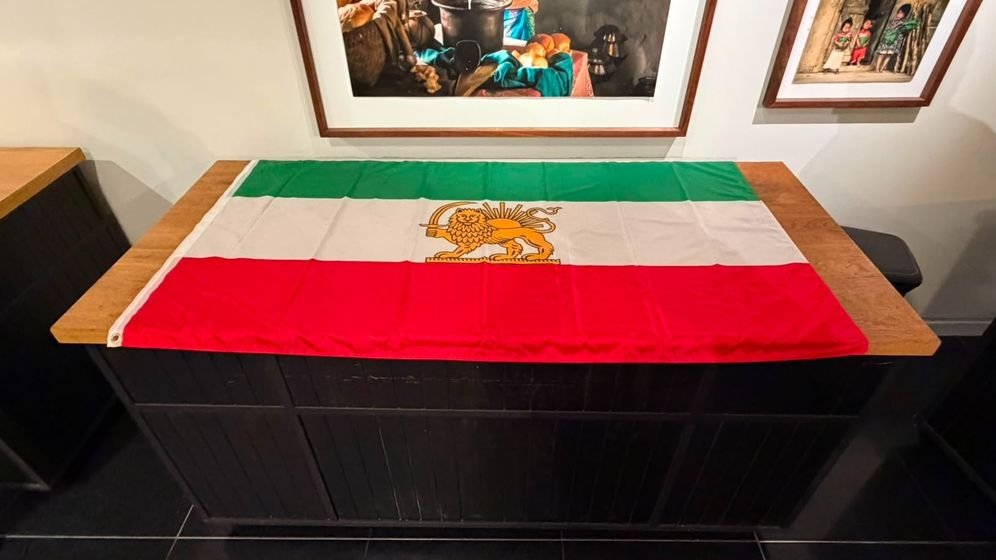
The term "Iranian Zionism" was coined by the organizers of this week's delegation — the Abrahamic Movement, the Jerusalem Interfaith Center, the Cyrus Fund and Project Aftab — to describe a practical political strategy rather than a religious or ideological alignment. Shachar Tal, CEO of the Cyrus Fund, told the gathering that the Iranian opposition has demonstrated "a willingness within the Iranian people to do something very similar to what we did 100 or 150 years ago — which is to adopt Zionism as a practice."
Tal emphasized that the objective is not to replicate Jewish Zionism literally, but to study how the movement established pre-state institutions, brought together a scattered diaspora and prepared the administrative foundations for a future government. "The idea is really to copy what we have achieved successfully with Zionism and adapt it to the Iranian situation," Tal said. "They need to get their country back." The Cyrus Fund, a Tel Aviv-based organization, has been quietly facilitating dialogue between Israelis and Iranian opposition figures since its founding, operating below the radar of mainstream diplomatic channels.
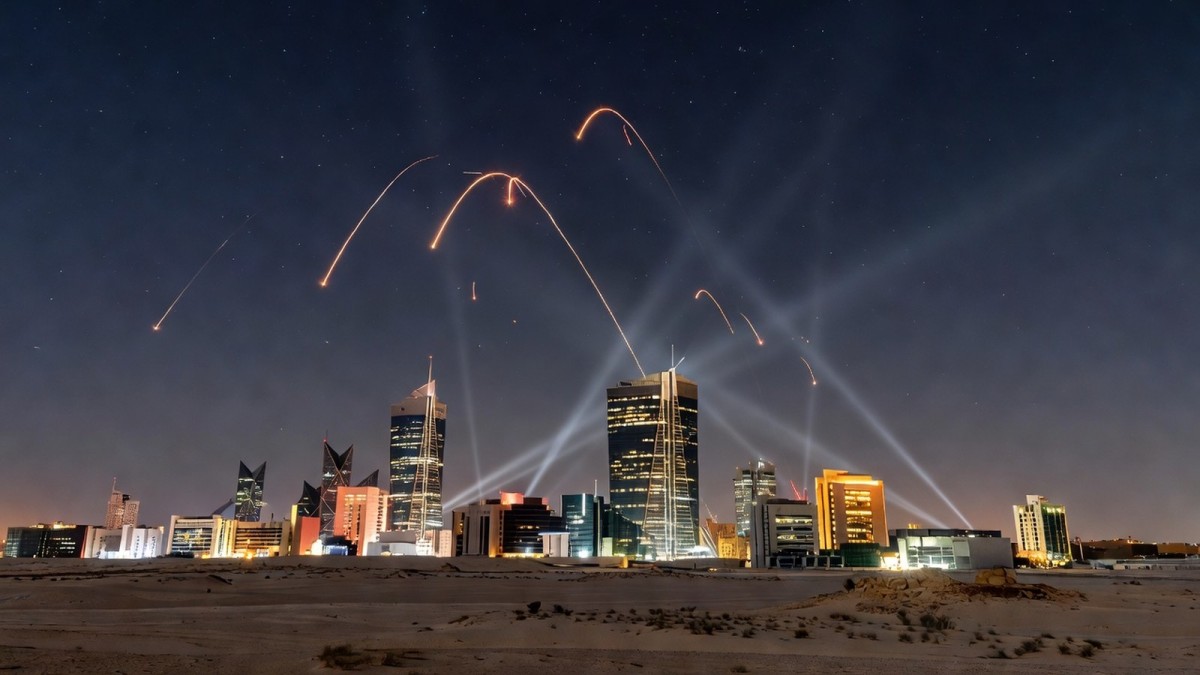
The delegation's visit comes amid a formal state of war between Israel and Iran that began on February 28, 2026, when coordinated US-Israeli airstrikes killed several senior Iranian officials, including Supreme Leader Ali Khamenei. Mojtaba Khamenei, the late leader's son, was subsequently elected as Iran's new supreme leader in a hastily arranged succession. The conflict has triggered hundreds of ballistic missiles and thousands of drones fired from Iranian territory at Israel, with the IDF's air defense systems intercepting the vast majority of incoming projectiles.
Cyrus the Great and a Shared Past
Tom Wegner, CEO of the Abrahamic Movement and co-founder of the Cyrus Fund, opened the Tel Aviv event by invoking the ancient Persian king Cyrus the Great, who allowed the Jewish people exiled in Babylon to return to Jerusalem and rebuild the Temple in the sixth century BCE. "Cyrus the Great, the father of the Iranian nation, is also the first Zionist and the liberator of the Jewish people," Wegner said. "There is a secretive alliance between Israelis and Iranians. It's not always on the table, but we share the same past."
Wegner drew a direct line from that ancient alliance to the present conflict. "The radical regime that is killing Iranians is also killing Israelis," he said. "It is oppressing the Iranian people, and it is building a ring of terror around Israel." He concluded with a message of unity: "The children of Israel and the children of Cyrus are united, and they stand together against injustice." The reference to Cyrus carries particular weight in Iranian opposition circles, where the pre-Islamic history of Persia is celebrated as a counterpoint to the Islamic Republic's narrative.
Iran and Israel maintained close diplomatic, military and economic relations before the 1979 Islamic Revolution, including joint oil pipeline projects and intelligence cooperation under the Shah. The Islamic Republic reversed that relationship, making hostility toward Israel a central pillar of its foreign policy and funding terror groups including Hezbollah in Lebanon, Hamas in Gaza and the Houthis in Yemen. The delegation's visit sought to draw a sharp distinction between the Iranian government and the Iranian people, arguing that both ordinary Iranians and Israelis have suffered because of the same regime.
On the Ground in Tel Aviv
Iranian-American investor and advisor Ameen Soleimani, visiting Israel for the fifth time, told the gathering that most Iranians do not regard Israel as their enemy, despite more than four decades of anti-Israel state propaganda. "If you look at Iranian protests in the diaspora, basically all of the major opposition protests have Israeli flags in addition to the flag of the host country," Soleimani said, citing the wave of worldwide demonstrations that have accompanied the 2025-2026 Iranian protests.
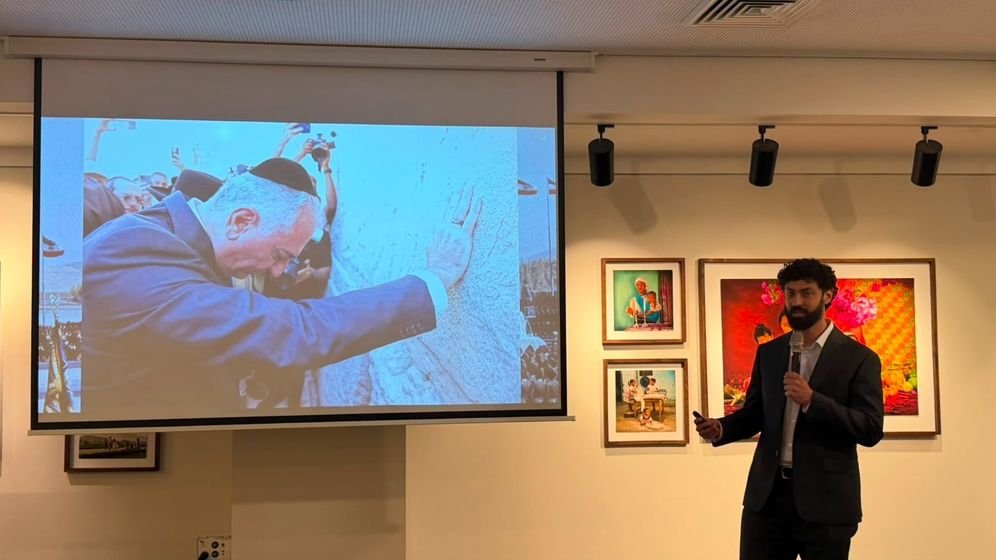
Soleimani pointed to the 2023 visit to Israel by Iran's exiled Crown Prince Reza Pahlavi, who prayed at the Western Wall and met with senior Israeli officials. "He broke a taboo when he did that," Soleimani said. "He did that to show that he and the Iranians who support him don't think Israel is our enemy." Pahlavi, the de facto leader of much of the Iranian diaspora opposition, has since called for dismantling the Islamic Republic's leadership with US and Israeli support and has spoken publicly about future Iranian elections and close ties with Israel.
Iranian activist Lily Moo described the delegation's mission as building "a positive civilian bridge" between Israelis and Iranians. "We are a collective of Iranians from across the diaspora. We are hoping to use the successful Zionist blueprint of building a country," Moo said. She described Iran as an ancient nation whose people are being "held hostage" by the regime. "This 2,500-year-old bond is not broken. It is not severed — it is just under strain. As soon as the oppressive regime of the ayatollah falls, the fruitful friendship of the Iranian people and the Israelis will be witnessed by the world." Iranian journalist Pantea Modiri also addressed the delegation, adding a media perspective to the discussions.
War, Repression and the Regime's Grip on Iran
The delegation's optimistic framing stands in stark contrast to the grim reality inside Iran, where the regime has intensified its crackdown on dissent since the outbreak of war. The United Nations has warned that Iran has executed at least 56 people since March, with human rights organizations documenting mass arrests, torture and show trials targeting activists, journalists and ordinary citizens suspected of opposing the government. State repression and restrictions on independent research make reliable polling inside the country extremely difficult, though Soleimani estimated that only 10 to 15 percent of Iranians genuinely support the regime.
The war has exacted a heavy toll on Iranian civilians. Israeli and US airstrikes have targeted military installations, nuclear facilities and command centers across Iran, while Iranian retaliation has included barrages of missiles and drones aimed at Israeli cities, most of which have been intercepted by the IDF's multi-layered air defense network. The conflict has upended Middle East dynamics, drawing in regional proxies and forcing neighboring states to navigate a precarious neutrality. The Iranian rial has collapsed, inflation has soared past 60 percent, and basic goods are increasingly scarce in Tehran, Isfahan and other major cities.
Despite the regime's efforts to portray the war as a patriotic struggle against foreign aggression, opposition activists say the conflict has only deepened public alienation. Diaspora protests in Los Angeles, London, Berlin, Paris and Toronto have drawn tens of thousands of demonstrators, many waving Israeli flags alongside Iranian tricolors — a visual rebuke to the regime's anti-Israel ideology. The protests have also featured calls for the restoration of the constitutional monarchy under Reza Pahlavi, who has positioned himself as the leader of a transitional government should the Islamic Republic collapse.
Regional Context: Israel's Evolving Strategy Toward Tehran
The Israeli government has watched the Iranian opposition's overtures with growing interest, though officials in Jerusalem remain cautious about committing to any particular successor regime. The Mossad and the Foreign Ministry have maintained quiet contacts with Iranian opposition figures for years, but the formal state of war has accelerated these channels. Israeli defense officials have stated publicly that the IDF's objective is the destruction of the Islamic Republic's military capabilities, not the political future of Iran itself — a position that leaves room for engagement with opposition groups.
The war has also reshaped Israel's broader regional posture. The Abraham Accords, which normalized relations with the United Arab Emirates, Bahrain and Morocco in 2020, have taken on new strategic importance as Israel coordinates with Gulf states on Iranian threats. Saudi Arabia, which has not formally normalized relations with Israel, has nonetheless shared intelligence and permitted Israeli overflights during the conflict. The Israeli government has signaled that a post-war regional order could include expanded diplomatic ties with additional Arab states, as well as a potential security partnership with a post-Islamic Republic Iran.
Reza Pahlavi's 2023 visit to Israel, which included meetings with then-Prime Minister Benjamin Netanyahu and other senior officials, laid the groundwork for the current dialogue. The exiled crown prince has called for US and Israeli support in dismantling the Islamic Republic's leadership, and has spoken about holding free elections within two years of the regime's fall. His vision includes close diplomatic and economic ties with Israel, including potential cooperation on water technology, agriculture and cybersecurity — areas where Israeli expertise is globally recognized.
Diplomatic and International Reactions
The delegation's visit has drawn a muted but notable response from the international community. The United States, which has been coordinating military operations with Israel since the February strikes, has expressed support for "the Iranian people's aspirations for freedom" without formally endorsing any particular opposition faction. European governments have been more cautious, wary of appearing to interfere in Iran's internal affairs while the war continues. The UN has called for de-escalation and humanitarian access, but has stopped short of addressing the question of Iran's political future.
Iran's Foreign Ministry has condemned the Tel Aviv gathering as "treasonous" and "a Zionist plot," with state media running lengthy segments denouncing the participants as foreign agents. The regime has also intensified its campaign against the diaspora, threatening to revoke citizenship and seize assets of Iranians who participate in opposition activities abroad. These threats have not deterred the delegation's organizers, who say the momentum behind the opposition movement is irreversible.
The Abrahamic Movement and the Cyrus Fund have announced plans for follow-up meetings, including a larger conference scheduled for later this year that would bring together Iranian opposition figures from across the diaspora with Israeli policymakers, academics and business leaders. The organizers say they are also exploring the establishment of a "pre-state institution" modeled on the Jewish Agency, which coordinated immigration, settlement and institution-building for the Zionist movement before Israel's founding.
Analysis and What This Means
The concept of "Iranian Zionism" represents a significant ideological shift in the Iranian opposition's approach to Israel. For decades, even opposition figures were reluctant to engage publicly with the Jewish state, fearing accusations of treason and betrayal. The delegation's open embrace of Israel as a model and partner signals that the taboo has been broken — a development with profound implications for the region's future.
From an Israeli perspective, the engagement with the Iranian opposition serves multiple strategic purposes. It undermines the Islamic Republic's narrative that Israel is an enemy of the Iranian people, it builds relationships with potential future leaders, and it provides a counterweight to the regime's regional ambitions. The IDF and the Mossad have long maintained that the Islamic Republic, not the Iranian people, is the enemy — a distinction that this week's events reinforce.
The practical challenges remain enormous. The Islamic Republic shows no signs of imminent collapse, despite the war, international sanctions and internal repression. The opposition is fragmented, with competing factions and no unified political platform. And the question of what comes after — constitutional monarchy, secular republic, or something else — remains unresolved. But the delegation's visit demonstrates that the groundwork for a post-regime transition is already being laid, and that Israel is positioning itself as a partner in that process.
For Israelis, the image of Iranian opposition figures waving Israeli flags and invoking Cyrus the Great offers a powerful counter-narrative to four decades of hostility. For Iranians, the Zionist blueprint offers a proven model of how a scattered diaspora can build a state. The war may be raging, but the seeds of a different future are being planted in Tel Aviv this week — a future in which the children of Israel and the children of Cyrus stand together.
By Hannah Berg, Staff Writer
This article was produced with AI-assisted research and editorial support. Reporting is based on sources cited in the article.
What's Your Reaction?
 Like
0
Like
0
 Dislike
0
Dislike
0
 Love
0
Love
0
 Funny
0
Funny
0
 Wow
0
Wow
0
 Sad
0
Sad
0
 Angry
0
Angry
0

Israel Correspondent at Global1.News. Based in Tel Aviv, covering Israeli politics, security, technology, and society. Provides balanced, deeply-sourced reporting on one of the most closely-watched regions in the world.













Comments (0)