
India's Defence Exports: Beyond BrahMos, Drones Rise
India's push to hit Rs 50,000 crore in defence exports by 2029-30 builds directly on the Rs 38,424 crore achieved in FY2025-26, with BrahMos missiles delivering high-profile wins across Southeast Asia. Yet the next phase of growth is shifting toward drones and loitering munitions, where DRDO laboratories and private firms in Hyderabad and Bengaluru are positioning India for faster, more scalable sales. This pivot redefines the country's role in global defence supply chains. India's Defence Expor
India's push to hit Rs 50,000 crore in defence exports by 2029-30 builds directly on the Rs 38,424 crore achieved in FY2025-26, with BrahMos missiles delivering high-profile wins across Southeast Asia. Yet the next phase of growth is shifting toward drones and loitering munitions, where DRDO laboratories and private firms in Hyderabad and Bengaluru are positioning India for faster, more scalable sales. This pivot redefines the country's role in global defence supply chains.
India's Defence Exports: Beyond BrahMos, Drones Rise
New Delhi, India – August 7, 2026 — India's defence exports have surged to Rs 38,424 crore in FY2025-26, setting the stage for a Rs 50,000 crore target by 2029-30 as BrahMos secures landmark deals while drones emerge as the surprise growth engine.
BrahMos: The Export Flagship
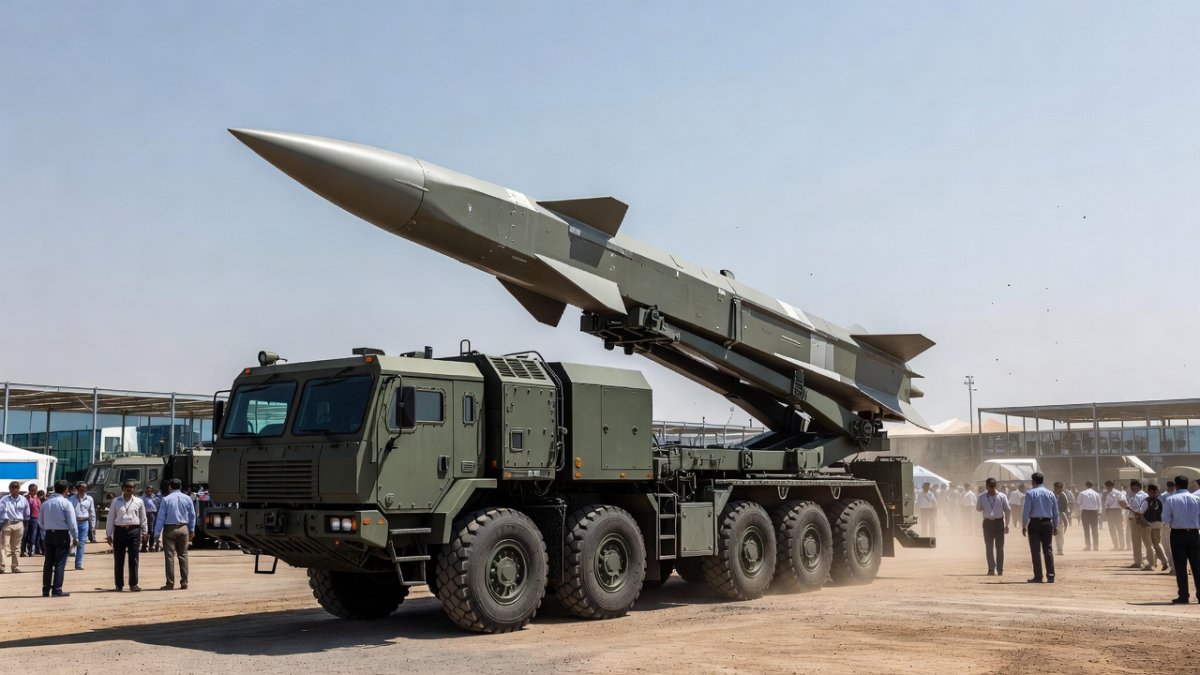
The Philippines deal of 2022, valued at approximately US$375 million, marked the first overseas sale of BrahMos and dismantled the long-held view that supersonic cruise missiles remained strictly strategic assets. By securing clearance for a system derived from the P-800 Oniks through the DRDO-NPO Mashinostroyeniya joint venture, New Delhi demonstrated that indigenous integration capabilities could meet international standards without Russian intermediaries. The subsequent Indonesia contract of Rs 3,800 crore (US$440.3 million) signed in February 2025 and Vietnam's agreement in May 2026 illustrate how Southeast Asian nations now view Indian supersonic missiles as credible deterrents amid South China Sea tensions, shifting the regional balance away from exclusive reliance on Western or Chinese suppliers.
Domestic Su-30MKI integration completed at roughly $9.6 million, compared with Russia's $200 million offer, underscores a 95 percent cost reduction that enhances export competitiveness. This achievement signals India's transition from licence assembler to technology exporter. Air-launched and land-attack BrahMos variants now in the pipeline further broaden appeal, offering navies and armies modular options for precision strikes while reinforcing the narrative of self-reliant defence manufacturing.
The Numbers Behind the Surge
Defence Ministry data released on April 2, 2026, confirm exports reached Rs 38,424 crore in FY2025-26, marking a 62% increase over the prior year and a 56-fold rise across 12 years. Shipments now reach more than 100 countries. Production is projected to exceed Rs 1.60 lakh crore this year, with a target of Rs 3 lakh crore by 2029. Global comparisons place India among the top fifteen defence exporters, yet the export target still represents only about one-sixth of current domestic production valued above Rs 1.60 lakh crore.
With overall production slated to reach Rs 3 lakh crore by 2029, the exportable share is projected to rise from roughly 24 percent today, reflecting policy emphasis on indigenisation lists and streamlined licensing that together convert rising output into foreign revenue. Defence Minister Rajnath Singh has tied these figures directly to policy incentives under Make in India, including eased licensing and increased private-sector participation in New Delhi's procurement framework. The Defence Ministry's dedicated export promotion cell, supported by defence attaches stationed abroad, has streamlined end-user certifications and offset negotiations, enabling faster deal closures than many legacy exporters.
DRDO's Drone Pivot
DRDO Chairman Dr. Samir V. Kamat outlined a 2026 strategic shift toward high-altitude long-endurance UAVs and counter-drone systems, responding directly to lessons from Ukraine and West Asia, where low-cost unmanned platforms repeatedly neutralised traditional air defences. The Defence Electronics Research Laboratory in Hyderabad hosted the Samrakshak exhibition in April 2026, showcasing integrated detection and neutralisation suites and highlighting the urgency of building persistent ISR coverage for Indian forces operating across the Himalayas and the Indian Ocean. This pivot aligns with broader Ministry of Defence directives to diversify beyond missiles and leverage India's growing electronics manufacturing base in Hyderabad and Kanpur.
Component indigenisation of sensors, engines and data links remains critical, with DRDO laboratories including DLRL, ADE and RCI reallocating resources to reduce foreign dependence. The strategic pivot toward HALE UAVs addresses critical gaps in persistent ISR coverage across the Himalayan frontier and the Indian Ocean Region, where extended endurance platforms can deliver real-time situational awareness without risking manned assets. Partnerships with private firms and academia under a collaborative funding model accelerate component indigenisation while fostering dual-use spin-offs in agriculture monitoring, disaster response and logistics delivery, expanding the commercial ecosystem beyond pure defence applications.
Counter-drone technologies emerging from this effort directly bolster homeland security by protecting critical infrastructure against swarm threats, creating a domestic market that complements export ambitions. By reallocating resources to these domains, India positions itself in the global UAV race against established players like Turkey, Israel and China, leveraging cost advantages and policy support to capture emerging demand in friendly nations seeking affordable, non-aligned alternatives.
The New Export Bets: Drones and Loitering Munitions
Indian firm IG Defence is in advanced discussions reportedly per The Print with Gulf nations for its KAL long-range loitering munition. Cyprus is evaluating Indian drones and precision munitions to reduce reliance on traditional suppliers. Recent conflicts have elevated these systems in global planning, creating openings for Indian exporters. These platforms require shorter development cycles than missiles and fit the export target through scalable production involving startups and mid-sized manufacturers across Vadodara and Bengaluru clusters.
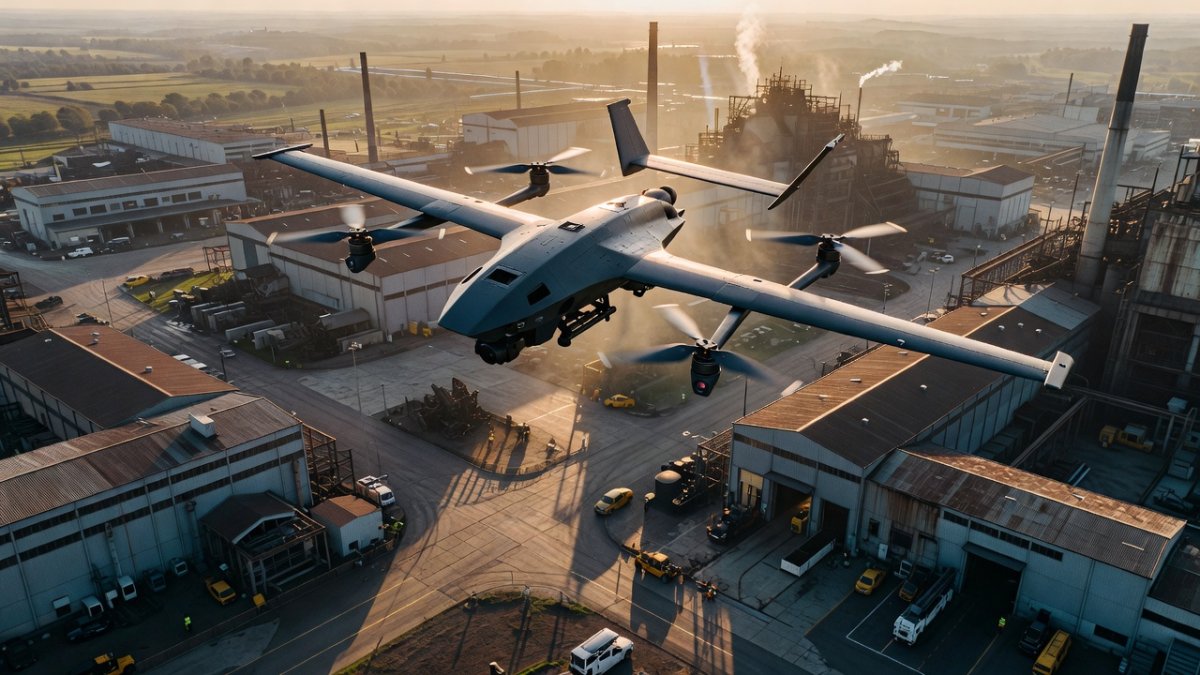
Loitering munitions such as the KAL system under discussion with Gulf states are redefining artillery roles by combining persistent surveillance with precision strike at lower cost than Western or Chinese equivalents. Cyprus's evaluation of Indian drones and loitering munitions further signals demand from both established and emerging markets in Southeast Asia, the Gulf and Africa, where budget-conscious militaries seek volume without performance trade-offs. Successful spin-offs from these programmes feed India's growing startup ecosystem, converting military-grade technologies into commercial UAV services for agriculture, disaster management and infrastructure monitoring while strengthening supply-chain resilience.
What This Means for India's Defence Ecosystem
The transition from BrahMos-led growth to drone exports supports wider industrial participation under Atmanirbhar Bharat. Private companies and startups now contribute to supply chains that previously centred on public-sector units, generating employment in tier-2 cities and reducing import dependence. Taxpayers benefit from the 95% integration cost savings demonstrated on the Su-30MKI programme, which can be replicated across UAV projects. Export revenues also strengthen the rupee and fund further R&D at DRDO laboratories.
India's private sector, operating outside traditional DRDO channels, supplies the speed, pricing flexibility and production scale required to meet these orders. Positive indigenisation lists and the updated Defence Acquisition Procedure channel procurement toward domestic sources, while DGAQA and CEMILAC certification frameworks provide the regulatory assurance international buyers demand before committing to multi-year contracts.
The Road to Rs 50,000 Crore
The 62 percent year-on-year growth to Rs 38,424 crore in FY2025-26, if sustained, would compound to exceed the export target well before 2029-30. Missile systems, artillery platforms, armoured vehicles, drones and electronics already constitute the core export basket, with shipments reaching more than 100 countries. Policy instruments such as positive indigenisation lists and the Defence Acquisition Procedure 2020 streamline approvals for export-oriented production, while FMS lines and rigorous end-user monitoring build buyer confidence in Indian systems.
Sustaining the current growth trajectory requires embedding MRO and training packages as recurring revenue streams, which also deepen manufacturing capabilities and generate skilled employment across the domestic ecosystem. India's export momentum outpaces several global peers amid rising demand for affordable platforms, yet supply-chain vulnerabilities, certification delays and shifting geopolitical alignments pose risks that defence attaches and the export promotion cell must mitigate through proactive diplomacy. Success in reaching the target would translate into broader industrial depth, with startup collaborations driving innovation and positioning India as a reliable alternative supplier in an increasingly multipolar arms market.
The Bottom Line
India's defence exports have moved from Rs 38,424 crore in FY2025-26 toward the export target by 2029-30, with drones and loitering munitions positioned to match or exceed BrahMos volumes. DRDO's Hyderabad-led pivot, combined with private-sector deals in the Gulf and Europe, demonstrates how policy incentives and domestic engineering are reshaping the sector. Whether the 2029 targets translate into sustained manufacturing depth and global market share will depend on disciplined execution, component indigenisation, and the startup collaborations now feeding the pipeline.
— By Dr. Raj Patel, Staff WriterThis article was produced with AI-assisted research and editorial support. Reporting is based on sources cited in the article.
What's Your Reaction?
 Like
0
Like
0
 Dislike
0
Dislike
0
 Love
0
Love
0
 Funny
0
Funny
0
 Wow
0
Wow
0
 Sad
0
Sad
0
 Angry
0
Angry
0

India/South Asia Correspondent at Global1.News. Analytical voice with a background in science and health journalism. Based in New Delhi, covering Indian politics, education, healthcare, technology, and policy. Breaks down complex data into clear, actionable reporting.














Comments (0)