
Gunmen attack popular Mangu market, kill five, injure scores
At least five people lost their lives and scores were left seriously wounded when gunmen descended on the bustling Friday market in Mangu Local Government Area of Plateau State on the night of 19 September 2026.
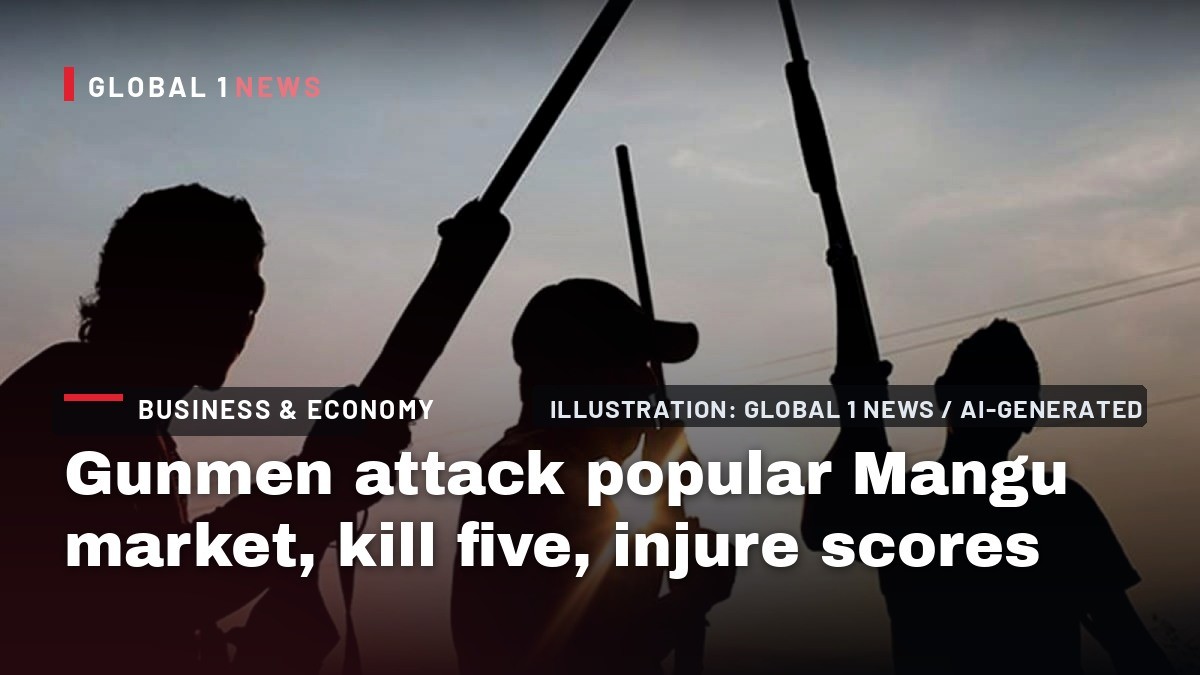
At least five people lost their lives and scores were left seriously wounded when gunmen descended on the bustling Friday market in Mangu Local Government Area of Plateau State on the night of 19 September 2026. The attack, which lasted for more than ten minutes, has reignited fears across the Middle Belt about the growing wave of armed violence that has plagued the region since 2023. As the community reels from the tragedy, local leaders and security officials are calling for a decisive response that leverages intelligence, technology and a renewed commitment to protect civilians.
The brutal assault on Mangu market
The assault unfolded at about 8 p.m., when traders were winding down a day of commerce and preparing to head home. According to Bulus Dabit, President of the Mwaghavul Development Association (MDA), gunmen stormed the vegetable market, opened fire sporadically on a passing vehicle and immediately began shooting at traders and shoppers alike. Two women and a young man were killed on the spot, while two other victims succumbed to their injuries after being rushed to a nearby hospital.
Eyewitness Anointed Inusa described the assailants as armed with “sophisticated weapons” and noted that the gunfire continued for roughly ten minutes. The sustained barrage created a chaotic scene, with panicked crowds scattering in all directions. Manji Ezekiel, another witness, likened the experience to a “war movie,” emphasizing the indiscriminate nature of the shooting and the frantic flight of hundreds of people who abandoned their goods in the scramble for safety.
Human cost and medical response
Beyond the five confirmed fatalities, the attack left “scores” of individuals seriously injured, according to both Dabit and the eyewitnesses. Victims were quickly transported to Jos University Teaching Hospital, where medical teams have been working to stabilise those with gunshot wounds and treat the many who suffered injuries while fleeing the market. The sudden surge of patients has strained local health services, underscoring the broader impact of such attacks on community infrastructure.
Families of the victims now face the dual burden of mourning lost loved ones and coping with the physical and psychological trauma inflicted on survivors. Community leaders have pledged to provide support, but the scale of the emergency highlights the need for a more coordinated emergency response system in the region.
Historical backdrop of violence in Plateau State
The Mangu market tragedy is part of a disturbing pattern of attacks that have plagued Plateau State and surrounding areas for several years. Since 2023, the Mwaghavul Development Association has documented the killing of more than 750 Mwaghavul people across the state. While the source material does not enumerate each incident, the cumulative toll points to a persistent security vacuum that has allowed armed groups to operate with relative impunity.
These recurring assaults have often targeted markets, places of worship and communal gatherings—sites that symbolize the social and economic lifeblood of the region. The repeated targeting of such civilian spaces has deepened mistrust among ethnic groups and heightened anxieties about the safety of everyday activities.
Community reaction and demands for security reform
In the aftermath of the Mangu market attack, MDA officials have been vocal in demanding a stronger security presence. Friday Derwam, Director of Public Affairs for the MDA, urged the federal and state security agencies to deploy intelligence and modern technology to locate and apprehend the perpetrators. He warned that the attackers “would not be far from the scene of the crime,” implying that they may still be operating within the vicinity of Mangu.
Derwam’s call reflects a broader sentiment among Plateau State residents who feel that traditional policing methods have failed to deter armed groups. The community’s plea for intelligence‑driven operations signals a shift toward seeking more sophisticated, data‑centric approaches to counter‑insurgency, a trend that is gaining traction across Nigeria’s security discourse.
Implications for regional stability
The violence in Mangu carries implications that extend beyond Plateau State. The Middle Belt has long been a flashpoint where ethnic, religious and resource‑based tensions intersect, and attacks on civilian markets can destabilise trade routes that connect the north and south of the country. Disruptions to market activity reverberate through supply chains, affecting food security and livelihoods not only in the immediate locality but also in neighboring LGAs that depend on Mangu’s market as a commercial hub.
Moreover, the use of “sophisticated weapons” as reported by eyewitnesses suggests that armed groups are acquiring more advanced firepower, potentially escalating the lethality of future attacks. This development raises concerns for neighboring states that share similar security challenges, prompting calls for a coordinated regional response to curb the flow of arms and to share intelligence across state lines.
Government response and the way forward
While the source material does not detail an immediate official response from the Plateau State governor or the federal Ministry of Interior, the public statements from MDA leaders indicate that pressure is mounting on authorities to act swiftly. The call for intelligence‑driven operations aligns with recent national security strategies that emphasise the use of technology, surveillance and community policing to counter violent extremism.
In the coming weeks, it is likely that security agencies will increase patrols in and around Mangu, conduct investigations into the identities of the gunmen, and possibly launch joint operations with the Nigerian Army and the Department of State Services. The effectiveness of these measures will hinge on their ability to address the root causes of insecurity—such as competition over land, communal grievances and the proliferation of illicit weapons—while also delivering immediate protection for vulnerable civilians.
Resilience and hope amid tragedy
Despite the horror of the night, the people of Mangu have shown remarkable resilience. Traders who survived the attack have begun to return to their stalls, determined to rebuild their livelihoods and restore a sense of normalcy. Community leaders, including Bulus Dabit, have pledged to support victims’ families and to advocate for stronger security measures that will prevent future tragedies.
The Mangu market attack serves as a stark reminder of the human cost of Nigeria’s security challenges, but it also highlights the enduring spirit of communities that refuse to be silenced by violence. As the nation grapples with the broader crisis of armed insecurity, the voices from Mangu echo a clear message: protection of civilians must be paramount, and the response must be swift, coordinated and rooted in the lived realities of the people most affected.
This article was produced with AI-assisted research and editorial support. Reporting is based on the source material cited below. Sources: Daily Post Nigeria; dailypost.ng; Global1.News (19 September 2026).
By Sarah Okafor, Staff Writer
What's Your Reaction?
 Like
0
Like
0
 Dislike
0
Dislike
0
 Love
0
Love
0
 Funny
0
Funny
0
 Wow
0
Wow
0
 Sad
0
Sad
0
 Angry
0
Angry
0

Africa Correspondent at Global1.News. Based in Lagos, covering politics, business, technology, and culture across the continent. Focused on telling African stories beyond the headlines — the innovation, entrepreneurs, and communities shaping the region's future.












Comments (0)