
Espionage Arrests of Ex-PLA Soldiers Could Strain South Korea-China Ties
The arrest of two former Chinese military servicemembers on espionage charges marks a significant test for South Korea-China relations, injecting a new layer of strategic friction into a bilateral dynamic already complicated by North Korea's provocations and the ongoing U.S.-China rivalry. The cases, announced by the Gyeonggi Nambu Provincial Police Agency, involve alleged attempts to intercept allied military communications and photograph U.S.
The arrest of two former Chinese military servicemembers on espionage charges marks a significant test for South Korea-China relations, injecting a new layer of strategic friction into a bilateral dynamic already complicated by North Korea's provocations and the ongoing U.S.-China rivalry. The cases, announced by the Gyeonggi Nambu Provincial Police Agency, involve alleged attempts to intercept allied military communications and photograph U.S. installations, raising profound questions about the extent of foreign intelligence activities on the Korean Peninsula.
The Espionage Case That Could Hit South Korea-China Ties
Seoul, South Korea – August 12, 2026 — The Gyeonggi Nambu Provincial Police Agency's security investigation unit announced Tuesday the arrest of two former People's Liberation Army (PLA) soldiers on espionage charges, a development that threatens to complicate diplomatic relations between Seoul and Beijing. Both men were detained Monday, August 10, with authorities alleging they engaged in activities ranging from intercepting military aircraft communications to photographing sensitive areas within a major U.S. military installation. The announcement comes at a particularly sensitive juncture, arriving just one day after South Korean and U.S. militaries confirmed they would begin the annual Ulchi Freedom Shield (UFS) exercise from August 17-27, and amid heightened tensions following North Korea's latest ballistic missile launch on Wednesday.
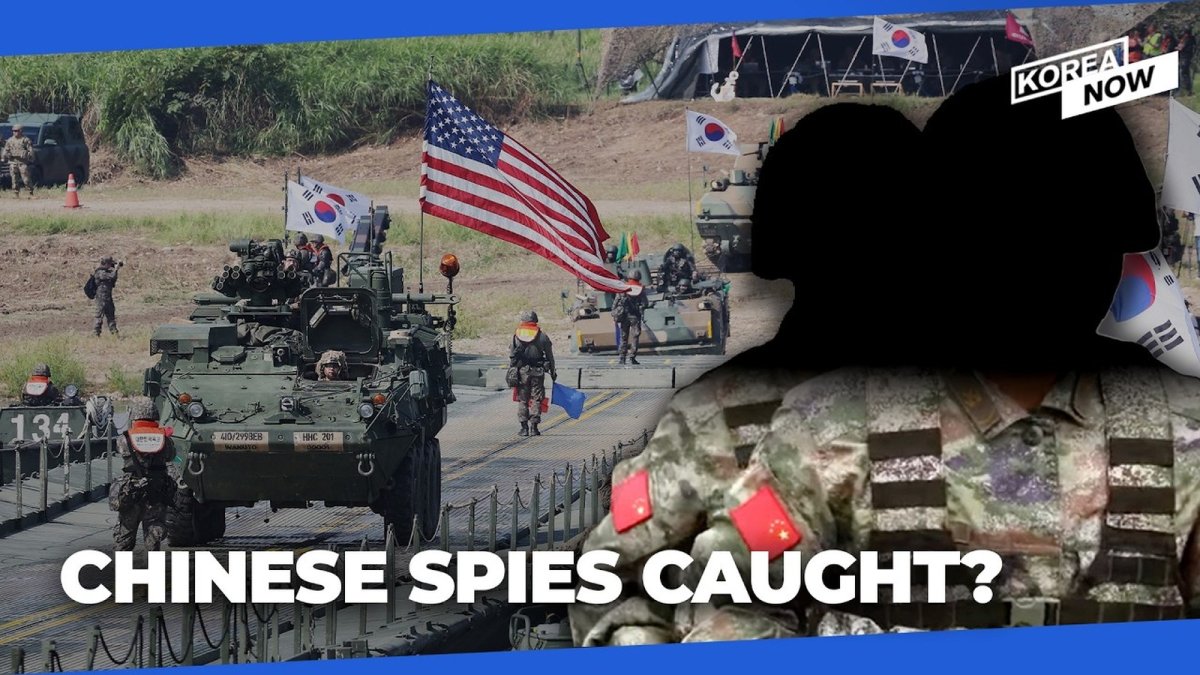
The Arrests — A Dual Threat Profile
The police investigation has revealed two distinct but potentially interconnected cases. Suspect A, a Chinese national in his 60s and a former PLA soldier, is accused of setting up an interception device at a hotel near Gunsan Airport in North Jeolla Province. This location is strategically significant, as Gunsan Airport is a commercial airport that shares its runway with Kunsan Air Base, home to South Korean and U.S. air forces. According to Stars and Stripes reporting, the suspect installed a software-defined radio (SDR) receiver, antenna, and laptop in April 2024, allegedly using the equipment to intercept communications between fighter jets flown by South Korean and U.S. pilots and air traffic controllers.
The timeline of Suspect A's activities is particularly telling. Police report he had no record of visiting South Korea before January 2024, after which he made multiple trips that coincided with the allies' joint air exercises. He is charged with violating laws on aiding the enemy (general treason) and the Protection of Communications Secrets Act. While he has told investigators that listening to aircraft communications was a personal hobby, police are conducting a forensic examination of his laptop to determine whether intercepted communications were relayed to Chinese authorities. The sophistication of the equipment and the timing of his visits suggest a level of operational planning that extends beyond mere hobbyist curiosity.
The Camp Humphreys Connection — A Deeper Infiltration
The second case involves Suspect B, a Chinese man in his 40s, described by Chosun as a 40-year-old ethnic Korean-Chinese national, while Yonhap via Yahoo identifies him as a 45-year-old ethnic Korean holding Chinese citizenship. Also a former PLA soldier, he operated a military supply store near the main gate of Camp Humphreys in Pyeongtaek, Gyeonggi Province, from November 2021 to May 2026. Camp Humphreys is not just any military installation; it serves as the headquarters for U.S. Forces Korea (USFK), U.N. Command, Combined Forces Command, Eighth Army, and the 2nd Infantry Division. It is the largest U.S. overseas military base, situated approximately 40 miles south of Seoul.
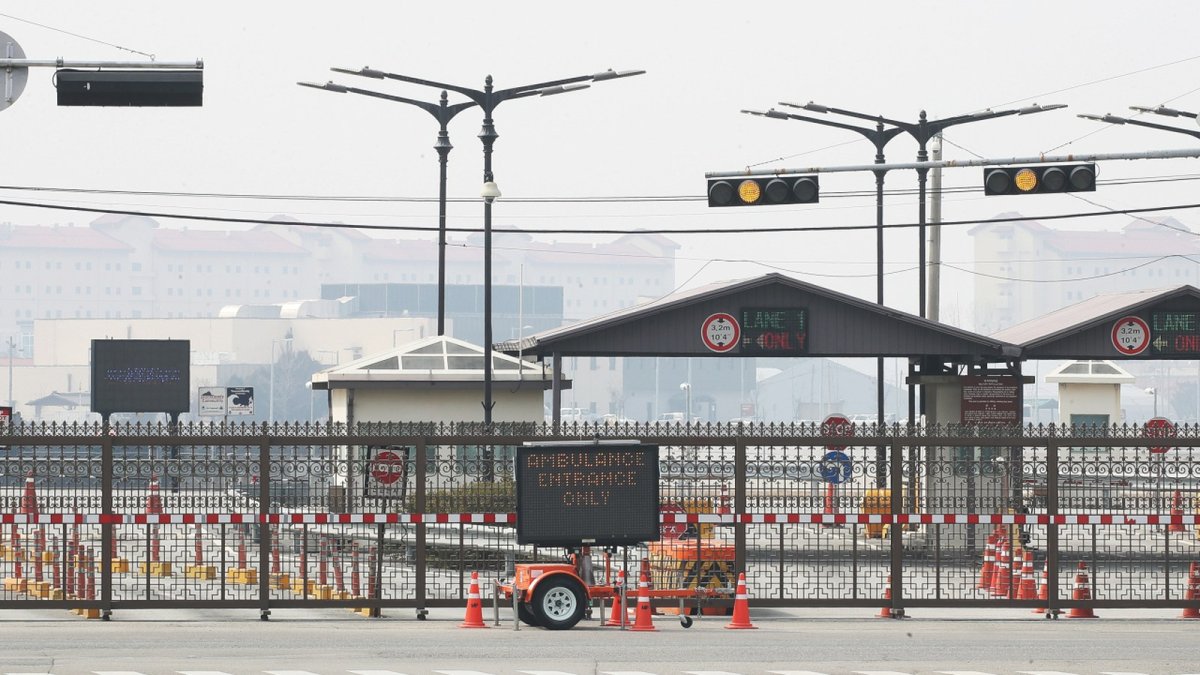
Allegations against Suspect B are extensive. He is accused of photographing weapons movements inside the base, workplaces of U.S. military commanders, and obtaining photos of change-of-command ceremonies. More concerning is his alleged recruitment of a South Korean woman, identified as Suspect C, who worked at Camp Humphreys. Police suspect a romantic relationship developed, with Suspect B providing money and gifts in exchange for information about base activities and South Korea-U.S. training exercises. Suspect C, a South Korean national, is not under arrest but remains under investigation for providing information related to military exercises.
Suspect B is charged with general treason (benefiting the enemy) and violations of the Military Bases and Installations Protection Act. During questioning, he argued that he sought the information believing it would help his business. Police note he maintained three SNS accounts primarily following U.S. military-related accounts and traded secondhand USFK goods, suggesting a long-term, systematic approach to intelligence gathering. Both suspects could face life in prison if found guilty of "benefiting the enemy," a charge that carries the most severe penalties under South Korean law.
Geopolitical Context — The China Factor
The timing and nature of these arrests cannot be separated from the broader geopolitical landscape. Police have not disclosed whether the two Chinese nationals were working together, and have not specified whether any collected information was transmitted to the Chinese government; both cases remain under investigation. The Chinese Embassy in Seoul did not answer calls after business hours Tuesday, and USFK spokesman Kim Eun-chong declined to comment. A Ministry of National Defense spokesman said the ministry cannot comment on an ongoing police investigation, leaving many questions unanswered.
This case emerges against the backdrop of the upcoming Ulchi Freedom Shield exercise, which incorporates "realistic" threats including drones, GPS disruption, and cyberattacks. The allies plan 14 Warrior Shield field training drills at battalion level or higher, a significant reduction from 39 in 2025. This reduction reflects a strategic recalibration, but the espionage cases suggest that the information domain remains a critical battleground. The fact that Suspect A's visits coincided with joint air exercises indicates that foreign intelligence operations are specifically targeting the alliance's most sensitive military activities.
Policy Implications — OPCON Transition and Alliance Readiness
The espionage cases carry significant implications for the ongoing discussions regarding the conditions-based wartime operational control (OPCON) transition. Seoul seeks to complete the transition before President Lee Jae-myung's term ends in 2030, while Washington stresses verifying agreed conditions first. The allies' Security Consultative Meeting (SCM) is held around November, providing a forum for these discussions. The revelation of sophisticated espionage activities targeting U.S. and South Korean military communications could harden positions on both sides, with Washington potentially arguing that the alliance's information security posture must be strengthened before any transition can occur.
The United States stations about 28,500 troops in South Korea, and the security guarantee they provide remains the cornerstone of the alliance. The Camp Humphreys case, in particular, raises concerns about the vulnerability of the alliance's command infrastructure. If a former PLA soldier could operate a business near the base for over four years while allegedly gathering intelligence, questions arise about the effectiveness of current counterintelligence measures. This could lead to enhanced security protocols, stricter background checks for local employees, and potentially a reassessment of how much information is shared with South Korean partners during the OPCON transition process.
Expert Perspectives — North Korea's Calculus
The espionage arrests must also be viewed through the lens of North Korea's ongoing provocations. On Wednesday, August 12, 2026, North Korea launched a ballistic missile from the Wonsan area toward the East Sea (Sea of Japan), flying more than 700 km — its 11th suspected ballistic missile test in 2026. Lim Eul-chul, a North Korea expert at Kyungnam University, told AFP: "North Korea has never simply let a South Korea-US joint military exercise pass without a response. This is a message that Pyongyang is closely watching the upcoming drills and could stage a provocation if it deems one necessary."
The convergence of these events — the espionage arrests, the UFS exercise, and North Korea's missile test — creates a complex security environment. For South Korea, the challenge is managing multiple threats simultaneously: the conventional and nuclear threat from the North, the intelligence threat from China, and the diplomatic challenge of maintaining a robust alliance with the United States while managing relations with its largest trading partner. The espionage cases could potentially complicate Seoul's efforts to maintain a balanced foreign policy, particularly if Beijing responds defensively to the allegations.
Looking Ahead — A Test of Strategic Patience
The coming weeks will be critical in determining the trajectory of this case. The forensic examination of Suspect A's laptop could reveal whether intercepted communications were transmitted to Chinese authorities, a finding that would dramatically escalate the diplomatic stakes. Similarly, the investigation into Suspect C's activities could uncover additional information about the depth of the alleged intelligence operation. The police have emphasized that both cases remain under investigation, and the full scope of the alleged espionage activities has yet to be determined.
For South Korea-China relations, this case represents a significant challenge. The two countries have maintained a complex relationship, balancing economic interdependence with strategic competition. The espionage allegations, if substantiated, could undermine the trust necessary for productive diplomatic engagement. However, it is also possible that both sides will seek to manage the fallout quietly, recognizing that a public confrontation would serve neither country's interests. The Chinese government has historically been sensitive to espionage allegations, and its response to these arrests will be closely watched by regional observers.
The broader implications for the U.S.-South Korea alliance are equally significant. The cases highlight the persistent intelligence threat posed by China, even as the alliance prepares for the OPCON transition. They also underscore the importance of information security in an era of great power competition. As the UFS exercise proceeds and the SCM approaches, both allies will need to balance the imperative of military readiness with the need to protect sensitive information from foreign intelligence services. The espionage cases serve as a stark reminder that the security environment on the Korean Peninsula extends far beyond the demilitarized zone, encompassing a complex web of intelligence operations, diplomatic maneuvering, and strategic competition.
By Prof. David Park, Staff Writer
This article was produced with AI-assisted research and editorial support. Reporting is based on sources cited in the article.
What's Your Reaction?
 Like
0
Like
0
 Dislike
0
Dislike
0
 Love
0
Love
0
 Funny
0
Funny
0
 Wow
0
Wow
0
 Sad
0
Sad
0
 Angry
0
Angry
0

East Asia/Technology Correspondent at Global1.News. Seoul-based voice covering Korean politics, technology, business, and culture. Analyzes how technology and geopolitics intersect across East Asia.














Comments (0)