
England's Driest July in 190 Years Devastates Farms
England and Wales recorded their driest July since 1836, with rainfall at 10% of average and 51.4% of England under official drought. Wheat yields are down 25-30%, farmers face water restrictions, and the crisis offers Latin America a warning ahead of a looming super El Nino.
England and Wales have just recorded their driest July since 1836, with rainfall totals collapsing to 6.5mm and 9.3mm respectively, turning fields to dust and slashing farm output in ways that threaten both local harvests and global food chains. Farmers across southern England now confront the human cost of this flash drought, as crops wither and livestock suffer under conditions that preview broader climate risks for regions like Latin America.
Driest July in 190 Years: English Farmers Count the Cost
London, England – August 6, 2026 — Provisional Met Office figures confirm England received just 6.5mm of rain in July 2026 — 10 percent of the long-term average — and Wales 9.3mm, making it the driest July since records began in 1836. With 51.4 percent of England under official drought status and wheat yields down as much as 30 percent, the human cost is already being counted in fields from Devon to East Anglia.
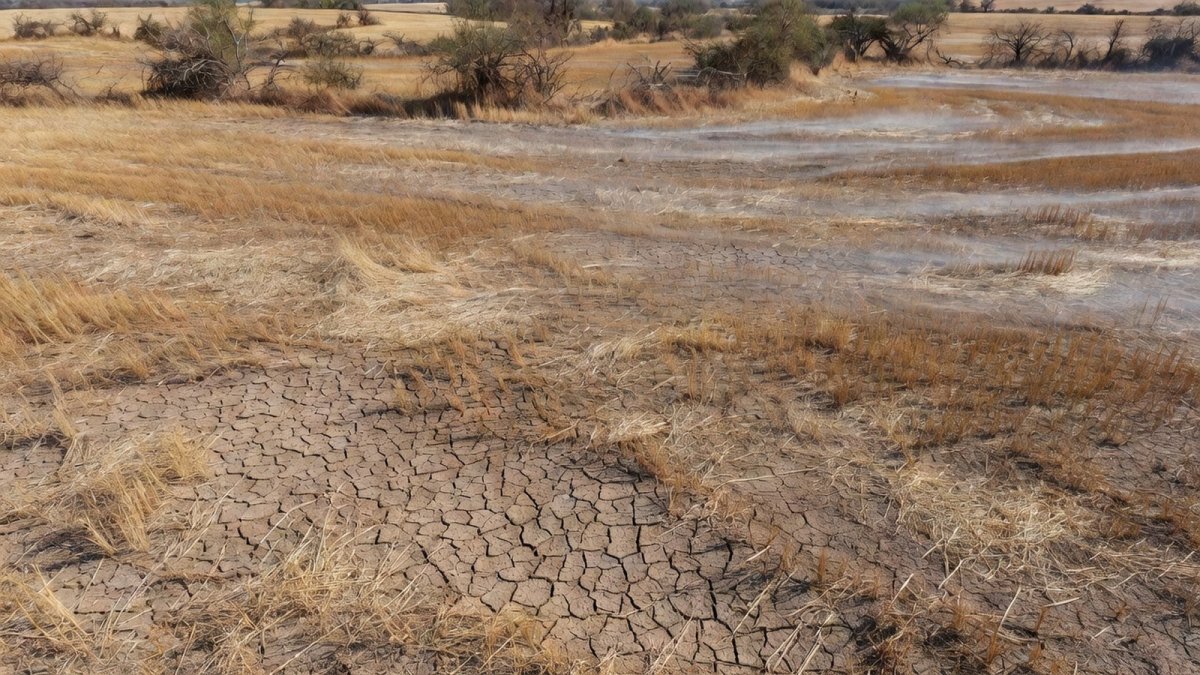
Record Dryness: The Numbers Behind England's Driest July
England recorded just 6.5mm of rain in July 2026, equaling only 10% of the long-term average, while Wales measured 9.3mm or 9% of average. This marks the driest July since records began in 1836, spanning 190 years of data. Southern England fared even worse with 1.9mm, a mere 3% of average and its driest month ever recorded. Nineteen counties registered 1mm or less for the entire month, and some parts of Devon endured no rain for 50 consecutive days. The Environment Agency declared seven areas in official drought on July 29, covering East Anglia, Hertfordshire and London, Thames Valley, Hampshire and Isle of Wight, Devon and Cornwall, West Midlands, and Wessex, which together span 51.4% of England. Officials labeled the event a flash drought. Seventy-eight percent of England's rivers sat below normal levels, with 17% classified exceptionally low. Reservoir storage reached only 75.3% of capacity, 7.4% below the seasonal average. This represents the third drought in five years after 2022 and 2025, marking the second consecutive summer drought. One thousand five hundred six abstraction licence restrictions hit farms due to low river flows. Forty percent of England's population, or 23 million people, fell under hosepipe bans imposed by seven water companies including Affinity, Anglian, Cambridge, Southern, South East, Thames, and South West.
Farmers Count the Cost of a Changing Climate
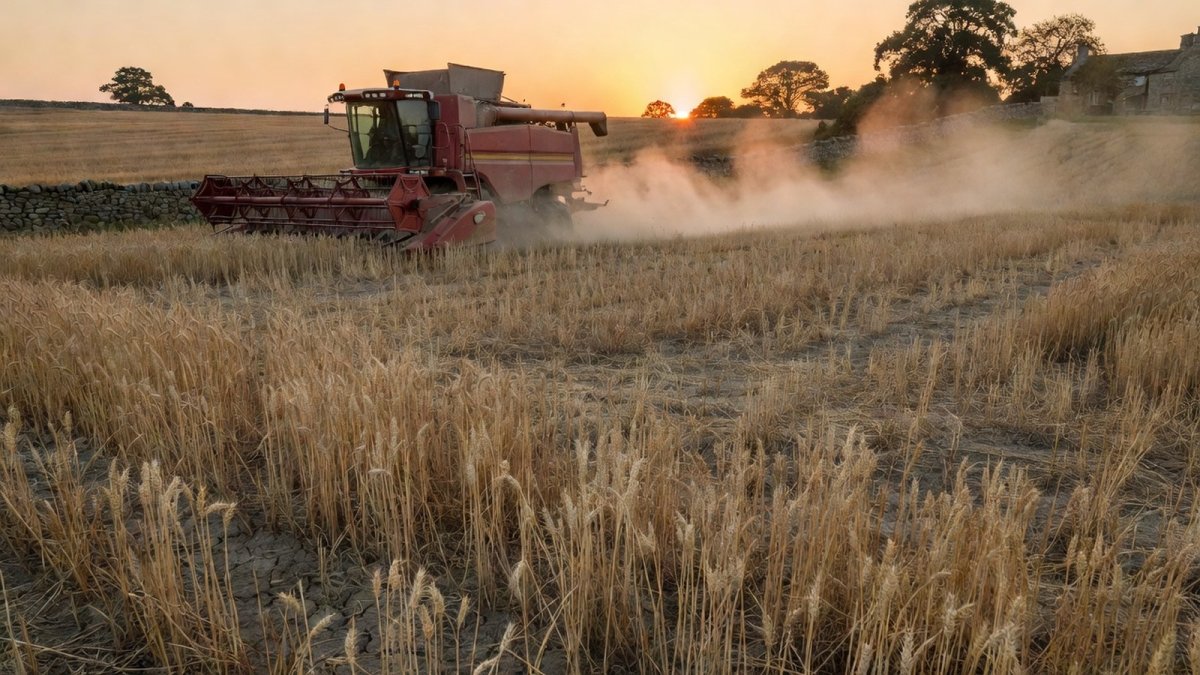
Wheat yields dropped 25-30% according to the Al Jazeera English report, with other spring cereals likely faring worse amid the extreme dryness. The harvest arrived earliest since records began in 2006, with combines operating two to three weeks ahead of the long-term average per the AHDB first harvest report 2026, and cereal yields falling below the 10-year average. Wheat crops stood at half their normal height in many places. Heat stress in cattle wiped 18.5 million litres off milk yields in recent weeks. Riverford Organic founder Guy Singh-Watson reported three of the company's four irrigation reservoirs completely dry in Devon. These losses compound across livestock and arable sectors already strained by repeated dry spells. The scale of damage extends beyond immediate output to long-term soil degradation and input cost spikes. Data from the reporting underscores how quickly a single month of record low rainfall can erase months of careful planning on British farms. Southern England's 1.9mm total left irrigation systems unable to compensate, forcing difficult decisions on which fields to abandon first.
Voices from the Ground: 'The Equivalent of the Sahara Desert'
Neil Shand, National Beef Association CEO, described the scene bluntly: "Grass in some places, it's not just shrivelled up; it's completely disappeared. People have been left with the equivalent of the Sahara Desert. It's just dust." NFU Deputy President Paul Tompkins stated that farmers have always contended with weather but now face climate change in action. NFU President Tom Bradshaw warned of possible food shortages and called on the prime minister for tax breaks to build water storage, noting that countries the UK relies on for imported food and vegetables also face changing climates. Gavin Lane, Country Land and Business Association president, observed this marks the third drought in five years, adding that what was once extraordinary is becoming routine in British farming and that this harvest could be the last for some operations. A third of British farmers already operate at a loss or break even only. The Al Jazeera English video "Driest July on Record: English Farmers Count the Cost," reported by Rory Challands from southern England, captured these pressures on the ground as combines moved early through stunted fields.
A Water System Built for a Different Climate
The House of Lords report "Surviving drought: reclaim the rain" from May 2026 projected England will face a 5 billion litre daily water deficit by 2055, equivalent to 2,000 Olympic swimming pools. No major reservoirs have been completed in England since 1992. Water minister Emma Hardy from Defra acknowledged the climate is changing and droughts are becoming increasingly common, with the government now building nine new reservoirs. Greenpeace UK highlighted that water companies waste five times more water through leaks than a nationwide hosepipe ban could save. One hundred ten wildfires have already struck England's most protected sites this year. UKHSA issued amber heat health alerts for London, the south east, east of England, and East Midlands until August 5, with temperatures forecast to reach 34C and heightened death risks among vulnerable groups on the 33rd day this year above 30C. Climate attribution studies show record-breaking heatwaves in western Europe are now 80 times more likely due to global heating, and 40 times more likely in eastern Europe. These infrastructure gaps leave farms exposed when flash droughts strike repeatedly.
Europe's Harvest Under Siege
Spain's 2026-27 cereal crop forecast fell from 24 million to 18.5 million tonnes. The EU cut sunflower expectations by 7%, grain maize by 6%, and potatoes and soya by 3%. Olive oil prices rose again, exceeding £7 per litre in the UK. French growers anticipate the earliest Champagne harvest ever around August 15. Légumes de France reported thousands of tonnes of salad, carrots, leeks, garlic, and onion lost. These continental shortfalls mirror England's wheat yield declines of 25-30% and earliest harvest since 2006. Combined pressure on supply chains raises costs for processors and retailers already navigating repeated dry summers. The pattern of consecutive droughts across western Europe amplifies volatility in staple and specialty crop markets alike.
What This Means for Latin America
England's drought serves as a preview for Latin America as a super El Niño looms with Pacific waters expected around 3C warmer by the end of 2026. The World Food Programme is ramping up preparedness plans while Latin American governments prepare for drought, floods, and heat. Previous strong El Niño events caused billions in damage across the region and disrupted agriculture from Brazil to Mexico. Bloomberg Economics estimates El Niño may push consumer prices up around 2 percentage points in emerging markets. Panama Canal water levels and Amazon drought already show strain. Tom Bradshaw's warning that food-importing nations depend on producing countries whose climates are changing applies directly here, as Latin America supplies critical coffee, soy, fruit, and vegetables to the world. The lesson from England's 1,506 abstraction restrictions and 75.3% reservoir levels is that water storage, reservoir investment, and drought-resilient farming matter as much in the Global South as in England. Latin American producers face parallel risks of yield shocks and price spikes that could ripple outward.
The Bottom Line - What Comes Next
With 78% of rivers below normal and seven drought areas covering over half of England, the immediate priority remains emergency water management and support for struggling farms. Long-term solutions hinge on accelerating the nine new reservoirs and fixing leaks that waste far more than hosepipe bans save. For Latin America, the English experience underscores the urgency of building resilient storage and adopting drought-tolerant practices before the next super El Niño intensifies. Without these steps, repeated flash droughts will continue eroding yields, raising import dependence, and threatening food security on both sides of the Atlantic. The data from 2026 shows the window for preparation is narrowing fast.
By Elena Vasquez, Staff Writer
This article was produced with AI-assisted research and editorial support. Reporting is based on sources cited in the article.
What's Your Reaction?
 Like
0
Like
0
 Dislike
0
Dislike
0
 Love
0
Love
0
 Funny
0
Funny
0
 Wow
0
Wow
0
 Sad
0
Sad
0
 Angry
0
Angry
0

Latin America Correspondent at Global1.News. Based in Mexico City, covering politics, economics, energy, and culture across the region. Brings an on-the-ground perspective to stories spanning from the Rio Grande to Patagonia.













Comments (0)