
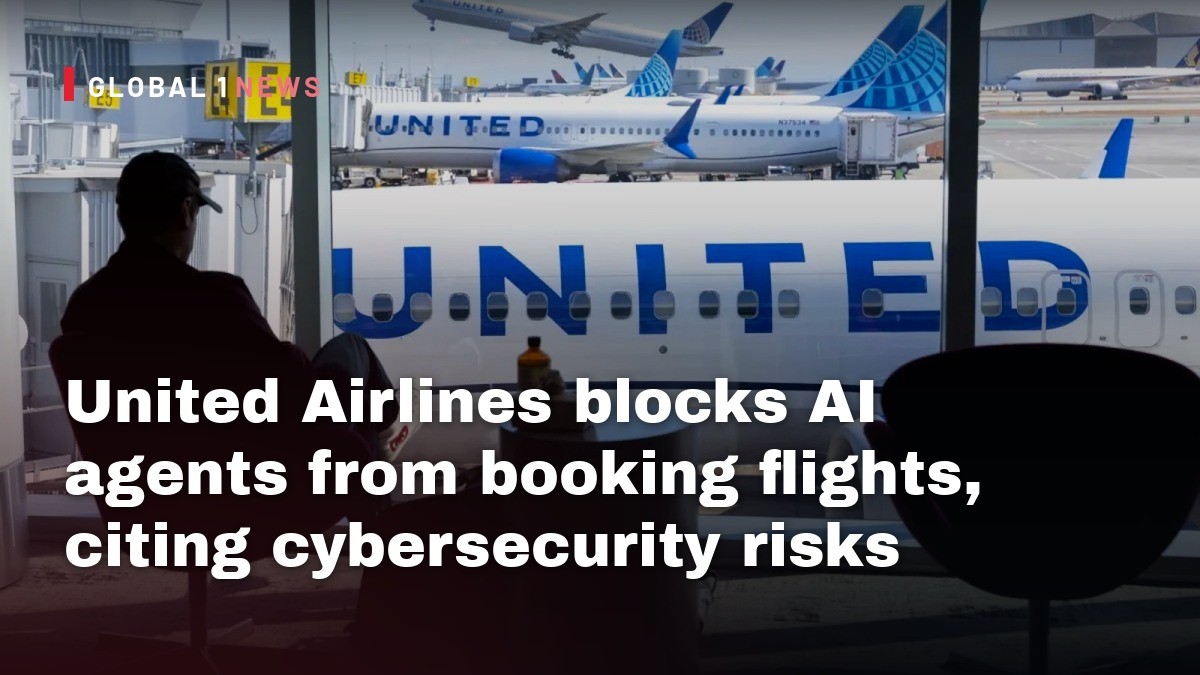
United Airlines blocks AI agents from booking flights, citing cybersecurity risks
United Airlines just put a stop‑sign on AI agents trying to book flights or fiddle with reservations, and the move is a wake‑up call for any independent provider that thinks “AI convenience” is a free‑for‑all.
United Airlines just put a stop‑sign on AI agents trying to book flights or fiddle with reservations, and the move is a wake‑up call for any independent provider that thinks “AI convenience” is a free‑for‑all. The airline’s own words make it clear: sharing credentials with a third‑party assistant opens a back‑door for hackers, and it could even land you in violation of federal aviation rules that demand a human check‑in to certify baggage contents. For us running real hosting infrastructure, that’s a textbook case of why “best practice” advice from hyperscalers and VC‑backed startups often collapses the moment you put it in production.
Why United’s Ban Makes Business Sense
United’s statement is blunt: “sharing account credentials with personal, third‑party, AI assistants can expose sensitive information.” From a risk‑management angle, that’s a non‑negotiable reality. When a user hands over a password to an AI chatbot, the assistant inherits full access to the MileagePlus account, the booking engine, and any stored payment details. Any breach of that assistant—whether through a compromised API key or a phishing attack—exposes the airline to fraud, chargebacks, and regulatory headaches.
What’s more, the airline flags a specific compliance issue: federal aviation rules require a human to confirm that bags don’t contain prohibited items. An autonomous agent can’t sign that declaration, so United is protecting itself from potential violations that could trigger fines or even grounding of flights. For a carrier, the cost of a compliance breach dwarfs any marginal gain from AI‑driven bookings.
The Credential‑Sharing Trap
The core of United’s concern is the practice of users handing over their passwords to AI assistants. That’s a trend we’ve seen across banks, retailers, and now airlines. Once a password is stored in an external service, the original platform loses control over how it’s protected. If the assistant’s backend is compromised, the attacker walks away with a master key to every linked account.
In the hosting world, we’ve lived through similar scares. A client once gave a DevOps bot root access to their servers; when the bot’s token was leaked, the attacker spun up crypto‑mining rigs across dozens of machines before the breach was detected. The lesson is the same: any third‑party that can act on your behalf must be sandboxed, audited, and, ideally, never given the same credentials a human would use.
Regulatory Risks Beyond the Airline Industry
United’s reference to “federal aviation rules” is a reminder that many sectors have hard‑wired human‑in‑the‑loop requirements. Financial regulators, for example, still demand a human sign‑off on certain high‑value transactions. The same logic applies to health‑care, where HIPAA mandates that patient data be accessed only by authorized personnel. When a company builds an “AI‑first” experience without mapping those regulatory checkpoints, they open a legal minefield.
For independent hosting providers, the parallel is clear: you might be tempted to offer AI‑driven control panels or automated provisioning bots, but you must embed audit trails and manual approvals where regulations or industry standards demand it. Skipping that step can lead to costly fines or loss of certifications.
What This Means for the “Best Practices” Playbook
The hype around AI assistants often comes with a checklist: “integrate your API, let the bot handle bookings, and watch conversion rates soar.” United’s move slams that checklist on the table. The “best practice” of seamless, password‑less experiences is attractive, but it ignores the underlying security model. If you hand over an OAuth token that grants write access to a user’s profile, you’ve effectively handed over the keys to the kingdom.
In my own setup, we enforce a principle of least privilege for any automation. An AI‑driven chatbot can query flight status, but it cannot initiate a purchase without a second factor from the user. That extra step adds friction, but it preserves the integrity of the account and keeps the provider out of the line of fire.
The Hyperscaler Pricing Trap
One temptation for companies looking to bolt on AI capabilities is to lean on hyperscaler services that charge per API call. Those platforms promise “secure credential storage” and “managed identity,” but the pricing model can explode when you start scaling to millions of users. United’s decision to block AI agents outright sidesteps that cost curve entirely, but for smaller players the hidden expense of securing those integrations can be a killer.
We’ve seen clients sign up for a “pay‑as‑you‑go” AI service, only to watch their monthly bill balloon as bots start making repetitive booking attempts. The smarter move is to build a thin wrapper around the AI that throttles calls, validates intent, and logs every transaction for audit. That way you keep costs predictable and retain control over the security posture.
Practical Steps for Providers
First, audit every third‑party integration that can act on a user’s behalf. Identify where passwords or tokens are stored and enforce encryption at rest and in transit. Second, implement multi‑factor verification for any high‑risk action—think booking a flight, moving funds, or provisioning a server. Third, design your API contracts to require explicit user consent for each operation, and log that consent in an immutable ledger.
Finally, educate your customers. United’s public warning is a reminder that end‑users often don’t grasp the risk of handing over credentials to a chatbot. Provide clear guidance on how to keep their passwords private, and offer alternative authentication flows that don’t rely on sharing secrets with AI assistants.
Bottom Line: Security Wins Over Convenience
United Airlines’ decision to block AI agents is a pragmatic, risk‑averse move that cuts through the hype. For us in the hosting business, it’s a signal to double down on secure design rather than chase the latest AI convenience feature. The cost of a breach—whether it’s a compromised mileage account or a hijacked server farm—far outweighs the marginal gain of a frictionless AI booking flow.
In short, treat any third‑party AI as a potential attack vector, not a value‑add. Harden your credential handling, embed human checks where regulations demand them, and keep an eye on the hidden costs of hyperscaler services. That’s the playbook that keeps your infrastructure alive and your customers’ trust intact.
— Allan Ali, Founder
This article was produced with AI-assisted research and editorial support. Reporting is based on the source material cited below. Sources: TechCrunch; techcrunch.com; Global1.News (13 November 2026).
By Allan Ali, Global1.News
What's Your Reaction?
 Like
0
 Dislike
0
 Love
0
 Funny
0
 Wow
0
 Sad
0
 Angry
0

Publisher of Global1.News. Automation architect, systems builder, and the guy making sure the truth gets published.













Comments (0)