
US 'America First' APEC Pitch Previews Xi's September Visit
Washington is pushing an America First agenda at APEC senior-officials talks in Dalian, China, weeks before President Xi Jinping's September 24 visit to the United States. The US delegation is seeking market access in agriculture, energy and services, while Beijing counters with calls for fewer t...
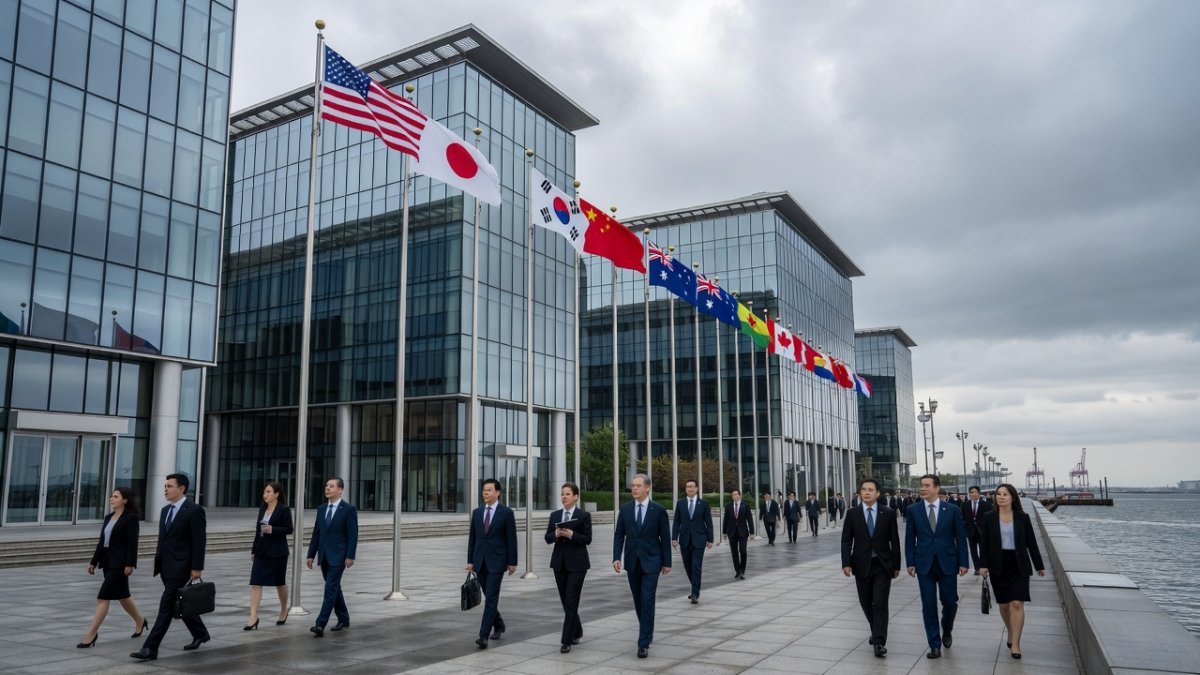
Washington Carries an 'America First' Playbook Into APEC Talks on Chinese Soil
The United States has opened the latest round of Asia-Pacific Economic Cooperation talks in Dalian, China, with a blunt message: American leadership in the forum will be measured by what it delivers for US business. The pledge, filed by the State Department ahead of the third APEC Senior Officials' Meeting of 2026, lands weeks before Chinese President Xi Jinping is expected in Washington on September 24 for his first visit of the year - and it gives the region its clearest preview yet of how the two largest economies intend to manage their truce.
"US leadership in Apec is a key dimension to pursuing America First policies that foster prosperity and advance economic growth in the United States and across the region by breaking down barriers for US business, boosting fair and reciprocal trade and supporting American job growth," the State Department said.
Tags: APEC, US China relations, Xi Jinping, America First, trade policy, Dalian, tariffs, supply chains, Shenzhen summit, Japan trade, Board of Trade, Casey Mace, Asia Pacific
The Dalian Round: What Washington Is Asking For
The meeting, which runs from August 17 to 28 in the northeastern port city, is the third senior-officials round of the APEC year and the largest yet, drawing more than 2,300 representatives from the forum's 21 member economies across nearly 130 events, according to China's foreign ministry. The American delegation is led by Casey Mace, the US senior official for APEC affairs and a career member of the Senior Foreign Service with more than two decades focused on the Indo-Pacific.
Washington's stated priorities for the round are concentrated in sectors where US exporters have the most at stake: agriculture and fisheries, energy, transport, health and food security. The delegation has also pledged to push services exports and supply-chain innovation, and to lead discussions on trade and labour-related matters - a list that tracks closely with the "fair and reciprocal trade" language the administration has applied to its bilateral deals across Asia.
One concrete example of the approach is a workshop led by Ruth Perry, a senior US official overseeing ocean, fisheries and polar affairs, designed to showcase American innovations such as satellite monitoring as part of APEC's broader effort to combat illegal fishing and marine debris. The choice of venue is itself significant: the United States is promoting its tools inside a Chinese-hosted forum, in a city that serves as one of the bases for China's own commercial fishing and shipping industries.
Beijing's Counter-Argument: Open Borders, Resilient Chains
China has answered with an appeal for openness. At a separate customs-focused meeting in Dalian on Saturday, Zhang Baofeng, deputy head of the General Administration of Customs, called on APEC economies to remove trade barriers and ease cross-border bottlenecks amid increasingly fragmented global supply chains, according to state news agency Xinhua. He said the need to align rules and standards and strengthen supply-chain resilience "had never been more urgent".
Zhang's prescription - greater regulatory coordination, lower transaction costs, more efficient customs procedures - is the mirror image of Washington's emphasis on "America First". Where the United States frames trade as a competition for market access and jobs, China frames it as a shared infrastructure problem to be solved through coordination. The contrast is not merely rhetorical; it defines the negotiating fault line that will run through the September summit and the November APEC Economic Leaders' Meeting in Shenzhen.
What the September 24 Summit Is Really About
The Dalian round is, in effect, the dress rehearsal for Xi's visit to Washington, which President Trump announced would take place on September 24. Trump's envoy, Senator Steve Daines, is expected to return to Beijing for another round of preparatory talks to lock in the summit agenda, according to people familiar with the planning.
The institutional scaffolding for the visit already exists, though it is only partly built. When Trump travelled to Beijing in May - his first trip to China since 2017 - the two leaders chartered a US-China Board of Trade and a US-China Board of Investment as the cornerstone of their agreement. Secretary of State Marco Rubio said in late July that the Board of Trade could launch before Xi's arrival, following his talks with Chinese Foreign Minister Wang Yi in Manila. The Board of Investment, by contrast, has stalled, with no concrete deliverables expected when the leaders meet, according to an SCMP exclusive published this month.
That mixed record matters because the summit is being framed on both sides as a stability exercise rather than a breakthrough negotiation. Washington wants to demonstrate progress on market access and agricultural purchases; Beijing wants to lock in a predictable truce before the year-end APEC summit it is hosting. The boards are the visible scorecard for both.
Shenzhen in November: China's Turn to Set the Agenda
Behind the September meeting looms a larger prize: the 33rd APEC Economic Leaders' Meeting in Shenzhen on November 18-19, only the third time China has hosted the summit, after Shanghai in 2001 and Beijing in 2014. China unveiled the APEC 2026 theme and logo last year, drawing on Shenzhen's identity as the "City of Peng" - the mythical creature that transforms from a giant fish into a soaring bird - a metaphor the hosts have used to frame the year as one of transformation and integration.
For Xi, a successful Shenzhen summit would cement a rare diplomatic trifecta: a stabilised relationship with Washington, a China-centred agenda for the region's premier economic forum, and a showcase for the southern technology hub that anchors his economic vision. For the United States and Japan, it is a test of whether they can sustain their own priorities - reciprocal access, allied solidarity, and rules-based trade - inside a forum that China controls as chair.
Japan's Stake in a US-China Thaw
For Tokyo, the stakes are unusually direct. Japan is one of the 21 APEC members and its own trade relationship with Washington is still settling after the Trump administration lowered tariffs on Japanese autos and parts to 15 percent from 25 percent in a bilateral deal agreed in July and signed in September of last year. Any rebalancing of US trade policy toward China will inevitably shape how much attention Washington has left for its allies' trade grievances.
Prime Minister Sanae Takaichi's government is also watching the summit calendar closely. Beijing has hinted at a Xi-Takaichi meeting, and the two leaders have yet to hold formal bilateral talks since her snap-election victory; their predecessors last met at the APEC leaders' meeting in Lima in November 2024. A September Xi visit to Washington, followed by a November APEC summit in Shenzhen, gives Beijing two high-visibility opportunities to decide whether to engage Japan's most popular post-war leader or sustain the chill that has marked the relationship for most of the year.
What to Watch For
Three markers will tell observers how much substance the US-China truce actually carries. First, whether the Board of Trade is formally launched before or during the September 24 visit, and whether the Board of Investment receives any commitment at all - its continued stall would signal that Beijing is keeping its deepest concessions in reserve. Second, how the final APEC leaders' statement from Shenzhen in November balances the competing vocabularies heard in Dalian: "America First" market access versus Chinese calls for open borders and resilient supply chains. Third, whether Takaichi and Xi meet on the sidelines of either gathering - a meeting that would end a freeze that has run for most of 2026 and reshape the trilateral dynamics among Washington, Beijing and Tokyo.
For Japan's readers in Tokyo, the practical question is narrower but no less urgent: whether the two giants' truce holds long enough to stabilise supply chains, and whether Tokyo can extract a place at the table when the boards of trade and investment begin operating. The Dalian round is the first real evidence that both sides are preparing for a working relationship, not a repeat of last year's tariff war - but the evidence is still early, and the November summit will be the true test.
By Kenji Tanaka, Staff Writer
This article was produced with AI-assisted research and editorial support. Sources: South China Morning Post, US State Department, Xinhua, APEC, White House.
What's Your Reaction?
 Like
0
Like
0
 Dislike
0
Dislike
0
 Love
0
Love
0
 Funny
0
Funny
0
 Wow
0
Wow
0
 Sad
0
Sad
0
 Angry
0
Angry
0

Japan Correspondent at Global1.News. Tokyo-based voice covering Japanese politics, technology, economy, and culture. Tracks the intersection of tradition and innovation in one of the world's most dynamic societies.















Comments (0)