
Jensen Huang Resigns as NVIDIA CEO, Colette Kress Takes Interim Helm Amid Security Probe
In a development that sent shockwaves through the global semiconductor and artificial intelligence sectors, Jensen Huang announced his resignation from NVIDIA with immediate effect, relinquishing his roles as chief executive, president and board member.
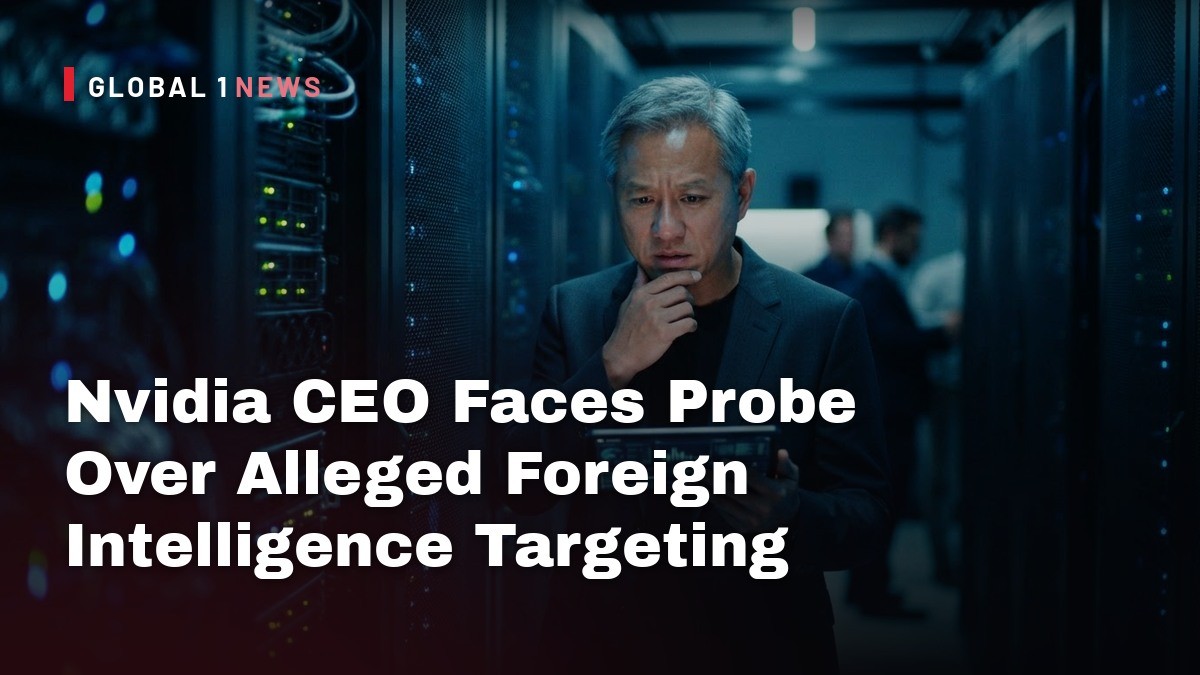
In a development that sent shockwaves through the global semiconductor and artificial intelligence sectors, Jensen Huang announced his resignation from NVIDIA with immediate effect, relinquishing his roles as chief executive, president and board member. The announcement, reported by India Today on 12 November 2026, cited multiple controversies and an alleged inappropriate relationship with a company executive as the immediate catalyst. In the wake of Huang’s departure, Chief Financial Officer Colette Kress has agreed to assume the duties of interim chief executive officer, while former Apple chief Tim Cook has been floated by former US President Donald Trump as a potential permanent successor. The episode has triggered a cascade of investigations by US intelligence agencies, Congress and NVIDIA’s own internal compliance teams, focusing on alleged intelligence failures, security lapses and the circumvention of export controls that could have enabled Chinese access to advanced AI chips.
The Sudden Exit of a Tech Icon
The resignation of Jensen Huang, a figure who has been synonymous with NVIDIA’s rise from a niche graphics chip maker to a global AI powerhouse, is unprecedented in its abruptness. The video report notes that Huang stepped down with immediate effect, abandoning not only the chief executive role but also his positions as president and board member. While the precise details of the alleged inappropriate relationship remain undisclosed, the mention of “multiple controversies” underscores a broader context of governance challenges that have been gathering pace behind the scenes.
For Indian stakeholders, the ramifications are immediate. NVIDIA’s GPUs power a substantial portion of India’s data centre infrastructure, underpin many AI research projects at premier institutions such as IITs and IIMs, and are integral to the country’s push for AI‑driven economic growth under the National AI Strategy. A sudden leadership vacuum at the helm of the company raises concerns about supply chain continuity, pricing stability and the strategic direction of product roadmaps that Indian enterprises rely upon.
Moreover, the resignation occurs at a time when the Ministry of Electronics and Information Technology (MeitY) is negotiating new procurement frameworks for high‑performance computing hardware. Any disruption in NVIDIA’s executive stability could influence the timing and terms of upcoming contracts, potentially prompting Indian buyers to reassess risk exposure and diversify across alternative vendors.
Colette Kress as Interim Chief Executive
Colette Kress, who has served as NVIDIA’s chief financial officer, has stepped into the interim chief executive role. The video indicates that Kress has agreed to take over the responsibilities, signalling a continuity plan that leans on internal financial stewardship rather than external recruitment. Her background in finance suggests a short‑term focus on stabilising the company’s balance sheet, reassuring investors and partners that the firm remains financially sound despite the leadership turmoil.
From an Indian policy perspective, Kress’s appointment may affect ongoing collaborations between NVIDIA and Indian research institutions. Financial prudence could translate into tighter controls on credit terms for Indian customers, especially those engaged in large‑scale AI initiatives funded by the Department of Science and Technology (DST) or the Indian Council of Medical Research (ICMR). Indian universities and start‑ups that depend on credit‑based procurement of GPUs might need to renegotiate payment schedules or explore alternative financing mechanisms.
Additionally, Kress’s interim tenure will likely be scrutinised by the Indian Ministry of Commerce, which monitors foreign direct investment and technology transfer risks. A CFO‑led interim leadership could be perceived as a period of heightened fiscal oversight, potentially influencing the pace at which new technology transfer agreements are finalised.
Tim Cook as a Potential Successor
The video report adds a surprising political dimension: former US President Donald Trump has reportedly pitched former Apple CEO Tim Cook as a candidate to succeed Huang permanently. While this suggestion remains informal, it reflects the intertwining of corporate leadership with geopolitical considerations, especially as the United States grapples with concerns over AI dominance and export controls.
For India, the prospect of a former Apple chief at the helm of NVIDIA could reshape the competitive landscape. Apple’s deep integration of custom silicon in its product ecosystem has already prompted Indian regulators to examine supply chain localisation. A Cook‑led NVIDIA might accelerate convergence between AI hardware and consumer electronics, potentially opening new avenues for Indian manufacturers to supply components or assembly services under the Make in India initiative.
However, the political undertone of Trump’s endorsement also signals the heightened scrutiny that US tech firms face from both domestic and foreign policymakers. Indian ministries such as the Ministry of External Affairs and the Department of Telecommunications will likely monitor any policy shifts that could affect cross‑border data flows, licensing regimes and collaborative research agreements involving AI hardware.
US Investigations into Security Lapses
The report highlights that US intelligence agencies, Congress and NVIDIA itself have launched multiple investigations into alleged intelligence failures and security lapses. Central to these probes is the claim that NVIDIA may have illicitly bypassed chip export controls, potentially facilitating Chinese access to advanced AI chips. Such allegations, if substantiated, could trigger severe regulatory penalties and reshape the global AI supply chain.
India’s own regulatory environment mirrors many of these concerns. The Ministry of Electronics and Information Technology has been tightening export controls on dual‑use technologies, and the Department of Defense monitors foreign acquisition of AI hardware that could impact national security. Any findings that NVIDIA breached export protocols could prompt Indian authorities to reassess the risk profile of importing its chips, especially for defence‑related projects overseen by the Defence Research and Development Organisation (DRDO).
Furthermore, Indian academic and research institutions that collaborate with NVIDIA through joint research programmes may face increased compliance requirements. The Indian Council of Medical Research and the Indian Space Research Organisation (ISRO) could be required to conduct additional due‑diligence checks before engaging in technology sharing, potentially slowing down research timelines.
Implications for Indian AI and Semiconductor Ecosystem
The turbulence at NVIDIA reverberates across India’s burgeoning AI and semiconductor ecosystem. Start‑ups in Bengaluru, Hyderabad and Pune that rely on NVIDIA GPUs for training large language models may encounter supply uncertainties, prompting them to explore alternative hardware from rivals such as AMD or emerging Indian chip designers. This diversification could accelerate the domestic semiconductor push championed by the Semiconductor Manufacturing Initiative, but it also entails short‑term cost escalations.
In the education sector, AI curricula at IITs and NITs that incorporate hands‑on labs with NVIDIA hardware may need to adjust lab schedules or seek temporary licensing extensions. The Ministry of Human Resource Development, now the Ministry of Education, may need to coordinate with universities to ensure that students do not lose valuable practical exposure during this transitional period.
From a fiscal standpoint, Indian investors holding NVIDIA stocks through mutual funds or exchange‑traded funds will watch the investigations closely. Market volatility could affect the performance of technology‑focused funds managed by Indian asset management firms, influencing portfolio allocations for retail investors.
Looking Ahead: Governance, Compliance and Strategic Partnerships
The episode underscores the critical importance of robust corporate governance and compliance in an era where technology firms sit at the nexus of commercial ambition and national security. For Indian policymakers, the NVIDIA saga offers a cautionary tale about the need for transparent oversight mechanisms, especially as India deepens its engagement with foreign AI hardware providers.
Going forward, the Ministry of Electronics and Information Technology may consider tightening audit requirements for foreign technology imports, mandating regular compliance reporting to mitigate the risk of illicit technology transfer. Simultaneously, the Department of Science and Technology could incentivise domestic chip design projects that reduce reliance on external suppliers, aligning with the broader Make in India vision.
Finally, the interim leadership of Colette Kress will be closely watched by Indian industry bodies such as the Confederation of Indian Industry (CII) and the Federation of Indian Chambers of Commerce & Industry (FICCI). Their engagement with NVIDIA during this period could shape the terms of future collaborations, ensuring that Indian stakeholders retain a voice in the evolving global AI supply chain while safeguarding national interests.
By Dr. Raj Patel, Staff Writer
This article was produced with AI-assisted research and editorial support. Reporting is based on the source material cited below. Sources: India Today video report (12 November 2026); India Today; Global1.News
What's Your Reaction?
 Like
0
 Dislike
0
 Love
0
 Funny
0
 Wow
0
 Sad
0
 Angry
0

India/South Asia Correspondent at Global1.News. Analytical voice with a background in science and health journalism. Based in New Delhi, covering Indian politics, education, healthcare, technology, and policy. Breaks down complex data into clear, actionable reporting.











Comments (0)