
EAM Jaishankar on two-day visit to Bhutan from today: What's on the agenda?
External Affairs Minister S Jaishankar arrived in Thimphu on 16 September 2026 for a two‑day official visit, signalling the continued vigor of India’s “Neighbourhood First” policy.
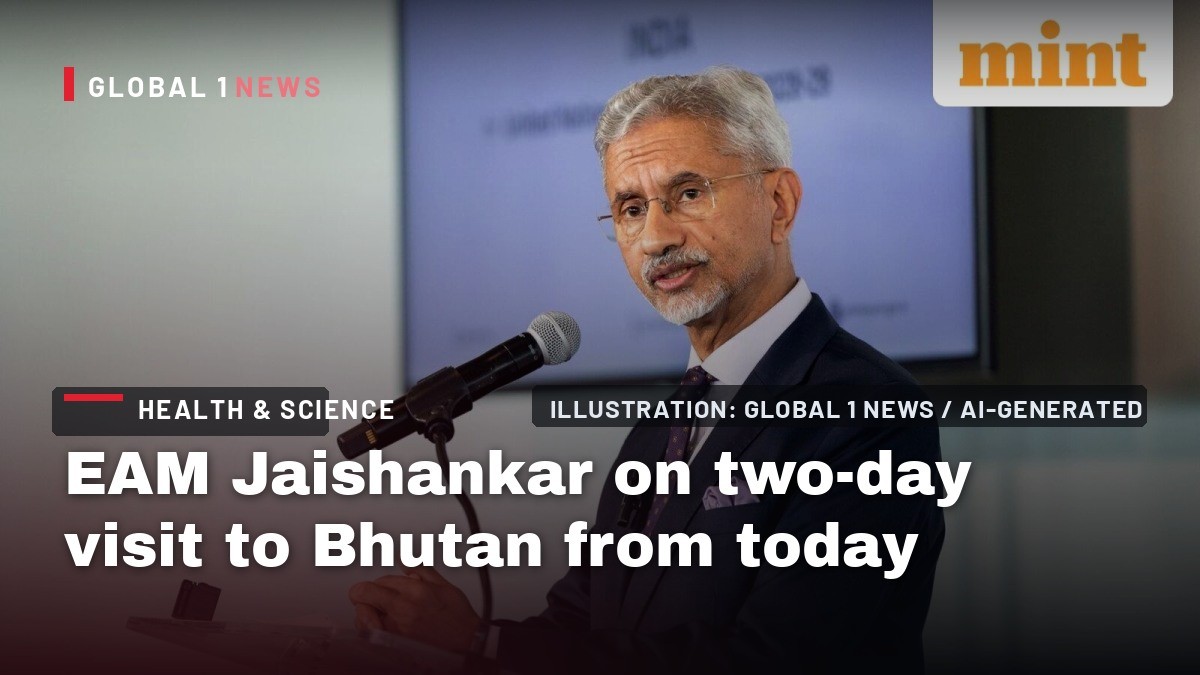
External Affairs Minister S Jaishankar arrived in Thimphu on 16 September 2026 for a two‑day official visit, signalling the continued vigor of India’s “Neighbourhood First” policy. The itinerary, outlined by the Ministry of External Affairs, includes bilateral talks with Bhutan’s Foreign Minister Lyonpo D.N. Dhungyel, a royal audience with King Jigme Khesar Namgyel Wangchuck, and a meeting with Prime Minister Tshering Tobgay. While the visit follows a pattern of regular high‑level exchanges, it also dovetails with a series of sector‑specific engagements that have unfolded over the past months, particularly in water resources and energy cooperation.
Strategic Context of the Visit
The Ministry’s press statement framed the trip as a reaffirmation of “the existing close ties of friendship and cooperation” between India and Bhutan. This language reflects a broader diplomatic calculus: India’s neighbourhood strategy emphasises deep, multifaceted linkages with its Himalayan neighbours to counterbalance regional uncertainties and to secure critical infrastructure corridors. Bhutan, sharing a 724 km border with India, remains a cornerstone of this approach, especially given its strategic location and its role in regional water and energy dynamics.
Jaishankar’s visit, therefore, is not merely ceremonial. It is an operational checkpoint that allows New Delhi to assess progress on joint projects, reinforce diplomatic goodwill, and align future initiatives with the overarching objectives of the Neighbourhood First doctrine. The timing—following a high‑level bilateral meeting on trans‑border rivers in August—suggests a deliberate sequencing of diplomatic and technical engagements.
Water Resources: From Dialogue to Implementation
In August, a senior delegation led by Bhutan’s Minister for Energy & Natural Resources, Lyonpo Gem Tshering, met Union Jal Shakti Minister C.R. Paatil in New Delhi. The discussions centred on trans‑border river management, flood forecasting, and the sharing of hydrological data. Both sides reviewed existing cooperation mechanisms and explored avenues to upgrade the hydro‑meteorological network in Bhutan.
The emphasis on flood management and data sharing underscores a growing recognition of climate‑induced hydrological volatility in the Himalayas. By strengthening the hydro‑meteorological infrastructure, India aims to enhance early‑warning capabilities that benefit downstream Indian states, while Bhutan gains more robust monitoring for its own disaster risk reduction. The joint commitment to “sustained technical collaboration” signals an intent to institutionalise these data exchanges, potentially through regular joint workshops and shared sensor deployments.
Progress on the Punatsangchhu‑I Hydroelectric Project
One of the flagship outcomes of the August talks was a review of the Punatsangchhu‑I (Puna‑I) hydroelectric project, a 1,200 MW venture that epitomises the energy partnership between the two nations. The project, being implemented in Bhutan with Indian partnership, is pivotal for Bhutan’s export‑oriented power strategy and for India’s renewable energy targets.
During the bilateral meeting, both delegations discussed measures to accelerate the project’s timeline. While the source material does not disclose specific milestones, the language of “expeditious implementation” suggests that any lingering bottlenecks—whether related to financing, civil works, or grid integration—are being addressed at the highest diplomatic level. Jaishankar’s upcoming talks are likely to probe the current status, reaffirm financial commitments, and possibly explore additional technical assistance to ensure the plant’s commissioning aligns with India’s 2030 renewable goals.
Energy Sector Cooperation Beyond Hydropower
Parallel to the water‑resource dialogue, Union Minister of Power and Housing & Urban Affairs Manohar Lal met Lyonpo Gem Tshering in New Delhi to reaffirm the “special and enduring partnership” in the power sector. This meeting broadened the scope of bilateral energy cooperation beyond the Punatsangchhu‑I project, touching on the overall framework that underpins India‑Bhutan power trade.
The reference to “avenues for further strengthening collaboration” hints at potential diversification of energy exchanges, such as joint development of solar‑hydro hybrid systems, grid stabilisation technologies, or capacity‑building programmes for Bhutan’s nascent power sector workforce. Such diversification would align with India’s domestic push for a balanced renewable mix and could provide Bhutan with additional revenue streams while reducing its reliance on seasonal hydropower.
Implications for Indian Domestic Policy
From an Indian policy perspective, the Bhutan engagements feed directly into several national priorities. First, the Neighbourhood First agenda seeks to cement reliable supply chains for water and energy, thereby reducing geopolitical vulnerabilities. Second, the emphasis on data sharing and hydro‑meteorological upgrades dovetails with India’s National Disaster Management framework, which aims to integrate cross‑border early‑warning systems.
Third, the progress on Punatsangchhu‑I contributes to India’s renewable energy targets under the National Solar Mission and the broader climate commitments made at the COP conferences. By securing long‑term power imports from Bhutan, India can offset some of the intermittency challenges associated with its own solar and wind capacity expansions, thereby stabilising the national grid while advancing decarbonisation goals.
Future Trajectories: Institutionalising Bilateral Mechanisms
The series of high‑level meetings—spanning foreign affairs, water resources, and power—reflects an emerging pattern of sector‑specific institutionalisation. Regular technical dialogues, joint working groups, and data‑exchange protocols are likely to become permanent fixtures, reducing reliance on ad‑hoc diplomatic visits.
Such institutional depth could also pave the way for broader trilateral or multilateral initiatives, for instance, involving Nepal or Bangladesh in shared river‑basin management frameworks. By establishing robust bilateral mechanisms first, India positions itself as a facilitator of regional water governance, a role that could enhance its diplomatic capital in South Asia.
Conclusion: A Visit Symbolising Depth and Direction
Minister Jaishankar’s two‑day itinerary in Bhutan is emblematic of a relationship that has matured from symbolic friendship to substantive, project‑driven partnership. The agenda—encompassing diplomatic courtesies, technical reviews, and strategic project assessments—mirrors India’s calibrated approach to neighbourhood engagement: combine high‑level political endorsement with granular sectoral collaboration.
As the meetings unfold, the outcomes will likely be measured not just in signed memoranda but in the tangible acceleration of water‑resource data networks, the timely commissioning of the Punatsangchhu‑I plant, and the expansion of renewable energy trade. These deliverables will reinforce India’s Neighbourhood First policy, bolster regional resilience to climate risks, and contribute to the nation’s own energy security and climate objectives. The Bhutan visit, therefore, stands as a critical waypoint on a longer trajectory of integrated, data‑rich, and mutually beneficial India‑Bhutan cooperation.
This article was produced with AI-assisted research and editorial support. Reporting is based on the source material cited below. Sources: Livemint; livemint.com; Global1.News (16 September 2026).
By Dr. Raj Patel, Staff Writer
What's Your Reaction?
 Like
0
Like
0
 Dislike
0
Dislike
0
 Love
0
Love
0
 Funny
0
Funny
0
 Wow
0
Wow
0
 Sad
0
Sad
0
 Angry
0
Angry
0

India/South Asia Correspondent at Global1.News. Analytical voice with a background in science and health journalism. Based in New Delhi, covering Indian politics, education, healthcare, technology, and policy. Breaks down complex data into clear, actionable reporting.














Comments (0)